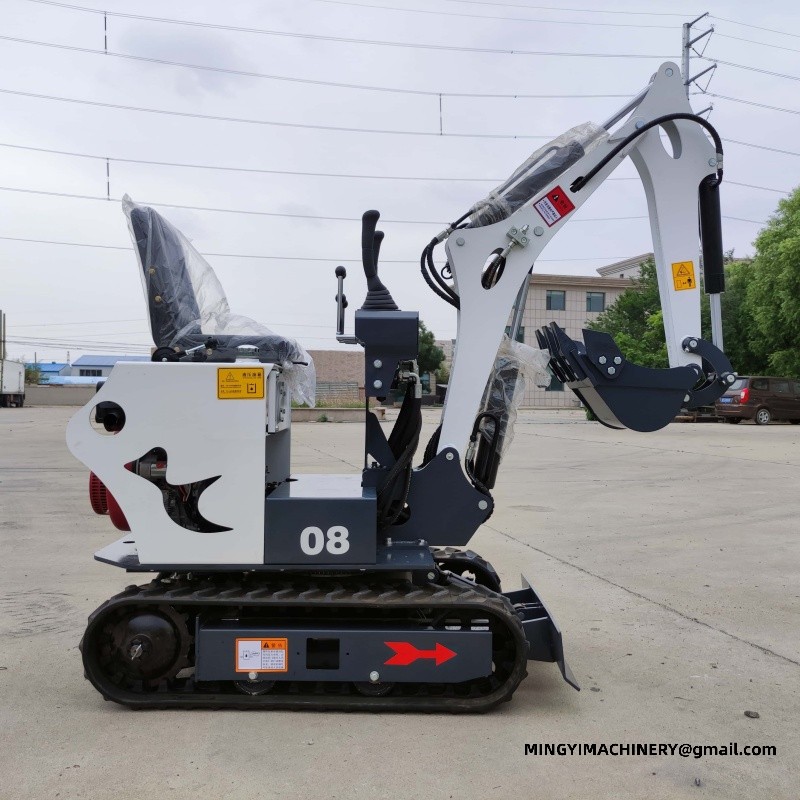
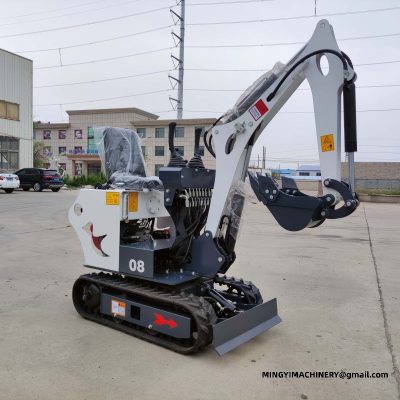
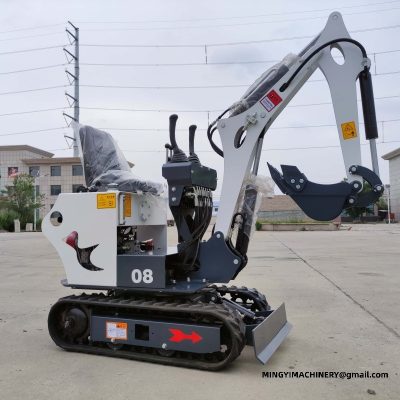
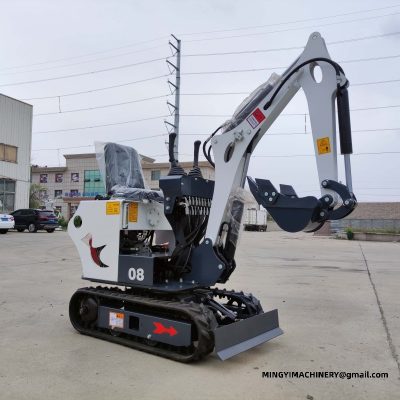
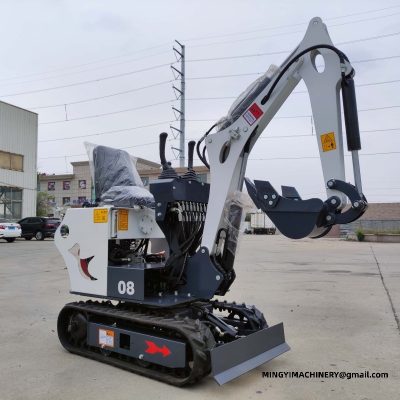
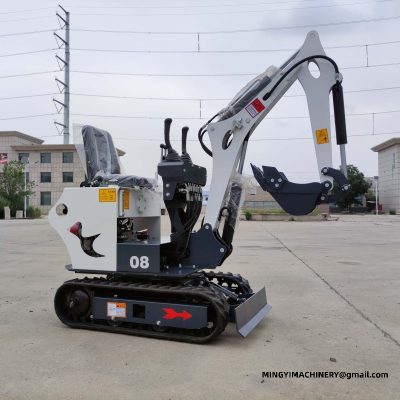
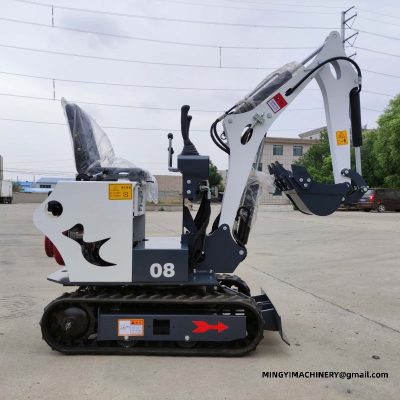
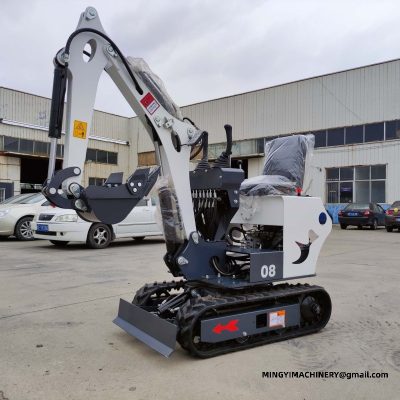
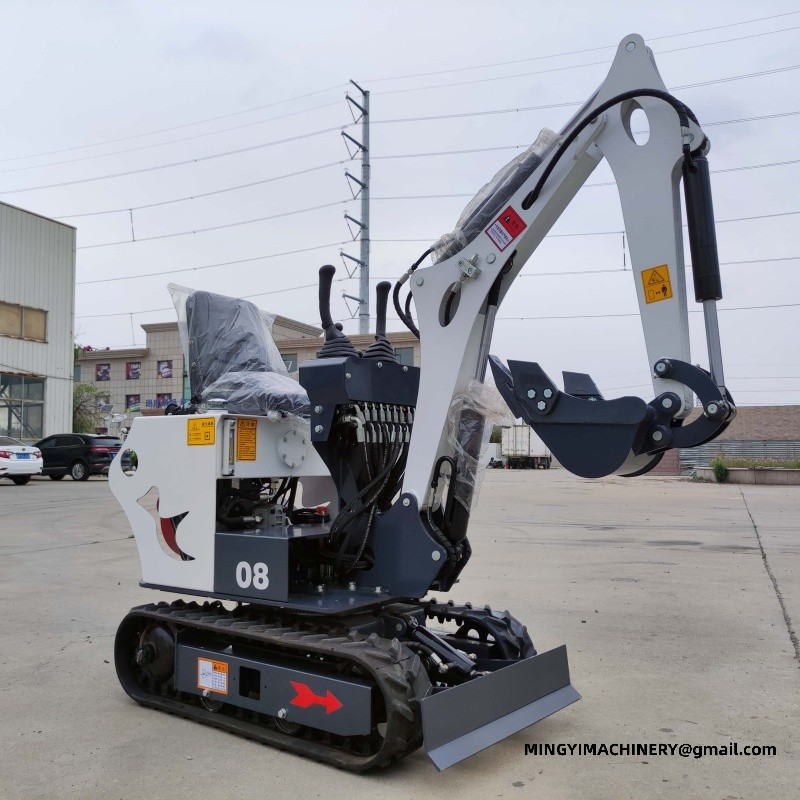
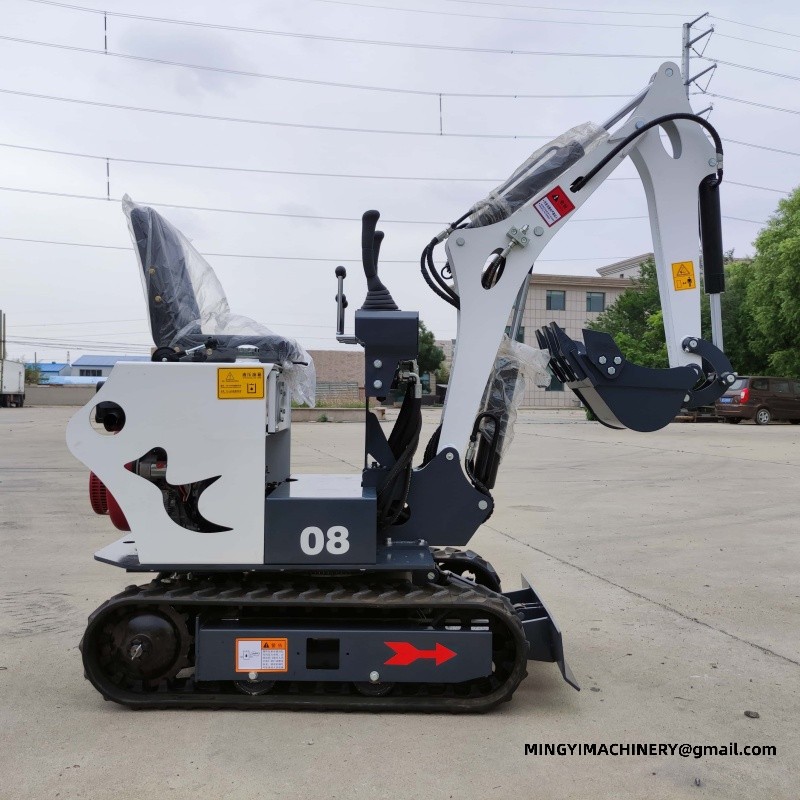
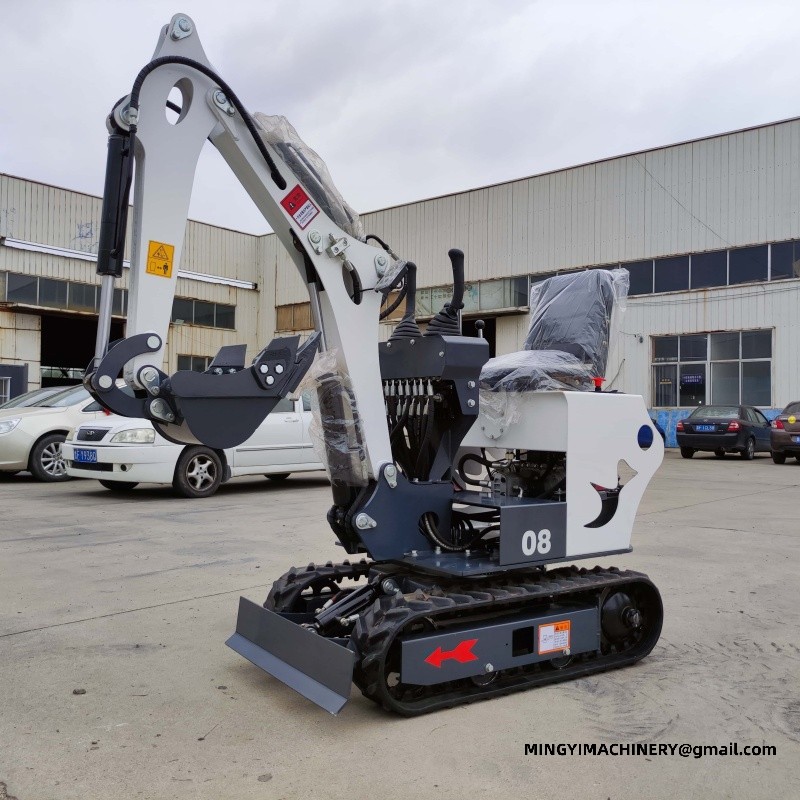
OEM production lets a dealer or rental fleet sell excavators as their own product, with their own branding, colour and specification, built by a manufacturer who already produces the base machine. MINGYI builds OEM mini excavators for distributors and fleets worldwide.
Machines can be produced to a house specification covering engine family, track type, operator station, attachment interface and branding.
What can be customised
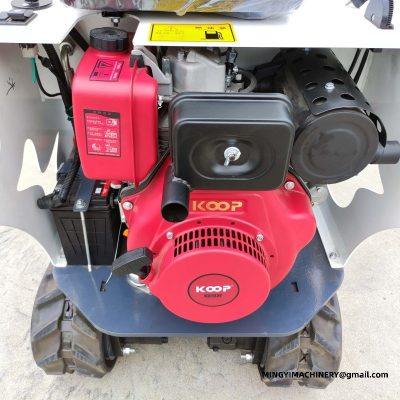
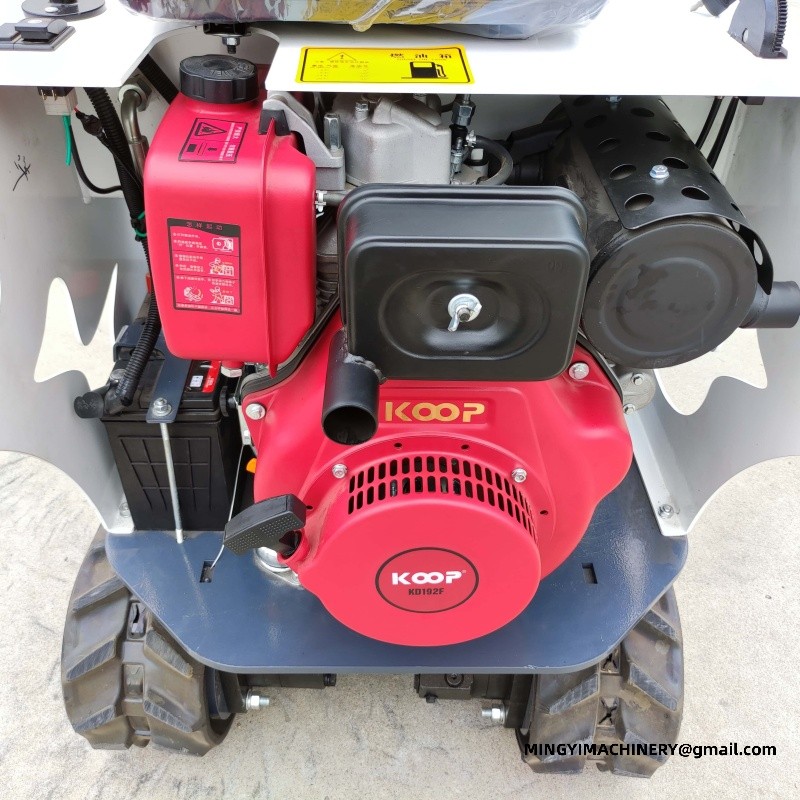
The build specification is the starting point. Buyers can set the engine family for local parts support, the track type for the ground conditions in their market, the operator station to suit the climate, and the attachment set to match the work their customers actually do.
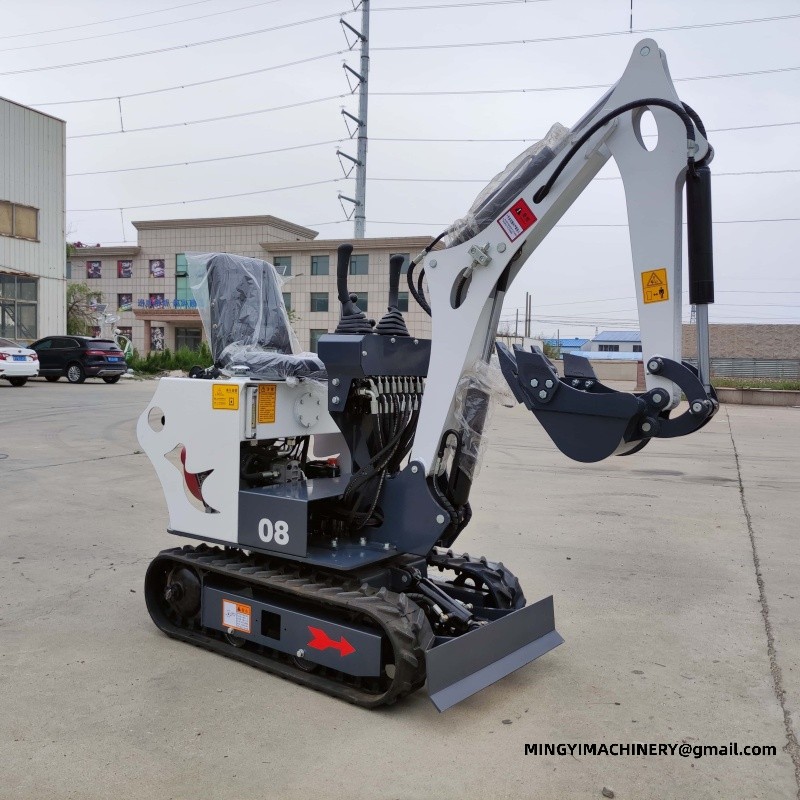
Branding extends to machine identification and labels so the machines can be presented as the dealer’s own product line alongside their existing range.
Why buyers choose OEM production
An OEM programme gives a distributor a product they control without building a factory. It also allows a rental fleet to standardise on one specification across many depots, so operators and fitters only have to learn one machine.
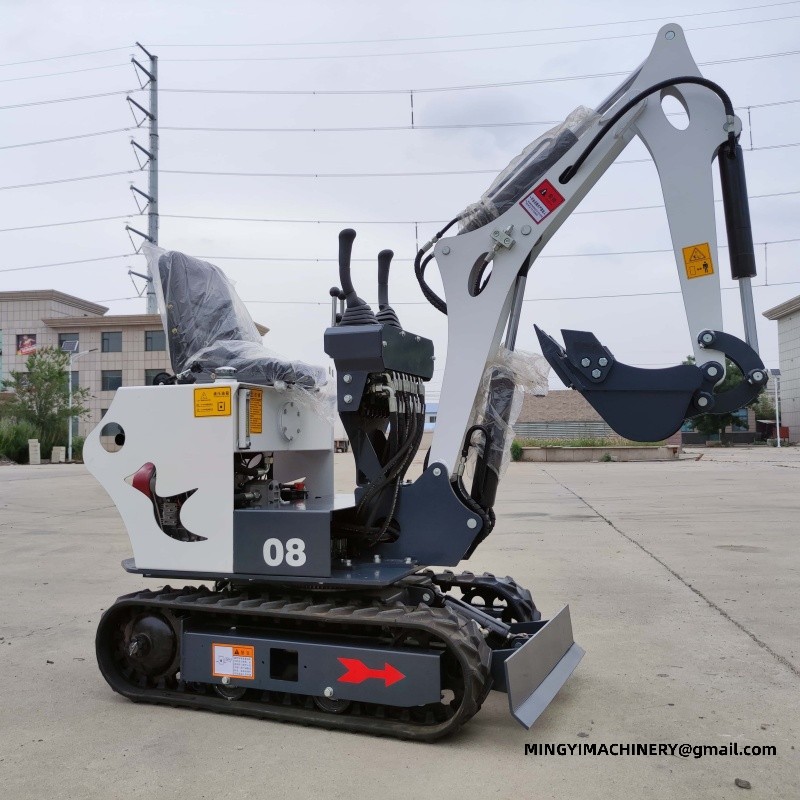
OEM options
• House specification built to order
• Engine family, track type and operator station selection
• Attachment set matched to the target market
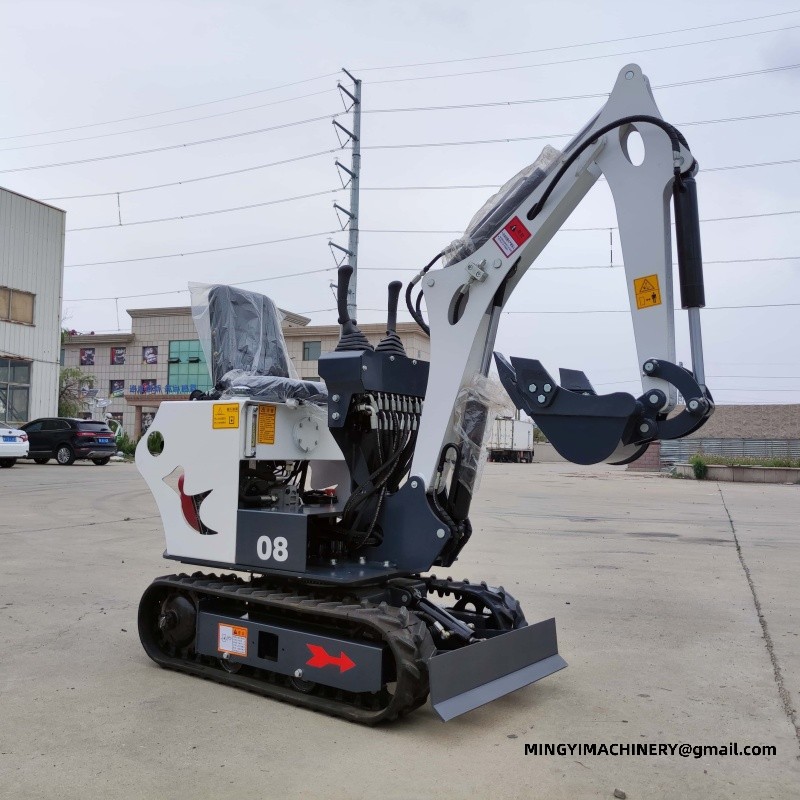
• Machine branding and identification
• Production quantities to suit dealer or fleet scale
Tell us the market you sell into, the specification you want and the quantities you plan and we will discuss an OEM programme.
Parts, service and support for mini excavator OEM Support after delivery is a parts question. Wearing items for this class of machine - filters, belts, track components, bucket teeth and pins - are the items a buyer should plan to hold before the first service interval. Remote support is handled by video. The unit in daily use fault can often be diagnosed on a walk-around call with the panel open, which is faster than waiting for a visit and avoids shipping a part that is not needed. Road and paving work for mini excavator OEM Road repair generates short, interrupted jobs - a patch, a drainage connection, a kerb line. A machine of this size is economical here because it travels on a small trailer and starts working minutes after arriving. Breaking out a failed slab and backfilling the same hole in one visit is normal work for the equipment on site. The breaker and the bucket come off the same coupler, so the road is reopened the same day. Track choice for mini excavator OEM Undercarriage selection is a ground question, not a preference question. The machine itself running on finished paving needs rubber; the same machine on demolition rubble or rock wears rubber quickly, so steel with rubber blocks becomes the better answer over a full season. Track type changes what the machine can cross and what it leaves behind. Buyers specify rubber for lawns, driveways and municipal work, and steel with rubber blocks for sites where sharp material would cut a rubber belt in a week. What owners should plan for beyond the mini excavator OEM Purchase decision is the visible part of the effort. Fuel, filters, tracks or tyres, the operator and the transport between sites are the items that decide what the model in question actually demands over a few seasons, and they are worth listing before the order. The useful comparison is demand per working hour, not demand per machine. The machine in that duty that works more hours a year spreads its standing takes over more output, which is why utilisation usually matters more than the invoice figure. Orchard, vineyard and farm use of mini excavator OEM Orchard and vineyard work is carried out between rows. The unit on the job with a narrow chassis and a swing boom works down the row without damaging the trees, which is the reason a full-size machine is not used at all. Ditching, fertilising and drainage on farmland suit a machine built for the work because the work is spread over a large area in short bursts. The machine travels behind a pickup and works where it stops. Boom configuration for the equipment in service A swing boom lets the machine dig parallel to its tracks without repositioning, which is what makes trenching beside a wall or a fence practical. On this class of machine this is often the option that decides whether a job is possible at all. Detachable boom sections are used where transport length matters. The unit in daily use that has to travel on a standard trailer can be built so the arm comes off for the road and goes back on at the site. Noise, dust and working near occupied buildings Work near housing or occupied premises brings constraints that open sites do not. Start times, exhaust condition and how often a machine of this size needs to reverse are the practical limits that neighbours notice. Enclosure and machine condition both reduce noise. The equipment on site with intact panels, sound mounts and a maintained exhaust is measurably quieter than the same machine with loose guards, and the difference matters on restricted sites. Hydraulic circuits on the machine itself Auxiliary hydraulic lines are what let a machine drive a tool rather than only a bucket. The model in question specified with the right circuits and flow runs a breaker or an auger without an add-on power pack bolted to the frame. Flow and pressure are matched to the tool, not to the machine size. Asking for the attachment list first means the machine in that duty leaves the factory with circuits that suit the heaviest tool the buyer intends to run. Running the unit on the job in a rental fleet Rental fleets buy for utilisation, not for a single job. A machine built for the work with a quick coupler and a common attachment standard is hired more often because it suits more of the calls that come in. Fleet buyers also weigh transport. The equipment in service that a customer can tow on a normal licence and a standard trailer is a hire that does not need a delivery truck, which changes how often it goes out. Daily checks and maintenance on this class of machine Track tension is the item most often neglected. The unit in daily use run with slack tracks wears the undercarriage and can throw a track on a turn; run too tight, the same components wear from the other direction. Greasing is the second item. The slew ring, the boom and arm pins and the bucket linkage on a machine of this size take grease daily in dusty work, and the intervals shorten further when the machine is used in water or mud. Working on slopes and uneven ground with the equipment on site Slope work is a stability question before it is a traction question. Knowing the gradient the machine itself is rated for, and working across rather than straight up where the ground allows, removes most of the risk. Planning the direction of travel helps. Working so that the model in question is stable under load and not required to turn on a slope is a decision made before the job starts, not a correction made during it. OEM and fleet customisation of the machine in that duty Distributors and rental fleets usually need the machine to look like theirs. Paint, decals, seat colour and attachment branding can be specified on the unit on the job at build time rather than applied after import. Customisation also covers the specification sheet. A fleet buyer may want every machine built for the work delivered with the same coupler, the same engine and the same tool kit so training and parts stock stay simple. Hiring versus owning the equipment in service Availability is part of the decision. Owning this class of machine means it is there on the day the ground is ready; hiring means competing for the same machine at the same time as everyone else in the season. Ownership brings obligations that hiring does not. Storage, servicing, insurance and an operator are the items to set against the hire rate before deciding which way the unit in daily use should be supplied. Specification data for a machine of this size Where the equipment on site is being specified for a job list, the table below gives the factory figures that matter most: what the machine weighs, how deep and how far it works, and what it measures on a trailer. These are the reference figures for the machine itself. MINGYI confirms the final build sheet, including engine and attachment choices, against the destination and the job list before production. Interior demolition is an access and a weight question. The model in question that fits through a doorway and works on a suspended floor does jobs that would otherwise be done by hand or by a larger machine that cannot enter. Breaking out a floor slab, a wall footing or a concrete step is routine work for the machine in that duty with a breaker. The machine is small enough to work inside and heavy enough to run the tool at a practical rate.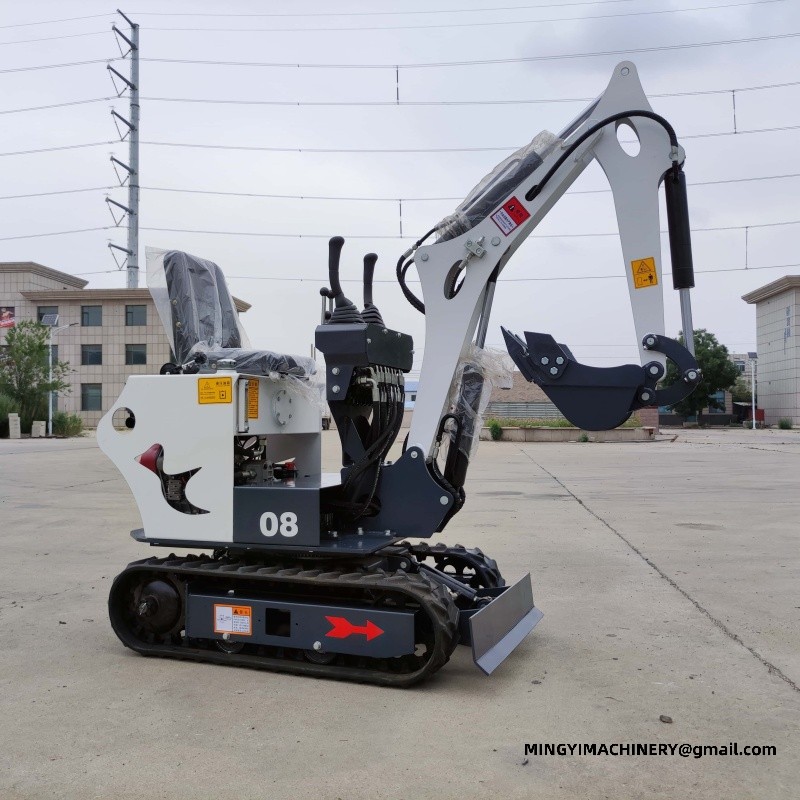
Reference specification — mini excavator range 12W 20-1W 20-1WL 25L Operating weight 1200 kg (2645.55 lb) 1800 kg (3968.32 lb) 1900 kg (4188.78 lb) 2200 kg (4850.17 lb) Transport size (L×W×H) 2200 × 930 × 2250 mm 2550 × 1100 × 2200 mm 2550 × 1100 × 2200 mm 3000 × 1300 × 2700 mm Max digging depth 1630 mm (64.17 in) 1800 mm (70.87 in) 1800 mm (70.87 in) 2300 mm (90.55 in) Max digging height 2750 mm (108.27 in) 2820 mm (111.02 in) 2820 mm (111.02 in) 3100 mm (122.05 in) Max dumping height 1960 mm (77.17 in) 2050 mm (80.71 in) 2050 mm (80.71 in) 2050 mm (80.71 in) Max digging radius 2900 mm (114.17 in) 3050 mm (120.08 in) 3050 mm (120.08 in) 3900 mm (153.54 in) Max digging distance 2100 mm (82.68 in) 2300 mm (90.55 in) 2300 mm (90.55 in) 3100 mm (125.05 in) Minimum turning radius 1300 mm (51.18 in) 1450 mm (57.09 in) 1450 mm (57.09 in) 1800 mm (70.87 in) Travel speed 3 km/h (1.86 mph) 5 km/h (3.11 mph) 5 km/h (3.11 mph) 7 km/h (4.35 mph) Gradeability 30° 30° 30° 30° Fuel consumption 1-1.3 L/h (0.264—0.343 gal) 2-3 L/h (0.528—0.793 gal) 2-3 L/h (0.528—0.793 gal) 2-3 L/h (0.528—0.793 gal) Fuel tank capacity 10 L (2.64 gal) 16 L (4.23 gal) 16 L (4.23 gal) 16 L (4.23 gal) Hydraulic oil tank 16 L (4.23 gal) 18 L (4.76 gal) 18 L (4.76 gal) 18 L (4.76 gal) Dozer blade lift height 180 mm (7.09 in) 180 mm (7.09 in) 180 mm (7.09 in) 230 mm (9.06 in) Dozer blade drop depth 210 mm (8.27 in) 210 mm (8.27 in) 210 mm (8.27 in) 280 mm (11.02 in)
Q. Do you offer OEM mini excavators?
A. Yes. MINGYI builds compact excavators to buyer specification for OEM orders, including colour, decals and the attachment set, on the 08, 12 and 18 models. The machine is produced to the order rather than taken from stock.
Q. What can be customised on an OEM order?
A. The paint and decals for the buyer's brand, the engine family, the track type and the tooling list. Because the machine is built to order, the specification follows the buyer's market rather than a fixed factory standard.
Q. What is the minimum OEM order?
A. OEM builds are normally organised around a container, since several machines are produced and loaded together. Send the sizes and the specification you want and MINGYI will specification the order on that basis.
Handover and getting familiar with the unit on the job
Familiarisation is not the same as reading the manual. Sitting on a machine built for the work, working through the controls at low speed and learning where the machine balances takes an hour, and that hour is what keeps the first week uneventful.
Later additions and retrofits on the equipment in service
Most additions are easier to plan than to add. Hydraulic services, mounting brackets and electrical capacity on this class of machine are build items, and deciding them at the specification stage is far easier than doing it later.
A second operator for the unit in daily use
Training is simpler than repair. An hour spent with a new operator on a machine of this size, covering the limits and the awkward cases, is the least lengthy hour in the whole ownership.
E-mail : sales@mingycn.com
LINE ( ID ): mingyicn
Related pages
mini excavator wholesale · mini excavator supply for importers · emission-compliant mini excavator · PRODUCTS









