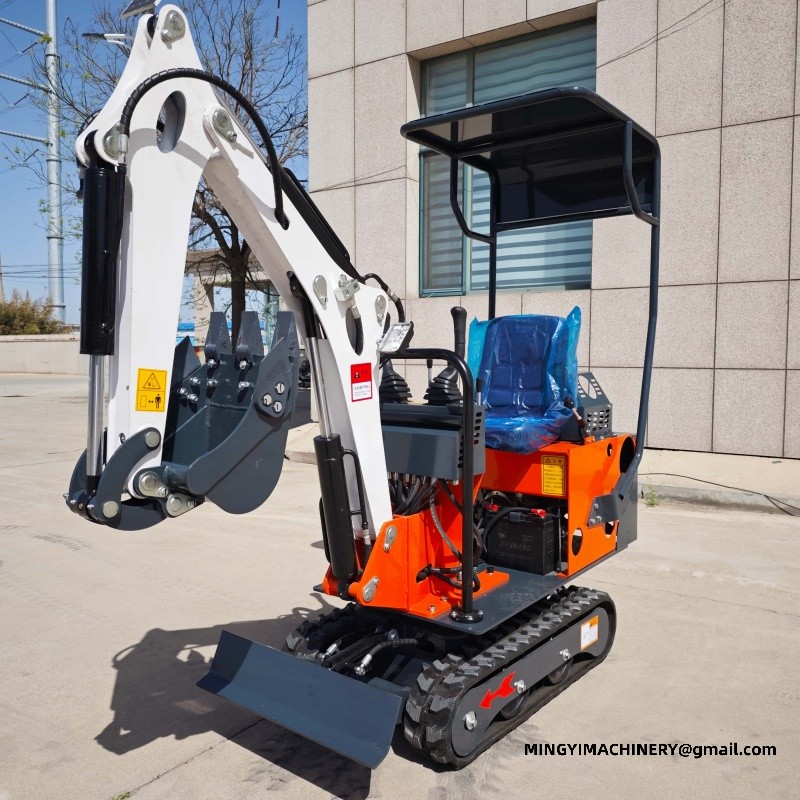
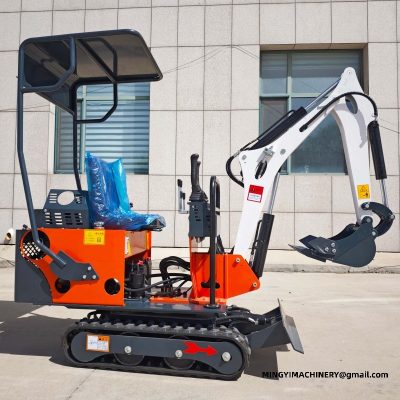
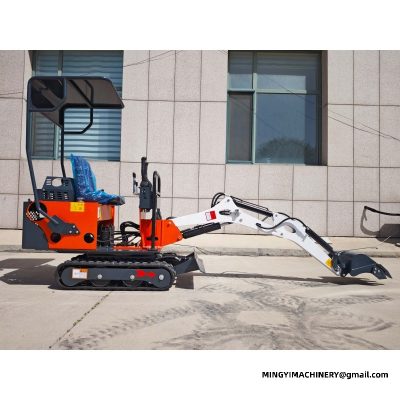
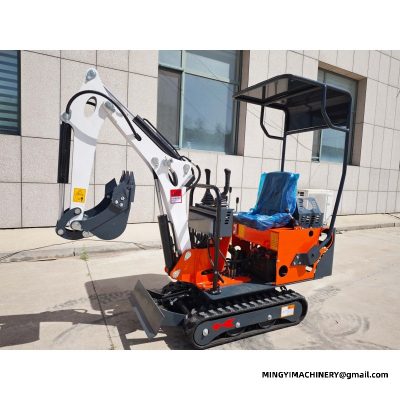
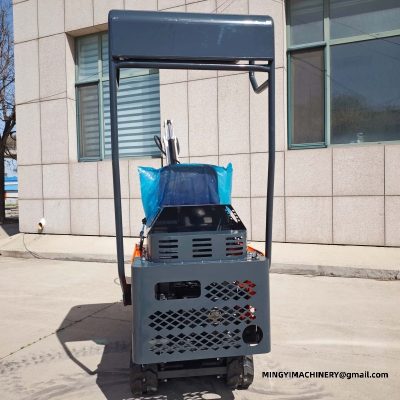
A effort-effective machine is one that keeps earning. That means enough capability to take on the work, enough reliability to keep working through the season, and running demands low enough that the allowance on each job holds up.
MINGYI mini excavators are specified against that definition rather than against the simplest possible invoice.
Three ways a compact excavator pays for itself
First, by replacing manual labour on work that would otherwise be dug by hand. Second, by replacing machine hire: a machine used regularly enough quickly takes less to own than to hire. Third, by taking on work the contractor would otherwise decline because the access is too tight.
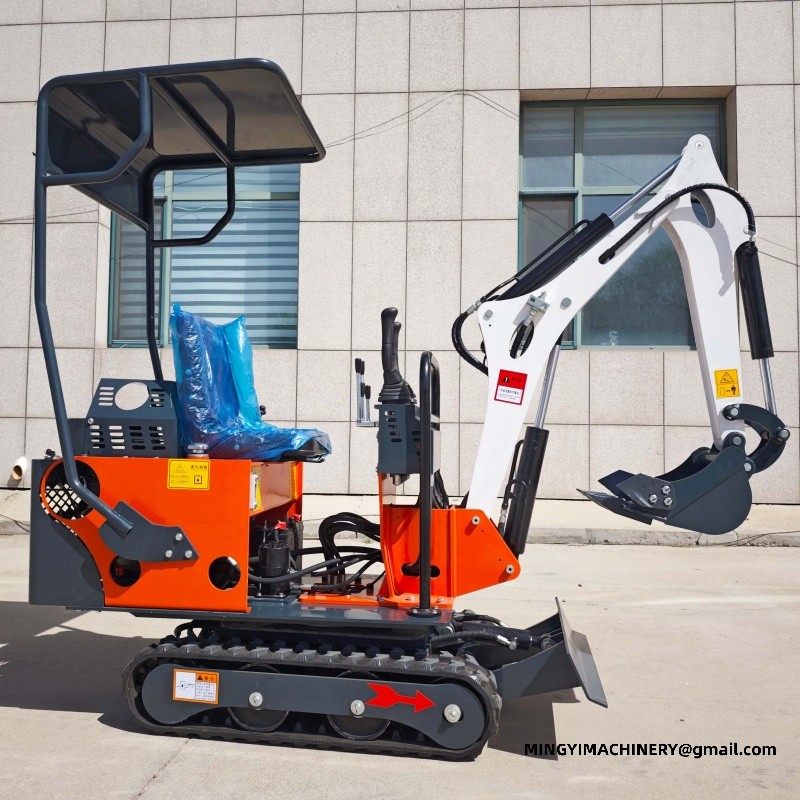
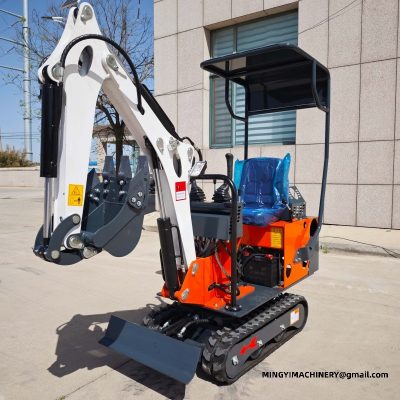
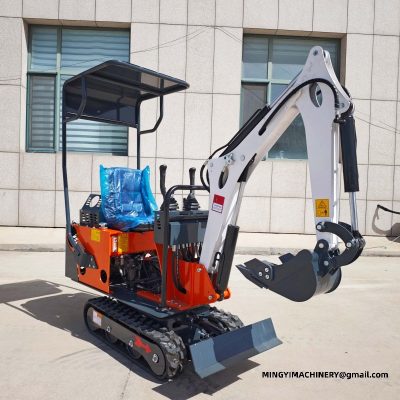
The third point is often the most valuable. A machine that fits through a rear access lets a contractor specification for domestic and municipal work that larger plant cannot service.
Holding the running effort down
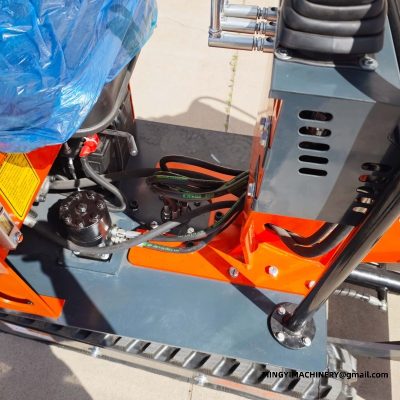
Diesel power, matched hydraulic components, rubber tracks where surfaces must be protected and a common quick-change attachment interface all reduce the demand per working hour. Specifying the engine family to match an existing fleet also reduces the parts stock a contractor has to carry.
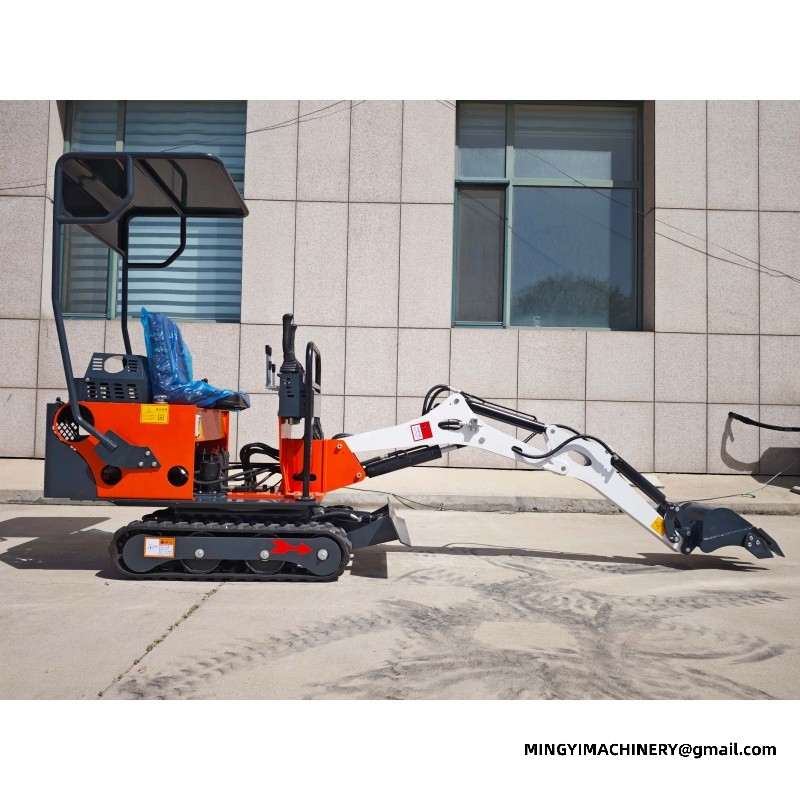
Effort-effectiveness drivers
• Replacing hand digging on confined work
• Reducing reliance on hired plant
• Winning work that larger machines cannot access
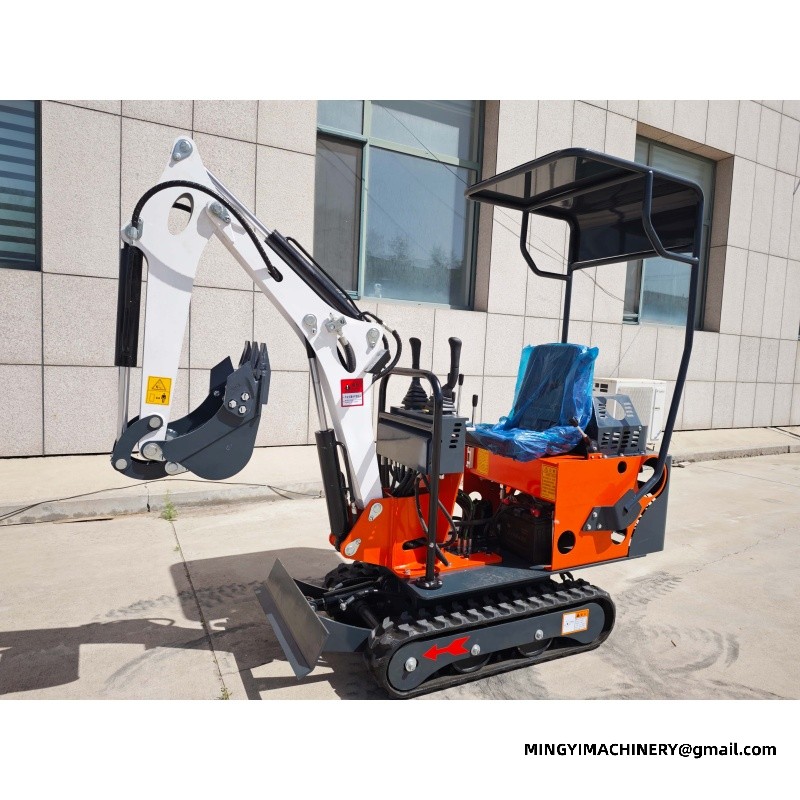
• Low fuel consumption from matched diesel engines
• Shared attachments across the machine range
Tell us how the machine will be used and how often, and we will show the specification with the strongest return.
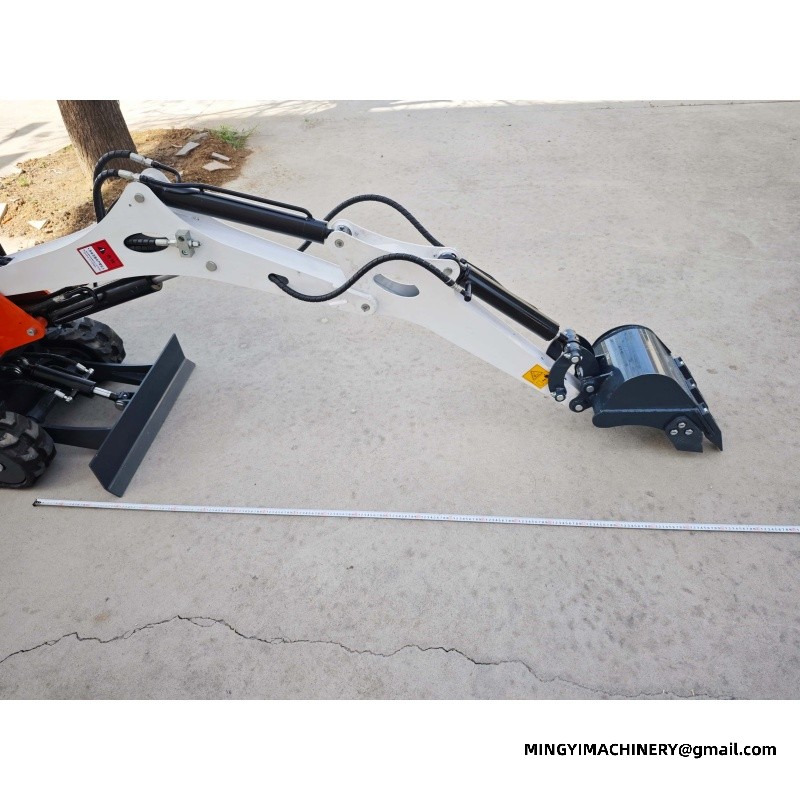
Lifting and material handling with a mini excavator for everyday site work Stability changes with reach. A load this class of machine handles close in becomes a different proposition at full extension, so the working radius belongs in the plan before the lift rather than during it. Ground condition under the machine is part of every lift. Soft or uneven support is the common factor in handling incidents, and checking it takes less time than recovering the unit in daily use that has settled. Hiring versus owning a mini excavator for everyday site work Availability is part of the decision. Owning a machine of this size means it is there on the day the ground is ready; hiring means competing for the same machine at the same time as everyone else in the season. Ownership brings obligations that hiring does not. Storage, servicing, insurance and an operator are the items to set against the hire rate before deciding which way the equipment on site should be supplied. Attachments that turn mini excavator for everyday site work into several machines The base machine is a carrier; the tool on the end of the arm decides the task. The machine itself fitted with a toothed bucket digs, and the same machine with a breaker, an auger or a grab does work that would otherwise need a second unit on site. Most of the daily variety on the model in question comes from the attachment rack rather than from the machine itself. Bucket, breaker, auger, ripper, rake and grab cover the large majority of the work a contractor will see. Landscaping and ground care with mini excavator for everyday site work Grass cutting heads, rakes and tillers extend the machine in that duty into ground care. The same carrier that digs a border in spring can cut and clear the same area later in the season. On soft landscape work the surface is the constraint. The unit on the job on rubber tracks crosses turf without stripping it, which is why the same jobs are not given to a wheeled machine. Quick coupler practice on mini excavator for everyday site work A quick coupler is the single option that changes how a machine is used day to day. Fitted to a machine built for the work, it turns an attachment change from a two-person workshop job into a task the operator does alone in minutes. For a fleet that shares attachments between machines, a common coupler standard matters more than the coupler brand. The equipment in service that picks up the same tools as the larger machines keeps the rack usable across the yard. Working on slopes and uneven ground with this class of machine Slope work is a stability question before it is a traction question. Knowing the gradient the unit in daily use is rated for, and working across rather than straight up where the ground allows, removes most of the risk. Ground that looks level often is not. A machine of this size crossing a filled trench, a soft edge or a hidden void behaves differently from one on undisturbed ground, and those are the places worth walking before driving. Specifying the equipment on site against a job list The practical way to specify is to write the job list first: the narrowest access, the deepest trench, the heaviest tool and the surfaces the machine must cross. The machine itself is then matched to those four numbers. Buyers who skip this step either over-buy or under-buy. The model in question specified only from machine size tends to arrive without the coupler, the circuits or the track type the work actually needs. Trailering and moving the machine in that duty Transport weight and width decide whether a machine needs a specialist haulier. The unit on the job sized to travel on a standard plant trailer behind a suitable vehicle moves with the crew rather than on a scheduled low loader. Detachable components reduce transport length. A machine built for the work built with a removable arm section or a folding step fits a shorter trailer and may avoid an oversize movement permit. Trenching work with the equipment in service Service trenches are the most common reason this class of machine is hired. Water, sewage, cable and gas runs are narrow, shallow and often close to existing services, which is exactly the work a full-size machine cannot do safely. Depth control matters more on service work than speed. The unit in daily use working beside live services is chosen because it can be placed precisely and stopped instantly, which is what the job actually requires. Daily checks and maintenance on a machine of this size Track tension is the item most often neglected. The equipment on site run with slack tracks wears the undercarriage and can throw a track on a turn; run too tight, the same components wear from the other direction. Greasing is the second item. The slew ring, the boom and arm pins and the bucket linkage on the machine itself take grease daily in dusty work, and the intervals shorten further when the machine is used in water or mud. Operator technique for the model in question The second habit is tool discipline. Running the machine in that duty with the right bucket width for the trench means less spoil, less reinstatement and a cleaner job than a wide bucket and a lot of trimming. Stability is the third. The unit on the job working across the tracks rather than over the corners keeps the machine steady and the undercarriage loaded evenly, which shows up as track life at the end of the season. Getting a machine built for the work through a narrow gap The first question on most job lists is whether the machine can reach the work at all. The equipment in service is chosen against the narrowest point on the route - a garden gate, a doorway, a gap between two walls - because a machine that arrives and then cannot pass loses a day, not an hour. Access decides the machine before output does. With this class of machine the limiting dimension is usually the widest point on the way in, so measuring the gate, the corridor and the turning space first saves a wasted delivery and a second visit. Engine options behind the unit in daily use Two buyers can order the same the equipment on site and receive different engines. The decision is rarely about peak power; it is about which parts counter is closest to the site and which engine the local mechanic already knows. Engine choice is also an emissions and documentation question for some markets. Listing the available units with a machine of this size enquiry lets the factory confirm what can be supplied and documented for the destination country. Specification data for the machine itself The figures below are the factory figures for the models most often matched to the model in question. They are the numbers to check against the site: the depth the work needs, the reach from one position, and the width of the narrowest point on the route in. Figures are factory figures and are confirmed on the build sheet for the machine in that duty. Where a job sits between two models, the larger machine usually takes less time than the smaller one spends on rework. Purchase decision is the visible part of the effort. Fuel, filters, tracks or tyres, the operator and the transport between sites are the items that decide what the unit on the job actually demands over a few seasons, and they are worth listing before the order. The useful comparison is demand per working hour, not demand per machine. A machine built for the work that works more hours a year spreads its standing takes over more output, which is why utilisation usually matters more than the invoice figure.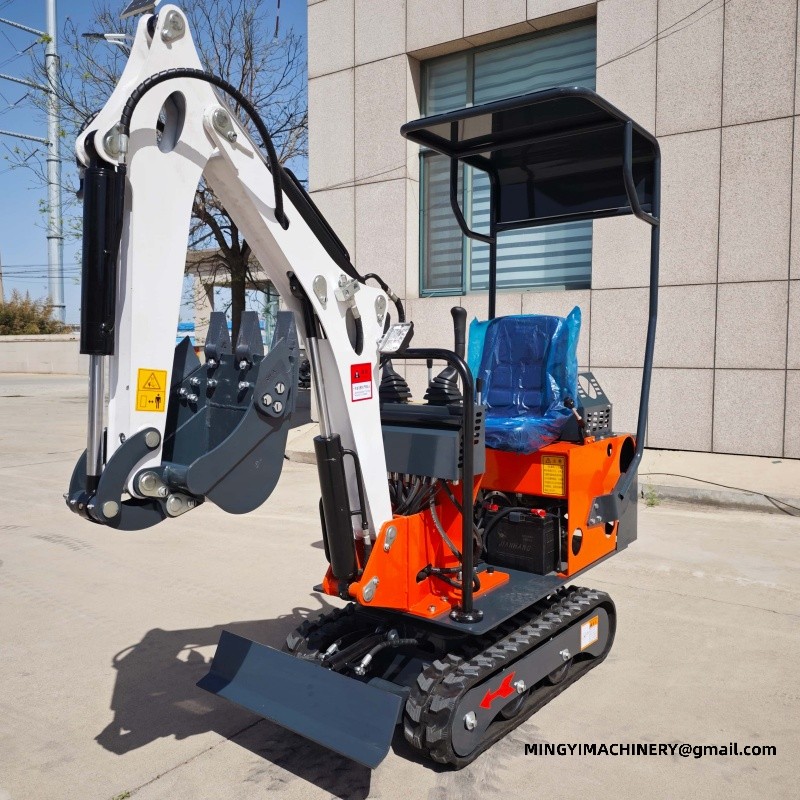
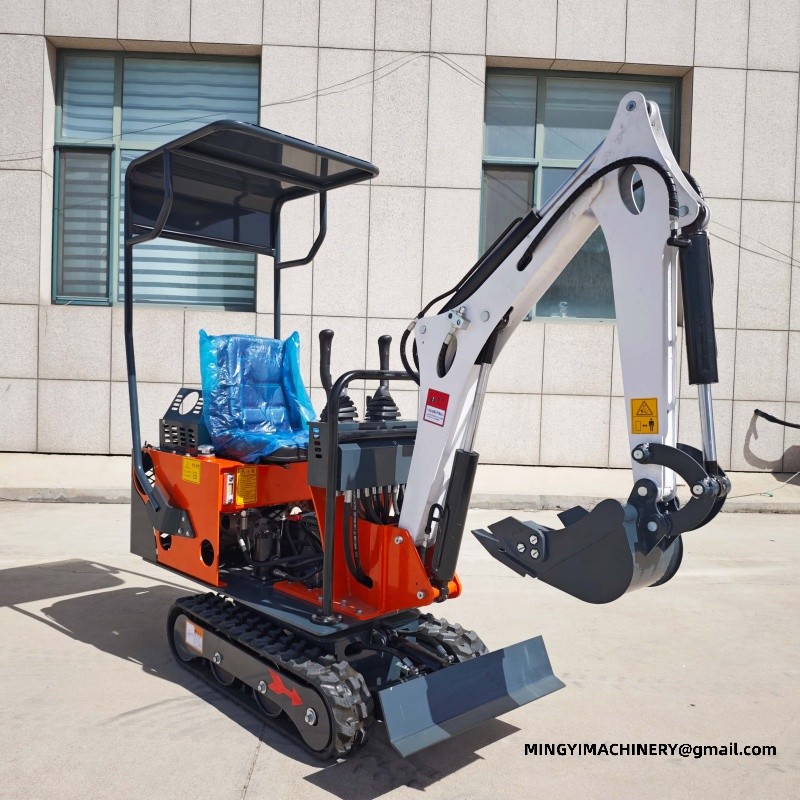
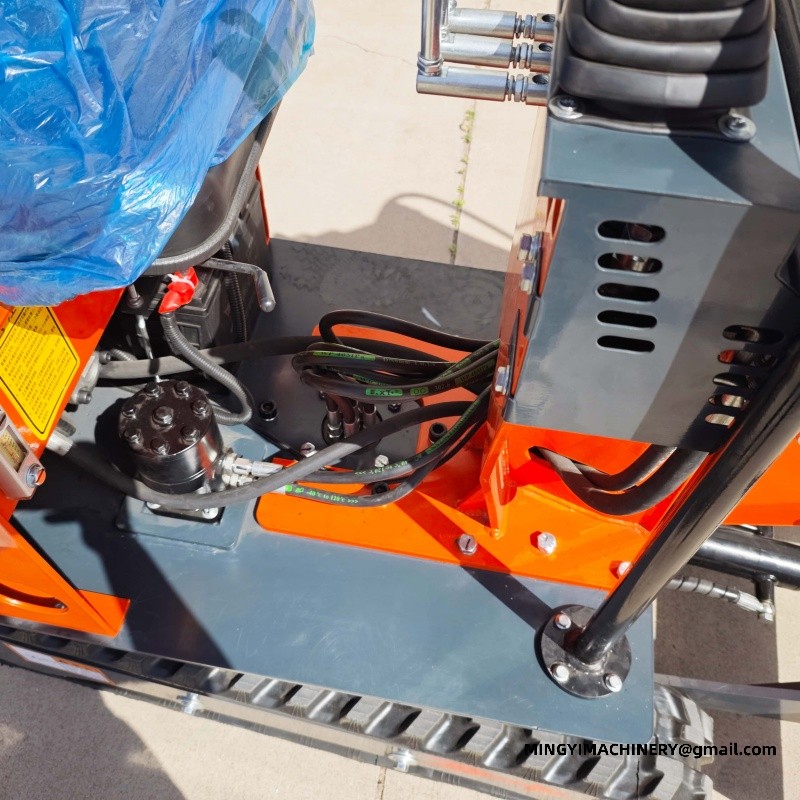
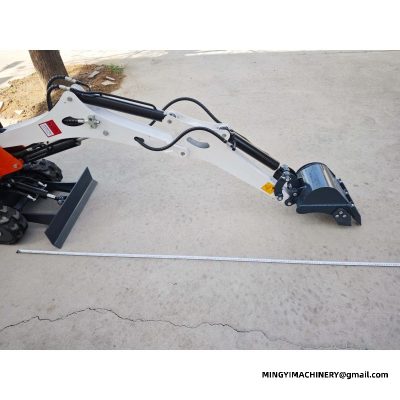
Reference specification — mini excavator range 20-1W 20-3W 09L 15L Operating weight 1800 kg (3968.32 lb) 1900 kg (4188.78 lb) 1100 kg (2425.08 lb) 1400 kg (3086.47 lb) Transport size (L×W×H) 2550 × 1100 × 2200 mm 2550 × 1100 × 2200 mm 2300 × 720 × 1870 mm 2200 × 930 × 2250 mm Max digging depth 1800 mm (70.87 in) 1800 mm (70.87 in) 1400 mm (55.12 in) 1700 mm (66.93 in) Max digging height 2820 mm (111.02 in) 2820 mm (111.02 in) 2800 mm (110.24 in) 2750 mm (108.27 in) Max dumping height 2050 mm (80.71 in) 2050 mm (80.71 in) 1880 mm (74.02 in) 1960 mm (77.17 in) Max digging radius 3050 mm (120.08 in) 3050 mm (120.08 in) 2490 mm (98.03 in) 2900 mm (114.17 in) Max digging distance 2300 mm (90.55 in) 2300 mm (90.55 in) 2000 mm (78.74 in) 2300 mm (90.55 in) Minimum turning radius 1450 mm (57.09 in) 1450 mm (57.09 in) 1400 mm (55.12 in) 1450 mm (57.09 in) Travel speed 5 km/h (3.11 mph) 5 km/h (3.11 mph) 3 km/h (1.86 mph) 3 km/h (1.86 mph) Gradeability 30° 30° 30° 30° Fuel consumption 2-3 L/h (0.528—0.793 gal) 2-3 L/h (0.528—0.793 gal) 1-1.3 L/h (0.264—0.343 gal) 1-1.3 L/h (0.264—0.343 gal) Fuel tank capacity 16 L (4.23 gal) 16 L (4.23 gal) 8 L (2.11 gal) 10 L (2.64 gal) Hydraulic oil tank 18 L (4.76 gal) 18 L (4.76 gal) 16 L (4.23 gal) 16 L (4.23 gal) Dozer blade lift height 180 mm (7.09 in) 180 mm (7.09 in) 180 mm (7.09 in) 180 mm (7.09 in) Dozer blade drop depth 210 mm (8.27 in) 210 mm (8.27 in) 210 mm (8.27 in) 210 mm (8.27 in)
Q. What makes a mini excavator efficient?
A. It is the machine that does the work it was bought for, with low service effort and few idle attachments. MINGYI offers the 08, 12 and 18 models with a choice of engine families, so the buyer can line the machine up with the local service and parts situation.
Q. Is a simpler machine always more efficient?
A. No. A machine that is undersized for the work takes more passes and more hours, and one with an engine that cannot be serviced locally spends time waiting for parts. Efficientness is the total of purchase, service and downtime, not the purchase decision alone.
Q. How do I work out which option is simplest overall?
A. Estimate the hours the machine will run each month and the service intervals those hours imply, then compare that against the specification difference between the models. Send us the estimate and MINGYI will set out the options that fit it.
A second operator for the equipment in service
Training is simpler than repair. An hour spent with a new operator on this class of machine, covering the limits and the awkward cases, is the least lengthy hour in the whole ownership.
Keeping a service record for the unit in daily use
Patterns show up in the record before they show up in the machine. Rising oil consumption or a filter that keeps blocking on a machine of this size is obvious on paper long before it becomes a failure on site.
E-mail : sales@mingycn.com
LINE ( ID ): mingyicn
Related pages
mini excavator specification · mini excavator running guide · small tracked excavator · PRODUCTS









