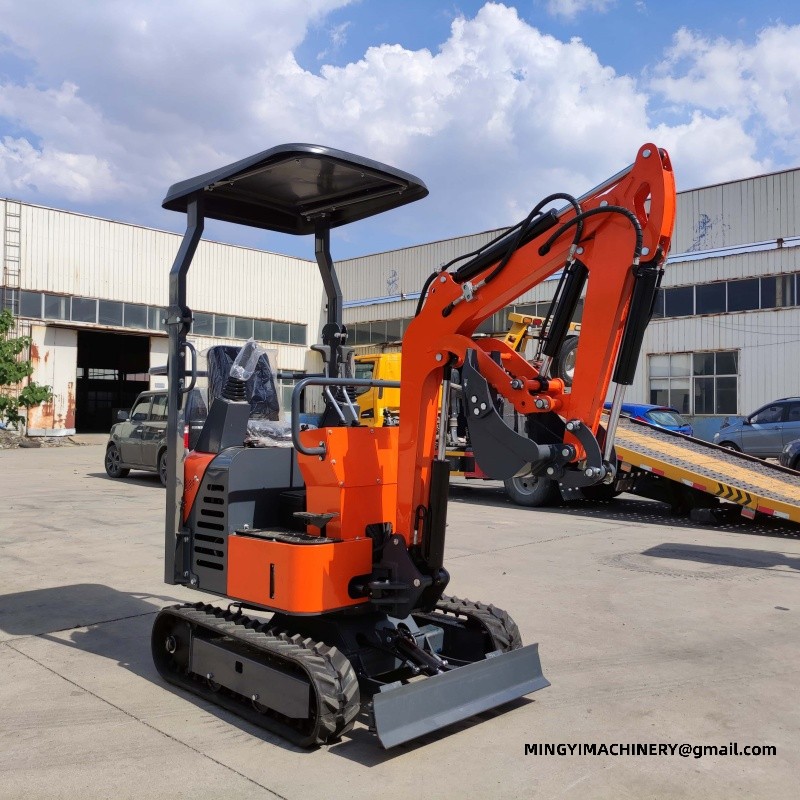
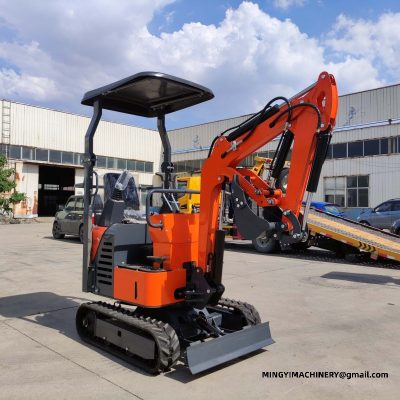
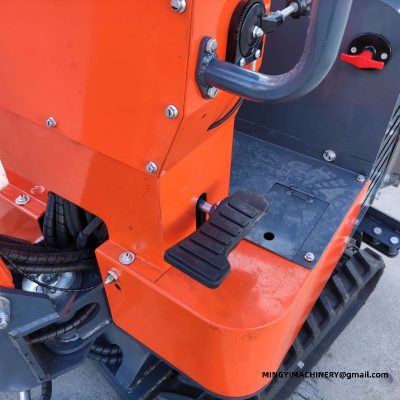
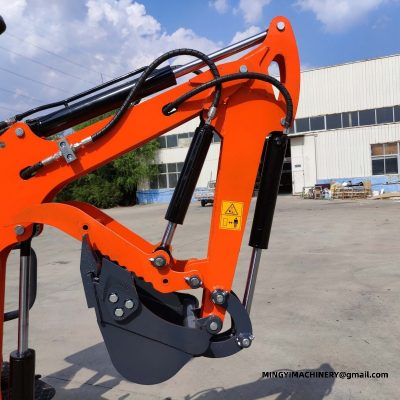
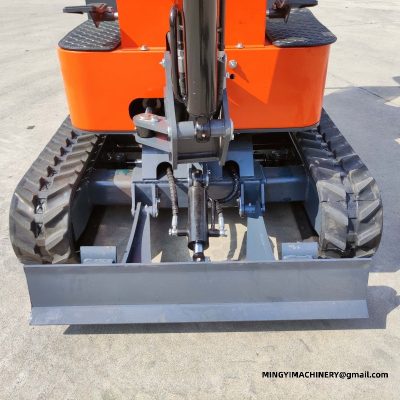
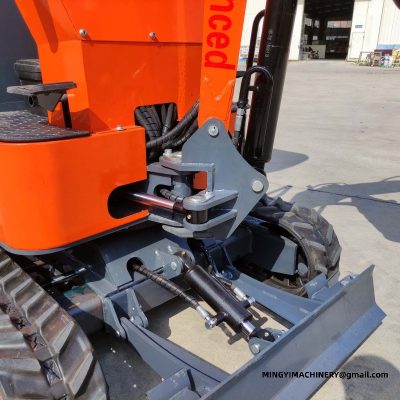
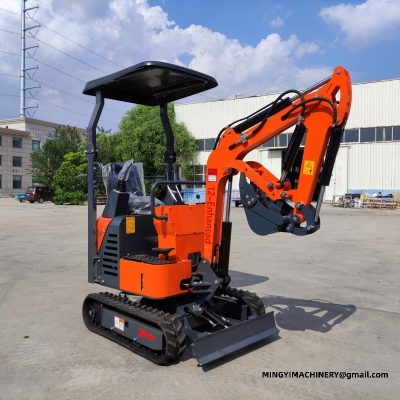
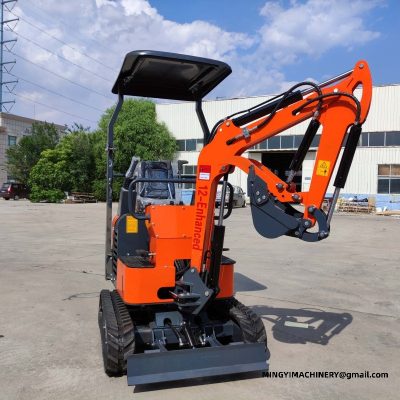
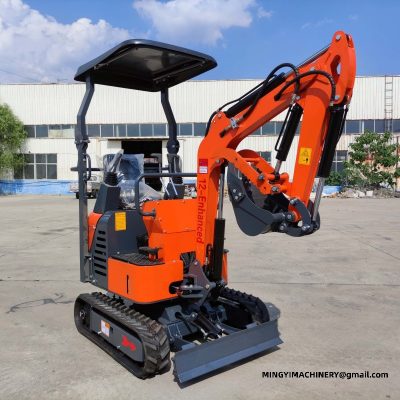
The one-tonne class is popular because it can be moved by one person with ordinary equipment. That advantage only holds if the trailer, the loading method and the tie-down points are chosen to suit the machine rather than assembled around it.
Transport and setup are usually the difference between a compact excavator earning money every day and one that sits in the yard. Planning the route, the trailer and the unloading point takes less time than solving the problem on site.
Choosing the trailer and the towing vehicle
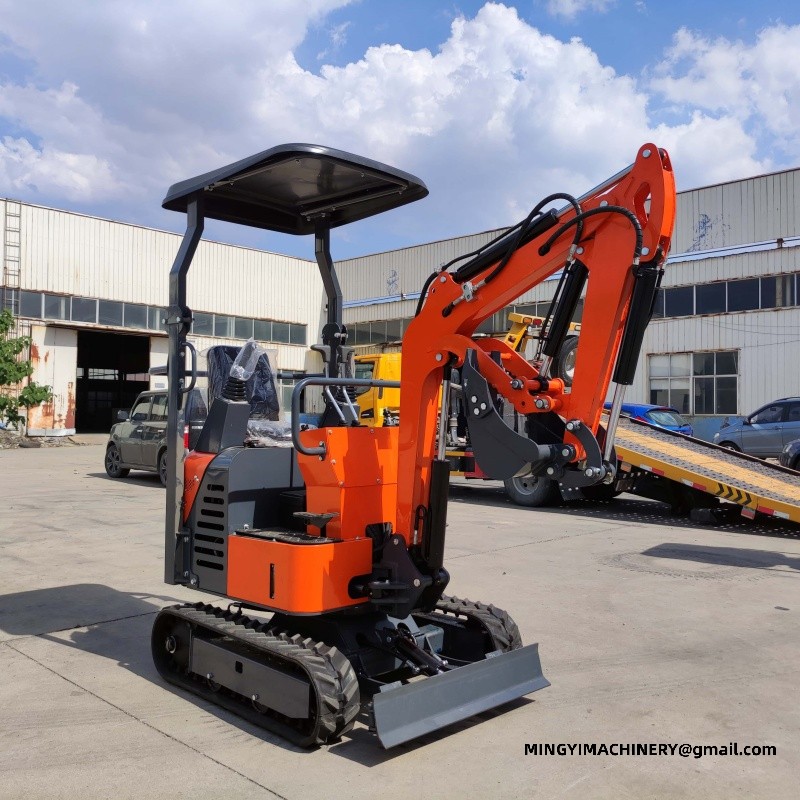
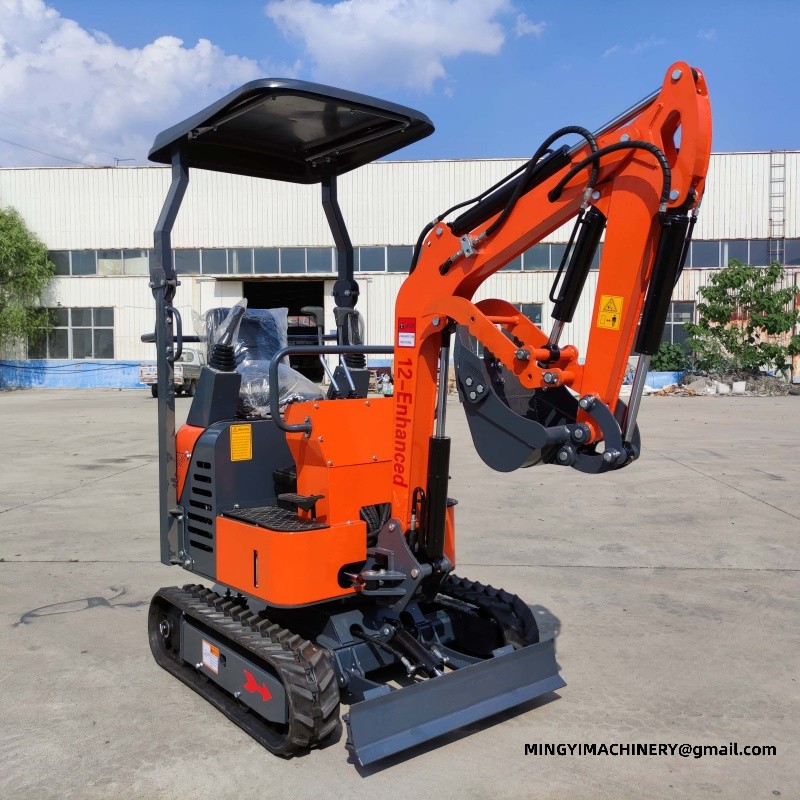
A 1 ton mini excavator travels on a small flatbed or plant trailer rather than a low-loader. What matters is the rated capacity of the trailer against the machine with its bucket fitted, and the towing vehicle rating against the combined load, because the trailer must stop as well as carry.
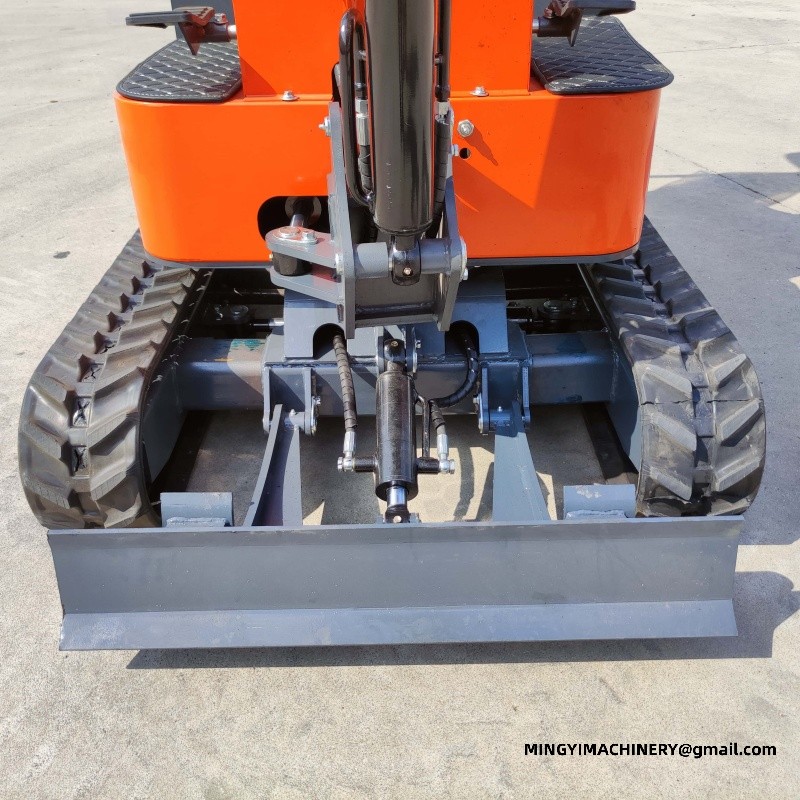
Track condition changes the loading plan. Rubber tracks roll onto a ramp easily and will not scar a paved surface; steel tracks with rubber blocks need a ramp with enough grip and a surface that can take the weight. Loading with the blade or dozer first keeps the machine level on the ramp.
Tie-down and safe travel
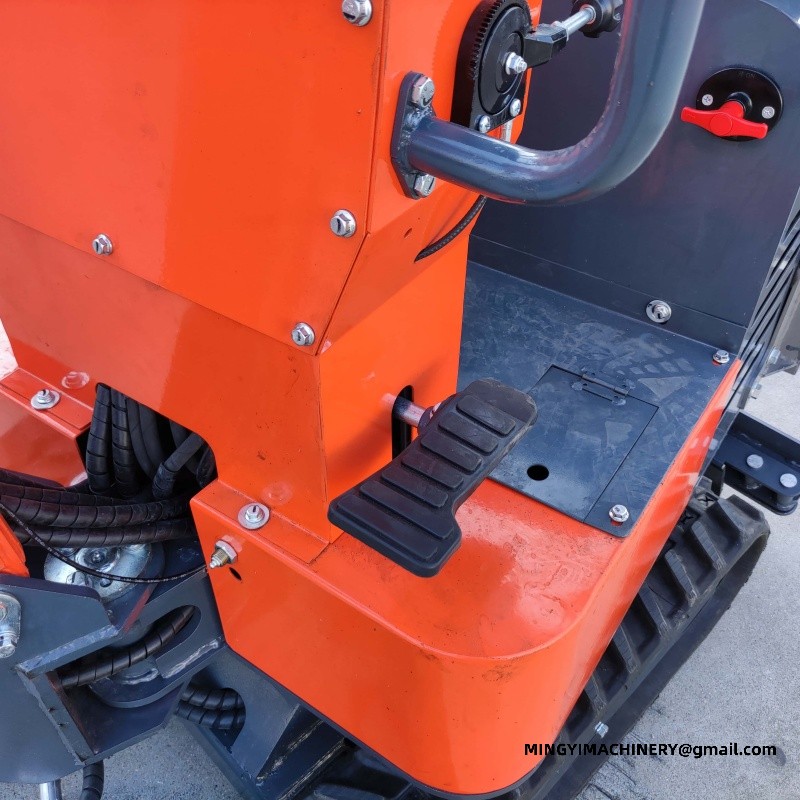
The machine should be tied down over the tracks or undercarriage, not over the boom alone, and the boom should be lowered and the bucket rested so the machine cannot shift. Chocks behind the tracks and a strap across the front stop movement in an emergency stop.
Load height and width decide the route. Checking bridges, low trees and narrow lanes before setting off is quicker than turning around on a country road. Many owners also lock the cab or canopy, remove loose tools and fold the antenna before travelling.
Unloading and first-day setup
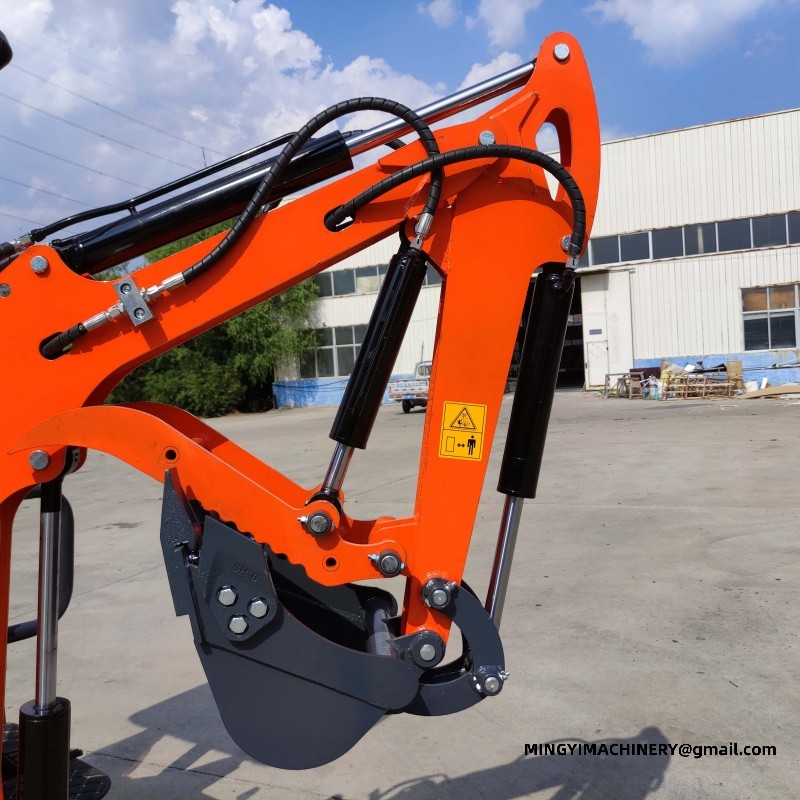
Unloading is the reverse of loading, at a spot that is level and firm enough to take the trailer and the machine. Once down, the checks before the first trench are simple: engine oil level, hydraulic oil level, coolant, air filter and the track tension, plus a walk around the machine for anything loosened in transit.
For daily use, the routine that keeps a one-tonne machine dependable is short: track tension checked weekly, grease points on the boom, arm and bucket pins, hydraulic hoses inspected for chafing, and the cooling package blown out in dusty conditions. Tell us the machine model and how you intend to move it, and we will confirm the transport and setup points for your operation.
Tell us the model you operate and the trailer you have, and we will advise on loading, tie-down and the first checks before work starts.
E-mail : Landscaping and ground care with this class of machine Landscape contractors use the unit in daily use for planting holes, pond excavation, grading and retaining work. The machine is light enough to cross finished lawn and narrow enough to work between established trees. Grass cutting heads, rakes and tillers extend a machine of this size into ground care. The same carrier that digs a border in spring can cut and clear the same area later in the season. Daily checks and maintenance on 1 ton mini excavator transport and setup Daily maintenance on the equipment on site is a short list: engine oil level, coolant, track tension, hydraulic oil level and a look at the hoses. Ten minutes at the start of the shift prevents most of the failures that stop a machine. Greasing is the second item. The slew ring, the boom and arm pins and the bucket linkage on the machine itself take grease daily in dusty work, and the intervals shorten further when the machine is used in water or mud. Working near live services with 1 ton mini excavator transport and setup Digging near water, gas and cable is a precision job. The model in question is used here because the operator can work in short controlled cuts and because the machine can be positioned without driving over the run being exposed. Utility crews specify the machine in that duty with a narrow bucket and good visibility for exactly this reason: the machine has to stop at the service, not at the edge of the operator's view. What owners should plan for beyond the 1 ton mini excavator transport and setup The useful comparison is demand per working hour, not demand per machine. The unit on the job that works more hours a year spreads its standing takes over more output, which is why utilisation usually matters more than the invoice figure. Downtime is the hidden line item. A machine built for the work waiting on a part earns nothing while it stands, so parts availability and service access belong in the plan as much as fuel does. Canopy or enclosed cab on a 1 ton mini excavator transport and setup A canopy keeps the machine light and the operator aware of the surroundings, which suits short jobs in warm weather. A fully enclosed cab is specified where rain, dust or cold are part of the working year, and it can be added to the equipment in service as a retrofit rather than only at build time. Enclosure also changes noise and dust exposure. A sealed cab on this class of machine keeps dust out on dry sites and lets the machine work through weather that would otherwise stop a canopy machine for the day. Road and paving work for 1 ton mini excavator transport and setup Road repair generates short, interrupted jobs - a patch, a drainage connection, a kerb line. The unit in daily use is economical here because it travels on a small trailer and starts working minutes after arriving. Patching and reinstatement favour a machine that can work in a lane closure. A machine of this size occupies less road than a full-size excavator, which reduces the traffic management needed and the length of the closure. Hydraulic circuits on the equipment on site Auxiliary hydraulic lines are what let a machine drive a tool rather than only a bucket. The machine itself specified with the right circuits and flow runs a breaker or an auger without an add-on power pack bolted to the frame. Hydraulic specification is easier to settle at build time than to correct later. The model in question delivered without auxiliary lines can still dig, but every additional tool becomes a retrofit project. Working the machine in that duty in confined spaces Confined sites are decided by dimensions. Overall width, tail swing and the space needed to work the arm are what let the unit on the job operate inside a building, between walls or in a courtyard. Ventilation is the other indoor constraint. Running a machine built for the work inside a closed structure needs air movement, and that is a planning item rather than something to discover after the first hour. Quick coupler practice on the equipment in service A quick coupler is the single option that changes how a machine is used day to day. Fitted to this class of machine, it turns an attachment change from a two-person workshop job into a task the operator does alone in minutes. Couplers are specified early because they affect the arm and the hydraulic kit. Adding one to the unit in daily use after delivery means new pins, new hoses and a fitment session; adding it at build time is a line on the sheet. Getting a machine of this size through a narrow gap The first question on most job lists is whether the machine can reach the work at all. The equipment on site is chosen against the narrowest point on the route - a garden gate, a doorway, a gap between two walls - because a machine that arrives and then cannot pass loses a day, not an hour. Contractors who buy the machine itself normally have one job in mind that nothing else reaches. The purchase order follows the access measurement, not the other way round, and the build sheet is then settled around it. Track choice for the model in question Rubber tracks suit paved and landscaped ground because they spread the machine weight and leave the surface intact. Steel tracks with rubber blocks are specified where the ground is rougher or the working day is longer, and the choice can be made per machine rather than accepted as a factory default. Undercarriage selection is a ground question, not a preference question. The machine in that duty running on finished paving needs rubber; the same machine on demolition rubble or rock wears rubber quickly, so steel with rubber blocks becomes the better answer over a full season. Hiring versus owning the unit on the job Availability is part of the decision. Owning a machine built for the work means it is there on the day the ground is ready; hiring means competing for the same machine at the same time as everyone else in the season. Specification data for the equipment in service The figures below are the factory figures for the models most often matched to this class of machine. They are the numbers to check against the site: the depth the work needs, the reach from one position, and the width of the narrowest point on the route in. Figures are factory figures and are confirmed on the build sheet for the unit in daily use. Where a job sits between two models, the larger machine usually takes less time than the smaller one spends on rework. Later additions and retrofits on a machine of this size Retrofitting is limited by the base machine. Before anything is added to the equipment on site the hydraulic flow, the mounting interface and the stability allowance have to be checked, because those limits are what decide what is sensible. Wear items and spares worth holding for the machine itself Holding spares is about downtime rather than the shelf itself. The question for the model in question is not how large the part is but how long the machine sits while it is found, and a small shelf answers that better than a fast courier. The choice follows the hours. Work that fills a few weeks a year is usually better hired, while the machine in that duty that would be on site most weeks starts to justify ownership once the transport and booking time is counted. Ownership brings obligations that hiring does not. Storage, servicing, insurance and an operator are the items to set against the hire rate before deciding which way the unit on the job should be supplied.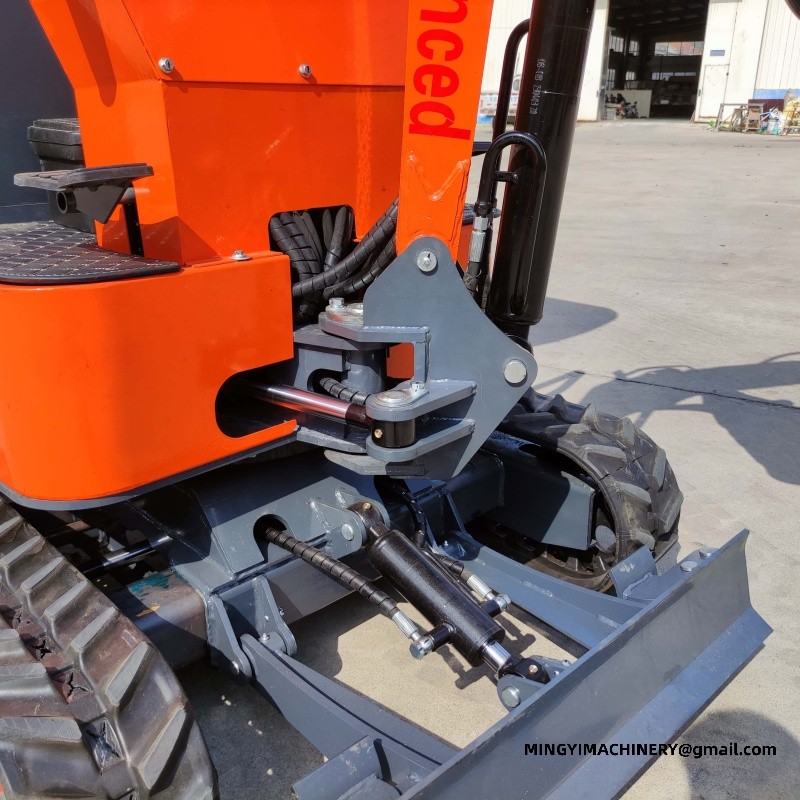
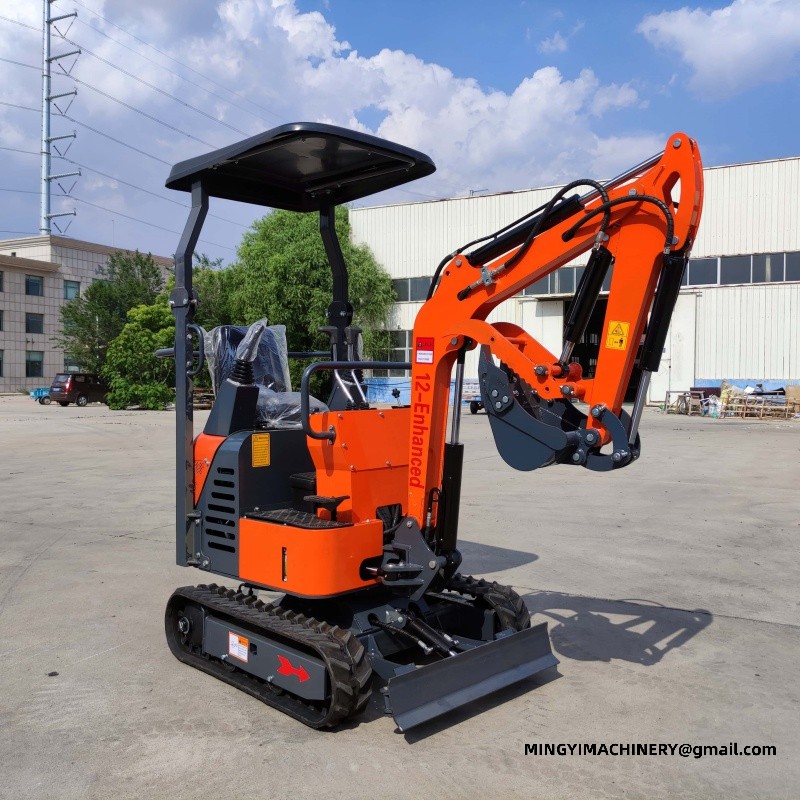
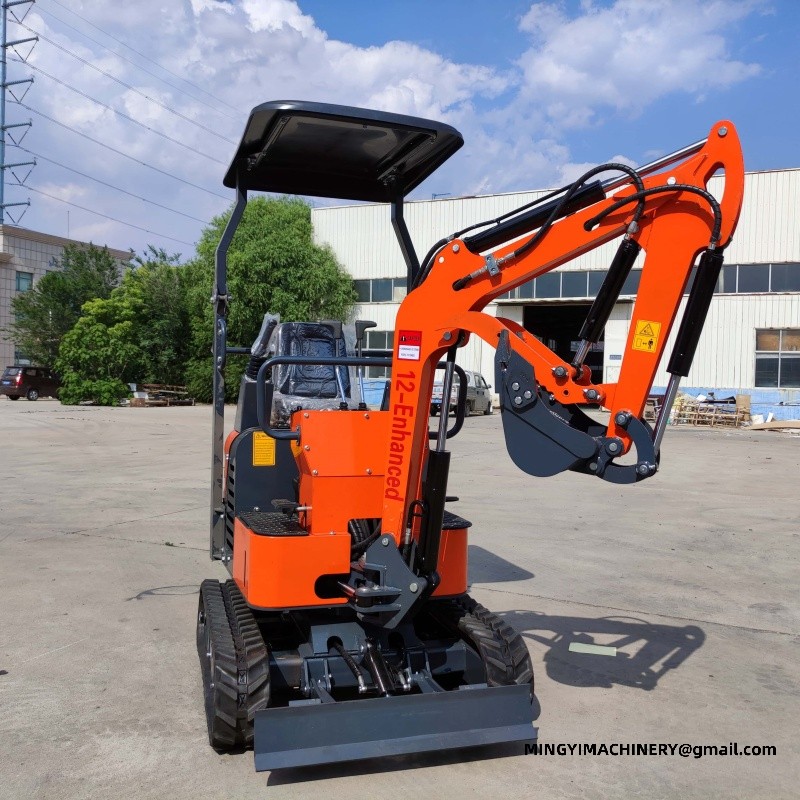
Reference specification — mini excavator range 09W 09L 20-2L 25L Operating weight 1100 kg (2425.08 lb) 1100 kg (2425.08 lb) 1900 kg (4188.78 lb) 2200 kg (4850.17 lb) Transport size (L×W×H) 1800 × 750 × 1970 mm 2300 × 720 × 1870 mm 2600 × 1300 × 2344 mm 3000 × 1300 × 2700 mm Max digging depth 1250 mm (49.21 in) 1400 mm (55.12 in) 2100 mm (82.68 in) 2300 mm (90.55 in) Max digging height 2800 mm (110.24 in) 2800 mm (110.24 in) 2880 mm (113.39 in) 3100 mm (122.05 in) Max dumping height 1700 mm (66.93 in) 1880 mm (74.02 in) 2100 mm (82.68 in) 2050 mm (80.71 in) Max digging radius 2570 mm (101.18 in) 2490 mm (98.03 in) 3215 mm (126.57 in) 3900 mm (153.54 in) Max digging distance 1869 mm (73.58 in) 2000 mm (78.74 in) 2460 mm (96.85 in) 3100 mm (125.05 in) Minimum turning radius 1000 mm (39.37 in) 1400 mm (55.12 in) 1587 mm (62.48 in) 1800 mm (70.87 in) Travel speed 3 km/h (1.86 mph) 3 km/h (1.86 mph) 5 km/h (3.11 mph) 7 km/h (4.35 mph) Gradeability 30° 30° 30° 30° Fuel consumption 1-1.3 L/h (0.264—0.343 gal) 1-1.3 L/h (0.264—0.343 gal) 2-3 L/h (0.528—0.793 gal) 2-3 L/h (0.528—0.793 gal) Fuel tank capacity 8 L (2.11 gal) 8 L (2.11 gal) 16 L (4.23 gal) 16 L (4.23 gal) Hydraulic oil tank 16 L (4.23 gal) 16 L (4.23 gal) 18 L (4.76 gal) 18 L (4.76 gal) Dozer blade lift height 180 mm (7.09 in) 180 mm (7.09 in) 180 mm (7.09 in) 230 mm (9.06 in) Dozer blade drop depth 210 mm (8.27 in) 210 mm (8.27 in) 210 mm (8.27 in) 280 mm (11.02 in)
LINE ( ID ): mingyicn
1 ton mini excavator
Related pages
1.5 ton mini excavator · 1.7 ton mini excavator · two tonne mini excavator for landscaping · PRODUCTS









