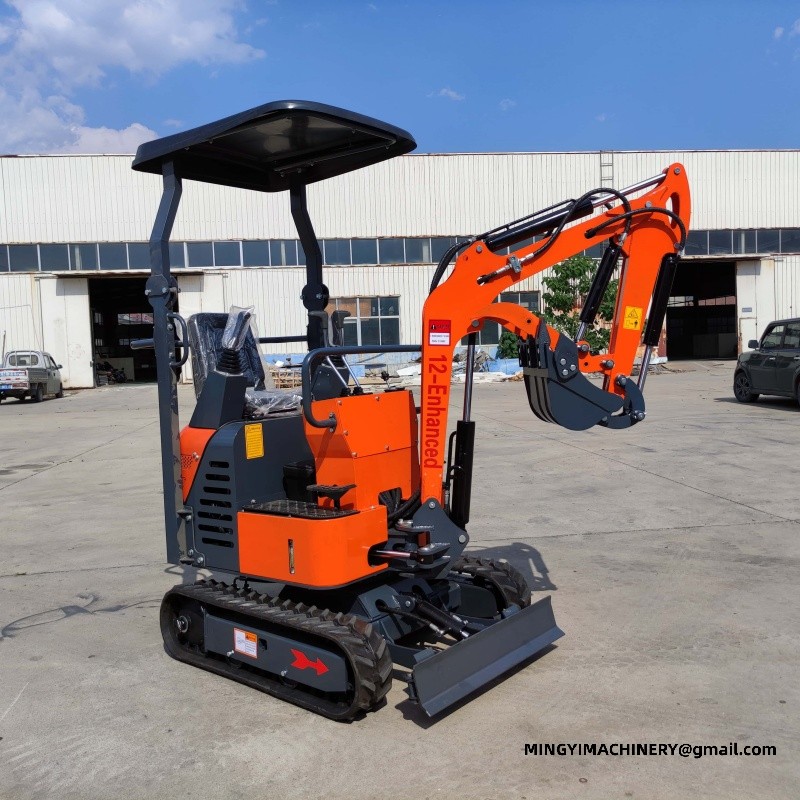
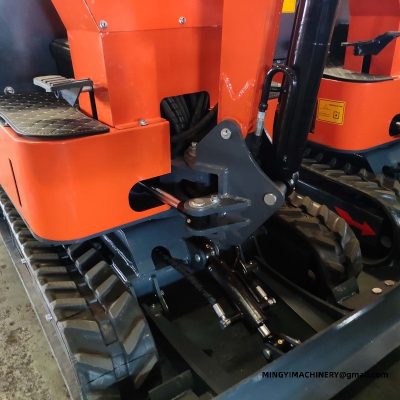
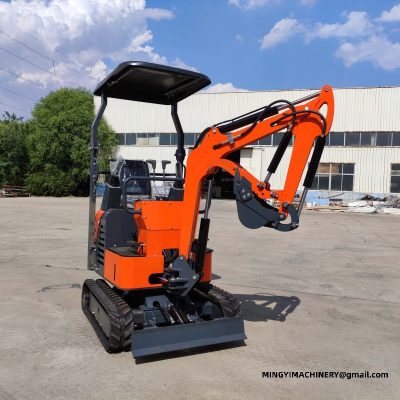
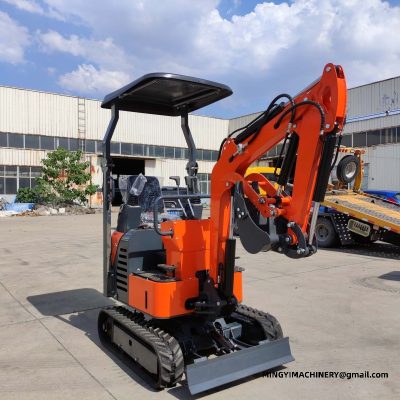
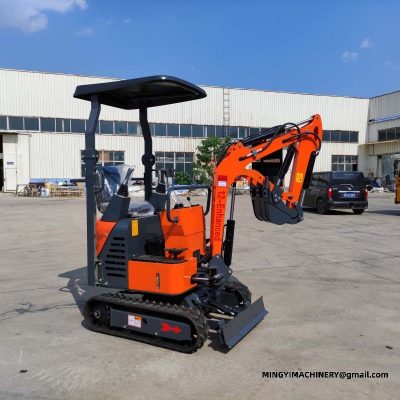
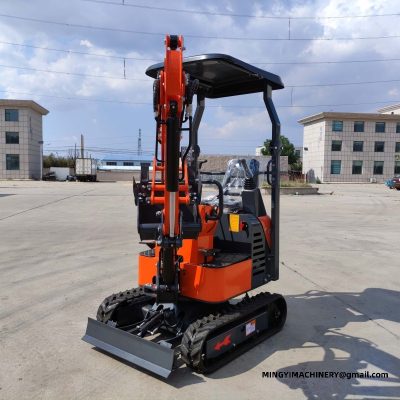
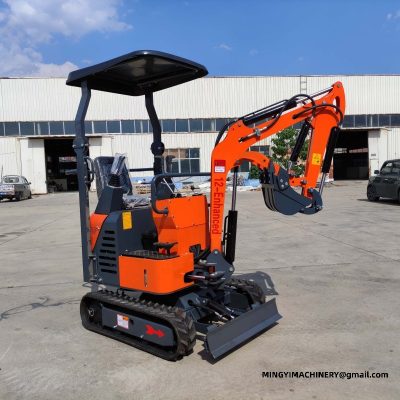
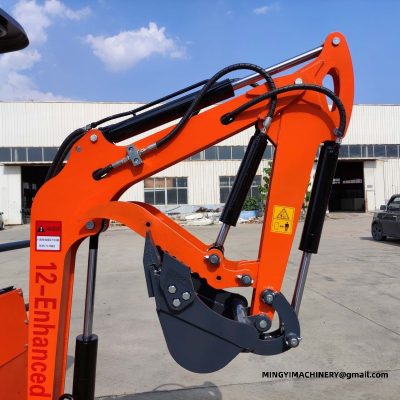
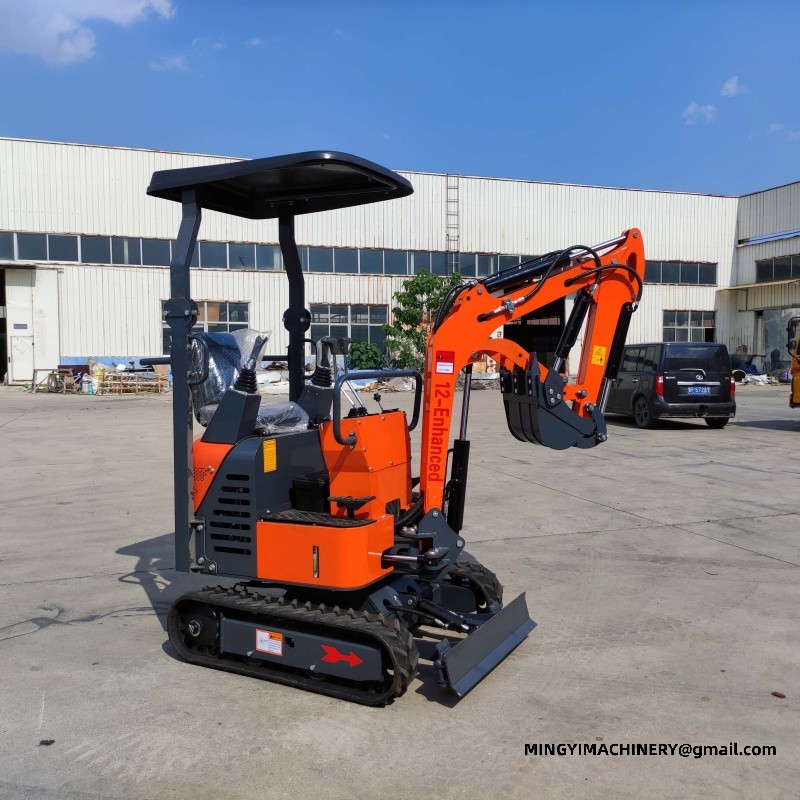
The 1.5 tonne class is the most widely used mini excavator size in the world, and for good reason. It is small enough to be transported easily and to work in confined gardens, yet heavy enough to dig real trenches, break concrete and run a hammer all day without feeling strained.
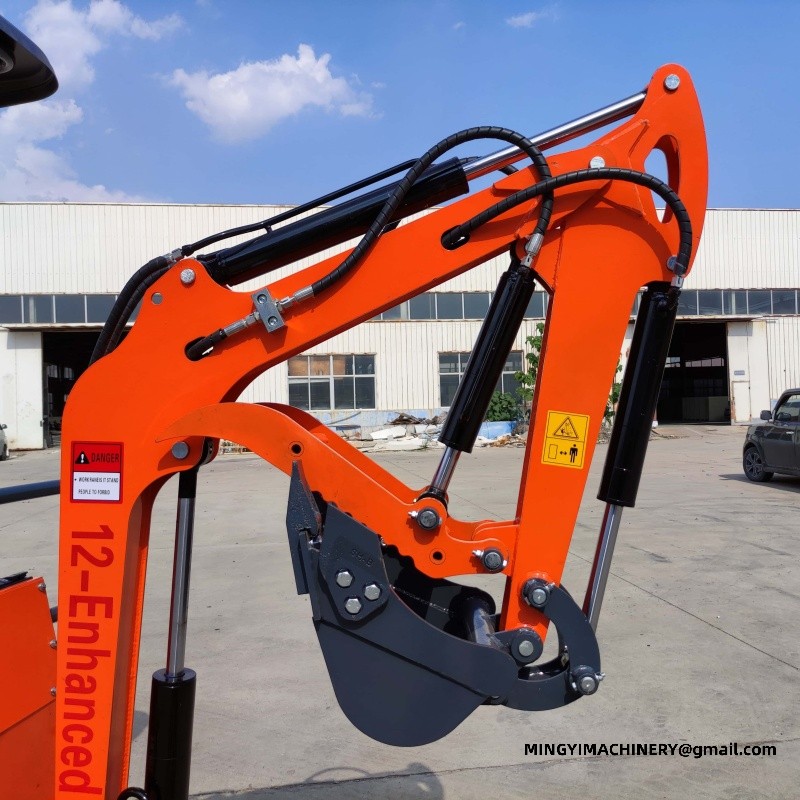
MINGYI builds the 1.5 tonne class as the general-purpose machine in its 08, 12 and 18 model range.
Why 1.5 tonnes is the general-purpose choice
Below this size the machine starts to be limited on digging depth and attachment capability; above it, transport and access become more complicated. At 1.5 tonnes the machine still travels behind a light commercial vehicle yet has the mass to hold itself steady when the boom is extended and the bucket is loaded.
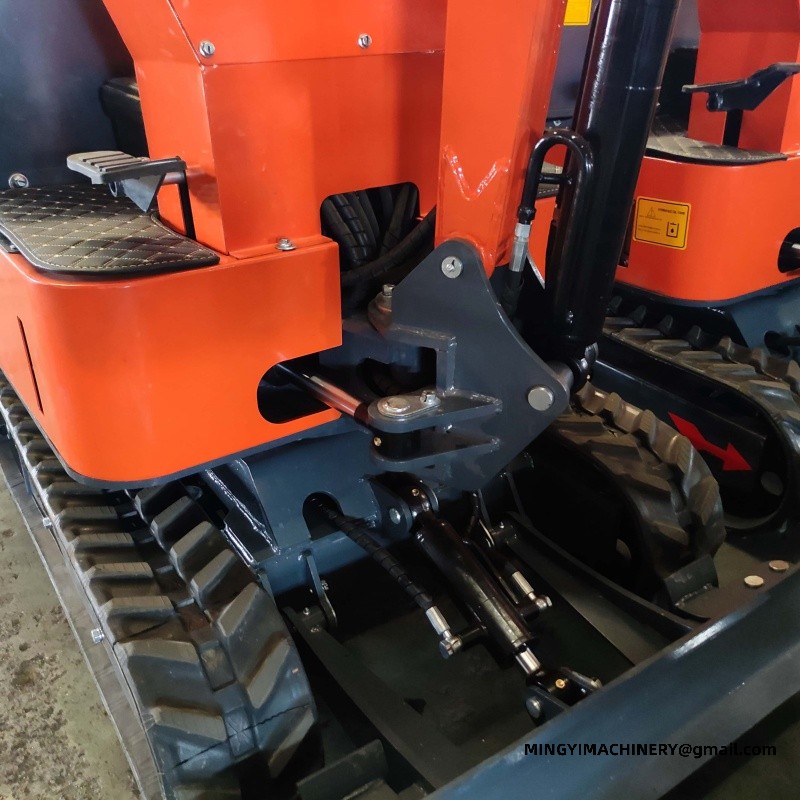
That combination — easy transport, real digging capacity, full attachment capability — is what makes this class the standard hire and contractor machine.
Configuration
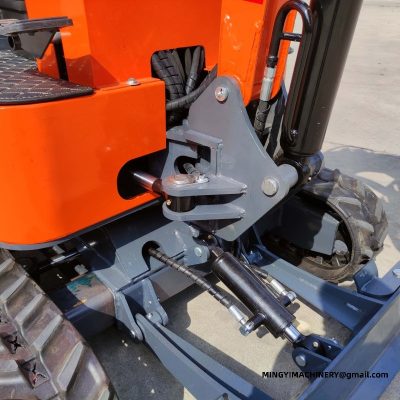
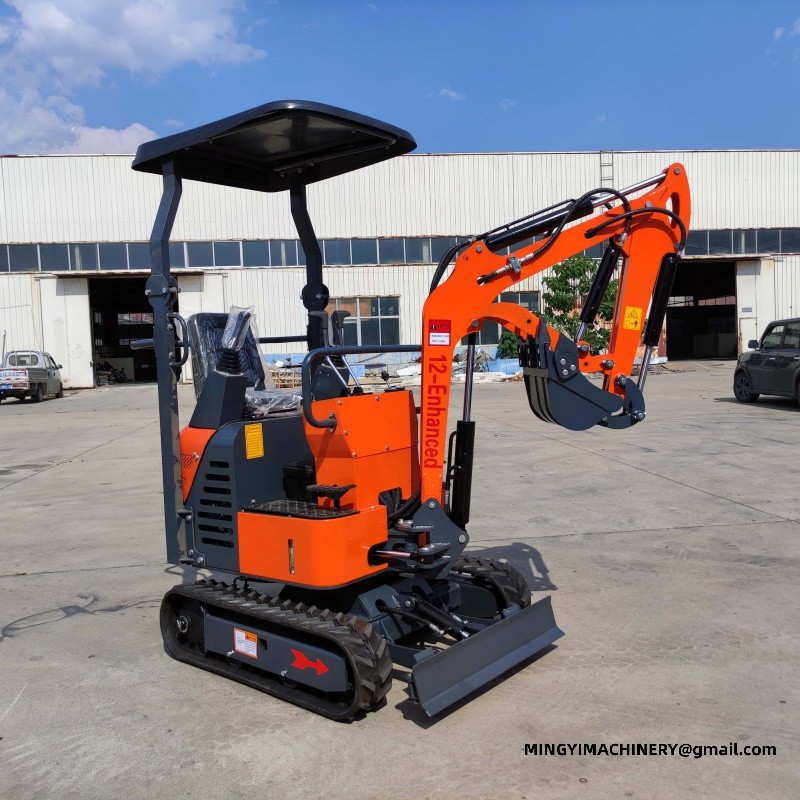
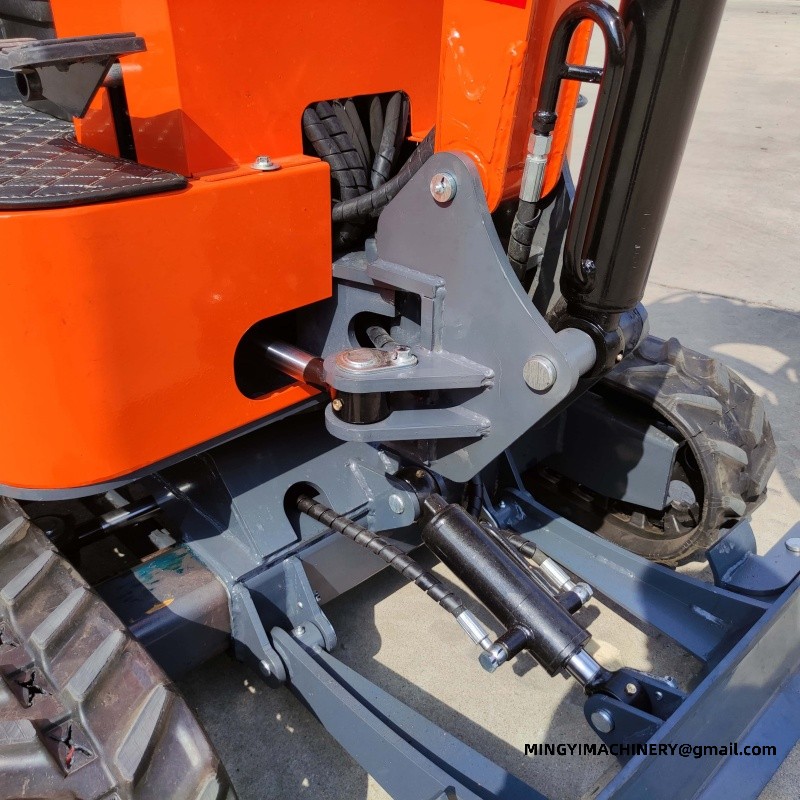
The machine is offered with rubber tracks or steel tracks with rubber blocks, on a canopy or enclosed cab, with engine options covering Kubota D722 and D902, YANMAR, Changchai, Laidong, Runtong, YARMAX and Youpu. The quick-change head accepts buckets, breaker hammers, augers and rakes from the MINGYI attachment range.
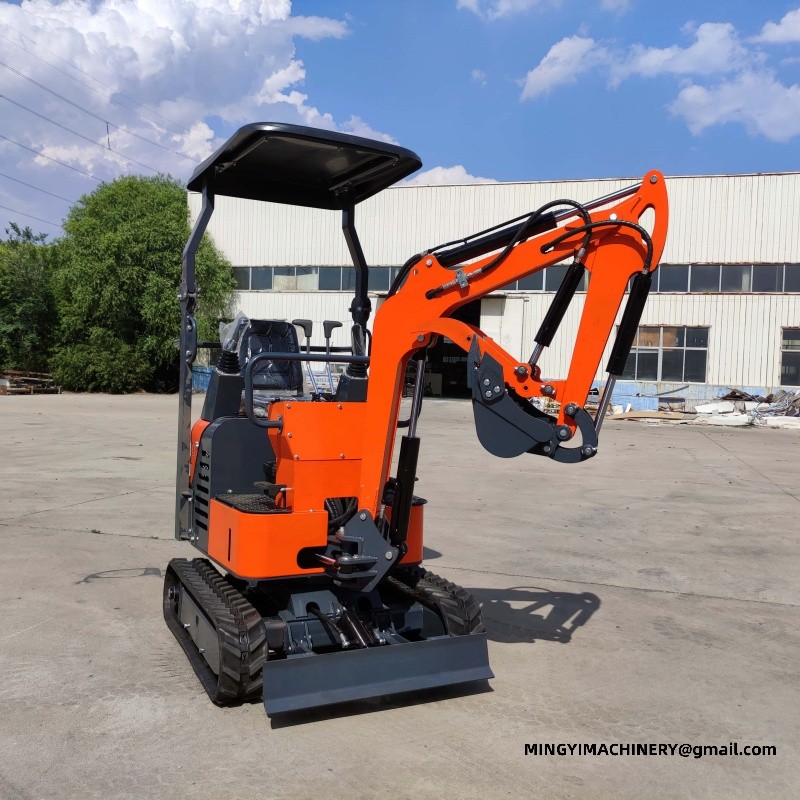
Where the 1.5 tonne class works best
• Domestic and commercial groundwork and drainage
• Landscaping and garden construction
• Utility and service trenching in residential streets
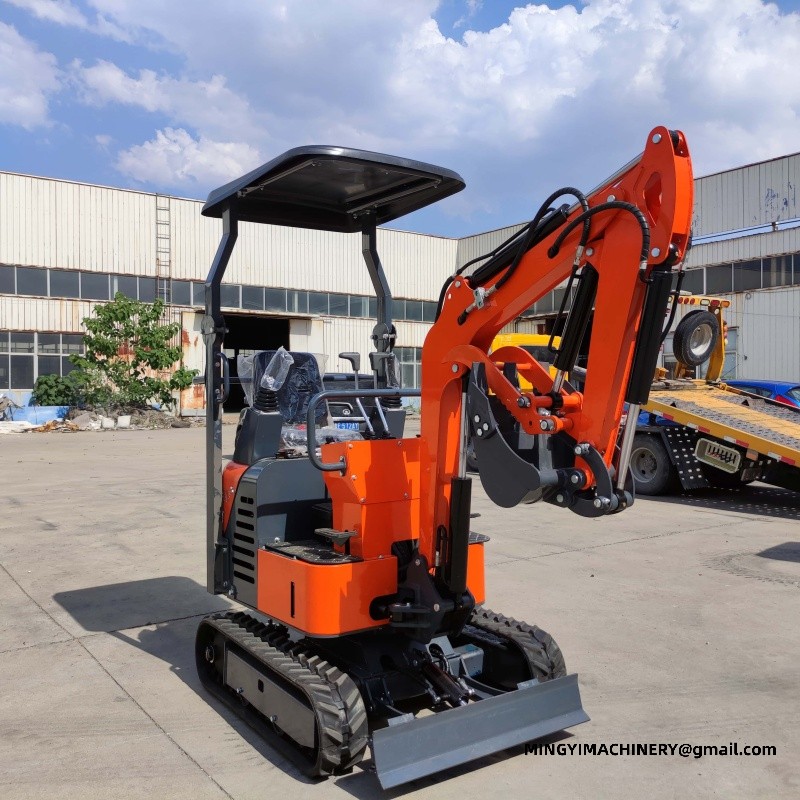
• Small demolition and concrete breakout
• Hire and rental fleets needing one flexible machine
Tell us your typical trench depth and transport method and we will confirm the 1.5 tonne specification that suits your operation.
Export packing and shipping of 1.5 ton mini excavator Export documentation, decals and paint are settled before packing. Asking for them with the unit in daily use order avoids a second handling session and keeps the machine on the booked vessel. Buyers who import regularly plan the spare parts with the machine. This class of machine ordered with a wearing-parts kit arrives ready to work rather than ready to wait for the first service interval. Trailering and moving 1.5 ton mini excavator Transport weight and width decide whether a machine needs a specialist haulier. A machine of this size sized to travel on a standard plant trailer behind a suitable vehicle moves with the crew rather than on a scheduled low loader. Loading practice matters as much as the numbers. The equipment on site is driven up ramps under its own power with the boom lowered and the tracks aligned, and secured at the points the manufacturer specifies. Boom configuration for 1.5 ton mini excavator A swing boom lets the machine dig parallel to its tracks without repositioning, which is what makes trenching beside a wall or a fence practical. On the machine itself this is often the option that decides whether a job is possible at all. Extended and offset boom configurations change reach and working range. The model in question with a longer arm reaches further but lifts less at full extension, so the specification is set against the deepest and furthest point on the job list. Noise, dust and working near occupied buildings Enclosure and machine condition both reduce noise. The machine in that duty with intact panels, sound mounts and a maintained exhaust is measurably quieter than the same machine with loose guards, and the difference matters on restricted sites. Dust control is often part of the same conversation. Water, timing and work sequence reduce what leaves the site, and agreeing them in advance keeps the unit on the job working rather than stopped after a complaint. Lifting and material handling with a 1.5 ton mini excavator Lifting with a machine built to dig needs a plan. The load, the radius and the ground under the equipment in service all matter, and the safe figure is the one on the chart rather than the one that looks possible. Stability changes with reach. A load a machine built for the work handles close in becomes a different proposition at full extension, so the working radius belongs in the plan before the lift rather than during it. Parts, service and support for this class of machine Support after delivery is a parts question. Wearing items for the unit in daily use - filters, belts, track components, bucket teeth and pins - are the items a buyer should plan to hold before the first service interval. Engine parts availability usually drives the engine choice. A machine of this size built with an engine the local network already carries is serviced from stock rather than from an international order. Working the equipment on site through the seasons Seasonal planning smooths the workload. Machines that are busy for a few months and idle for the rest benefit from a service slot in the quiet period, and the machine itself prepared in the off-season starts the busy months reliably. Heat and dust are as limiting as rain. Air intake condition and cooling cleanliness decide how the model in question behaves in a dry season, and both are checked in a minute rather than repaired later. Interior and light demolition with the machine in that duty Breaking out a floor slab, a wall footing or a concrete step is routine work for the unit on the job with a breaker. The machine is small enough to work inside and heavy enough to run the tool at a practical rate. Dust, debris clearance and floor loading all argue for a compact machine indoors. A machine built for the work spreads its weight over a wider track footprint than a wheeled machine of similar capacity. Matching the equipment in service to ground conditions Hard and abrasive ground reverses the specification. On rock, demolition rubble or sharp gravel, steel tracks with rubber blocks on this class of machine survive conditions that cut a rubber belt quickly. Mixed sites are common and argue for a compromise specification. Most buyers choose rubber for the unit in daily use and accept the wear, unless the majority of the work is on material that will damage it. Operator technique for a machine of this size The second habit is tool discipline. Running the equipment on site with the right bucket width for the trench means less spoil, less reinstatement and a cleaner job than a wide bucket and a lot of trimming. Stability is the third. The machine itself working across the tracks rather than over the corners keeps the machine steady and the undercarriage loaded evenly, which shows up as track life at the end of the season. Orchard, vineyard and farm use of the model in question Ditching, fertilising and drainage on farmland suit the machine in that duty because the work is spread over a large area in short bursts. The machine travels behind a pickup and works where it stops. Farms also use the unit on the job for general maintenance - clearing a watercourse, repairing a track, loading a spreader. One carrier with a few attachments covers most of the jobs that would otherwise wait for a contractor. Acceptance checks when a machine built for the work arrives A function check before the machine goes to work is worth the hour. Running through the controls, the travel and the attachment circuit on the equipment in service confirms it is set up as specified and ready for the site. Documentation should arrive with the machine. Parts list, service schedule and any certificates for this class of machine are what the workshop needs later, and they are much easier to obtain at delivery than in month six. What owners should plan for beyond the unit in daily use Purchase decision is the visible part of the effort. Fuel, filters, tracks or tyres, the operator and the transport between sites are the items that decide what a machine of this size actually demands over a few seasons, and they are worth listing before the order. Downtime is the hidden line item. The equipment on site waiting on a part earns nothing while it stands, so parts availability and service access belong in the plan as much as fuel does. Specification data for the machine itself Buyers comparing the model in question usually start from four numbers - weight, digging depth, reach and transport width - because those are the ones that decide whether the machine can be delivered and whether it can do the job once it is there. Figures are factory figures and are confirmed on the build sheet for the machine in that duty. Where a job sits between two models, the larger machine usually takes less time than the smaller one spends on rework. Slope work is a stability question before it is a traction question. Knowing the gradient the unit on the job is rated for, and working across rather than straight up where the ground allows, removes most of the risk. Ground that looks level often is not. A machine built for the work crossing a filled trench, a soft edge or a hidden void behaves differently from one on undisturbed ground, and those are the places worth walking before driving.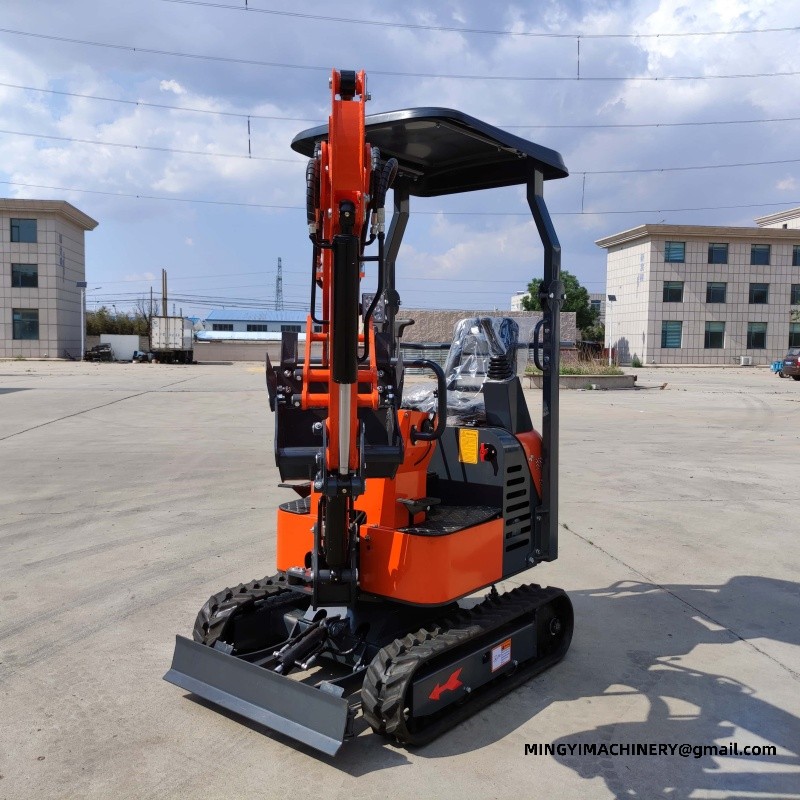
Reference specification — mini excavator range 20-1W 20-3W 30-2W 20-2L Operating weight 1800 kg (3968.32 lb) 1900 kg (4188.78 lb) 2700 kg (5952.48 lb) 1900 kg (4188.78 lb) Transport size (L×W×H) 2550 × 1100 × 2200 mm 2550 × 1100 × 2200 mm 3000 × 1100 × 2700 mm 2600 × 1300 × 2344 mm Max digging depth 1800 mm (70.87 in) 1800 mm (70.87 in) 2200 mm (86.61 in) 2100 mm (82.68 in) Max digging height 2820 mm (111.02 in) 2820 mm (111.02 in) 3000 mm (118.11 in) 2880 mm (113.39 in) Max dumping height 2050 mm (80.71 in) 2050 mm (80.71 in) 2000 mm (78.74 in) 2100 mm (82.68 in) Max digging radius 3050 mm (120.08 in) 3050 mm (120.08 in) 3800 mm (149.61 in) 3215 mm (126.57 in) Max digging distance 2300 mm (90.55 in) 2300 mm (90.55 in) 3050 mm (120.08 in) 2460 mm (96.85 in) Minimum turning radius 1450 mm (57.09 in) 1450 mm (57.09 in) 1750 mm (68.9 in) 1587 mm (62.48 in) Travel speed 5 km/h (3.11 mph) 5 km/h (3.11 mph) 7 km/h (4.35 mph) 5 km/h (3.11 mph) Gradeability 30° 30° 30° 30° Fuel consumption 2-3 L/h (0.528—0.793 gal) 2-3 L/h (0.528—0.793 gal) 2-3 L/h (0.528—0.793 gal) 2-3 L/h (0.528—0.793 gal) Fuel tank capacity 16 L (4.23 gal) 16 L (4.23 gal) 16 L (4.23 gal) 16 L (4.23 gal) Hydraulic oil tank 18 L (4.76 gal) 18 L (4.76 gal) 20 L (5.28 gal) 18 L (4.76 gal) Dozer blade lift height 180 mm (7.09 in) 180 mm (7.09 in) 230 mm (9.06 in) 180 mm (7.09 in) Dozer blade drop depth 210 mm (8.27 in) 210 mm (8.27 in) 280 mm (11.02 in) 210 mm (8.27 in)
Q. What can the equipment in service do?
A. House footings, drainage runs, garden and landscaping work, and short service trenches. It is the size most contractors reach for first, because it covers that spread of work while still passing through a garden gate.
Q. Why is 1.5 ton such a common size?
A. Because it sits where most compact work falls: large enough to dig a footing and carry useful tooling, small enough to be moved behind a small trailer and to work in a customer's garden without a haul road being needed.
Q. How do I specify a 1.5 ton machine?
A. Confirm the track type against the surface the machine crosses, the engine family against your local service network, and the tooling against the work. MINGYI builds the machine to those choices rather than to a fixed specification.
Later additions and retrofits on this class of machine
An added function should pay for itself quickly. Whether the unit in daily use gains a different bucket, a hydraulic service or a protection package, the test is the number of days a year it is actually used.
A second operator for a machine of this size
Different operators suit different work. The person who is quickest with the equipment on site on open ground is not always the one who is safest in a confined space, and having both available is a genuine advantage.
E-mail : sales@mingycn.com
LINE ( ID ): mingyicn
Related pages
1.7 ton mini excavator · 2 ton mini excavator · mini excavator in the 1 to 3.5 tonne class · PRODUCTS









