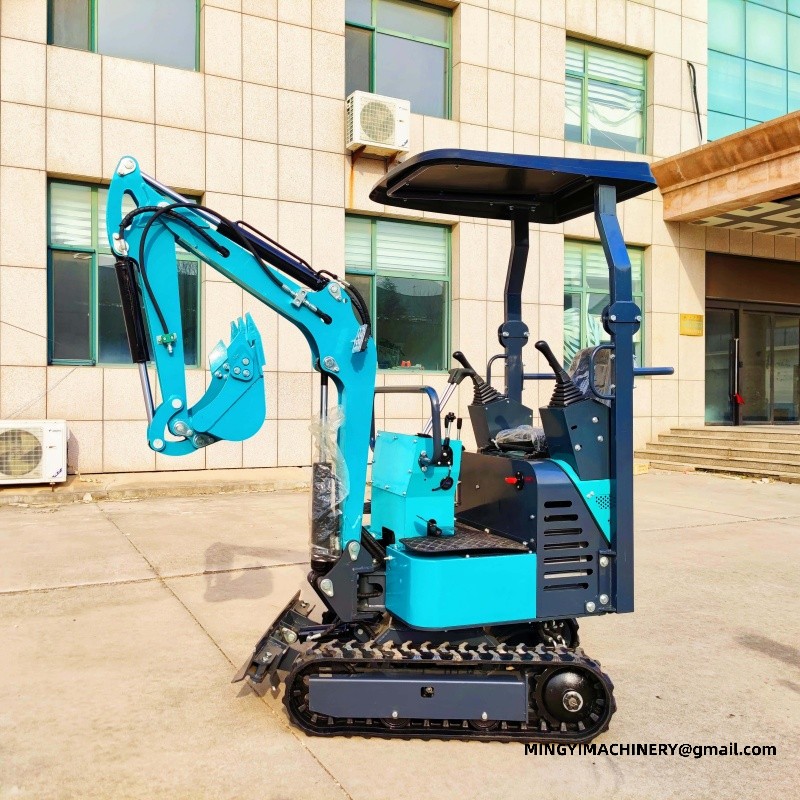
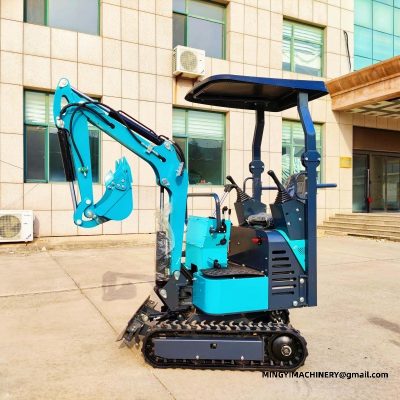
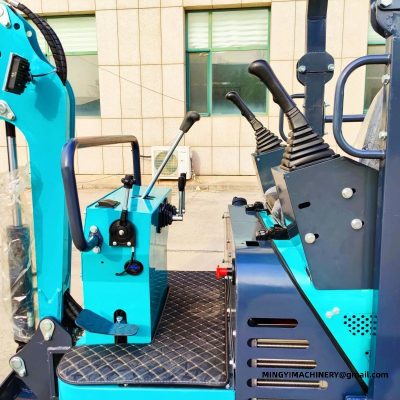
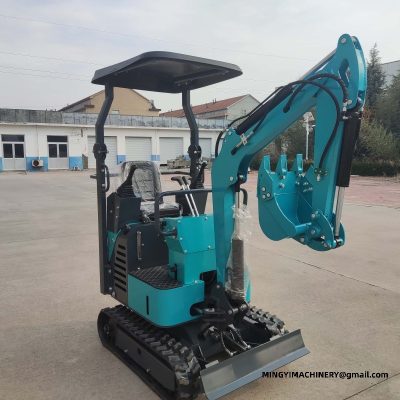
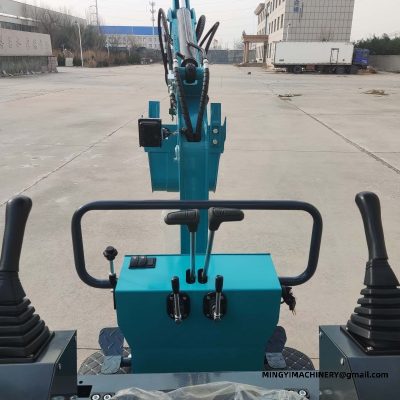
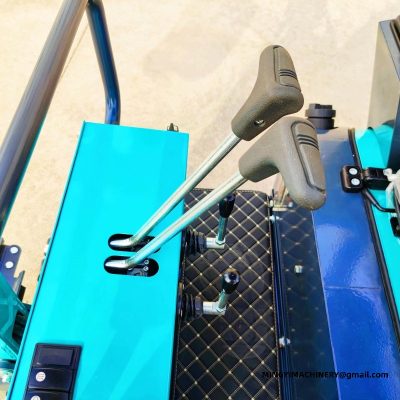
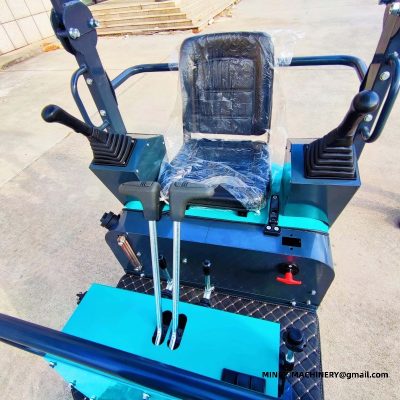
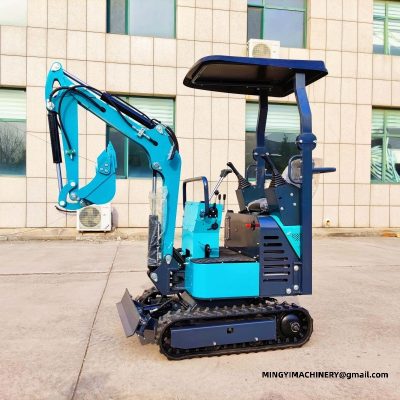
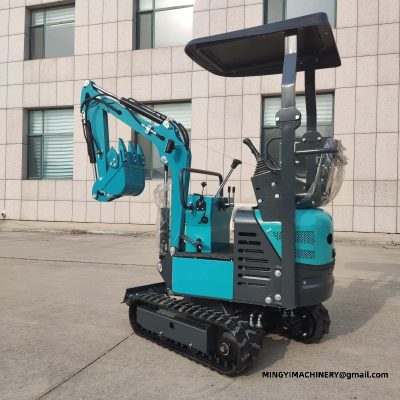
Farm work rarely needs one big machine for a month; it needs a capable small machine repeatedly through the year. Drainage, ditching, fencing, material handling and the clearing of buildings and yards are all jobs where a compact excavator pays for itself.
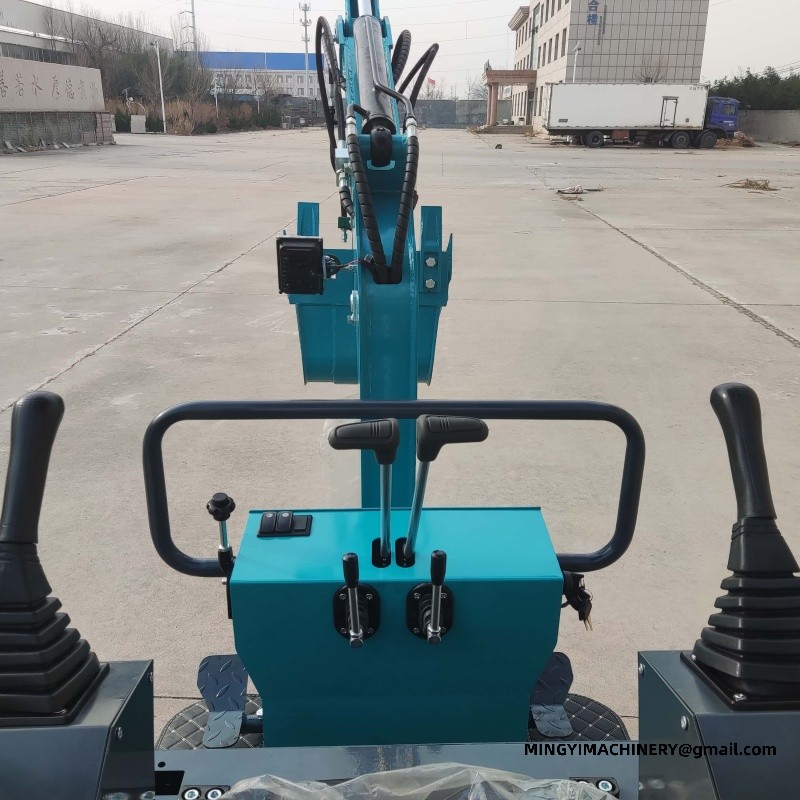
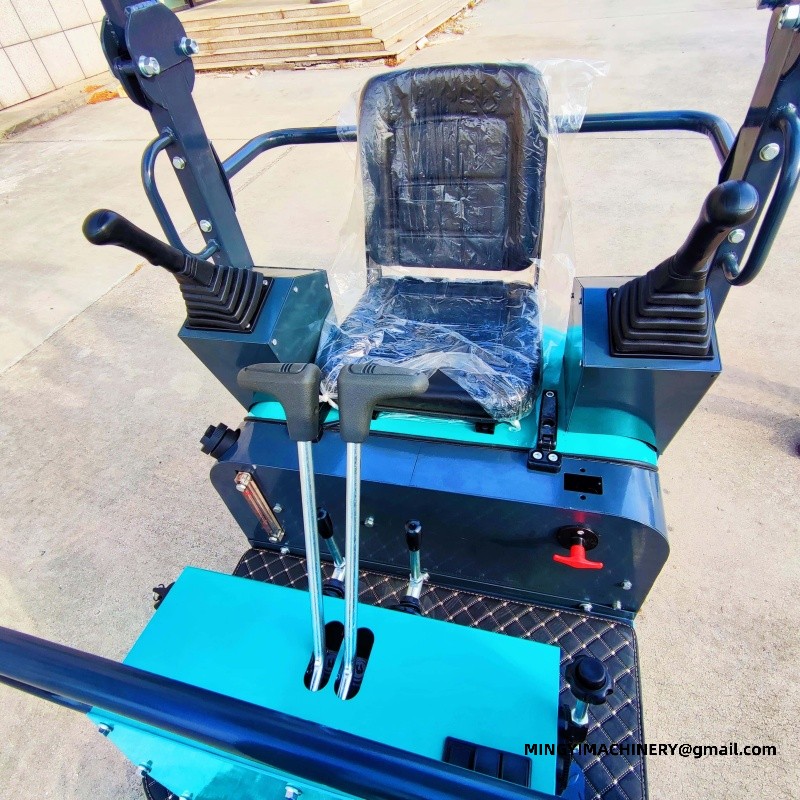
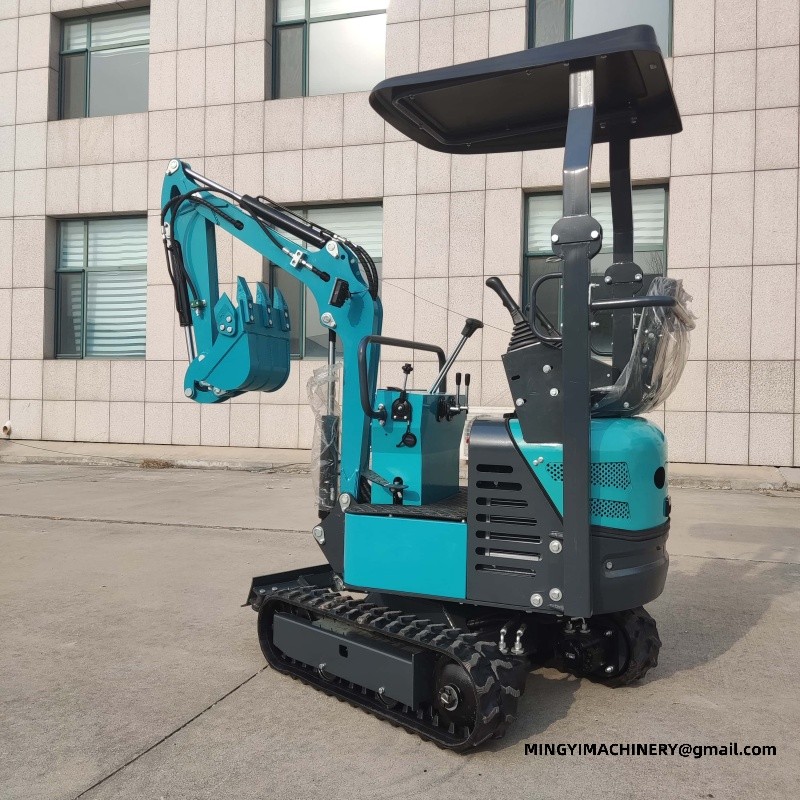
MINGYI mini excavators are used on farms and plantations across the model range, with rubber tracks protecting pasture, yards and tracks.
Farm duties a compact excavator covers
Field drainage and ditch maintenance, cleaning out culverts and watercourses, opening fence post holes with an auger, and clearing yards and livestock buildings are the day-to-day uses. Because the machine is small, it can work in a farmyard, along a field allowance or inside a barn without needing a wide access route.
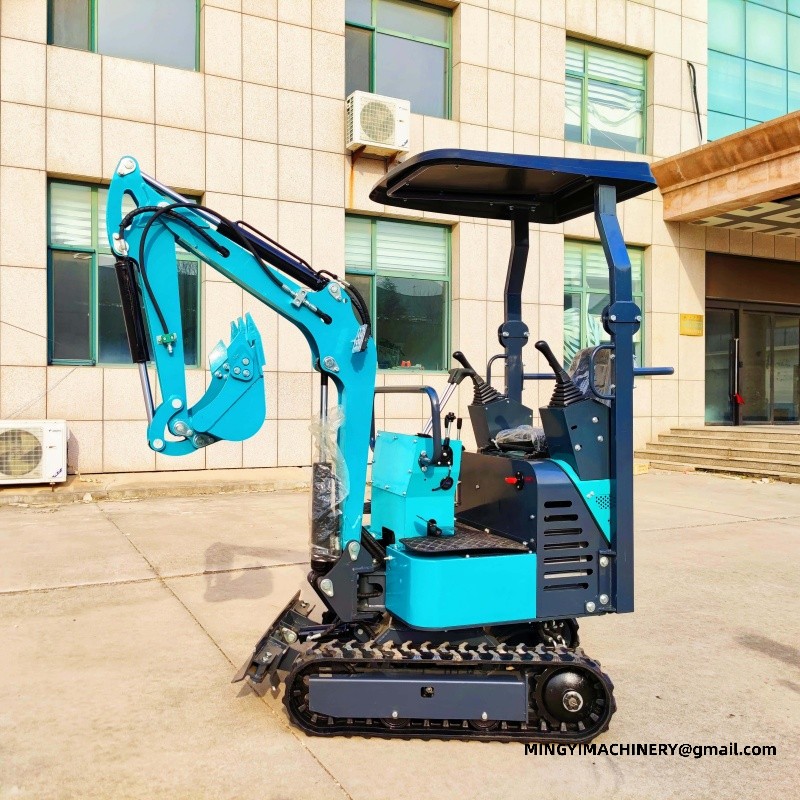
On orchard and vineyard operations the same machine trenches for irrigation, digs fertiliser trenches, opens planting holes and handles prunings and crop material with a rake or thumb attachment.
Suited to farm conditions
Diesel power with a range of engine families means servicing is straightforward and parts are locally available in most markets. Rubber tracks protect the surfaces the machine drives over, and the compact size means the machine can be transported between farm locations on a small trailer.
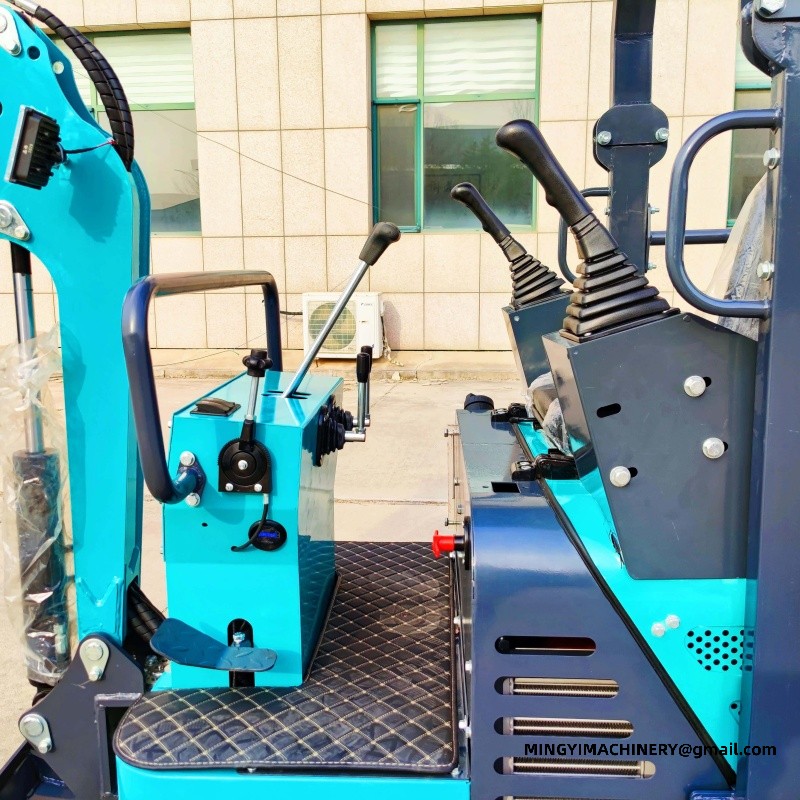
Farm applications
• Field drainage and ditch cleaning
• Culvert and watercourse maintenance
• Fencing, post holes and gate installation
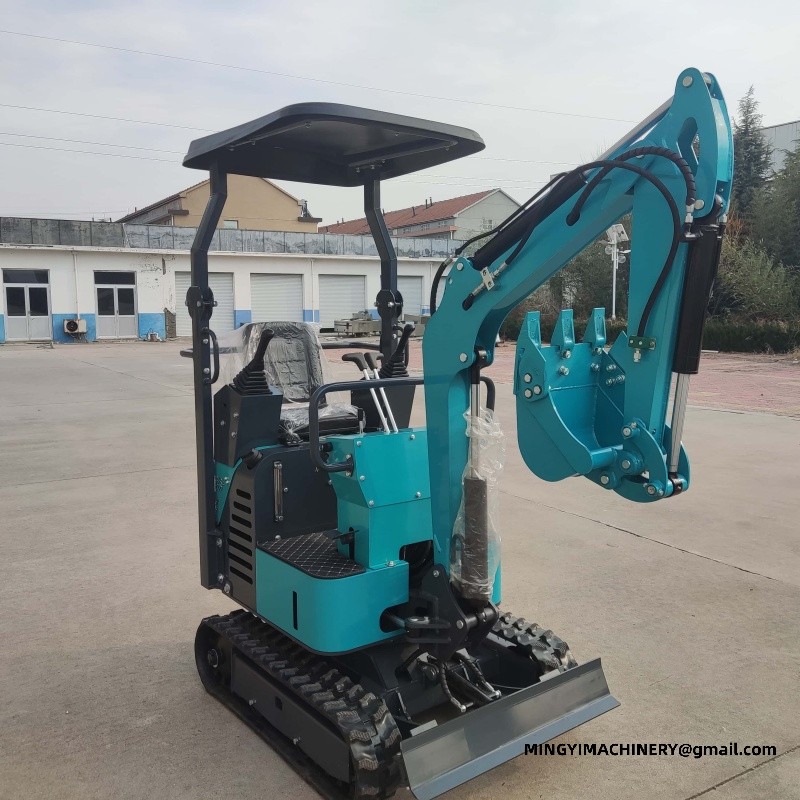
• Farmyard clearance and livestock building work
• Orchard and vineyard irrigation and planting
Tell us the main jobs the machine will do through the year and we will recommend the model and attachment set for them.
OEM and fleet customisation of mini excavator for farming Distributors and rental fleets usually need the machine to look like theirs. Paint, decals, seat colour and attachment branding can be specified on this class of machine at build time rather than applied after import. Customisation also covers the specification sheet. A fleet buyer may want every unit in daily use delivered with the same coupler, the same engine and the same tool kit so training and parts stock stay simple. Trailering and moving mini excavator for farming Loading practice matters as much as the numbers. A machine of this size is driven up ramps under its own power with the boom lowered and the tracks aligned, and secured at the points the manufacturer specifies. Detachable components reduce transport length. The equipment on site built with a removable arm section or a folding step fits a shorter trailer and may avoid an oversize movement permit. Getting mini excavator for farming through a narrow gap The first question on most job lists is whether the machine can reach the work at all. The machine itself is chosen against the narrowest point on the route - a garden gate, a doorway, a gap between two walls - because a machine that arrives and then cannot pass loses a day, not an hour. Access decides the machine before output does. With the model in question the limiting dimension is usually the widest point on the way in, so measuring the gate, the corridor and the turning space first saves a wasted delivery and a second visit. Export packing and shipping of mini excavator for farming Machines leave the factory prepared for container or flat rack shipment. The machine in that duty is normally shipped with the attachment set and the spare parts list agreed in advance so the container is planned once. Buyers who import regularly plan the spare parts with the machine. The unit on the job ordered with a wearing-parts kit arrives ready to work rather than ready to wait for the first service interval. Operator technique for mini excavator for farming Output on a compact machine comes from placement rather than power. An experienced operator keeps a machine built for the work working inside the swing arc, positions once and digs a full run instead of repositioning for every bucket. Stability is the third. The equipment in service working across the tracks rather than over the corners keeps the machine steady and the undercarriage loaded evenly, which shows up as track life at the end of the season. Working this class of machine through the seasons Weather decides which days are productive. Rain turns some ground unusable and cold changes how the unit in daily use starts and warms up, so planning the wet months around maintenance is more useful than planning around output. Heat and dust are as limiting as rain. Air intake condition and cooling cleanliness decide how a machine of this size behaves in a dry season, and both are checked in a minute rather than repaired later. Municipal and public works with the equipment on site Municipal crews work on streets, footpaths and parks where the public is present. The machine itself is specified because it occupies little space, works inside a small exclusion zone and can be moved on a standard trailer. Noise and surface protection matter on public work. The model in question on rubber tracks across paving, with a sealed cab for the operator, suits the conditions better than a larger tracked machine. Interior and light demolition with the machine in that duty Interior demolition is an access and a weight question. The unit on the job that fits through a doorway and works on a suspended floor does jobs that would otherwise be done by hand or by a larger machine that cannot enter. Breaking out a floor slab, a wall footing or a concrete step is routine work for a machine built for the work with a breaker. The machine is small enough to work inside and heavy enough to run the tool at a practical rate. Attachments that turn the equipment in service into several machines The base machine is a carrier; the tool on the end of the arm decides the task. This class of machine fitted with a toothed bucket digs, and the same machine with a breaker, an auger or a grab does work that would otherwise need a second unit on site. Most of the daily variety on the unit in daily use comes from the attachment rack rather than from the machine itself. Bucket, breaker, auger, ripper, rake and grab cover the large majority of the work a contractor will see. Working a machine of this size in confined spaces Confined sites are decided by dimensions. Overall width, tail swing and the space needed to work the arm are what let the equipment on site operate inside a building, between walls or in a courtyard. Clearance above matters as much as around. Door heights, pipework and overhead services set the limit for the machine itself indoors, and measuring them first avoids a machine that arrives and cannot be used. Acceptance checks when the model in question arrives Delivery day is the best time to find a problem. Checking the specification against the order, the fluid levels, the fasteners and any transport damage while the unit on the job is still on the trailer is faster than claiming later. Documentation should arrive with the machine. Parts list, service schedule and any certificates for the machine in that duty are what the workshop needs later, and they are much easier to obtain at delivery than in month six. Trenching work with a machine built for the work Service trenches are the most common reason the equipment in service is hired. Water, sewage, cable and gas runs are narrow, shallow and often close to existing services, which is exactly the work a full-size machine cannot do safely. Trench quality depends on the bucket width and the operator, not on machine size. This class of machine with a narrow bucket and a swing boom cuts a clean run along a boundary without disturbing the ground either side of it. Running the unit in daily use in a rental fleet The specification that rents best is usually the simplest one to explain at the counter. A machine of this size with rubber tracks, a canopy and a coupler covers the majority of weekend and short-term hires. Specification data for the equipment on site Where the machine itself is being specified for a job list, the table below gives the factory figures that matter most: what the machine weighs, how deep and how far it works, and what it measures on a trailer. Every value shown is as built for the model in question; options such as cab, side swing or a telescopic undercarriage change the transport dimensions and are confirmed at order stage. Rental fleets buy for utilisation, not for a single job. The machine in that duty with a quick coupler and a common attachment standard is hired more often because it suits more of the calls that come in. Fleet buyers also weigh transport. The unit on the job that a customer can tow on a normal licence and a standard trailer is a hire that does not need a delivery truck, which changes how often it goes out.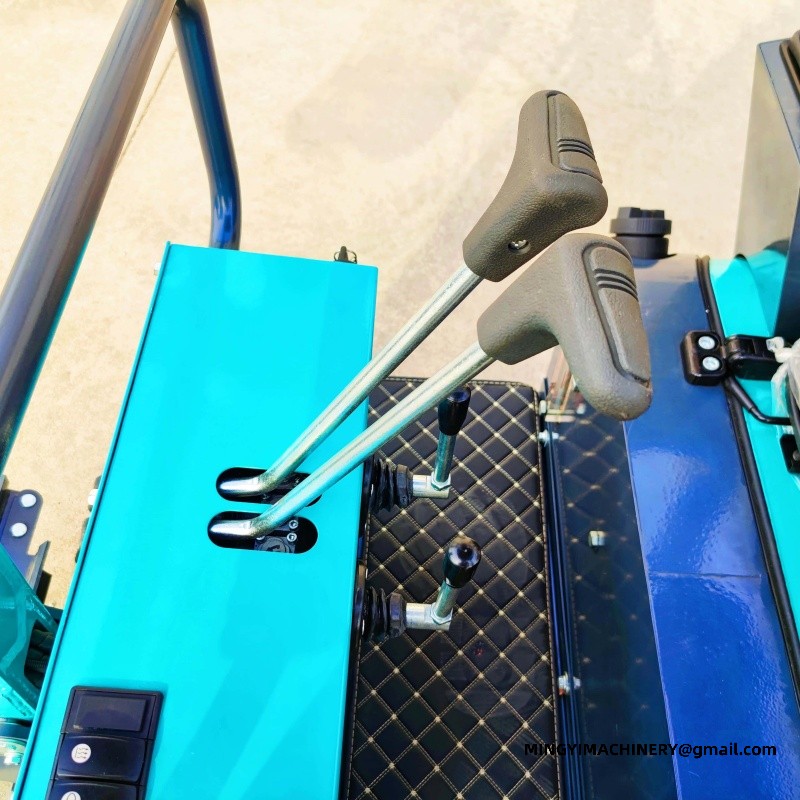
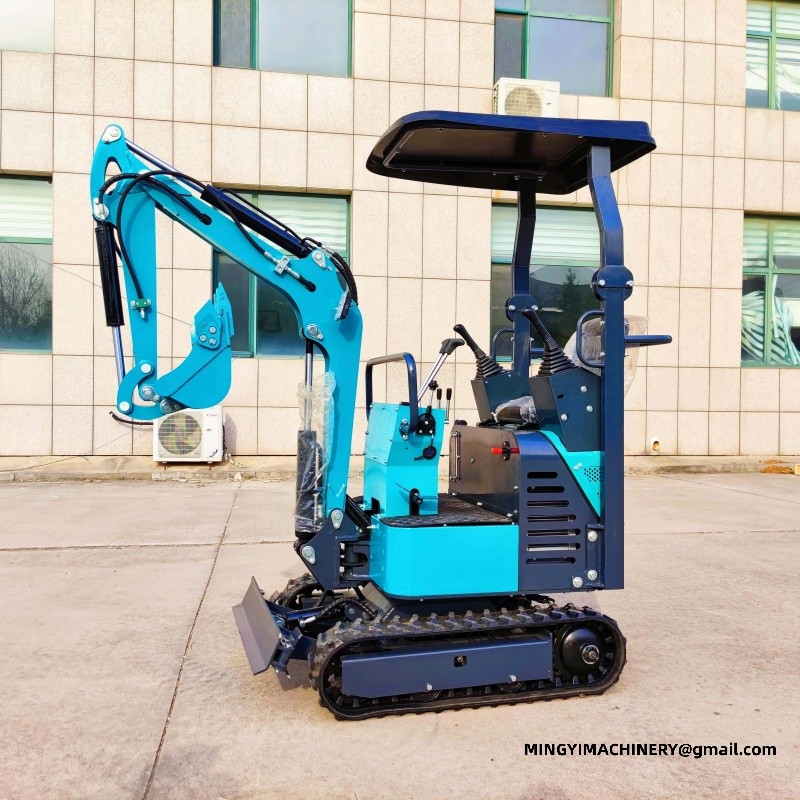
Reference specification — mini excavator range 12W 20-1WL 20-3W 30-1W Operating weight 1200 kg (2645.55 lb) 1900 kg (4188.78 lb) 1900 kg (4188.78 lb) 2900 kg (6393.41 lb) Transport size (L×W×H) 2200 × 930 × 2250 mm 2550 × 1100 × 2200 mm 2550 × 1100 × 2200 mm 3000 × 1250 × 2780 mm Max digging depth 1630 mm (64.17 in) 1800 mm (70.87 in) 1800 mm (70.87 in) 2200 mm (86.61 in) Max digging height 2750 mm (108.27 in) 2820 mm (111.02 in) 2820 mm (111.02 in) 3400 mm (133.86 in) Max dumping height 1960 mm (77.17 in) 2050 mm (80.71 in) 2050 mm (80.71 in) 2400 mm (94.49 in) Max digging radius 2900 mm (114.17 in) 3050 mm (120.08 in) 3050 mm (120.08 in) 4000 mm (157.48 in) Max digging distance 2100 mm (82.68 in) 2300 mm (90.55 in) 2300 mm (90.55 in) 2800 mm (110.24 in) Minimum turning radius 1300 mm (51.18 in) 1450 mm (57.09 in) 1450 mm (57.09 in) 2000 mm (78.74 in) Travel speed 3 km/h (1.86 mph) 5 km/h (3.11 mph) 5 km/h (3.11 mph) 5 km/h (3.11 mph) Gradeability 30° 30° 30° 30° Fuel consumption 1-1.3 L/h (0.264—0.343 gal) 2-3 L/h (0.528—0.793 gal) 2-3 L/h (0.528—0.793 gal) 2-3 L/h (0.528—0.793 gal) Fuel tank capacity 10 L (2.64 gal) 16 L (4.23 gal) 16 L (4.23 gal) 16 L (4.23 gal) Hydraulic oil tank 16 L (4.23 gal) 18 L (4.76 gal) 18 L (4.76 gal) 20 L (5.28 gal) Dozer blade lift height 180 mm (7.09 in) 180 mm (7.09 in) 180 mm (7.09 in) 420 mm (16.54 in) Dozer blade drop depth 210 mm (8.27 in) 210 mm (8.27 in) 210 mm (8.27 in) 210 mm (8.27 in)
Q. What mini excavator is best for farming?
A. The machine that matches the farm's routine work: drainage and ditch cleaning, muck handling, orchard and terrace work, and repair of tracks and buildings. MINGYI builds the 08, 12 and 18 models, and the choice is normally made on access and on the width of the work.
Q. Can a mini excavator work where a tractor cannot?
A. Yes, that is one of its main uses on farmland. Compact crawler machines spread their weight and hold traction on soft and sloped ground, so they reach positions a wheeled tractor either sinks into or cannot climb.
Q. Do you supply farming attachments?
A. MINGYI supplies bucket sets, augers, thumb buckets, rakes and other attachments for the compact range, and also builds machines set up with plough attachments for soil preparation on orchard, terrace and greenhouse ground.
A second operator for a machine built for the work
A machine that only one person can use is a single point of failure. Training a second operator on the equipment in service takes a day and removes the dependency that otherwise governs holidays, illness and busy weeks.
Cold weather and winter care for this class of machine
Cold exposes weak batteries, thick oil and water in the fuel. Preparing the unit in daily use for winter means the right grade of oil, a battery in good condition and fuel that will not wax in the tank overnight.
Later additions and retrofits on a machine of this size
Retrofitting is limited by the base machine. Before anything is added to the equipment on site the hydraulic flow, the mounting interface and the stability allowance have to be checked, because those limits are what decide what is sensible.
E-mail : sales@mingycn.com
LINE ( ID ): mingyicn
Related pages
mini excavator for gardening · mini excavator for precise trench digging · zero tail swing digger for narrow lanes · PRODUCTS









