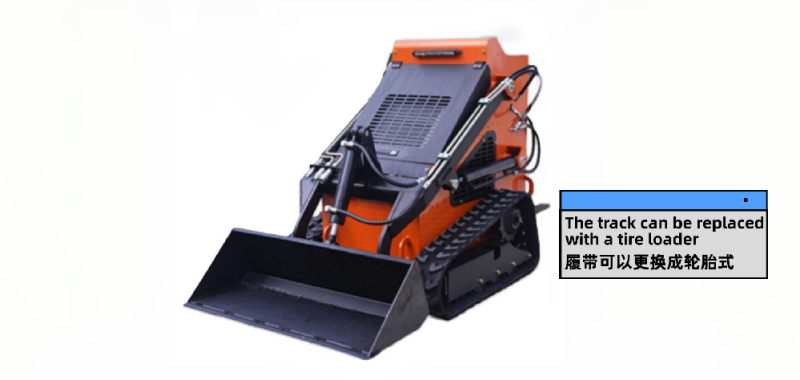
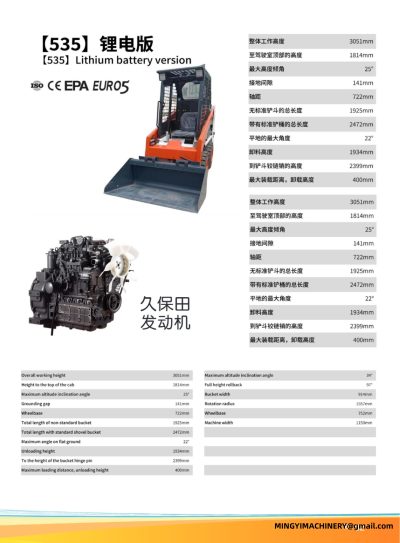
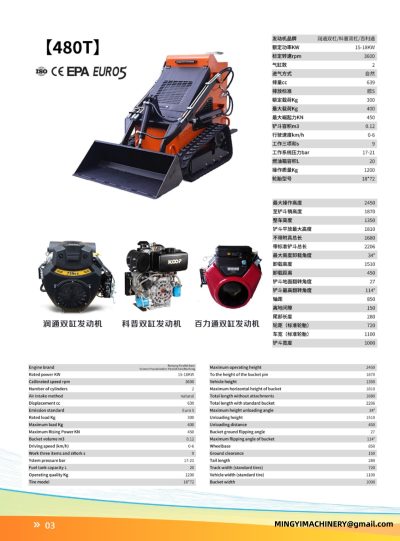
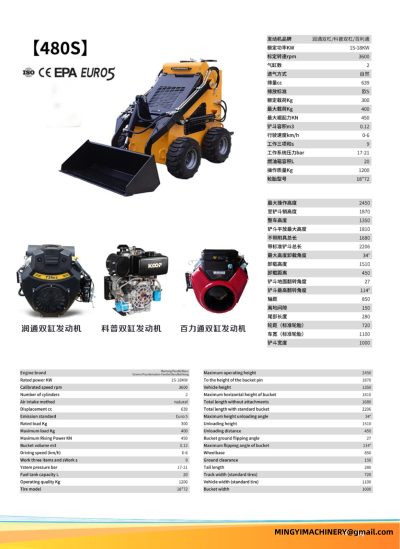
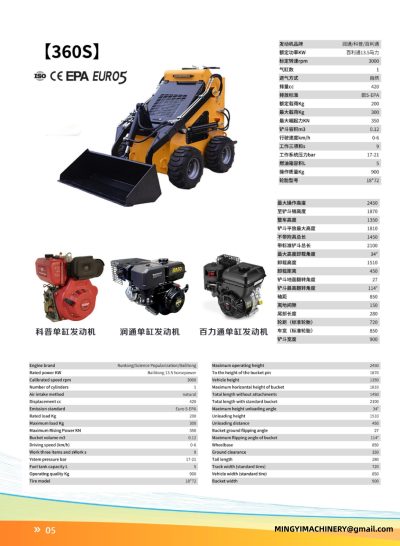
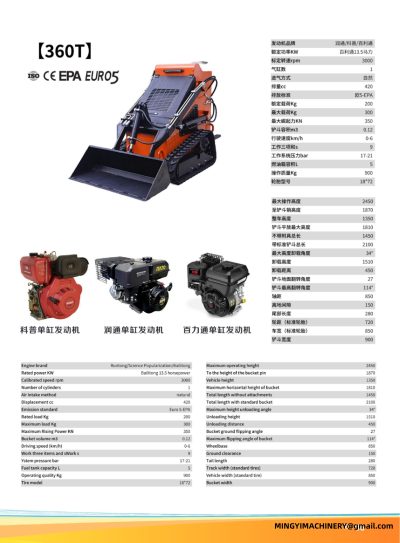
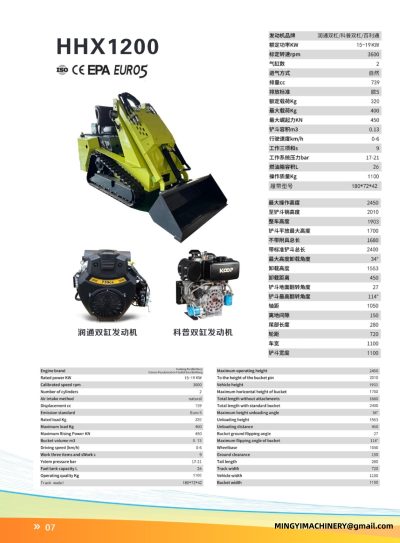
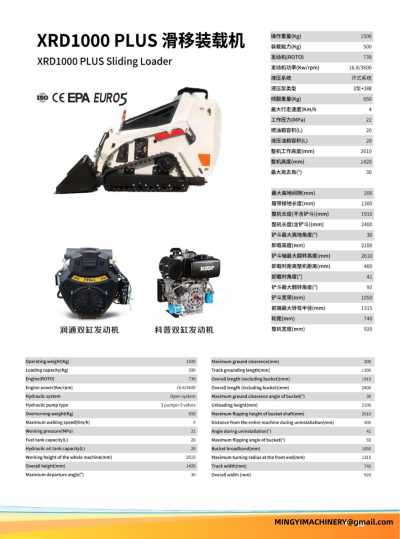
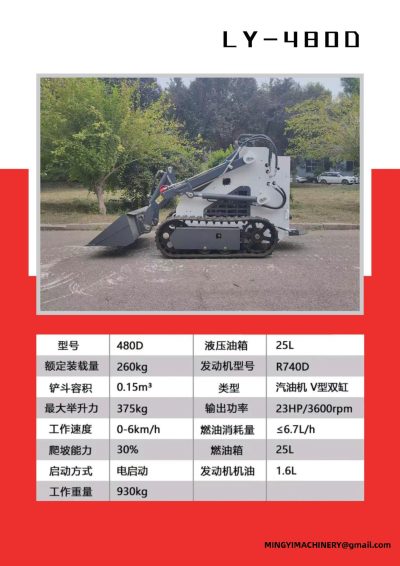
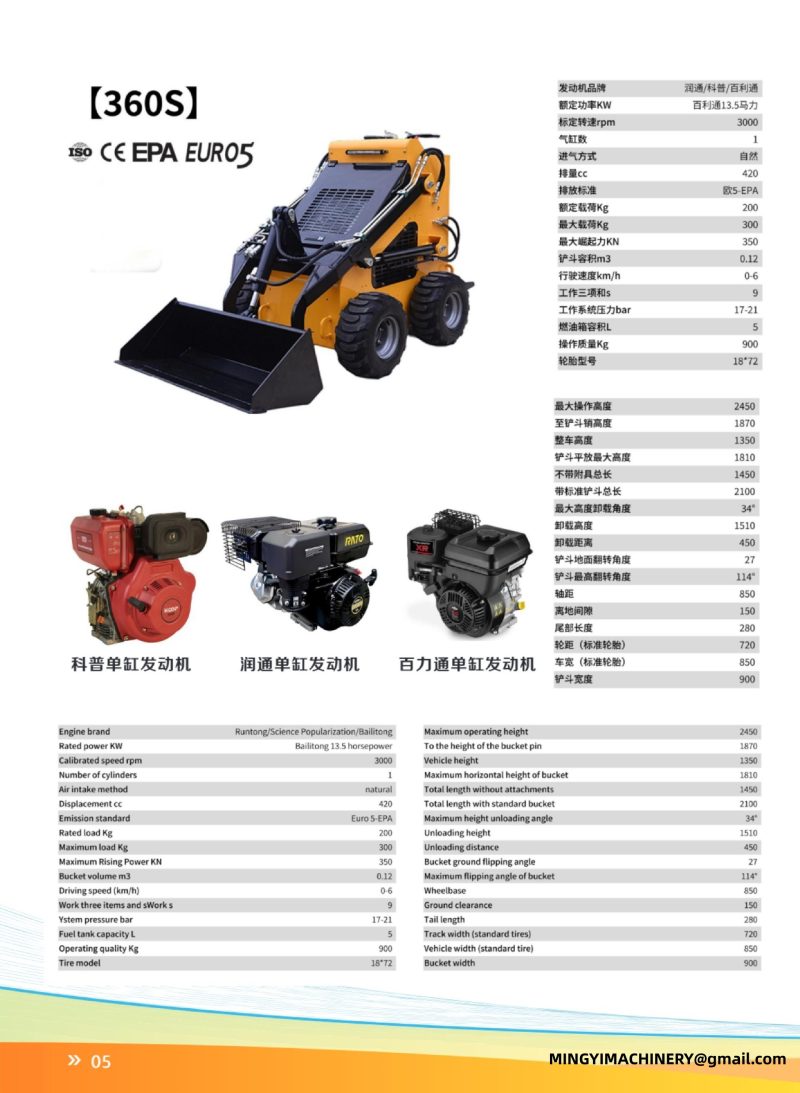
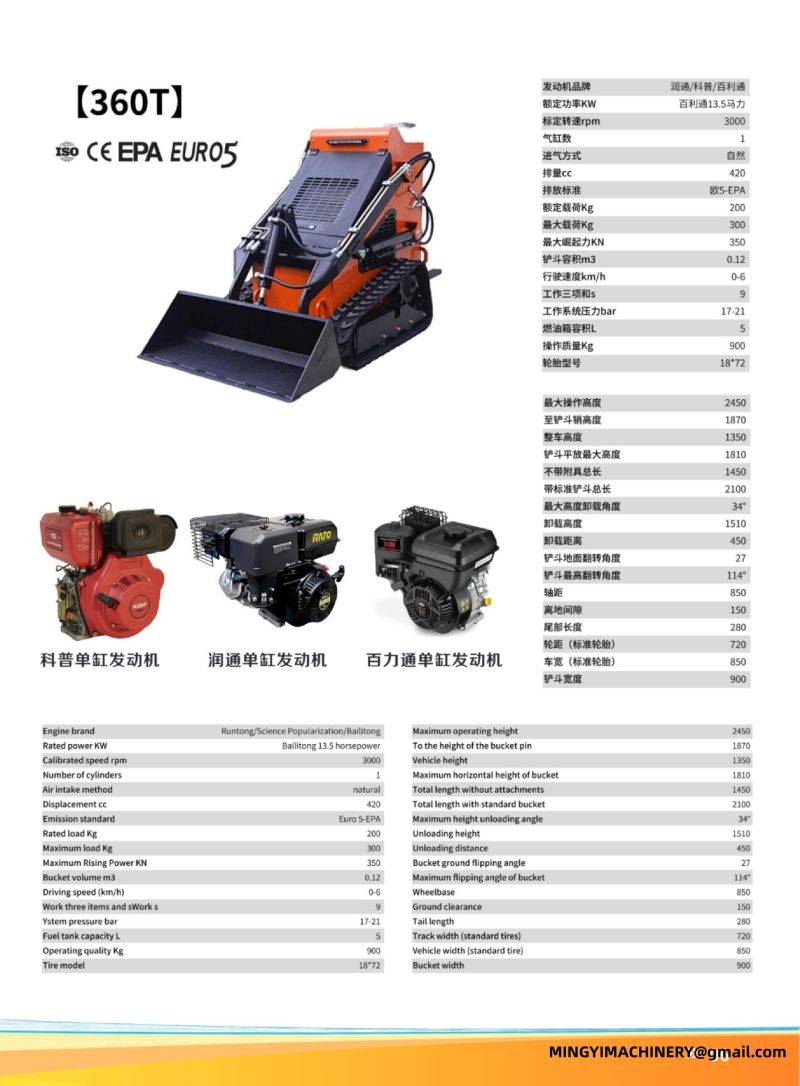
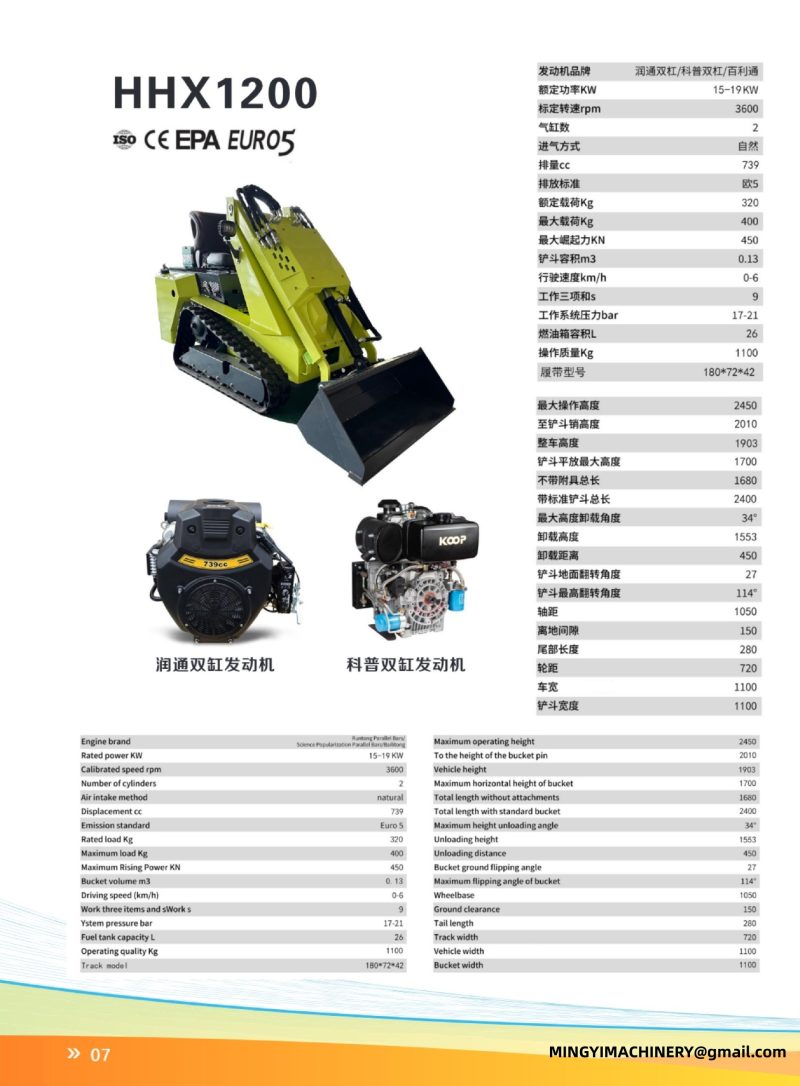
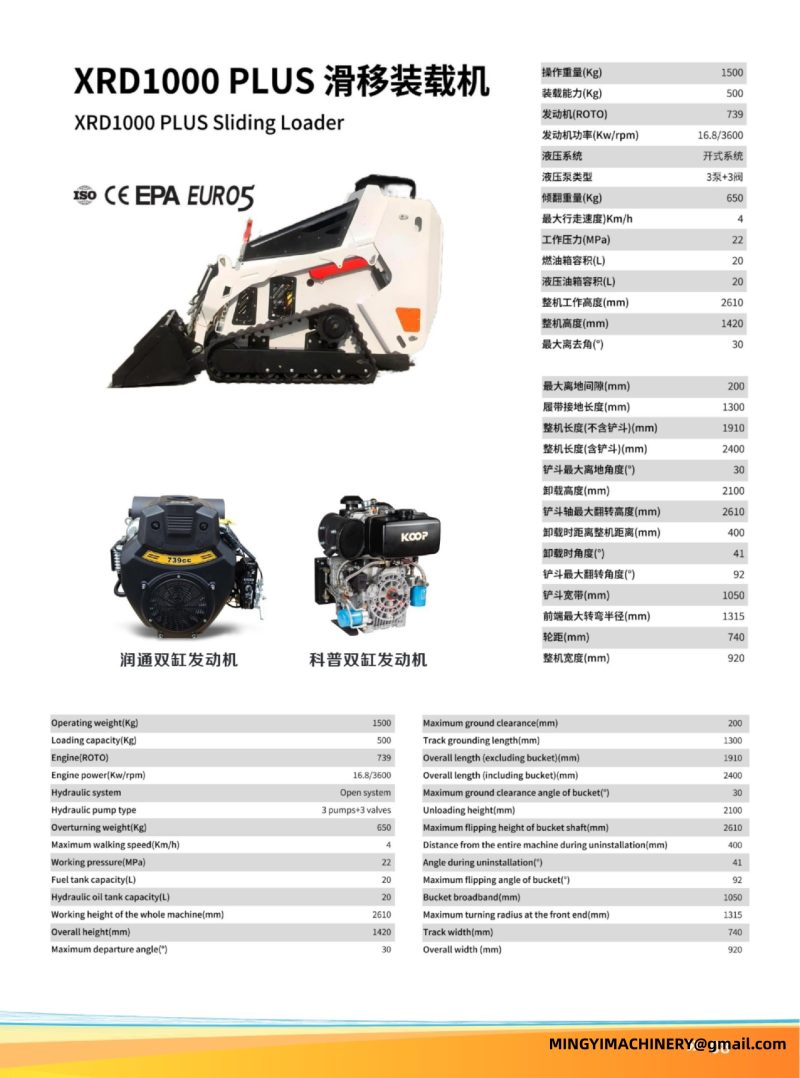
A skid-steer loader is a compact four-wheel machine that turns within its own length by driving the left and right wheels at different speeds. That zero-radius steering allows it to work inside buildings, between fence lines and in other spaces where a conventional loader cannot manoeuvre.
Mingyi skid-steer loaders combine a strong hydraulic system with a quick-change attachment interface, so one machine can handle many tasks: loading and levelling with a bucket, lifting pallets with forks, drilling with an auger, digging narrow trenches, sweeping yards, or gripping logs and debris with a grapple.
They are widely used in construction, agriculture, landscaping, livestock sheds and municipal maintenance, where a compact footprint and high manoeuvrability matter more than raw size. Open or enclosed cab, joystick or lever control, and track or tyre variants let the machine match the ground and the operator.
Tell us your job and site conditions, and we will recommend a skid-steer loader with the right attachments.
Matching skid-steer loader attachments and applications to ground conditions
Ground decides more of the outcome than power does. Soft, wet or loose surfaces call for a wider footprint and lower ground pressure, while hard standing allows a narrower machine that turns in less space and travels faster between tasks. The working surface should be surveyed before this class of machine is specified. A machine that is stable on compacted gravel can be unusable on the same site after rain, and the difference shows up as lost days rather than as a fault.
Wear items and life of skid-steer loader attachments and applications
Certain parts are designed to be consumed. Knowing which items on the unit in daily use are wearing parts, and roughly how long they last in the duty the machine sees, turns replacement into a plan rather than a breakdown. Wear rate follows conditions far more than hours. A machine of this size working on abrasive ground or in mud will consume undercarriage or tyre life much faster than the same machine on clean ground.
Export packing and shipping of skid-steer loader attachments and applications
Export orders add steps that domestic buyers never see. Packed dimensions, securing points, documentation and any dismantling required are all settled before the equipment on site leaves the factory, and each one affects the freight booking. Container loading is a planning exercise. Confirming how the machine itself is packed and how many units fit a container is what turns a per-unit freight estimate into a delivered figure the buyer can actually plan against.
Transporting skid-steer loader attachments and applications to and between sites
Owners who work across several sites should check the transport dimensions before ordering. The model in question that fits a standard trailer can be moved by any operator with a suitable vehicle, while an over-width machine narrows that choice and complicates every move. Shipping dimensions matter as much on export orders as they do locally. Confirming the packed size of the machine in that duty before booking avoids re-booking freight after the machine is built.
Warranty, commissioning and early checks
Warranty terms are clearer when they are read before purchase. Knowing what is covered, what counts as a wearing item and what documentation is required makes a claim on the unit on the job straightforward rather than contested. Early faults are usually simple. A machine built for the work that behaves differently in its first few hours is more often mis-set than defective, and a call to the supplier at that point usually resolves it the same day.
Fuel use and running demands of skid-steer loader attachments and applications
Fuel is usually the largest controllable running demand. Operating style, correct tyre or track condition and a clean air supply all move consumption on the equipment in service by more than most buyers expect. Consumption is best measured over a full week rather than judged per hour. Idle time, repositioning and waiting for other trades are often the largest share of the fuel this class of machine burns on a site.
Upgrading and reconfiguring skid-steer loader attachments and applications
Reconfiguration can extend the useful life of a machine. The unit in daily use that no longer suits the current work may suit it again with a different attachment, guarding or control arrangement. Upgrades should be checked against the base machine. Hydraulic capacity, mounting interface and stability all limit what can reasonably be added to a machine of this size, and confirming those limits avoids an unsatisfactory result.
Handover and documentation for skid-steer loader attachments and applications
Handover should include the documents as well as the keys. Parts list, service schedule and the operator notes for the equipment on site are what the workshop needs in month six, and they are much harder to obtain later. A short familiarisation session prevents the early faults. Most first-month problems on the machine itself come from unfamiliarity with controls, limits or checks rather than from the machine itself.
Storage and downtime care for the model in question
Before-storage preparation prevents most return-to-work faults. Draining or treating fuel, protecting exposed rods and relieving pressure where the maker specifies it are the items worth an hour when the machine in that duty is parked. A periodic start is better than none. Running the unit on the job to operating temperature during a long layoff keeps seals and the charging system in better condition than leaving it untouched until the next job.
Resale value and replacement planning
Replacement timing is a planning decision. Knowing the intended working life of a machine built for the work lets an owner sell while the machine still has value rather than after a major repair becomes due. Records are part of the asset. Keeping the service history and the hour records with the equipment in service makes it easier to sell, easier to insure and easier to justify the replacement machine internally.
Engine and power options behind this class of machine
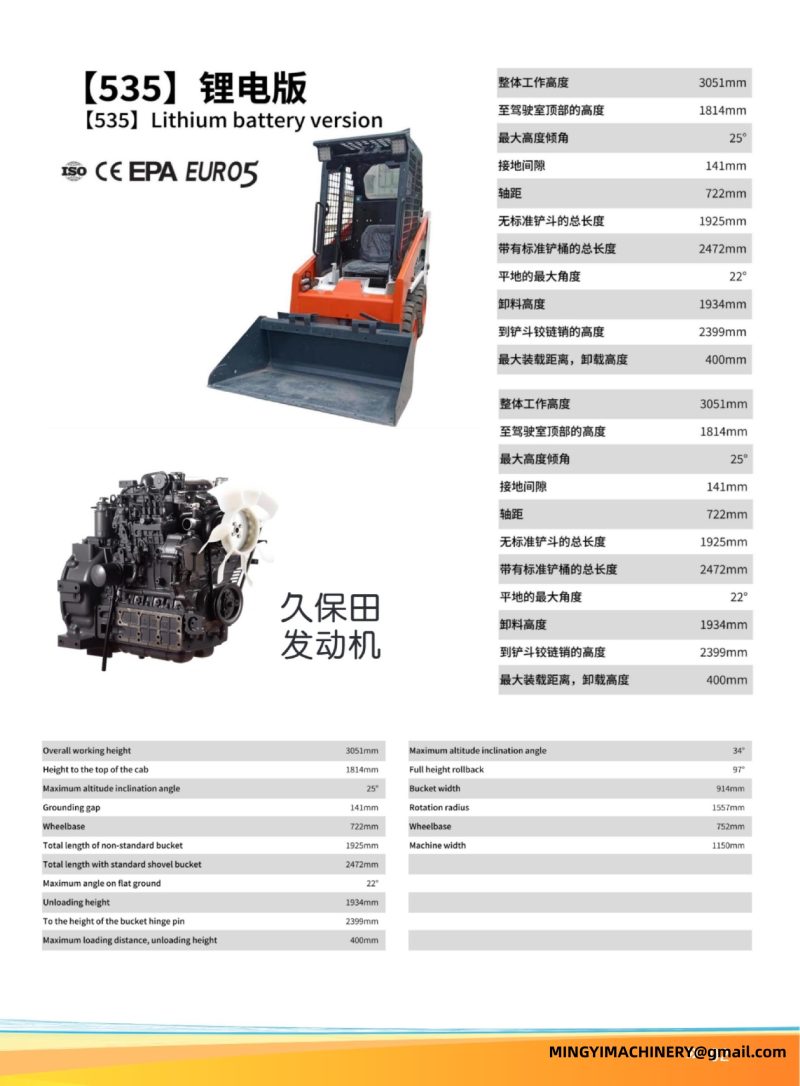
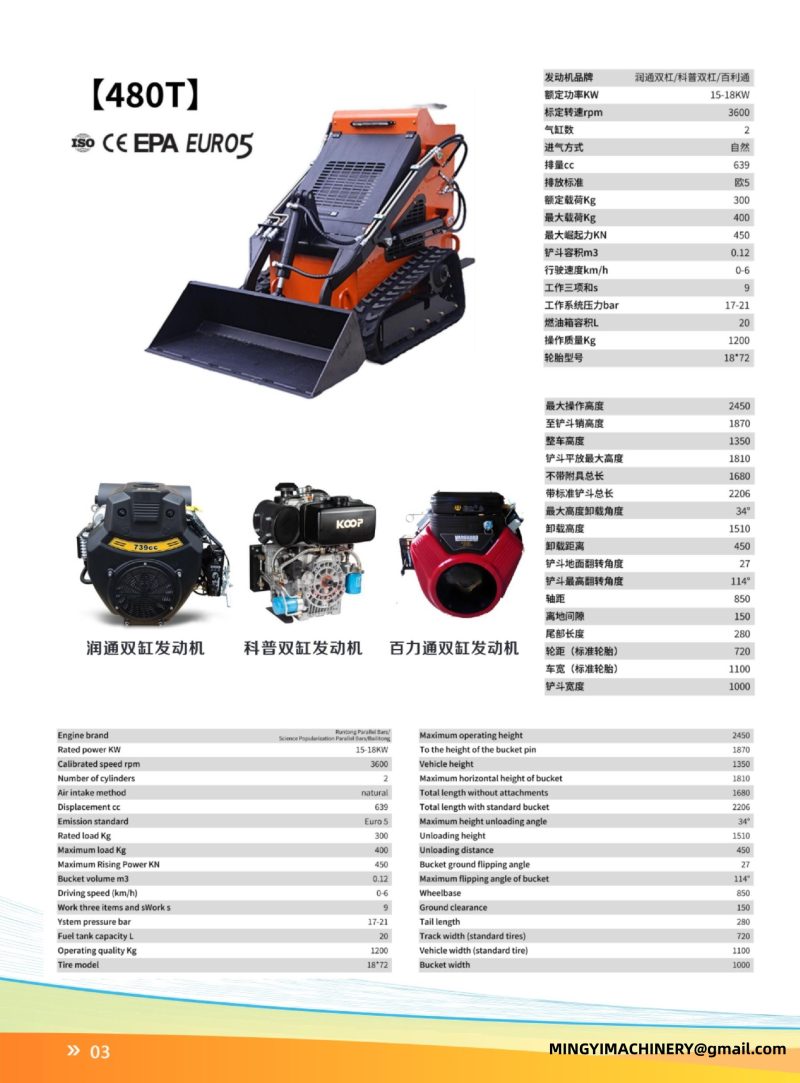
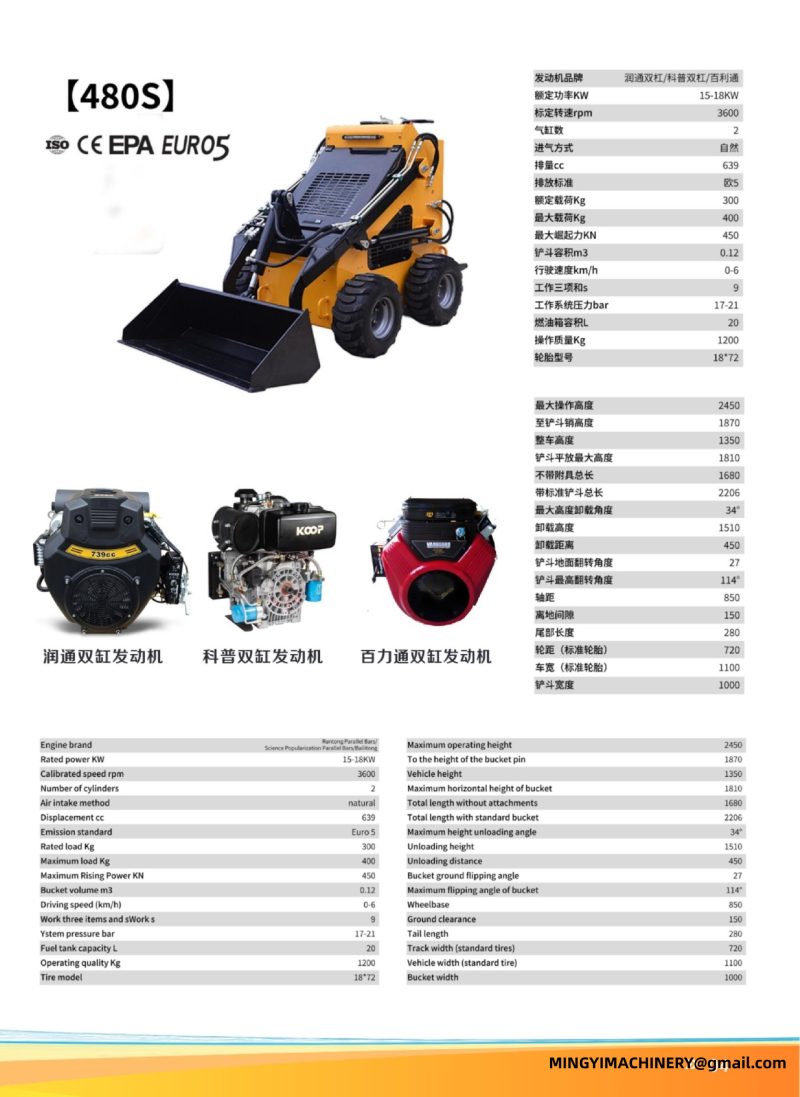
Power unit choice is usually a parts question, not a performance one. Two buyers can order the same a machine of this size and sensibly choose different engines, because the right answer depends on which brand the local workshop already supports. Matching the engine to the duty matters more than the peak rating. The unit in daily use that spends its day at part load benefits from a different setup than one that works at full output, and the difference shows in fuel use over a season.
Lighting and low light operation of the equipment on site
Working after daylight changes the risk. Lighting coverage on the machine itself and across the working area, plus high-visibility clothing for anyone on foot, are the items that make low-light work practical. Planning helps more than extra lamps. Positioning the model in question so that the work is lit from the machine side, and keeping the route clear, does more for safety than adding light to a badly planned task.
Cold weather and low temperature work with the machine in that duty
Cold changes how a machine starts and how it warms up. Allowing the unit on the job to reach operating temperature before loading it, and using the correct grade of oil and fuel for the season, prevents most cold-start problems. Low temperatures also make materials behave differently. Ground that is frozen hard in the morning can be soft by midday, and planning the sequence around that is easier than fighting it with a machine built for the work.
Running the equipment in service in a mixed fleet
Utilisation matters more than the purchase decision over a few years. This class of machine that sits idle ties up the same yard space standing still as one that earns, so the buying decision should follow the hours the machine will realistically work. Standardising where possible simplifies everything downstream. When several units of the unit in daily use share a service schedule and a parts list, the fleet becomes easier to plan and easier to sell on at replacement time.
Parts, service and support for a machine of this size
Support after delivery is a parts question. Filters, belts, hoses and the wearing items specific to the equipment on site are what a buyer should plan to hold before the first service interval rather than order after a failure. Parts availability usually decides the engine and the brand. A machine built around components the local network already carries is serviced from stock, which is the difference between a day lost and a week lost.
Ordering, lead time and delivery of the machine itself
The order should state the configuration in writing. Engine, attachments, colour, documents and any market requirement are clearer on the build sheet for the model in question than in a conversation after delivery. Delivery planning includes the receiving end. Knowing whether the machine in that duty will be craned, driven or forked off, and whether the site can accept it, is settled before dispatch rather than on the day.
Load, ballast and stability on the unit on the job
Ballast and attachment weight change the machine. Adding a heavy tool to a machine built for the work moves the centre of gravity, and the counterweight or configuration should be matched to the tool rather than assumed. Carrying and travelling with a load needs its own plan. Speed, gradient and surface all matter more once the equipment in service is loaded, and the safe combination is the conservative one.
Operator technique and familiarisation
Familiarisation should cover the limits as well as the controls. Knowing where this class of machine loses stability, how it behaves at full reach, and what the warning lights mean prevents the incidents that are put down to bad luck. A short handover pays for itself. Operators who understand why the unit in daily use is set up the way it is will report a change in behaviour early, which is usually the point where a repair is simplest.
Attachments and working tools for a machine of this size
The base machine is only as useful as the tool on the end of it. Matching the attachment to the task - rather than to what arrived with the machine - is what lets one the equipment on site cover several jobs across a week.
A second operator for the machine itself
Different operators suit different work. The person who is quickest with the model in question on open ground is not always the one who is safest in a confined space, and having both available is a genuine advantage.
Storage and long idle periods for the machine in that duty
The battery and the fuel are the first things to suffer in storage. Preparing the unit on the job properly at the start of the idle period avoids the flat battery and the contaminated tank that greet an unprepared machine.
Documents that travel with a machine built for the work
Keeping the documents together is part of ownership. The manual, the service record and the build sheet for the equipment in service belong in one folder, and the machine is easier to sell later when that folder is complete.
Later additions and retrofits on this class of machine
An added function should pay for itself quickly. Whether the unit in daily use gains a different bucket, a hydraulic service or a protection package, the test is the number of days a year it is actually used.
Planning the season around a machine of this size
Workload is rarely even across the year, and the machine should be specified for the busy weeks. The equipment on site sized only for the average month will be the limiting factor exactly when the work is worth the most.
Pre-delivery inspection before the machine itself leaves the shop
Inspection is a list, not a glance. Before the model in question is released the fluid levels, belt tension, electrical connections and safety decals are each ticked off, and anything that fails stays in the shop rather than travelling with the machine.
Wear limits and replacement points on skid-steer loader attachments and applications
Track sag, tyre tread, cutting edges and bucket teeth all have stated limits, and the figures in the manual are the ones to work from.
Measuring at the same place each time turns a guess into a trend, and a trend is what tells a workshop when to order.
Related pages
rubber track crawler carrier for soft ground · tracked rotary tiller for hillside and paddy fields · steel track replacement for mini diggers · PRODUCTS









