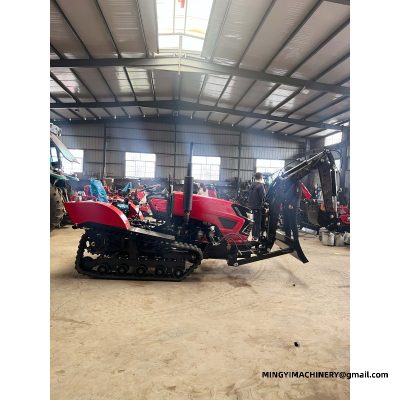
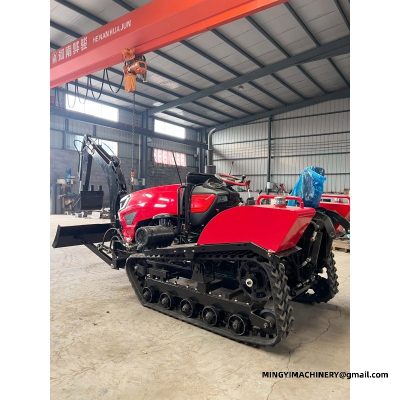
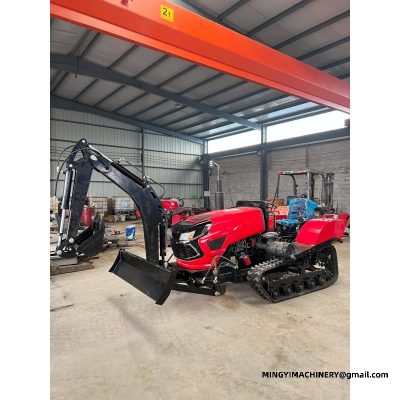
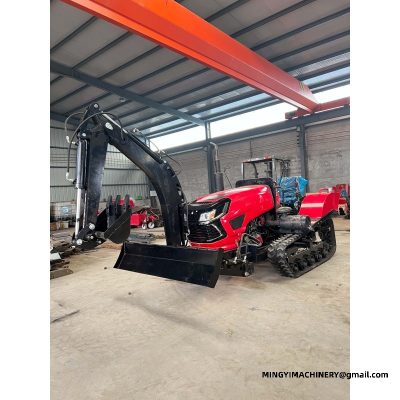
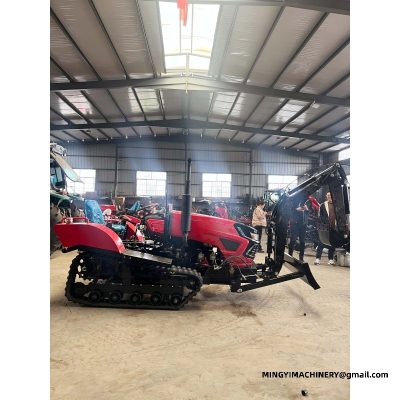
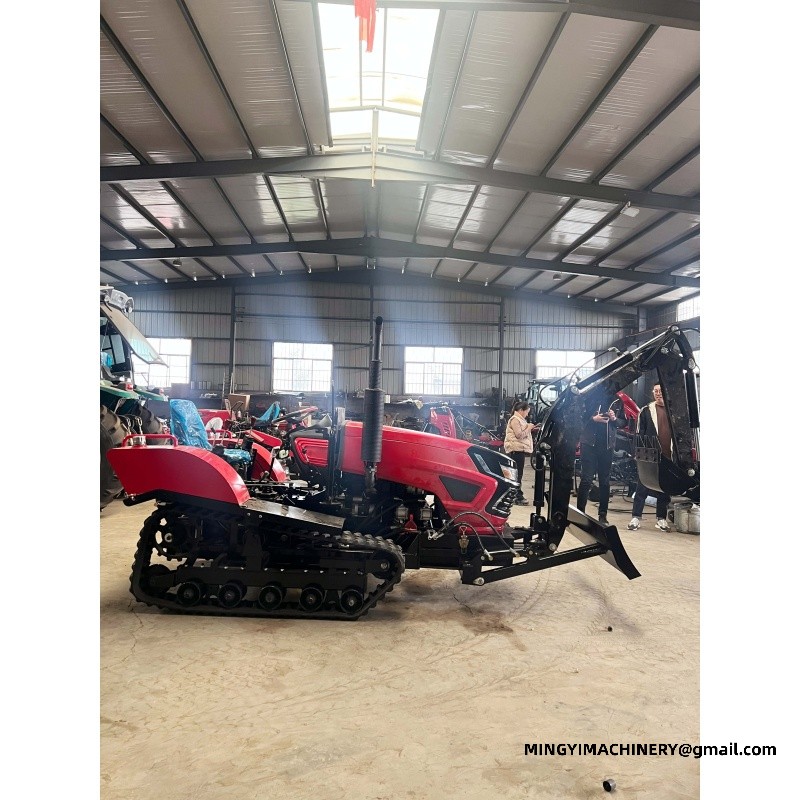
Crawler Type Rotary Tiller
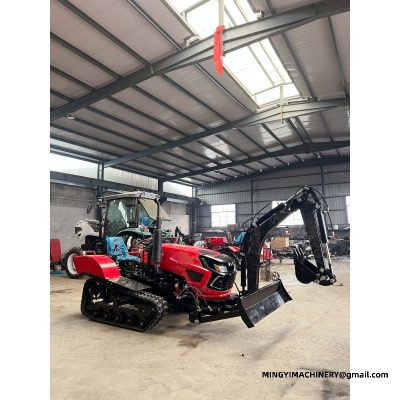
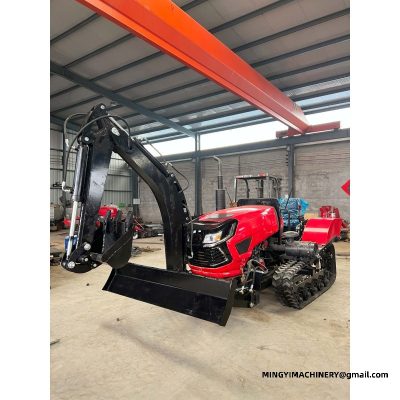
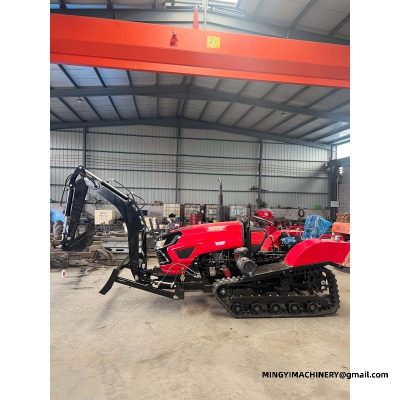
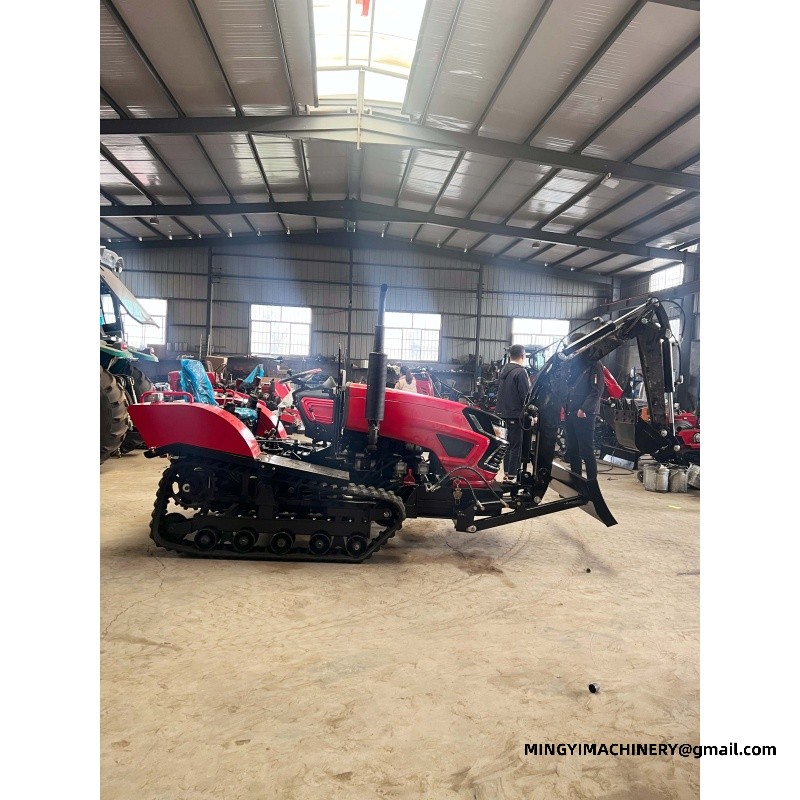
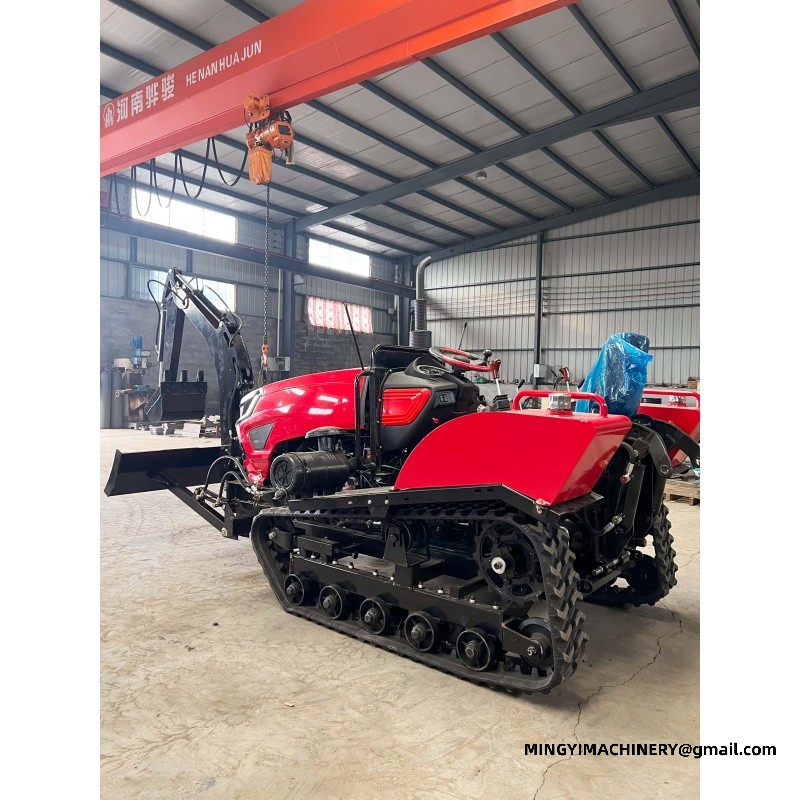
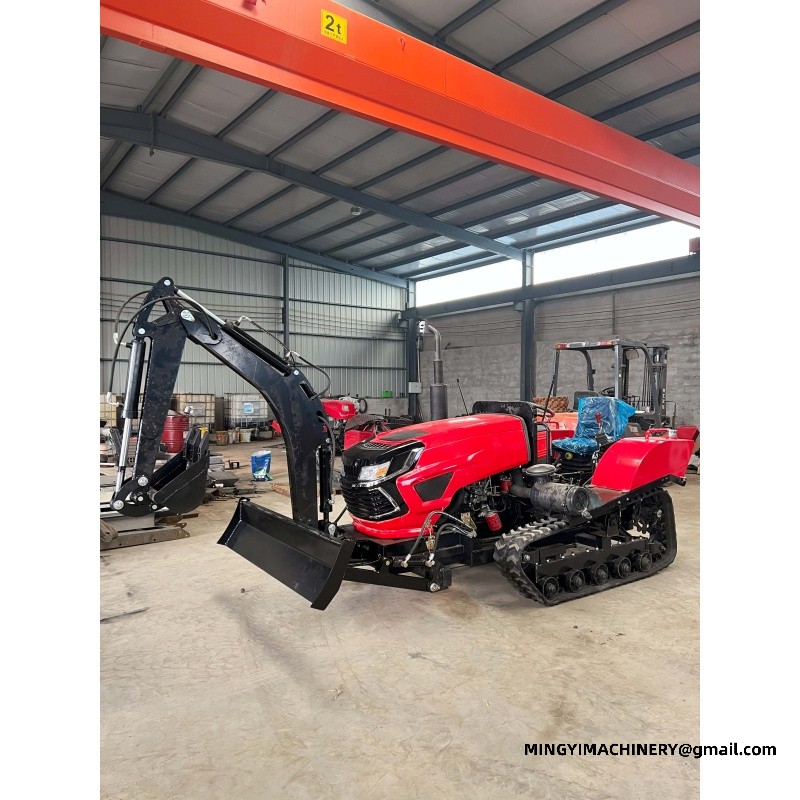
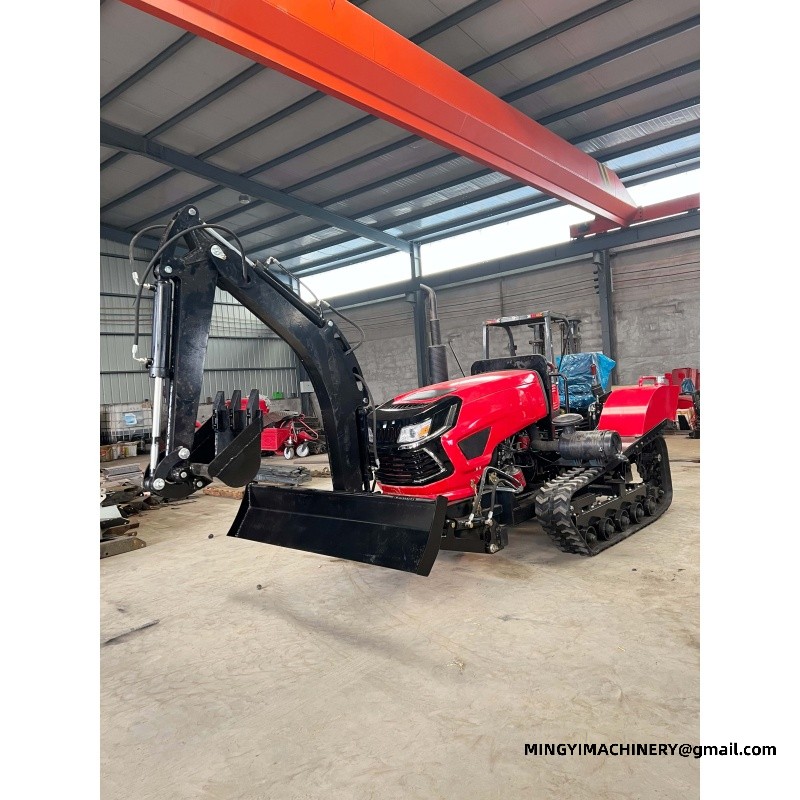
The Mingyi crawler type rotary tiller is an agricultural machine built around a tracked undercarriage. Powered tracks with a low centre of gravity give the tiller the traction and stability it needs on hillside fields, terraces and wet, muddy farmland where a wheeled tractor would slip or get stuck.
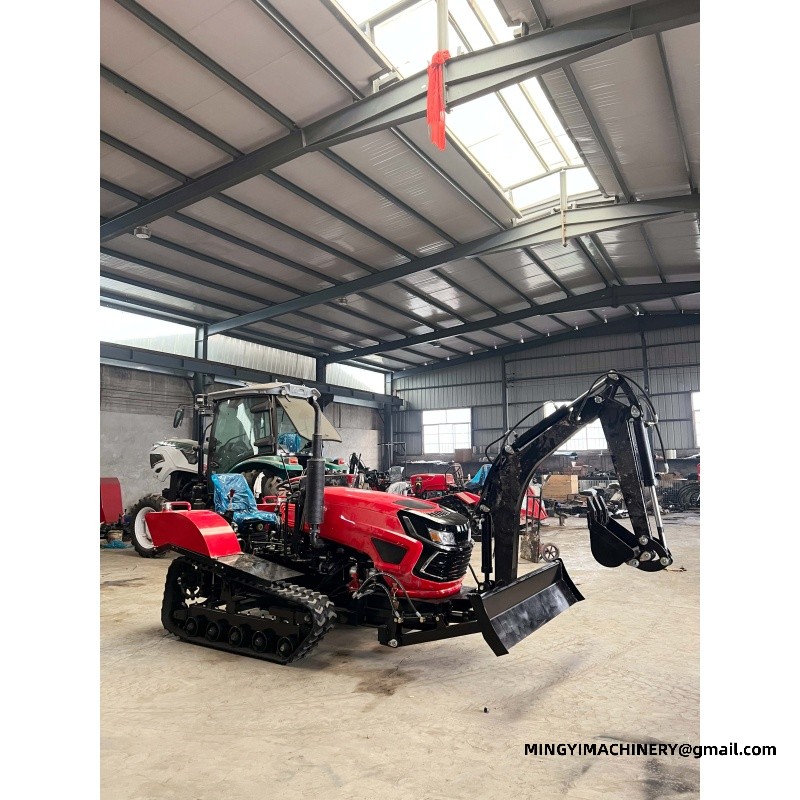
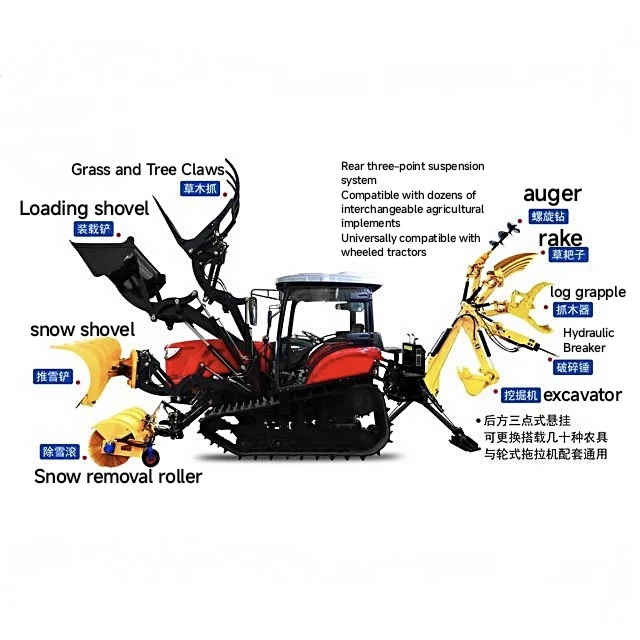
A rear three-point hitch accepts standard farm implements, so the same tracked power unit can run a rotary tiller, a plough, a ridger and other tools. Low ground pressure also means less compaction of the soil and less rutting in paddy and orchard conditions.
Typical duties include preparing seedbeds, turning over heavy clay and grass land, and working orchards and terraced plots that are difficult to reach with conventional machinery. The reinforced track frame, protected hydraulic lines and accessible service points are designed for continuous field work and straightforward maintenance in rural workshops.
Tell us your field conditions and the implements you intend to use, and we will suggest a suitable crawler tiller configuration.
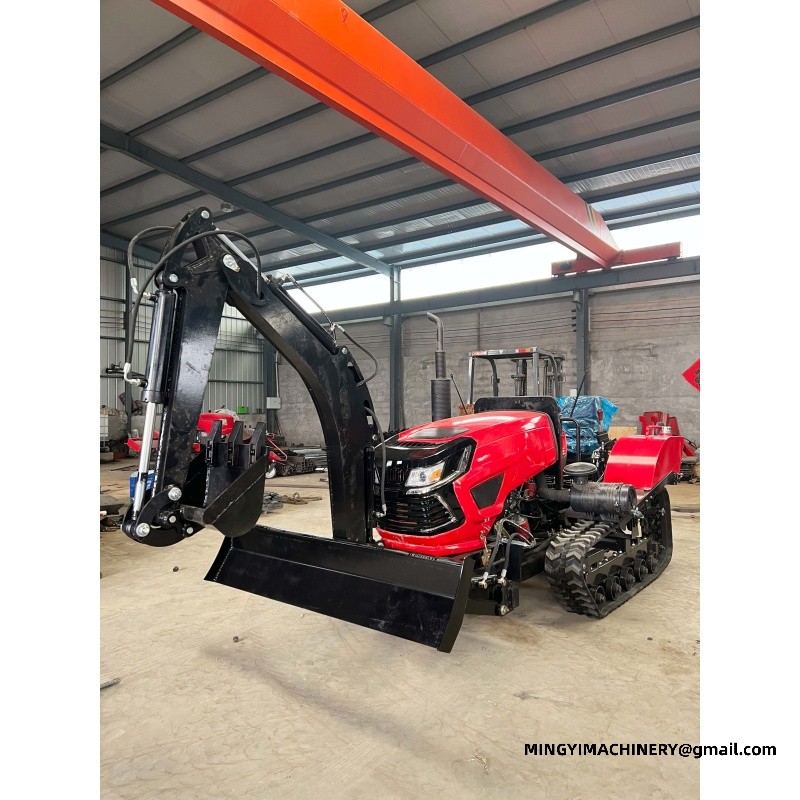
Daily checks and maintenance on tracked rotary tiller for hillside and paddy fields
Most failures start as something small that a walk-around would have caught. Fluid levels, belt tension, tyre or track condition and any fresh leak are the items worth two minutes at the start of each shift on this class of machine. Service intervals exist because wear is predictable. Following the maker schedule on the unit in daily use takes far less time than repairing the damage that follows a missed oil change or a filter left in place past its life.
Load, ballast and stability on tracked rotary tiller for hillside and paddy fields
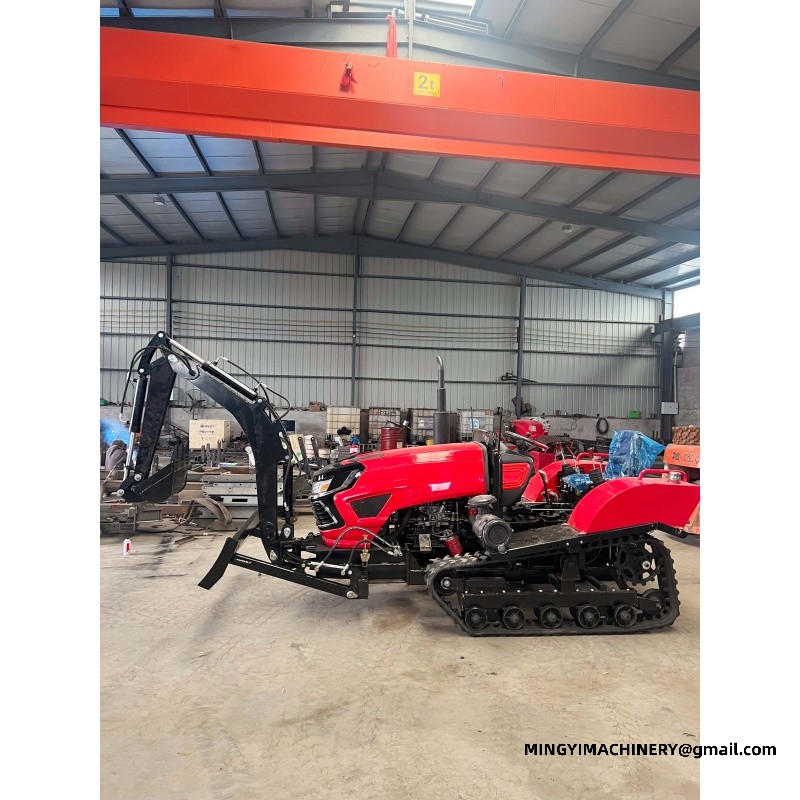
Stability follows the load and its position. Knowing the rated capacity of a machine of this size at the working radius, rather than at its best case, is what keeps handling predictable and the machine upright. Ballast and attachment weight change the machine. Adding a heavy tool to the equipment on site moves the centre of gravity, and the counterweight or configuration should be matched to the tool rather than assumed.
Safe working practice around tracked rotary tiller for hillside and paddy fields
Slopes and edges deserve a separate check. The machine itself that is stable on level ground behaves differently across a gradient, and the safe working angle is a number worth knowing rather than estimating. Personal protective equipment and a stop rule are simple controls. Agreeing before work starts that anyone can stop the job is the single measure that most often prevents a serious incident near the model in question.
Warranty, commissioning and early checks
Commissioning is the point where most avoidable issues are found. Checking levels, fasteners and function on the machine in that duty before it goes to work takes an hour and prevents a claim conversation later. Early faults are usually simple. The unit on the job that behaves differently in its first few hours is more often mis-set than defective, and a call to the supplier at that point usually resolves it the same day.
Fitting tracked rotary tiller for hillside and paddy fields into the wider site plan
Machine productivity depends on what happens around it. Deliveries, other trades and the sequence of work decide how much of the shift a machine built for the work spends actually working rather than waiting. Sequencing avoids rework. Doing the work in the order that suits the ground and the following trades keeps the equipment in service productive and prevents finishing a task that then has to be opened up again.
Matching tracked rotary tiller for hillside and paddy fields to ground conditions
Ground decides more of the outcome than power does. Soft, wet or loose surfaces call for a wider footprint and lower ground pressure, while hard standing allows a narrower machine that turns in less space and travels faster between tasks. Traction and flotation are two separate questions. This class of machine may have the power for a slope and still not have the grip, so the surface, not the engine rating, is usually what limits the working day.
Dust, mud and abrasive conditions around tracked rotary tiller for hillside and paddy fields
Cleaning is maintenance, not appearance. Washing the cooling surfaces and clearing packed material from the unit in daily use keeps temperatures where they should be and makes the next inspection quicker and more useful. Sealed points and guarded areas deserve a look in these conditions. A machine of this size working in abrasive dust benefits from checked boots, intact guards and clean breathers, all of which are quick to verify.
Parts, service and support for the equipment on site
Parts availability usually decides the engine and the brand. A machine built around components the local network already carries is serviced from stock, which is the difference between a day lost and a week lost. Remote diagnosis shortens most faults. A walk-around on video with the panels open often identifies the cause on the machine itself without waiting for a visit, and avoids shipping a part that turns out not to be needed.
Upgrading and reconfiguring the model in question
Upgrades should be checked against the base machine. Hydraulic capacity, mounting interface and stability all limit what can reasonably be added to the machine in that duty, and confirming those limits avoids an unsatisfactory result. The decision is economic as well as technical. Comparing the work of reconfiguring the unit on the job against a different machine is a short calculation that usually gives a clear answer.
Operator technique and familiarisation
Machine output varies more between operators than between brands. Smooth, planned movements put less load on the structure and use less fuel, and that difference is visible on the hour meter and in the service bills for a machine built for the work. Familiarisation should cover the limits as well as the controls. Knowing where the equipment in service loses stability, how it behaves at full reach, and what the warning lights mean prevents the incidents that are put down to bad luck.
Wear items and life of this class of machine
Certain parts are designed to be consumed. Knowing which items on the unit in daily use are wearing parts, and roughly how long they last in the duty the machine sees, turns replacement into a plan rather than a breakdown. Replacing wear items early is usually simpler. Worn components on a machine of this size load the parts they run against, so a worn part left too long often becomes a major repair.
Lighting and low light operation of the equipment on site
Working after daylight changes the risk. Lighting coverage on the model in question and across the working area, plus high-visibility clothing for anyone on foot, are the items that make low-light work practical. Visibility from the seat is different at night. Reflections, shadows and glare all hide detail, so the machine itself used after dark benefits from clean lenses, working wipers and a slower working pace.
Fuel use and running demands of the machine in that duty
Fuel is usually the largest controllable running demand. Operating style, correct tyre or track condition and a clean air supply all move consumption on the unit on the job by more than most buyers expect. Planning the work to reduce empty movement is free. Fewer repositioning cycles on a machine built for the work means less fuel, less wear on the undercarriage or tyres and more of the shift spent on productive work.
Attachments and working tools for the equipment in service
The base machine is only as useful as the tool on the end of it. Matching the attachment to the task - rather than to what arrived with the machine - is what lets one the unit in daily use cover several jobs across a week. Most owners find that the second attachment changes how often the machine is used. This class of machine that was bought for one task often becomes the general machine on site once a second tool is available.
Specifying a machine of this size against the job list
Buyers who specify the machine itself on paper before enquiring get specifications that can be compared. Without that list, two suppliers will propose two different machines and the simpler one is usually the smaller one, not the better value. A written duty list is the simplest part of the purchase. It takes an hour to note the material, the distance, the gradient and the hours per week, and it is what turns the equipment on site enquiry into a machine that fits.
Customisation and build options for the model in question
Build options are where a standard machine becomes the right machine. Colour, guarding, lighting, seating and hydraulic provisions can usually be set at build time on the machine in that duty, and are far simpler then than as a retrofit. Fleet buyers often want consistency rather than variety. Specifying the unit on the job so that several units share controls, filters and service points reduces training time and keeps the parts shelf small.
Transporting a machine built for the work to and between sites
Moving the machine is part of owning it. Overall length, width and height decide which trailer or container the equipment in service fits, and a machine that needs a permit or an abnormal load escort is a machine with a delivery delay built in. Owners who work across several sites should check the transport dimensions before ordering. This class of machine that fits a standard trailer can be moved by any operator with a suitable vehicle, while an over-width machine narrows that choice and complicates every move.
Commissioning the unit in daily use on site
Commissioning is where the specification meets the ground. The settings chosen for a machine of this size are confirmed against the actual site, and the working pattern is adjusted before the machine is asked for a full day.
Documents that travel with the equipment on site
The machine is only half of what arrives. The parts book, the service schedule and the declarations that come with the machine itself are what let the owner register, insure and maintain it without a second round of emails.
Wear items and spares worth holding for the model in question
The parts that stop a machine are rarely the parts that are hardest to find. Filters, belts, seals and the ground engaging tools on the machine in that duty are easy to hold and slow to replace, which is why they belong on the shelf rather than on an order.
Moving the unit on the job between sites
A machine that works on one site still has to reach the next. The overall dimensions and the operating weight of a machine built for the work decide what trailer or truck is needed, and that decision belongs before the job is booked.
Packing, loading and shipment of the equipment in service
How a machine travels decides how it starts on arrival. Securing this class of machine against movement, protecting the exposed cylinders and keeping the battery and fluids in the right state for the voyage all belong to the packing list.
Night work and lighting on tracked rotary tiller for hillside and paddy fields
Night work changes the job more than most specification lines do, because light coverage, glare and shadow decide how much of the site the operator can actually read.
A lighting check belongs at the start of every night shift, together with a look at the warning beacon and the brake lights.
Fatigue management matters more after dark, so shorter cycles, a second operator on long runs and a fixed break pattern are part of the plan.
Working alongside other plant with tracked rotary tiller for hillside and paddy fields
Most site incidents between machines are about sequencing rather than about skill, meaning who is in the arc, who is loading whom and who moves next.
A loading plan sets the spot where the truck waits, the direction it approaches from and the signal for it to leave.
Where two machines share a bench or a stockpile, the newer operator is paired with the experienced one for the first shift.
Fire prevention and emergency steps for tracked rotary tiller for hillside and paddy fields
Most machine fires start with heat, oil and a dry screen of debris, and the first defence is a clean engine bay.
Related pages
four-wheel drive farm tractor with three-point hitch · 4x4 off-road transport vehicle body options · steel track for small excavators · PRODUCTS









