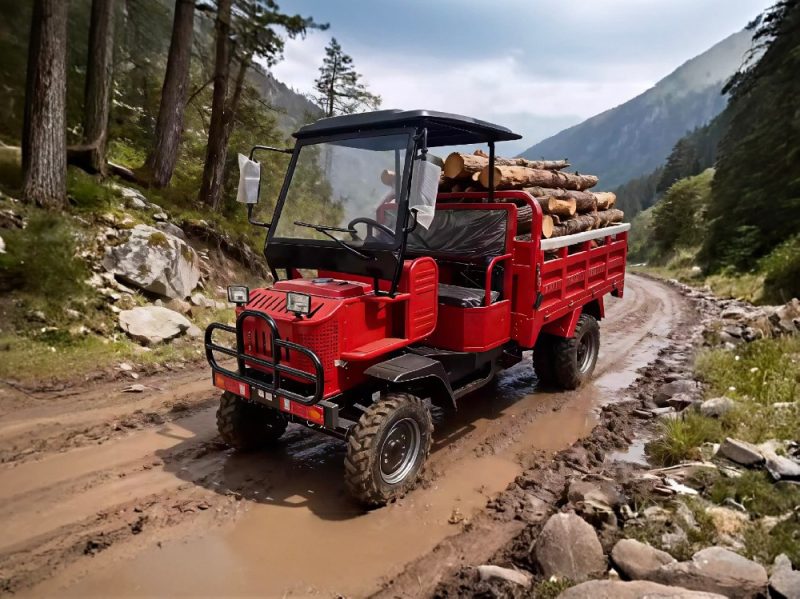
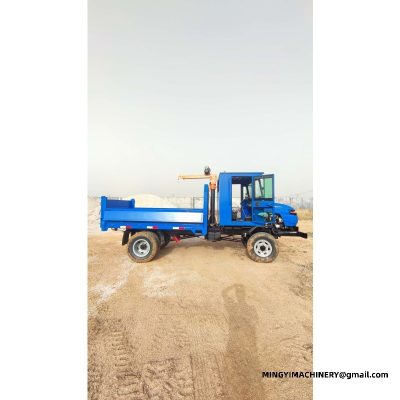
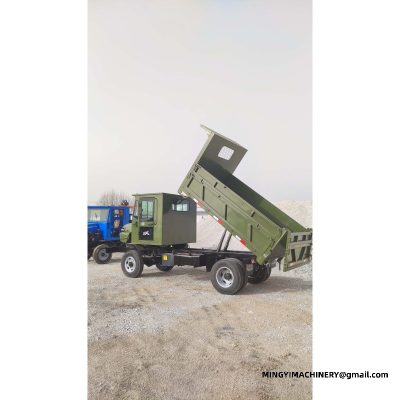
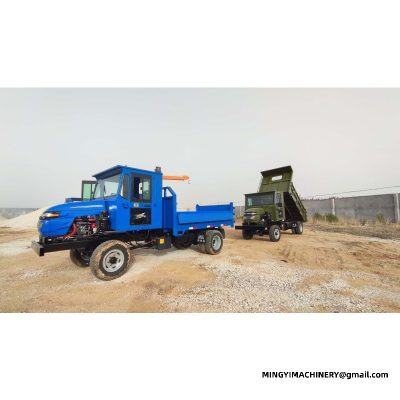
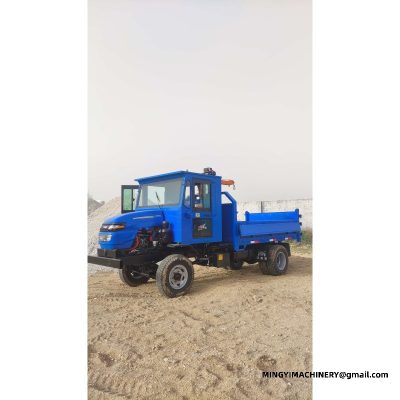
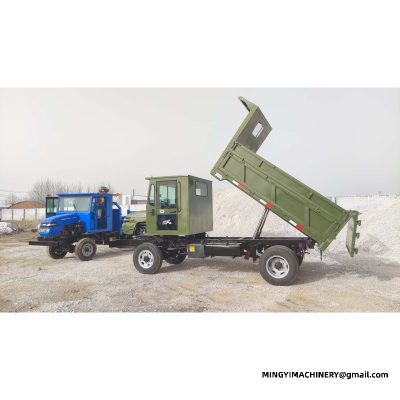
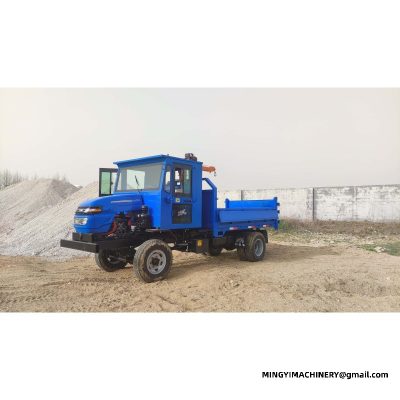
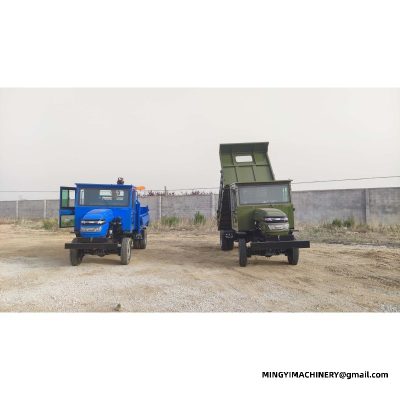
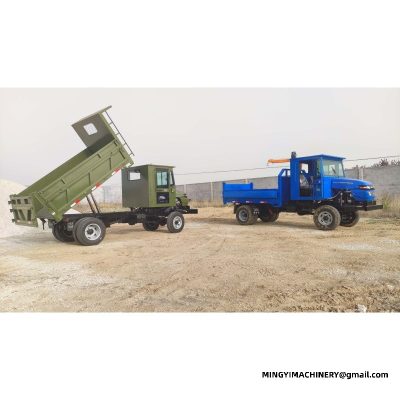
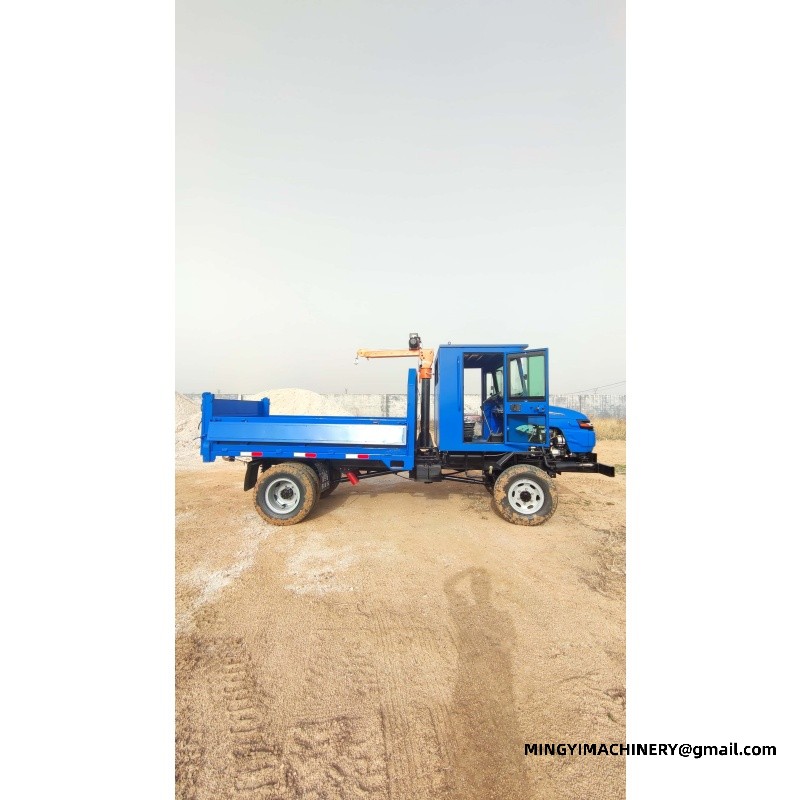
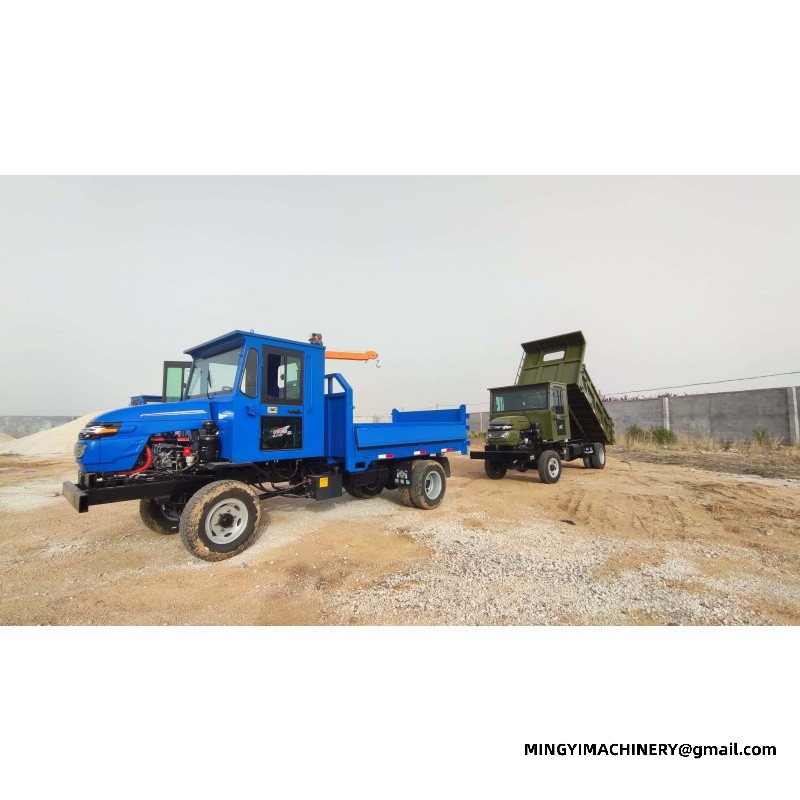
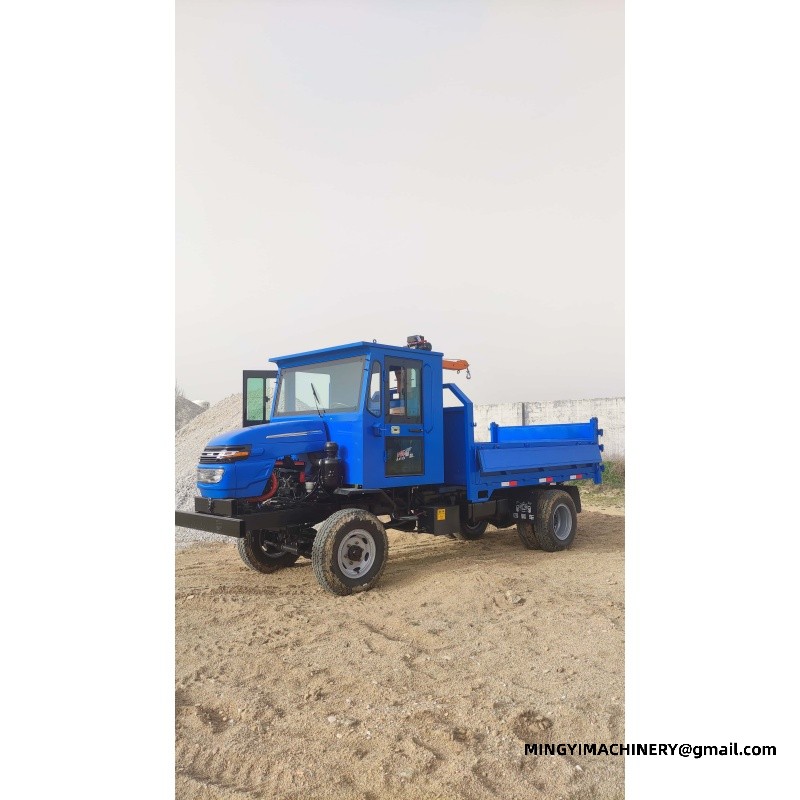
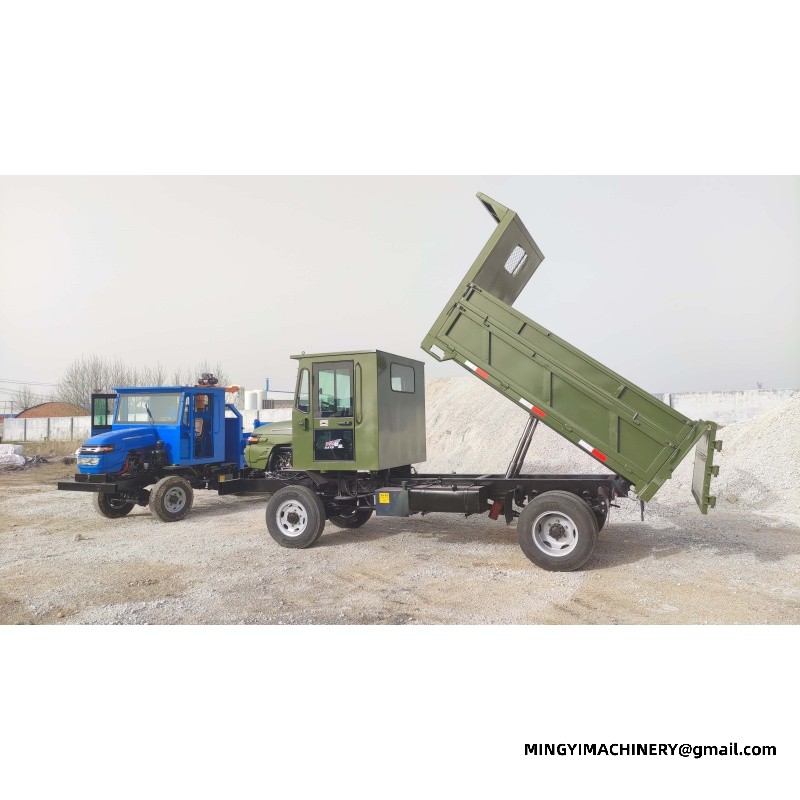
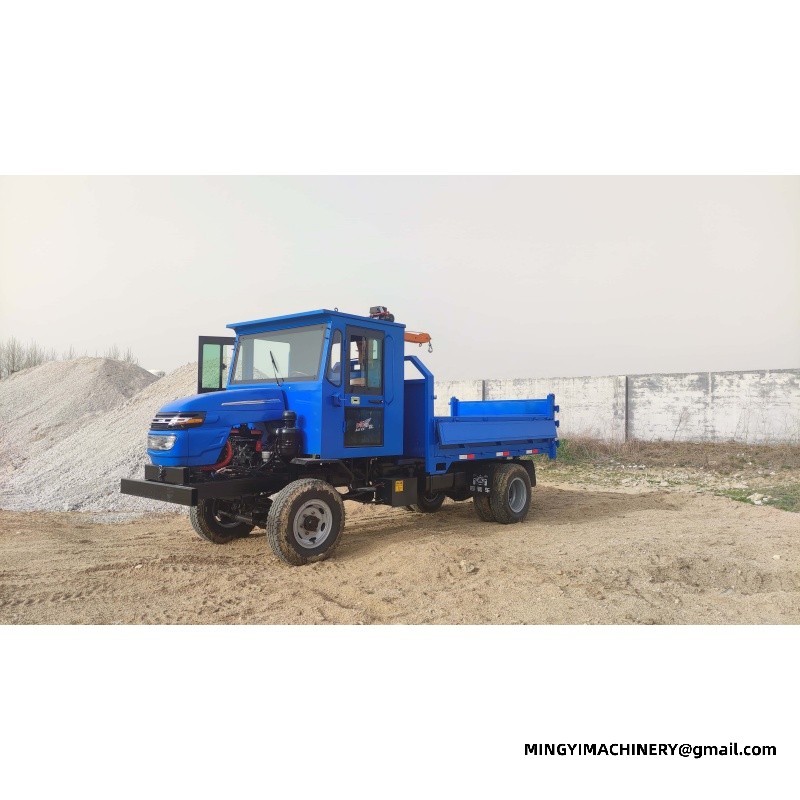
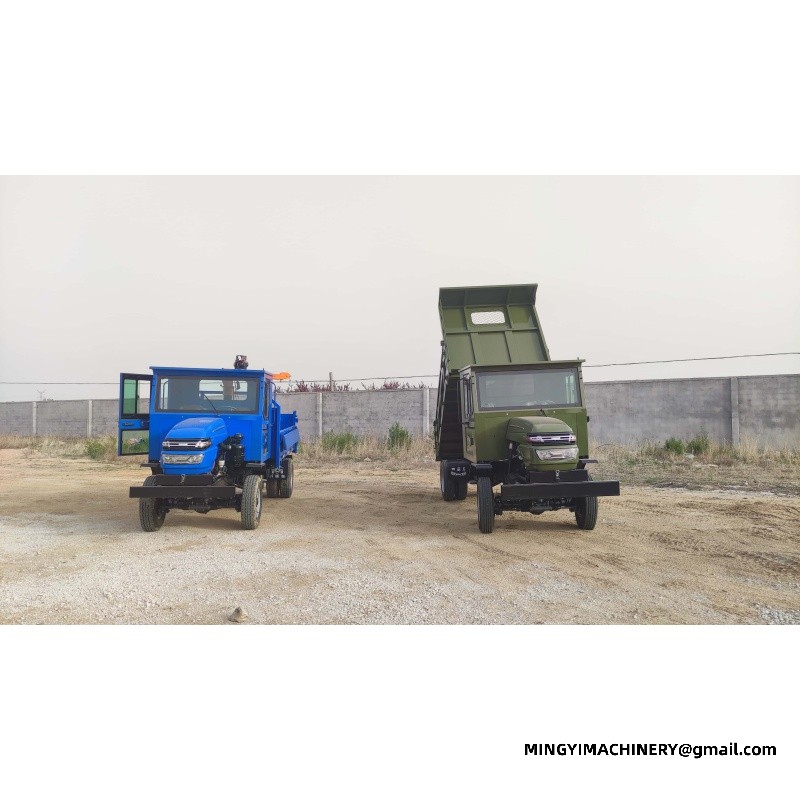
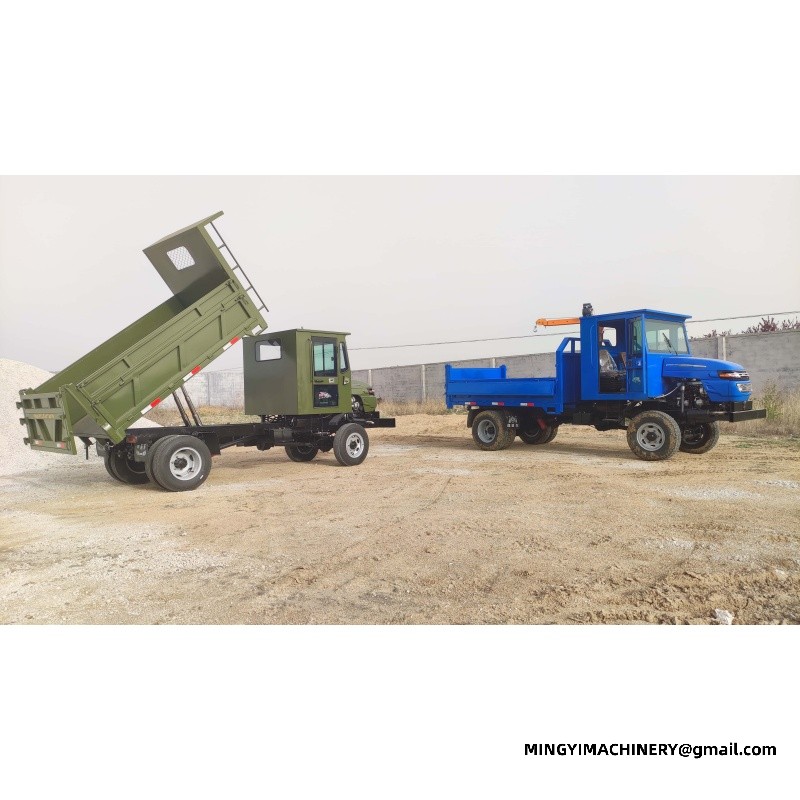
The Mingyi four-wheel drive transport vehicle is an off-road carrier for construction, mining, forestry and agricultural sites. Full-time four-wheel drive, a reinforced chassis and high ground clearance allow the machine to keep moving on muddy tracks, steep slopes and unrouted terrain where a standard lorry cannot operate.
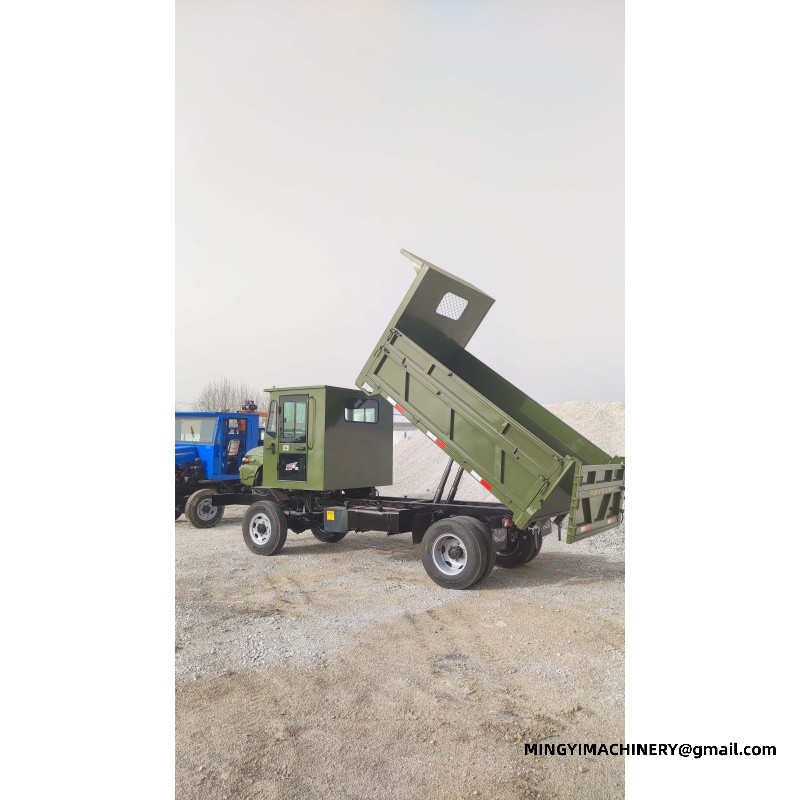
Because the platform is a chassis rather than a fixed body, it can be configured for different jobs: a dump body for soil, sand and gravel; a water tank for dust suppression and site supply; a concrete mixer for on-site pouring; a cargo deck for general goods; or a log grab for forestry work.
A high-torque diesel engine and heavy-duty axles support regular use under load, and the straightforward layout keeps servicing simple in remote areas. Drive modes — full-time four-wheel drive, part-time four-wheel drive and rear-wheel drive — can be specified according to ground conditions and fuel economy requirements.
Tell us the payload, the terrain and the body you need, and we will recommend a suitable 4x4 transport vehicle.
Storage and downtime care for 4x4 off-road transport vehicle body options
Before-storage preparation prevents most return-to-work faults. Draining or treating fuel, protecting exposed rods and relieving pressure where the maker specifies it are the items worth an hour when this class of machine is parked. A periodic start is better than none. Running the unit in daily use to operating temperature during a long layoff keeps seals and the charging system in better condition than leaving it untouched until the next job.
Engine and power options behind 4x4 off-road transport vehicle body options
Power unit choice is usually a parts question, not a performance one. Two buyers can order the same a machine of this size and sensibly choose different engines, because the right answer depends on which brand the local workshop already supports. Emissions documentation is part of engine selection for some destinations. Confirming which units can be supplied and documented for the destination country is worth doing at enquiry stage rather than after the build sheet is signed.
Export packing and shipping of 4x4 off-road transport vehicle body options
Export orders add steps that domestic buyers never see. Packed dimensions, securing points, documentation and any dismantling required are all settled before the equipment on site leaves the factory, and each one affects the freight booking. Documentation should be agreed at order stage. The commercial invoice, packing list and any certificate required at destination are part of shipping the machine itself, and missing papers delay clearance longer than the voyage takes.
Ordering, lead time and delivery of 4x4 off-road transport vehicle body options
The order should state the configuration in writing. Engine, attachments, colour, documents and any market requirement are clearer on the build sheet for the model in question than in a conversation after delivery. Delivery planning includes the receiving end. Knowing whether the machine in that duty will be craned, driven or forked off, and whether the site can accept it, is settled before dispatch rather than on the day.
Fitting 4x4 off-road transport vehicle body options into the wider site plan
Access and storage are worth settling early. Where the unit on the job will be parked, refuelled and serviced on site affects the working day more than most specification details, and it takes nothing to plan. Sequencing avoids rework. Doing the work in the order that suits the ground and the following trades keeps a machine built for the work productive and prevents finishing a task that then has to be opened up again.
Parts, service and support for 4x4 off-road transport vehicle body options
Support after delivery is a parts question. Filters, belts, hoses and the wearing items specific to the equipment in service are what a buyer should plan to hold before the first service interval rather than order after a failure. Parts availability usually decides the engine and the brand. A machine built around components the local network already carries is serviced from stock, which is the difference between a day lost and a week lost.
Cold weather and low temperature work with 4x4 off-road transport vehicle body options
Cold changes how a machine starts and how it warms up. Allowing this class of machine to reach operating temperature before loading it, and using the correct grade of oil and fuel for the season, prevents most cold-start problems. Batteries and fluids are the parts that notice the cold first. The unit in daily use kept on a maintainer through a freezing spell starts on the first turn, while one left standing is the usual cause of a lost morning.
Attachments and working tools for 4x4 off-road transport vehicle body options
The base machine is only as useful as the tool on the end of it. Matching the attachment to the task - rather than to what arrived with the machine - is what lets one a machine of this size cover several jobs across a week. Attachment decisions are best made before delivery. Specifying hydraulics and couplers at build time is simpler than adding them later, and it avoids the downtime of a workshop visit in the first month.
Handover and documentation for the equipment on site
Handover should include the documents as well as the keys. Parts list, service schedule and the operator notes for the machine itself are what the workshop needs in month six, and they are much harder to obtain later. A short familiarisation session prevents the early faults. Most first-month problems on the model in question come from unfamiliarity with controls, limits or checks rather than from the machine itself.
Wear items and life of the machine in that duty
Certain parts are designed to be consumed. Knowing which items on the unit on the job are wearing parts, and roughly how long they last in the duty the machine sees, turns replacement into a plan rather than a breakdown. Wear rate follows conditions far more than hours. A machine built for the work working on abrasive ground or in mud will consume undercarriage or tyre life much faster than the same machine on clean ground.
Operator technique and familiarisation
Familiarisation should cover the limits as well as the controls. Knowing where the equipment in service loses stability, how it behaves at full reach, and what the warning lights mean prevents the incidents that are put down to bad luck. A short handover pays for itself. Operators who understand why this class of machine is set up the way it is will report a change in behaviour early, which is usually the point where a repair is simplest.
Matching the unit in daily use to ground conditions
Ground decides more of the outcome than power does. Soft, wet or loose surfaces call for a wider footprint and lower ground pressure, while hard standing allows a narrower machine that turns in less space and travels faster between tasks. The working surface should be surveyed before a machine of this size is specified. A machine that is stable on compacted gravel can be unusable on the same site after rain, and the difference shows up as lost days rather than as a fault.
Specifying the equipment on site against the job list
The specification should be written from the job backwards. Listing the loads, the ground and the hours first, then matching the model in question to that list, avoids buying capacity the work never uses and avoids discovering a shortfall in the first week. A written duty list is the simplest part of the purchase. It takes an hour to note the material, the distance, the gradient and the hours per week, and it is what turns the machine itself enquiry into a machine that fits.
Lighting and low light operation of the machine in that duty
Working after daylight changes the risk. Lighting coverage on the unit on the job and across the working area, plus high-visibility clothing for anyone on foot, are the items that make low-light work practical. Planning helps more than extra lamps. Positioning the machine built for the work so that the work is lit from the machine side, and keeping the route clear, does more for safety than adding light to a badly planned task.
Safe working practice around the equipment in service
Most incidents around machinery come from the space rather than the machine. Exclusion zones, a clear signal person and a check on what is behind the unit in daily use before it moves cover the large majority of the risk on a working site. Personal protective equipment and a stop rule are simple controls. Agreeing before work starts that anyone can stop the job is the single measure that most often prevents a serious incident near this class of machine.
Resale value and replacement planning
Replacement timing is a planning decision. Knowing the intended working life of a machine of this size lets an owner sell while the machine still has value rather than after a major repair becomes due. Records are part of the asset. Keeping the service history and the hour records with the equipment on site makes it easier to sell, easier to insure and easier to justify the replacement machine internally.
Working hours and duty cycle of the machine itself
Duty cycle is the honest measure of a machine. The model in question working a few hours a week has different needs from one working two shifts, and the cooling, filtration and service intervals should follow the hours rather than the calendar. Hour planning helps at resale as well. The machine in that duty with a recorded service history and a sensible hour count is easier to sell than one with the same hours and no records, whatever its condition.
Customisation and build options for the unit on the job
Fleet buyers often want consistency rather than variety. Specifying a machine built for the work so that several units share controls, filters and service points reduces training time and keeps the parts shelf small. Customisation should still be limited to what the work needs. Each addition to the equipment in service is another item to maintain, so the useful question is not what can be added but what the job list actually requires.
Planning the season around this class of machine
The calendar decides more than the specification does. Planning when the unit in daily use will be working, when it will be serviced and when it can be spared keeps the maintenance out of the weeks that matter.
Fuel, oil and fluid quality for a machine of this size
Contamination is easier to prevent than to cure. Keeping the filler caps sealed, the funnels clean and the containers closed around the equipment on site is unglamorous work that shows up as reliability later.
Pre-delivery inspection before the machine itself leaves the shop
The last hour before packing is the best time to find a fault. Running the model in question through its full working cycle, checking for leaks under load and confirming that the controls match the specification avoids a conversation across time zones later.
Documents that travel with the machine in that duty
The machine is only half of what arrives. The parts book, the service schedule and the declarations that come with the unit on the job are what let the owner register, insure and maintain it without a second round of emails.
A second operator for a machine built for the work
Training is simpler than repair. An hour spent with a new operator on the equipment in service, covering the limits and the awkward cases, is the least lengthy hour in the whole ownership.
Water, mud and recovery planning for 4x4 off-road transport vehicle body options
A stuck machine is usually recovered badly, and a rated recovery point, a proper sling and a second machine with enough capacity keep a delay from becoming a repair.
Greasing before and after wet work pushes water out of the pins, and it is the single habit most worth keeping through a muddy season.
Planning the exit route before entering soft ground takes less time than planning the recovery afterwards.
Common operator mistakes with 4x4 off-road transport vehicle body options
Most early damage comes from three habits, namely working with the wrong attachment angle, carrying loads too high and skipping the walk-around.
Related pages
wheel loader bucket and attachment options · small excavator for engineering work · mini excavator log grab and buckets · PRODUCTS









