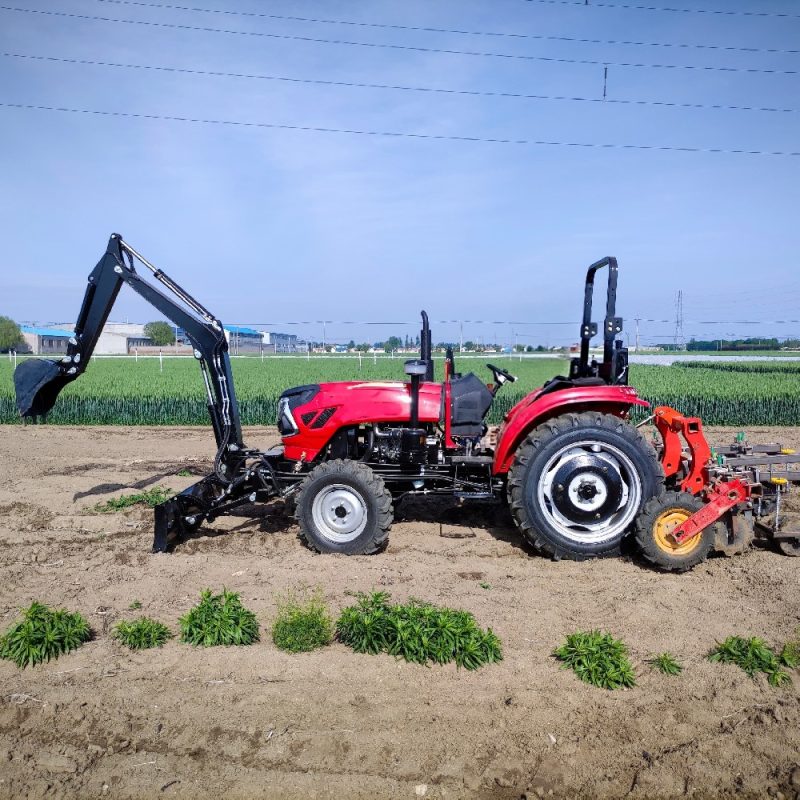
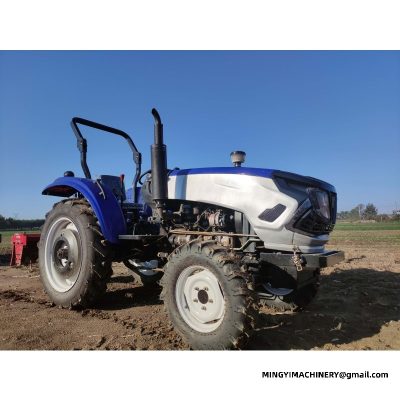
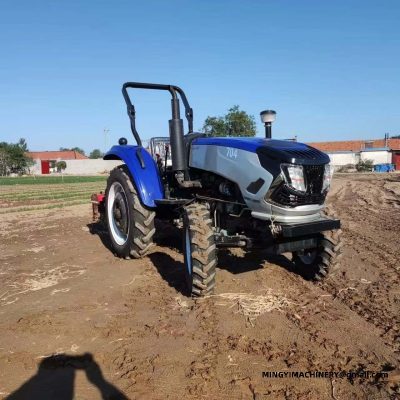
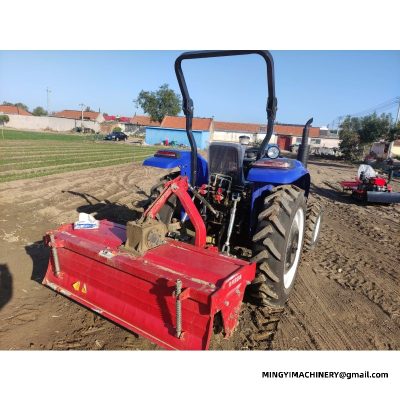
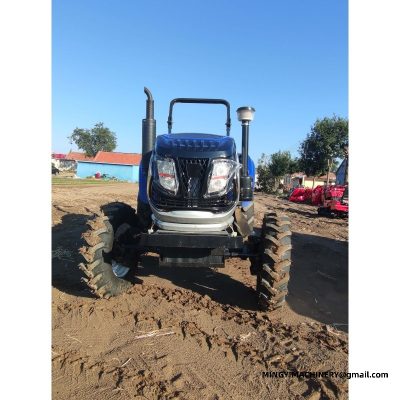
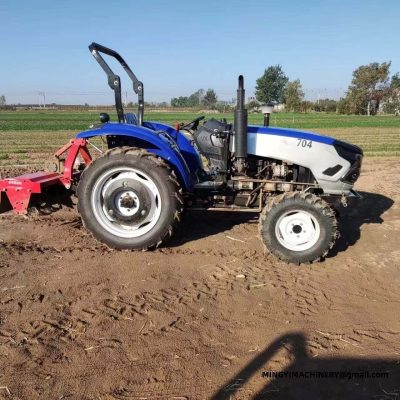
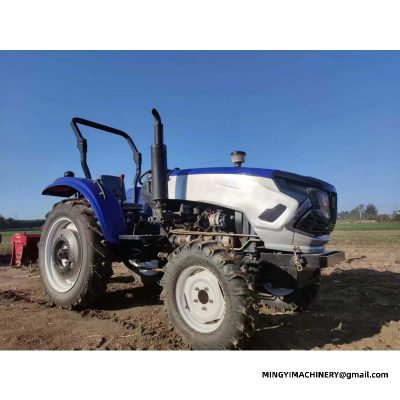
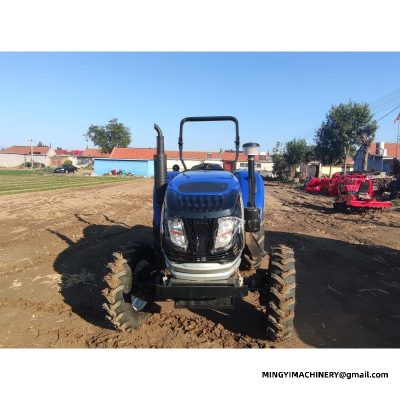
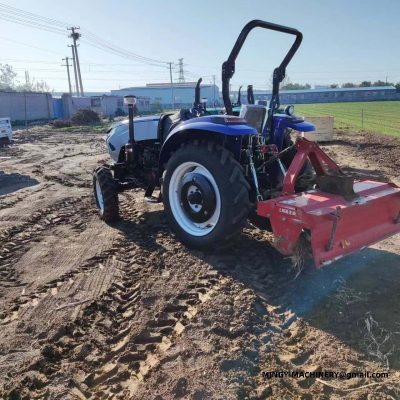
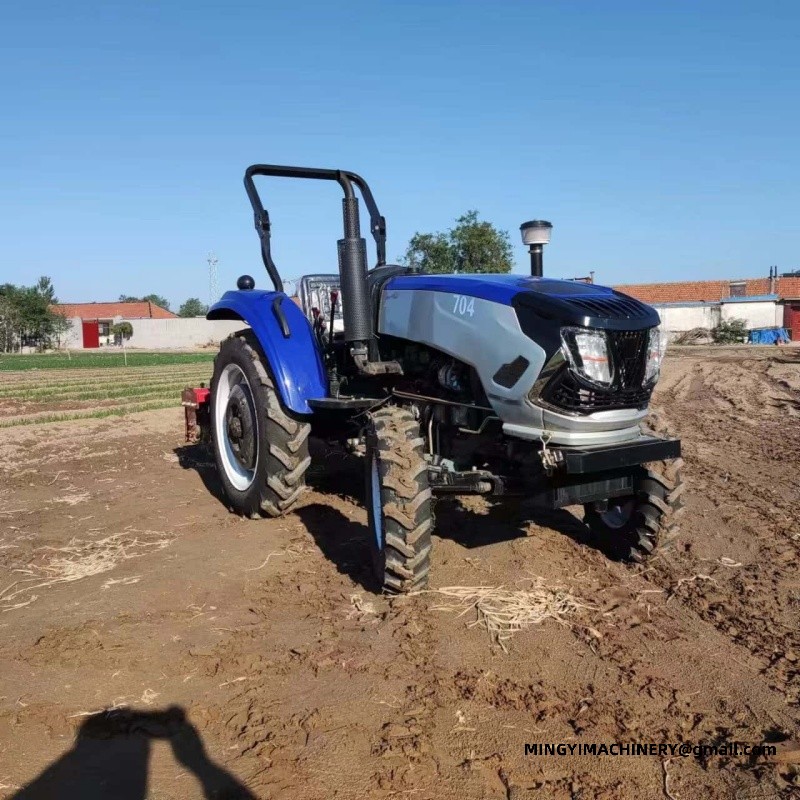
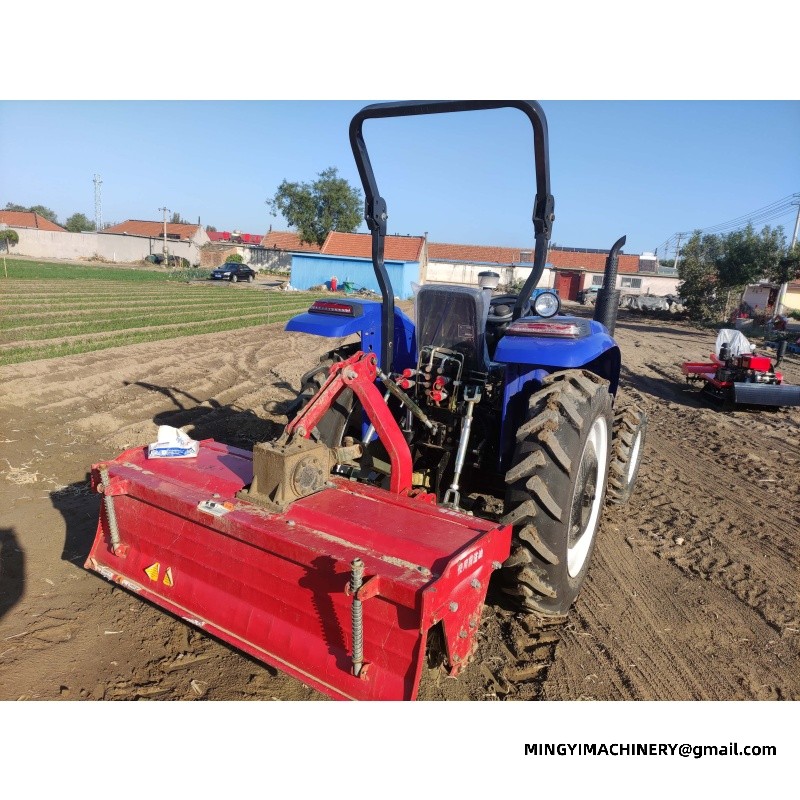
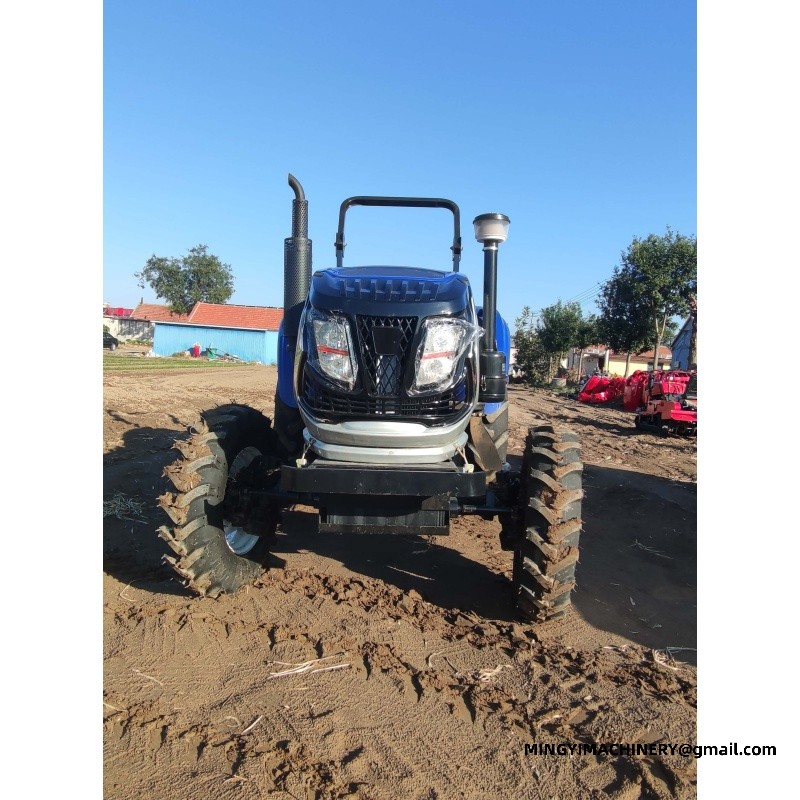
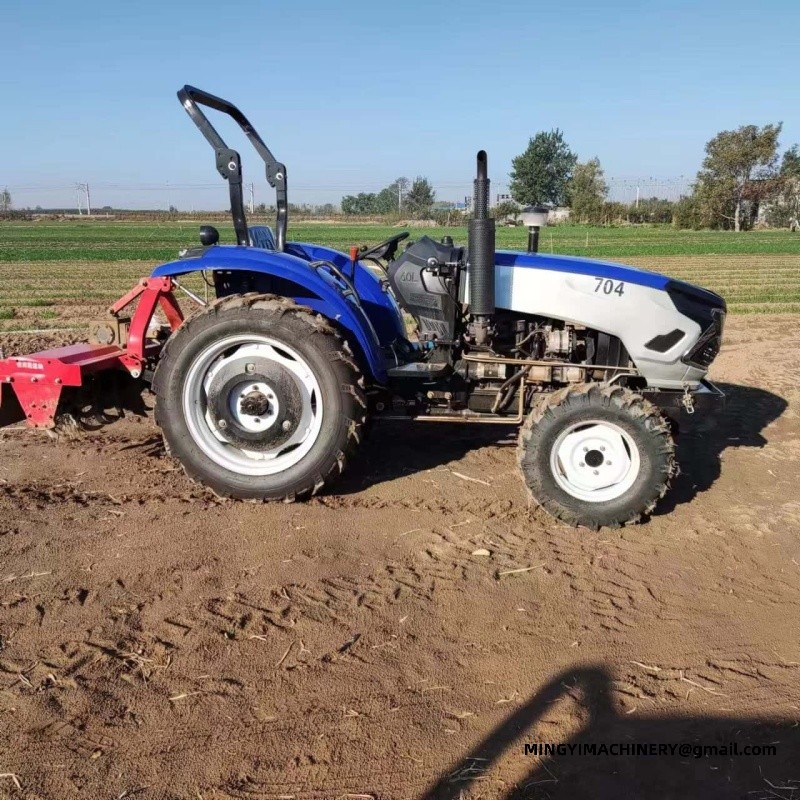
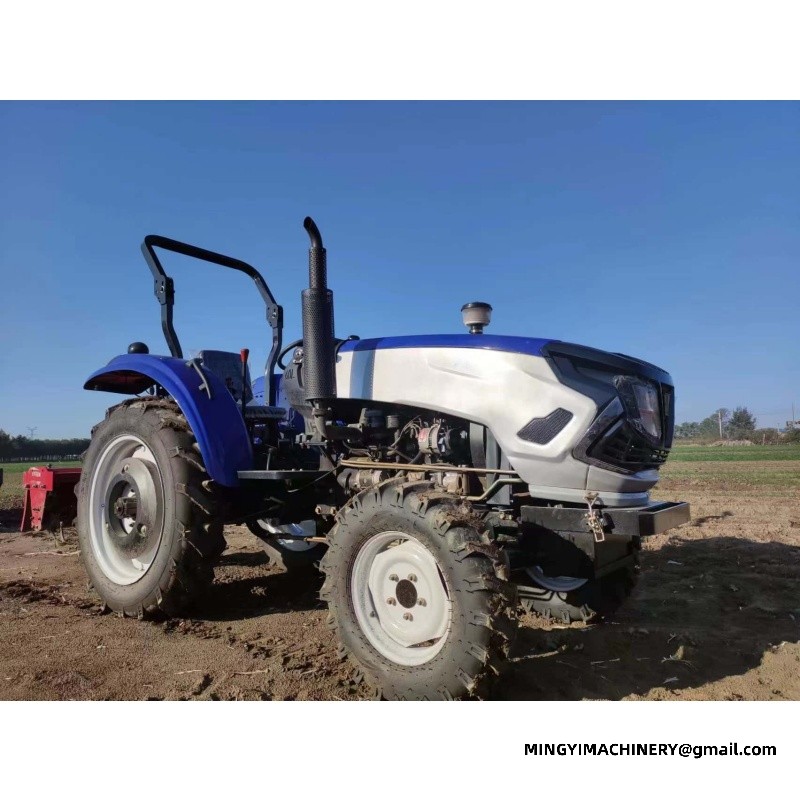
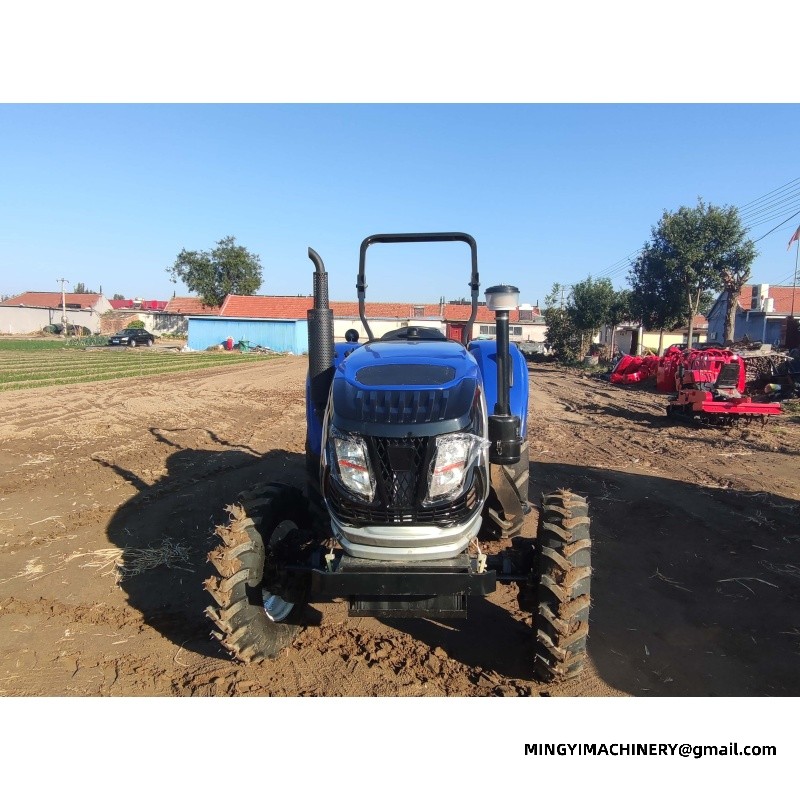
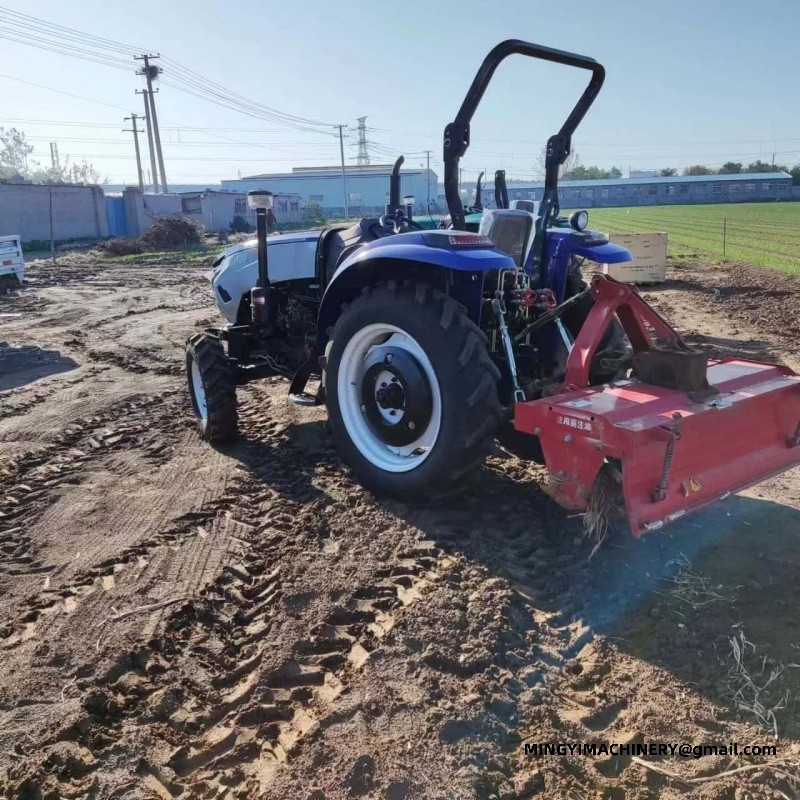
Mingyi wheel tractors are agricultural tractors built for farmland cultivation, land consolidation and heavy field work. A four-wheel drive transmission and a robust diesel engine deliver the traction and torque needed for tilling, ploughing, sowing and hauling loads across the farm.
These tractors are designed for long working days: a reinforced chassis and an enhanced transmission keep power delivery stable under load, while the hydraulic system supports a range of mounted and trailed implements. Three-point hitch, PTO and hydraulic outlets let one tractor run ploughs, rotary tillers, trailers, seeders and spraying equipment through the season.
Typical uses include preparing and maintaining crop land, transporting harvested produce along farm tracks, and moving inputs such as fertilizer and seed. A range of engine, transmission and tyre configurations covers smallholdings as well as larger estates, and OEM colours and decals are available for distributors.
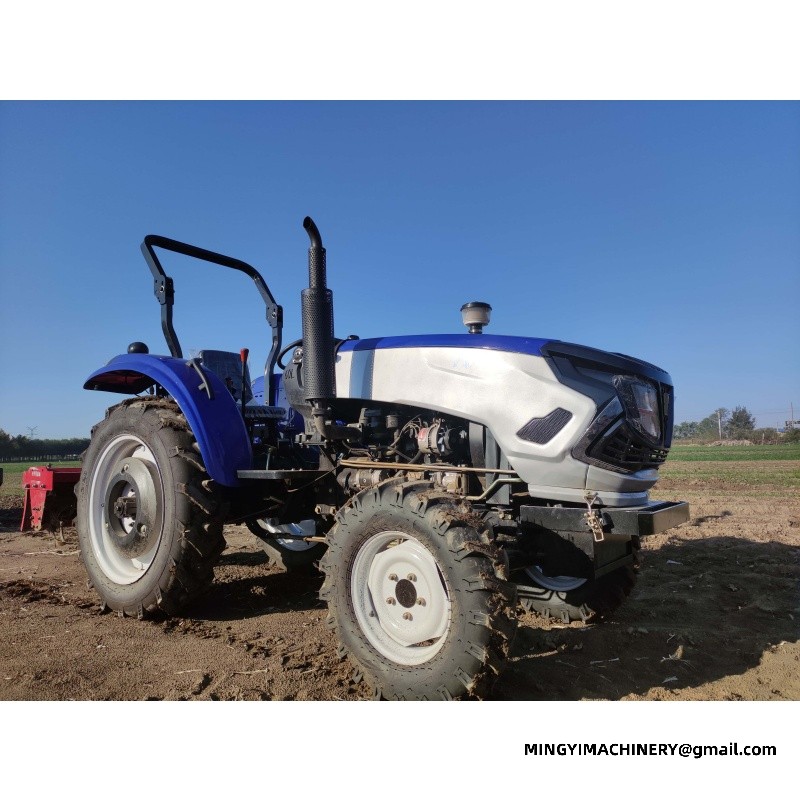
Tell us your field size, the implements you plan to use and your local conditions, and we will recommend the right wheel tractor.
Working hours and duty cycle of four-wheel drive farm tractor with three-point hitch
Duty cycle is the honest measure of a machine. This class of machine working a few hours a week has different needs from one working two shifts, and the cooling, filtration and service intervals should follow the hours rather than the calendar. Seasonal work changes the maintenance calendar. Machines that work hard for two months and stand for ten need preparation before storage and a check before returning to work, and both are simpler than the repairs they prevent.
Engine and power options behind four-wheel drive farm tractor with three-point hitch
Emissions documentation is part of engine selection for some destinations. Confirming which units can be supplied and documented for the destination country is worth doing at enquiry stage rather than after the build sheet is signed. Matching the engine to the duty matters more than the peak rating. The unit in daily use that spends its day at part load benefits from a different setup than one that works at full output, and the difference shows in fuel use over a season.
Ordering, lead time and delivery of four-wheel drive farm tractor with three-point hitch
Lead time is part of the specification. Confirming build time, shipping method and what is included before ordering a machine of this size prevents the common gap between when the machine is needed and when it can arrive. The order should state the configuration in writing. Engine, attachments, colour, documents and any market requirement are clearer on the build sheet for the equipment on site than in a conversation after delivery.
Export packing and shipping of four-wheel drive farm tractor with three-point hitch
Container loading is a planning exercise. Confirming how the machine itself is packed and how many units fit a container is what turns a per-unit freight estimate into a delivered figure the buyer can actually plan against. Documentation should be agreed at order stage. The commercial invoice, packing list and any certificate required at destination are part of shipping the model in question, and missing papers delay clearance longer than the voyage takes.
Upgrading and reconfiguring four-wheel drive farm tractor with three-point hitch
Reconfiguration can extend the useful life of a machine. The machine in that duty that no longer suits the current work may suit it again with a different attachment, guarding or control arrangement. Upgrades should be checked against the base machine. Hydraulic capacity, mounting interface and stability all limit what can reasonably be added to the unit on the job, and confirming those limits avoids an unsatisfactory result.
Safe working practice around four-wheel drive farm tractor with three-point hitch
Most incidents around machinery come from the space rather than the machine. Exclusion zones, a clear signal person and a check on what is behind the equipment in service before it moves cover the large majority of the risk on a working site. Slopes and edges deserve a separate check. A machine built for the work that is stable on level ground behaves differently across a gradient, and the safe working angle is a number worth knowing rather than estimating.
Running four-wheel drive farm tractor with three-point hitch in a mixed fleet
Fleet value comes from interchangeability. Operators who can step between machines without retraining, and a workshop that stocks one set of filters, keep utilisation higher than a fleet of individually optimised units. Utilisation matters more than the purchase decision over a few years. This class of machine that sits idle ties up the same yard space standing still as one that earns, so the buying decision should follow the hours the machine will realistically work.
Fuel use and running demands of four-wheel drive farm tractor with three-point hitch
Fuel is usually the largest controllable running demand. Operating style, correct tyre or track condition and a clean air supply all move consumption on the unit in daily use by more than most buyers expect. Consumption is best measured over a full week rather than judged per hour. Idle time, repositioning and waiting for other trades are often the largest share of the fuel a machine of this size burns on a site.
Transporting the equipment on site to and between sites
Owners who work across several sites should check the transport dimensions before ordering. The machine itself that fits a standard trailer can be moved by any operator with a suitable vehicle, while an over-width machine narrows that choice and complicates every move. Shipping dimensions matter as much on export orders as they do locally. Confirming the packed size of the model in question before booking avoids re-booking freight after the machine is built.
Dust, mud and abrasive conditions around the machine in that duty
Abrasive conditions shorten service intervals. Air filters, seals and any exposed sliding surface on the unit on the job need attention more often in dusty or muddy work, and the extra checks prevent far more wear than the time they take. Cleaning is maintenance, not appearance. Washing the cooling surfaces and clearing packed material from a machine built for the work keeps temperatures where they should be and makes the next inspection quicker and more useful.
Storage and downtime care for the equipment in service
Standing still is hard on machinery. This class of machine left for weeks benefits from a clean, dry, covered space, a charged battery and a fuel system prepared for the layoff, and all three effort very little. A periodic start is better than none. Running the unit in daily use to operating temperature during a long layoff keeps seals and the charging system in better condition than leaving it untouched until the next job.
Handover and documentation for a machine of this size
A short familiarisation session prevents the early faults. Most first-month problems on the equipment on site come from unfamiliarity with controls, limits or checks rather than from the machine itself. Keeping the manuals where they can be reached matters. The machine itself whose documents stay with the machine gets serviced on schedule; one whose paperwork was filed elsewhere tends to run on memory instead.
Warranty, commissioning and early checks
Warranty terms are clearer when they are read before purchase. Knowing what is covered, what counts as a wearing item and what documentation is required makes a claim on the model in question straightforward rather than contested. Early faults are usually simple. The machine in that duty that behaves differently in its first few hours is more often mis-set than defective, and a call to the supplier at that point usually resolves it the same day.
Parts, service and support for the unit on the job
Support after delivery is a parts question. Filters, belts, hoses and the wearing items specific to a machine built for the work are what a buyer should plan to hold before the first service interval rather than order after a failure. Remote diagnosis shortens most faults. A walk-around on video with the panels open often identifies the cause on the equipment in service without waiting for a visit, and avoids shipping a part that turns out not to be needed.
Daily checks and maintenance on this class of machine
Service intervals exist because wear is predictable. Following the maker schedule on the unit in daily use takes far less time than repairing the damage that follows a missed oil change or a filter left in place past its life. A simple log helps. Recording hours, fuel and any adjustment made to a machine of this size gives the workshop a history, and that history is what turns an intermittent fault into a one-visit repair instead of three.
Resale value and replacement planning
Resale starts at purchase. Specification choices, service records and the condition of wearing parts are what a buyer looks at, and the equipment on site that has been maintained on schedule is worth more than one that merely looks clean. Replacement timing is a planning decision. Knowing the intended working life of the machine itself lets an owner sell while the machine still has value rather than after a major repair becomes due.
Load, ballast and stability on the model in question
Stability follows the load and its position. Knowing the rated capacity of the machine in that duty at the working radius, rather than at its best case, is what keeps handling predictable and the machine upright. Carrying and travelling with a load needs its own plan. Speed, gradient and surface all matter more once the unit on the job is loaded, and the safe combination is the conservative one.
Cold weather and low temperature work with a machine built for the work
Batteries and fluids are the parts that notice the cold first. The equipment in service kept on a maintainer through a freezing spell starts on the first turn, while one left standing is the usual cause of a lost morning. Low temperatures also make materials behave differently. Ground that is frozen hard in the morning can be soft by midday, and planning the sequence around that is easier than fighting it with this class of machine.
Hot, humid and dusty conditions around the unit in daily use
Dust is the enemy of every rotating joint. Keeping the radiator and the air intake of a machine of this size clean, and cleaning them before they are blocked rather than after, is what separates a machine that lasts from one that overheats.
Documents that travel with the equipment on site
The machine is only half of what arrives. The parts book, the service schedule and the declarations that come with the machine itself are what let the owner register, insure and maintain it without a second round of emails.
Packing, loading and shipment of the model in question
The paperwork matters as much as the packing. Serial numbers, dimensions and weights recorded for the machine in that duty at loading are the same figures the destination needs, and a mismatch here loses more days than the voyage itself.
Fuel, oil and fluid quality for the unit on the job
The specification for oil is written for a reason. Using the grade and the change interval set for a machine built for the work keeps the engine and the hydraulic system inside the range they were designed for.
Moving the equipment in service between sites
Securing the load is not optional. Lashing this class of machine at the points intended for it, checking the tension before the vehicle moves and rechecking after the first kilometres is standard practice rather than extra care.
Slope working and stability with four-wheel drive farm tractor with three-point hitch
Ground that looks firm after a dry week can carry a different load after rain, and that difference is worth a walk-over each morning.
Tracks or tyres, the contact patch is what holds the machine, and worn or wrongly inflated running gear reduces it more than most operators expect.
Working up and down the fall line rather than across it keeps the load predictable, and where that is impossible the load is reduced.
Working alongside other plant with four-wheel drive farm tractor with three-point hitch
Exclusion zones drawn on the ground work better than zones described in a meeting, and they are re-drawn when the job phase changes.
Related pages
4x4 off-road transport vehicle body options · wheel loader bucket and attachment options · small excavator with loading bucket · PRODUCTS









