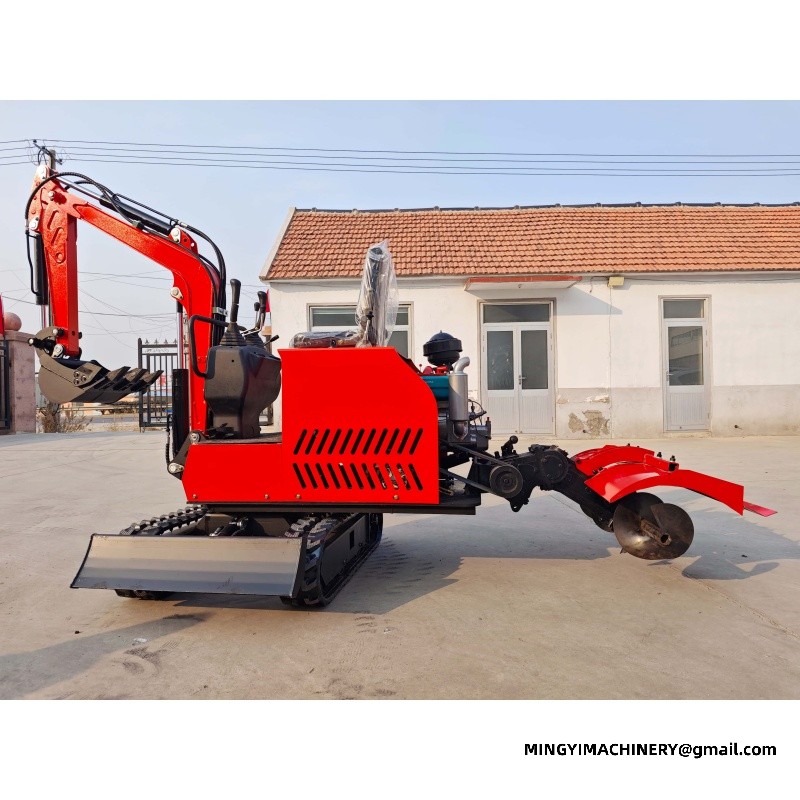
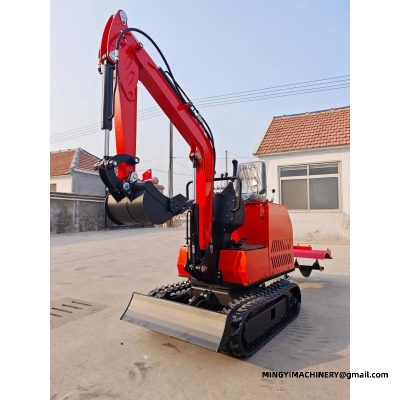
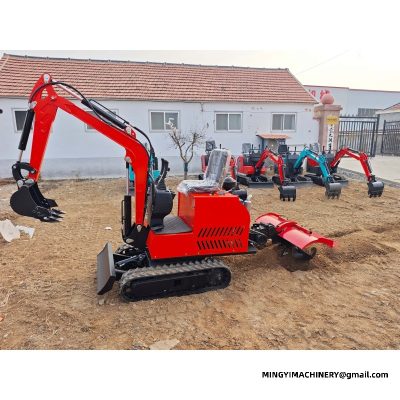
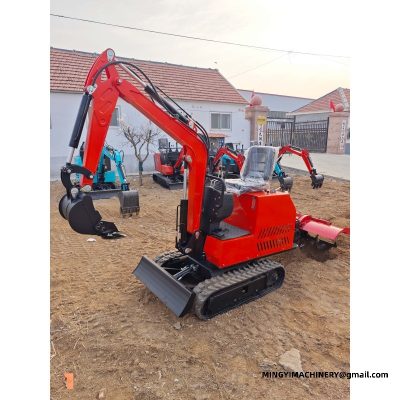
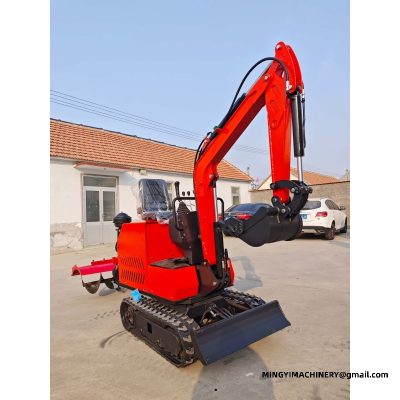
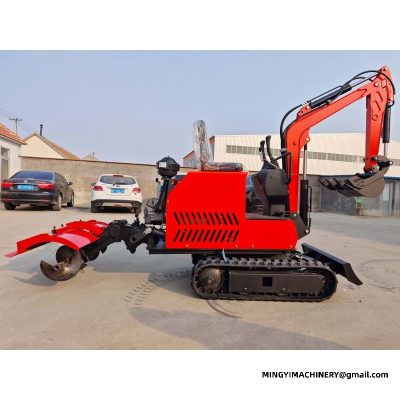
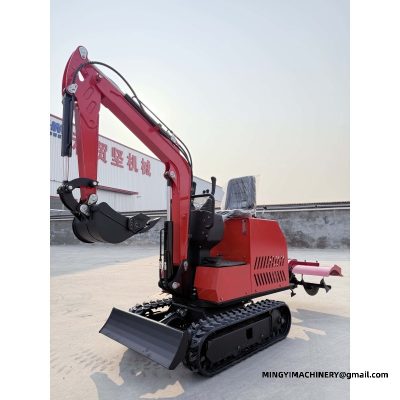
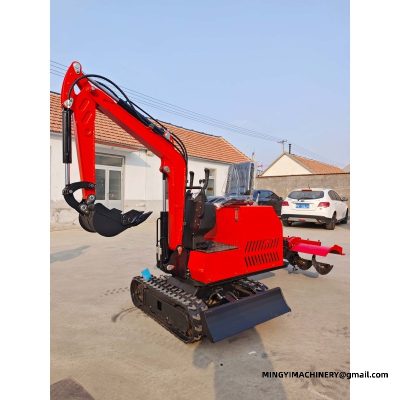
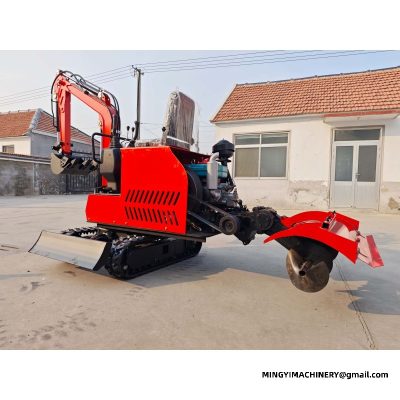
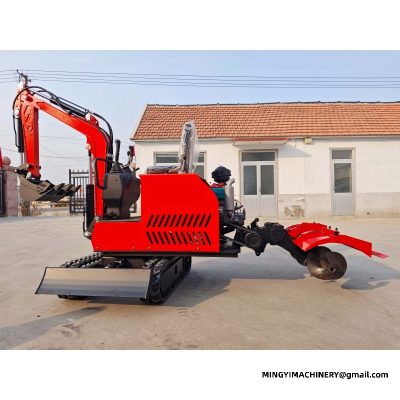
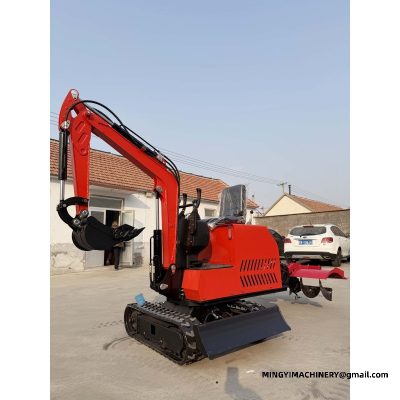
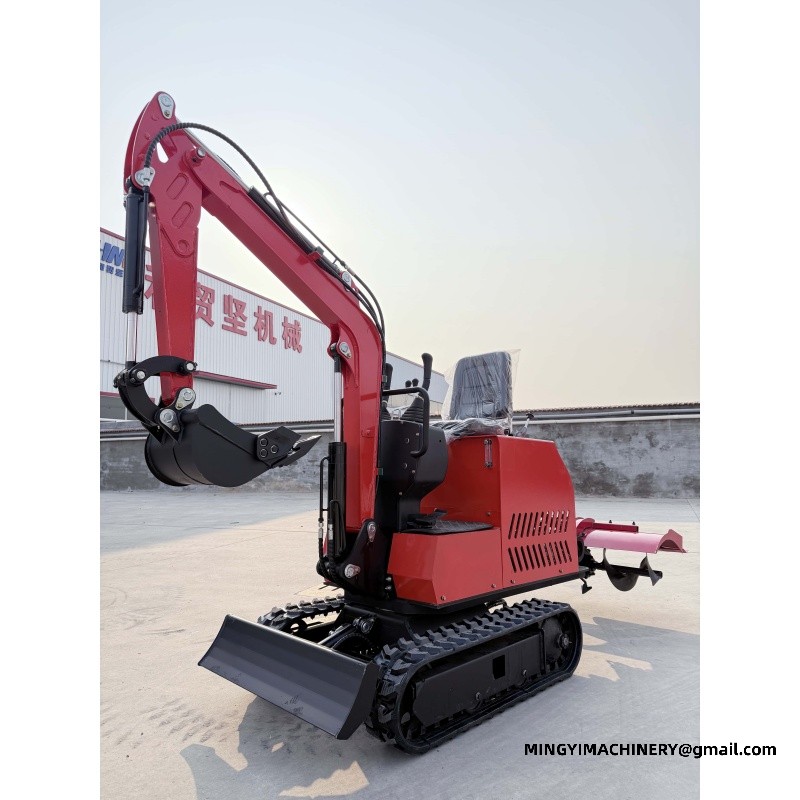
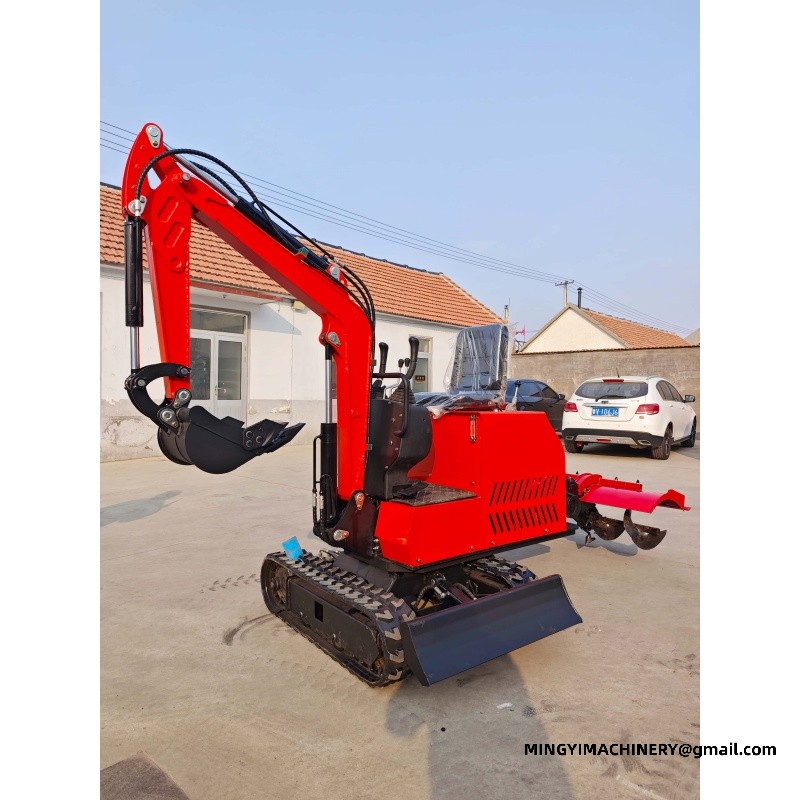
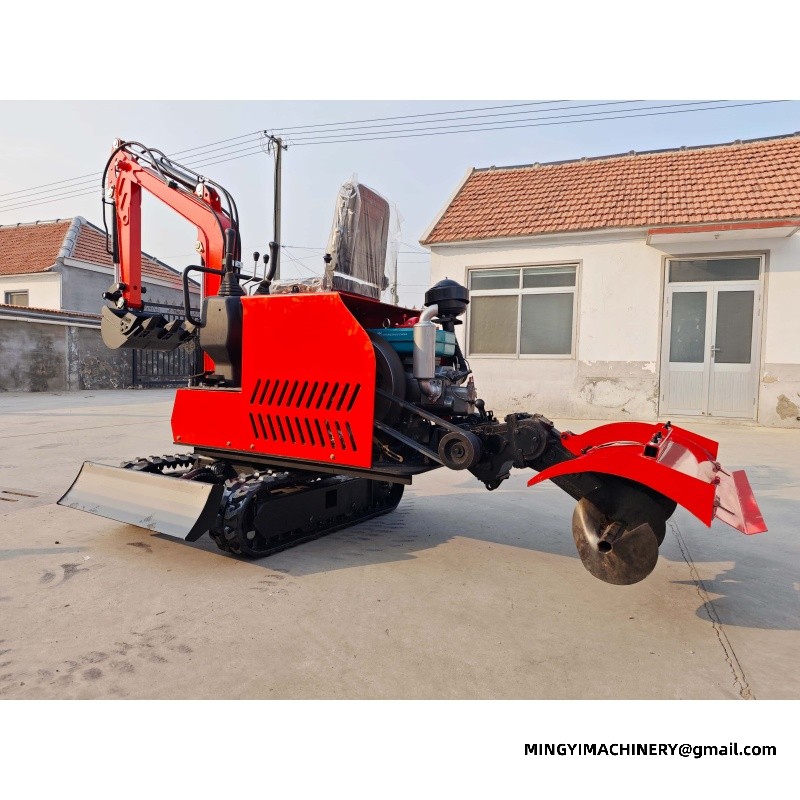
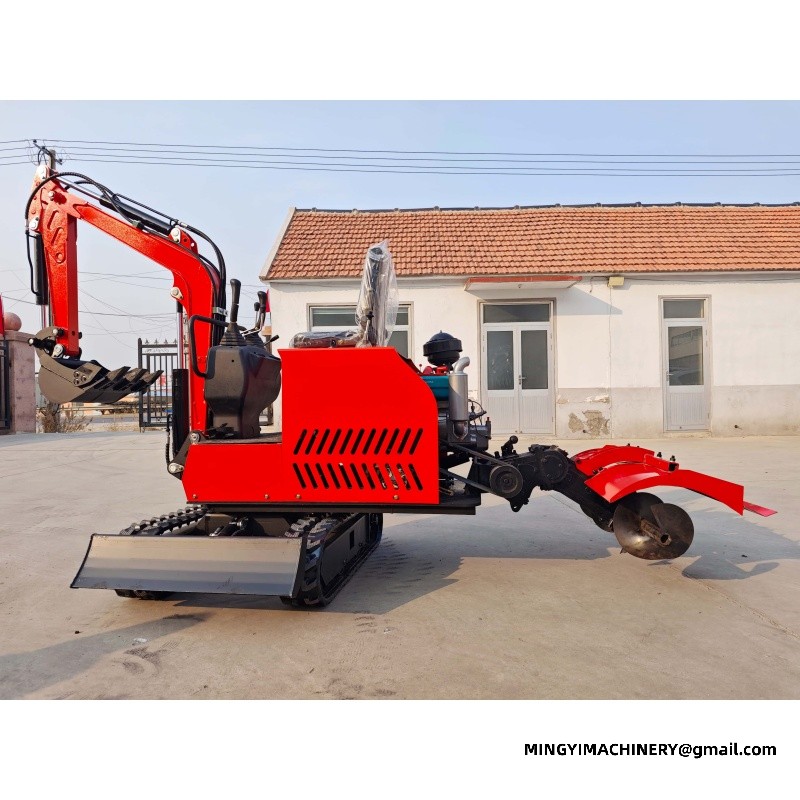
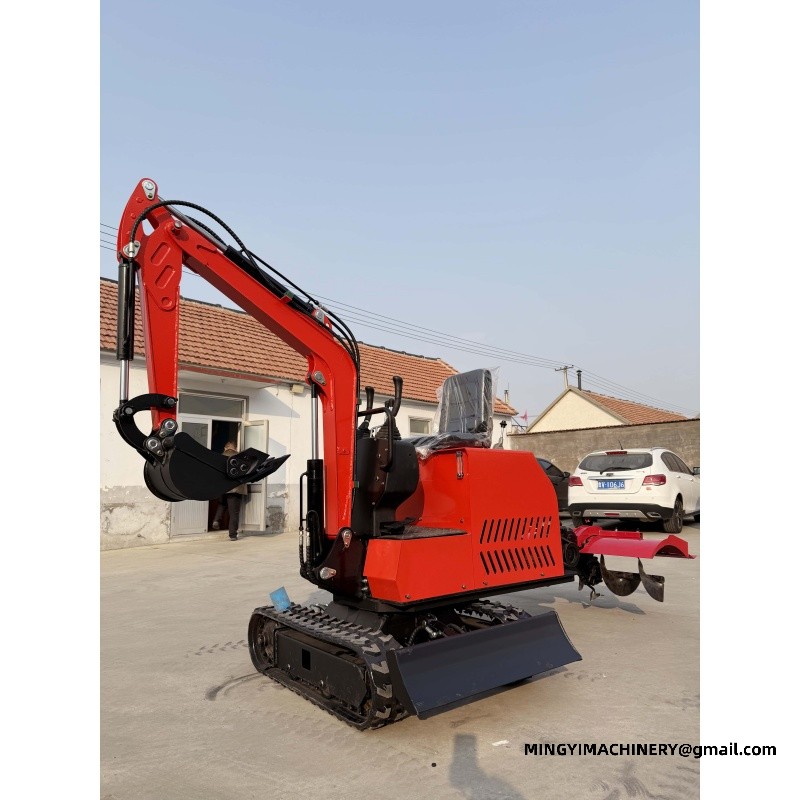
A tracked mini excavator and a small crawler tractor have more in common than they appear to. Both use a tracked undercarriage, a diesel engine and hydraulic power to drive an implement. That overlap is why a compact excavator can be fitted for tractor-type duties such as ploughing and soil preparation.
This conversion extends a compact excavator into cultivation work on small plots and sloping ground.
What carries over
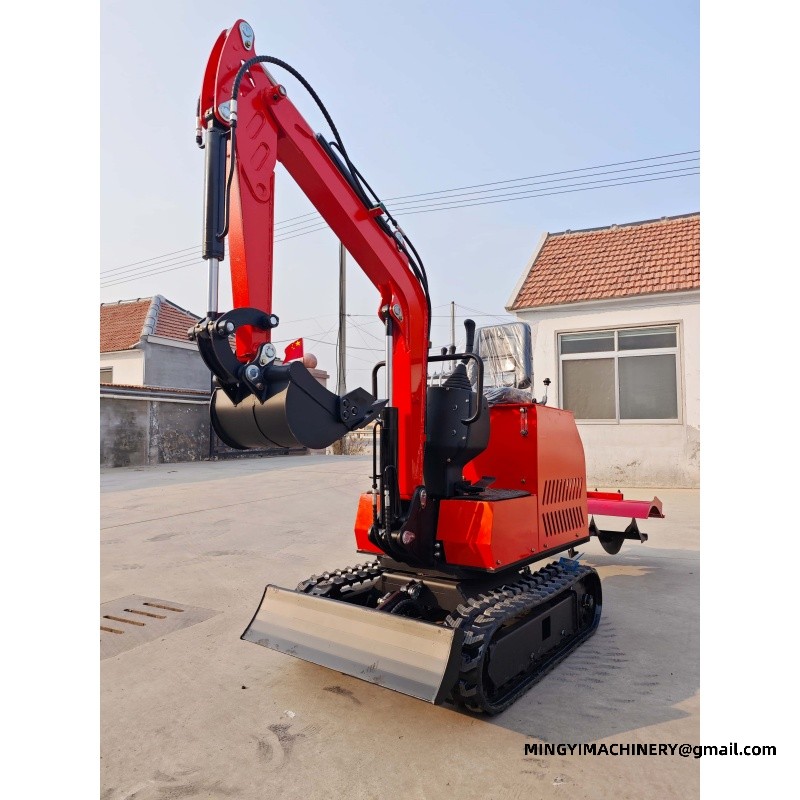
The tracked undercarriage provides traction and stability on ground where a wheeled machine loses grip, which is the principal reason a crawler machine is used for cultivation on hillsides and wet ground. The diesel engine and hydraulic system provide the power for an implement mounted on the machine.
Because the implement mounts on the attachment interface, the machine can be returned to excavation work whenever it is needed, so the owner is not committing the machine to one duty.
Where this works best
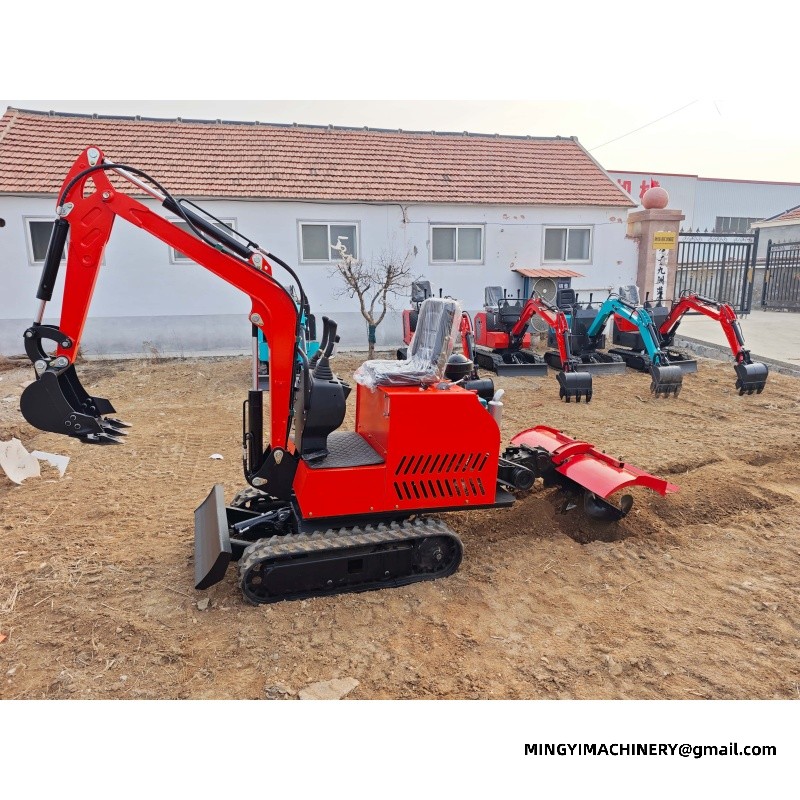
Smallholdings, orchards, terraced ground and hillside plots, where traction matters more than speed and where the area is too small to justify a separate tractor and too steep or too soft for a wheeled one.
Suited to
• Small and irregular plots where a tractor is impractical
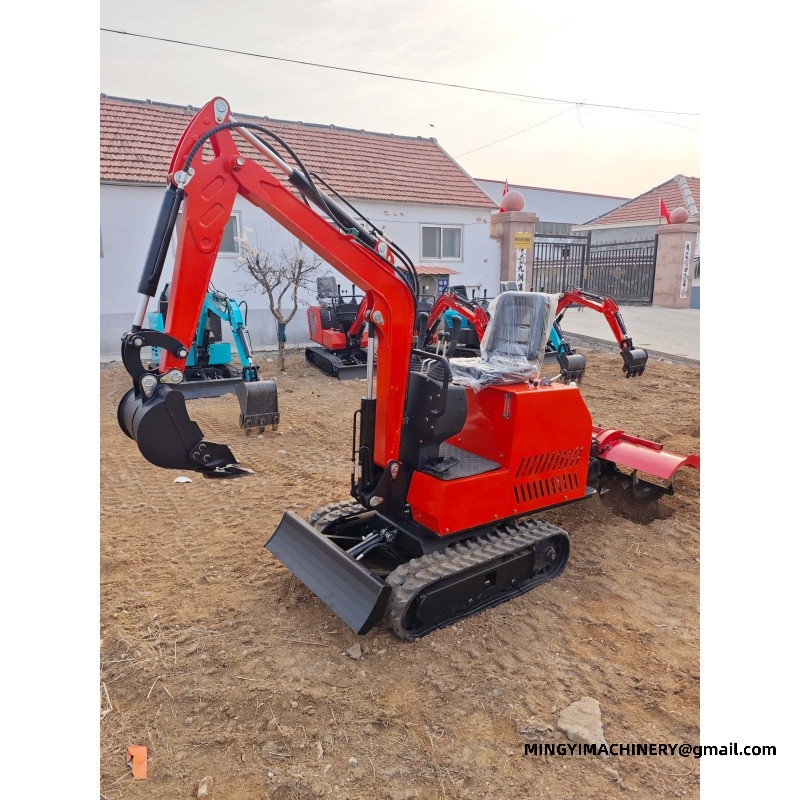
• Wet and soft ground where wheels lose traction
• Sloping and terraced ground
• Holdings combining cultivation with drainage work
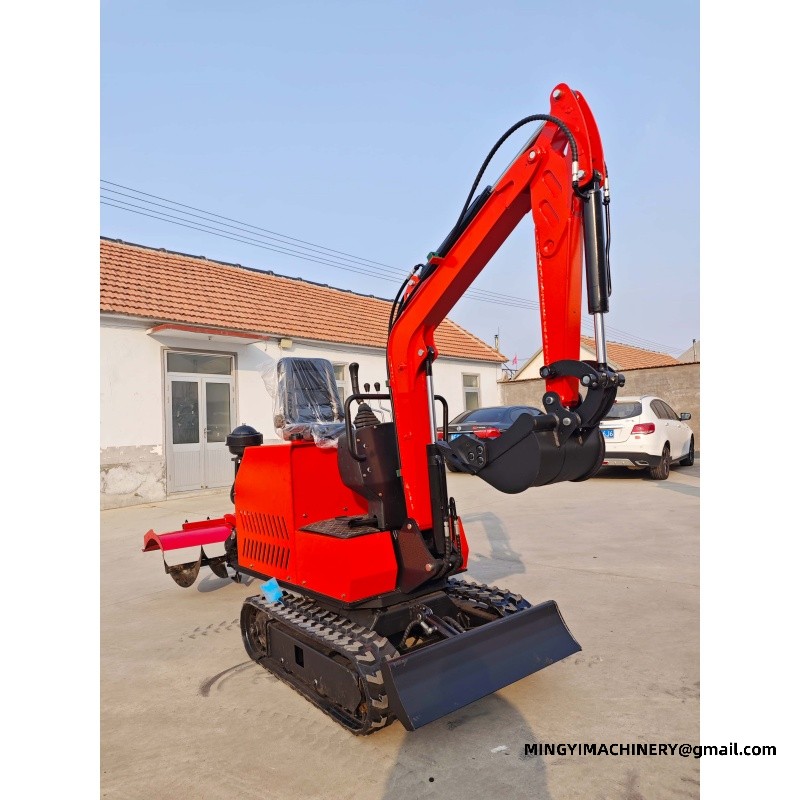
• Owners wanting one machine to cover both duties
Tell us your machine and the ground you work on and we will confirm the implement and fitment options.
Engine options behind Modification of Miniature Excavator into Tractor Power unit selection is settled against the service network the buyer already uses. MINGYI offers Kubota D722, Kubota D902, YANMAR, Changchai, Laidong, Runtong, YARMAX, Youpu 2V80 and Youpu 195, so a fleet running one brand of engine can keep the same filters, the same parts supplier and the same mechanic. Engine choice is also an emissions and documentation question for some markets. Listing the available units with this class of machine enquiry lets the factory confirm what can be supplied and documented for the destination country. Working a Modification of Miniature Excavator into Tractor through the seasons Seasonal planning smooths the workload. Machines that are busy for a few months and idle for the rest benefit from a service slot in the quiet period, and the unit in daily use prepared in the off-season starts the busy months reliably. Heat and dust are as limiting as rain. Air intake condition and cooling cleanliness decide how a machine of this size behaves in a dry season, and both are checked in a minute rather than repaired later. OEM and fleet customisation of Modification of Miniature Excavator into Tractor Distributors and rental fleets usually need the machine to look like theirs. Paint, decals, seat colour and attachment branding can be specified on the equipment on site at build time rather than applied after import. Documentation can be prepared to suit the importer. Manuals, parts books and decal sets for the machine itself can be supplied with the buyer's own branding where the order size justifies it. Orchard, vineyard and farm use of Modification of Miniature Excavator into Tractor Orchard and vineyard work is carried out between rows. The model in question with a narrow chassis and a swing boom works down the row without damaging the trees, which is the reason a full-size machine is not used at all. Farms also use the machine in that duty for general maintenance - clearing a watercourse, repairing a track, loading a spreader. One carrier with a few attachments covers most of the jobs that would otherwise wait for a contractor. Getting Modification of Miniature Excavator into Tractor through a narrow gap The first question on most job lists is whether the machine can reach the work at all. The unit on the job is chosen against the narrowest point on the route - a garden gate, a doorway, a gap between two walls - because a machine that arrives and then cannot pass loses a day, not an hour. Contractors who buy a machine built for the work normally have one job in mind that nothing else reaches. The purchase order follows the access measurement, not the other way round, and the build sheet is then settled around it. Working near live services with the equipment in service Digging near water, gas and cable is a precision job. This class of machine is used here because the operator can work in short controlled cuts and because the machine can be positioned without driving over the run being exposed. Utility crews specify the unit in daily use with a narrow bucket and good visibility for exactly this reason: the machine has to stop at the service, not at the edge of the operator's view. Canopy or enclosed cab on a machine of this size A canopy keeps the machine light and the operator aware of the surroundings, which suits short jobs in warm weather. A fully enclosed cab is specified where rain, dust or cold are part of the working year, and it can be added to the equipment on site as a retrofit rather than only at build time. Enclosure also changes noise and dust exposure. A sealed cab on the machine itself keeps dust out on dry sites and lets the machine work through weather that would otherwise stop a canopy machine for the day. Working on slopes and uneven ground with the model in question Slope work is a stability question before it is a traction question. Knowing the gradient the machine in that duty is rated for, and working across rather than straight up where the ground allows, removes most of the risk. Ground that looks level often is not. The unit on the job crossing a filled trench, a soft edge or a hidden void behaves differently from one on undisturbed ground, and those are the places worth walking before driving. Matching a machine built for the work to ground conditions Hard and abrasive ground reverses the specification. On rock, demolition rubble or sharp gravel, steel tracks with rubber blocks on the equipment in service survive conditions that cut a rubber belt quickly. Mixed sites are common and argue for a compromise specification. Most buyers choose rubber for this class of machine and accept the wear, unless the majority of the work is on material that will damage it. Road and paving work for the unit in daily use Road repair generates short, interrupted jobs - a patch, a drainage connection, a kerb line. A machine of this size is economical here because it travels on a small trailer and starts working minutes after arriving. Patching and reinstatement favour a machine that can work in a lane closure. The equipment on site occupies less road than a full-size excavator, which reduces the traffic management needed and the length of the closure. Interior and light demolition with the machine itself Breaking out a floor slab, a wall footing or a concrete step is routine work for the model in question with a breaker. The machine is small enough to work inside and heavy enough to run the tool at a practical rate. Dust, debris clearance and floor loading all argue for a compact machine indoors. The machine in that duty spreads its weight over a wider track footprint than a wheeled machine of similar capacity. Specification data for the unit on the job Where a machine built for the work is being specified for a job list, the table below gives the factory figures that matter most: what the machine weighs, how deep and how far it works, and what it measures on a trailer. Every value shown is as built for the equipment in service; options such as cab, side swing or a telescopic undercarriage change the transport dimensions and are confirmed at order stage. Daily maintenance on this class of machine is a short list: engine oil level, coolant, track tension, hydraulic oil level and a look at the hoses. Ten minutes at the start of the shift prevents most of the failures that stop a machine. Greasing is the second item. The slew ring, the boom and arm pins and the bucket linkage on the unit in daily use take grease daily in dusty work, and the intervals shorten further when the machine is used in water or mud.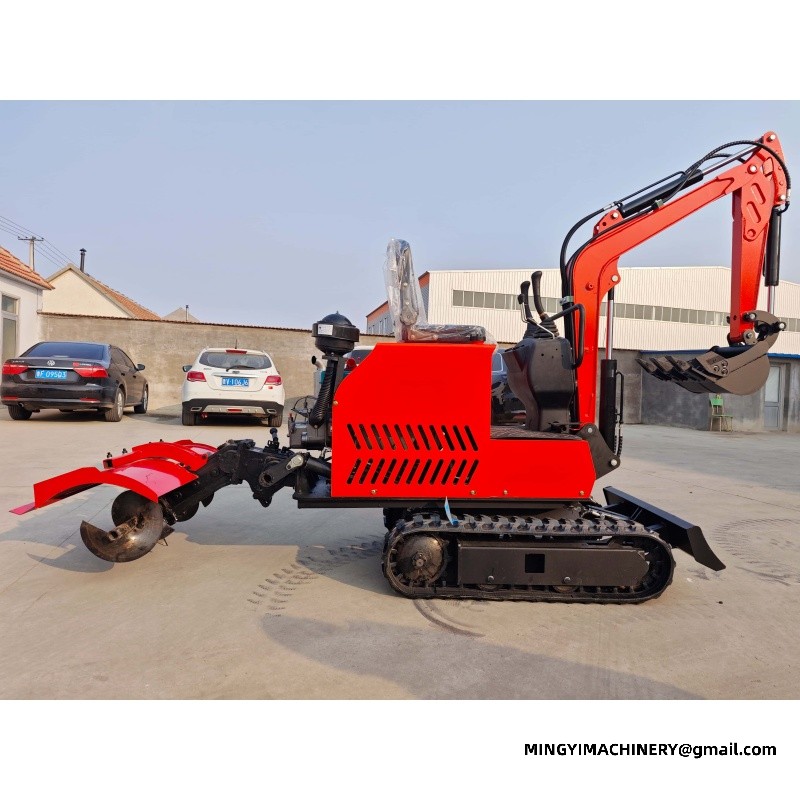
Reference specification — mini excavator range 12W 12L 20-2L 25L Operating weight 1200 kg (2645.55 lb) 1200 kg (2645.55 lb) 1900 kg (4188.78 lb) 2200 kg (4850.17 lb) Transport size (L×W×H) 2200 × 930 × 2250 mm 2200 × 930 × 2250 mm 2600 × 1300 × 2344 mm 3000 × 1300 × 2700 mm Max digging depth 1630 mm (64.17 in) 1700 mm (66.93 in) 2100 mm (82.68 in) 2300 mm (90.55 in) Max digging height 2750 mm (108.27 in) 2600 mm (102.36 in) 2880 mm (113.39 in) 3100 mm (122.05 in) Max dumping height 1960 mm (77.17 in) 1800 mm (70.87 in) 2100 mm (82.68 in) 2050 mm (80.71 in) Max digging radius 2900 mm (114.17 in) 2900 mm (114.17 in) 3215 mm (126.57 in) 3900 mm (153.54 in) Max digging distance 2100 mm (82.68 in) 2300 mm (90.55 in) 2460 mm (96.85 in) 3100 mm (125.05 in) Minimum turning radius 1300 mm (51.18 in) 1450 mm (57.09 in) 1587 mm (62.48 in) 1800 mm (70.87 in) Travel speed 3 km/h (1.86 mph) 3 km/h (1.86 mph) 5 km/h (3.11 mph) 7 km/h (4.35 mph) Gradeability 30° 30° 30° 30° Fuel consumption 1-1.3 L/h (0.264—0.343 gal) 1-1.3 L/h (0.264—0.343 gal) 2-3 L/h (0.528—0.793 gal) 2-3 L/h (0.528—0.793 gal) Fuel tank capacity 10 L (2.64 gal) 10 L (2.64 gal) 16 L (4.23 gal) 16 L (4.23 gal) Hydraulic oil tank 16 L (4.23 gal) 16 L (4.23 gal) 18 L (4.76 gal) 18 L (4.76 gal) Dozer blade lift height 180 mm (7.09 in) 180 mm (7.09 in) 180 mm (7.09 in) 230 mm (9.06 in) Dozer blade drop depth 210 mm (8.27 in) 210 mm (8.27 in) 210 mm (8.27 in) 280 mm (11.02 in)
Q. Can a compact machine be converted to tractor type work?
A. Yes. A compact crawler machine can be set up with tillage or plough attachments for soil preparation and similar tractor work, and MINGYI will match the attachment to the machine's hydraulic circuit at order stage.
Q. What work can it take on?
A. Soil preparation, bed forming and cultivation on ground where a wheeled tractor cannot operate, such as terraces, wet plots and orchard or greenhouse ground. The crawler base keeps ground pressure low.
Q. How do I specify the conversion?
A. Tell us the plot, the row spacing, the soil and the work required. Because the machine and the attachment are both built to order, the specification can be set to the job rather than adapted afterwards.
Documents that travel with a machine of this size
Keeping the documents together is part of ownership. The manual, the service record and the build sheet for the equipment on site belong in one folder, and the machine is easier to sell later when that folder is complete.
Pre-delivery inspection before the machine itself leaves the shop
Inspection is a list, not a glance. Before the model in question is released the fluid levels, belt tension, electrical connections and safety decals are each ticked off, and anything that fails stays in the shop rather than travelling with the machine.
A second operator for the machine in that duty
Training is simpler than repair. An hour spent with a new operator on the unit on the job, covering the limits and the awkward cases, is the least lengthy hour in the whole ownership.
E-mail : sales@mingycn.com
LINE ( ID ): mingyicn
Heat and hydraulic temperature in Modification of Miniature Excavator into Tractor
Cooling cores blocked with dust or seed husks are the common cause in summer, and cleaning them from the inside out works better than washing the face of the radiator.
Hoses age faster next to hot manifolds, so routing and clearance are checked at the same time as the oil level.
A temperature gauge that reads differently from week to week is itself a fault, and it is worth checking before the season turns.
Related pages
1 ton mini excavator · mini excavator for groundwork contractors · mini excavator for retaining walls · PRODUCTS









