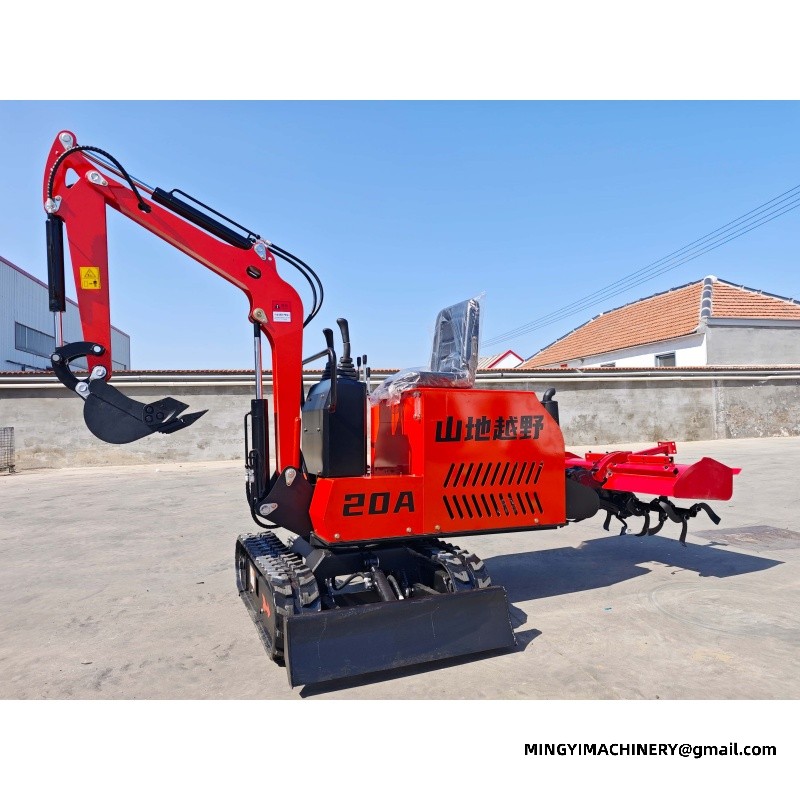
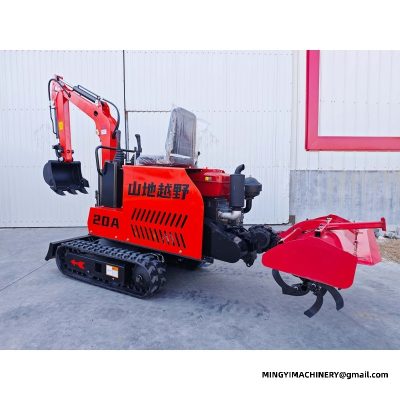
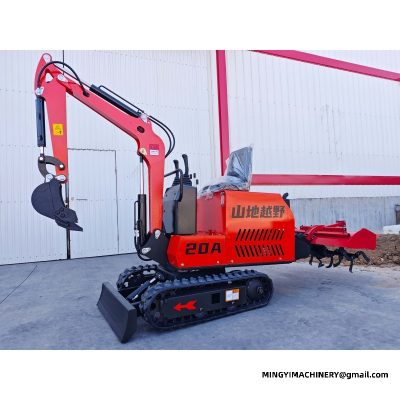
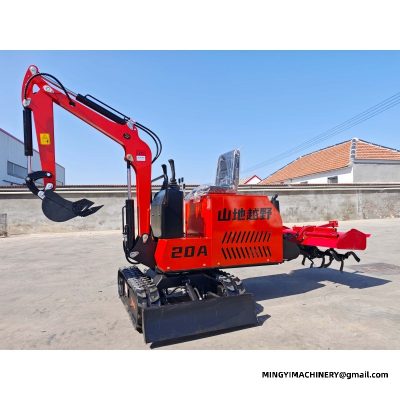
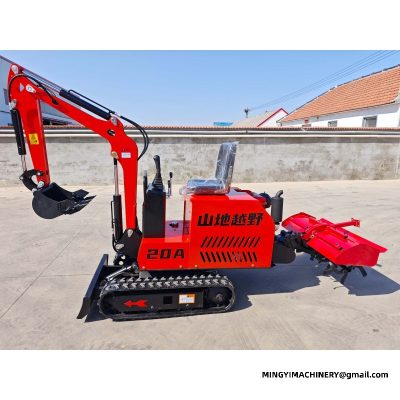
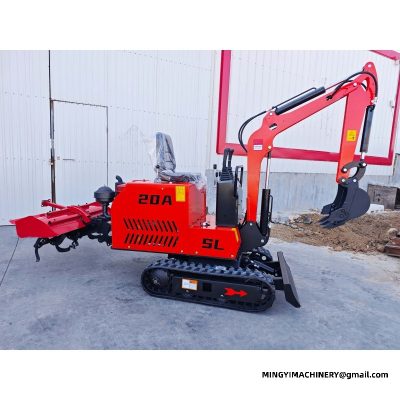
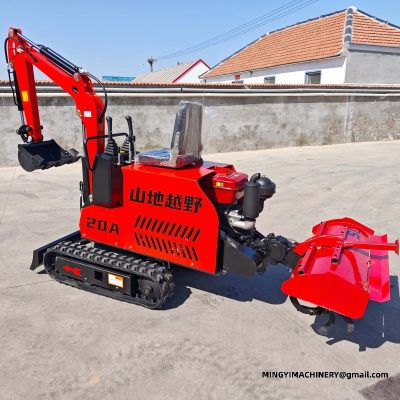
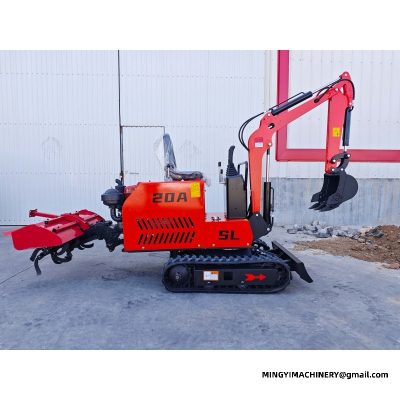
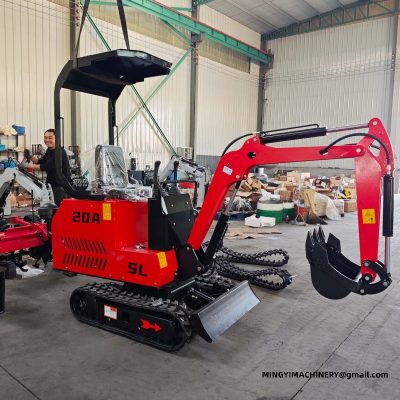
Garden work is the smallest end of compact excavator use, and it makes demands that larger machines cannot meet: narrow access, delicate finishes and a machine light enough not to ruin what it crosses.
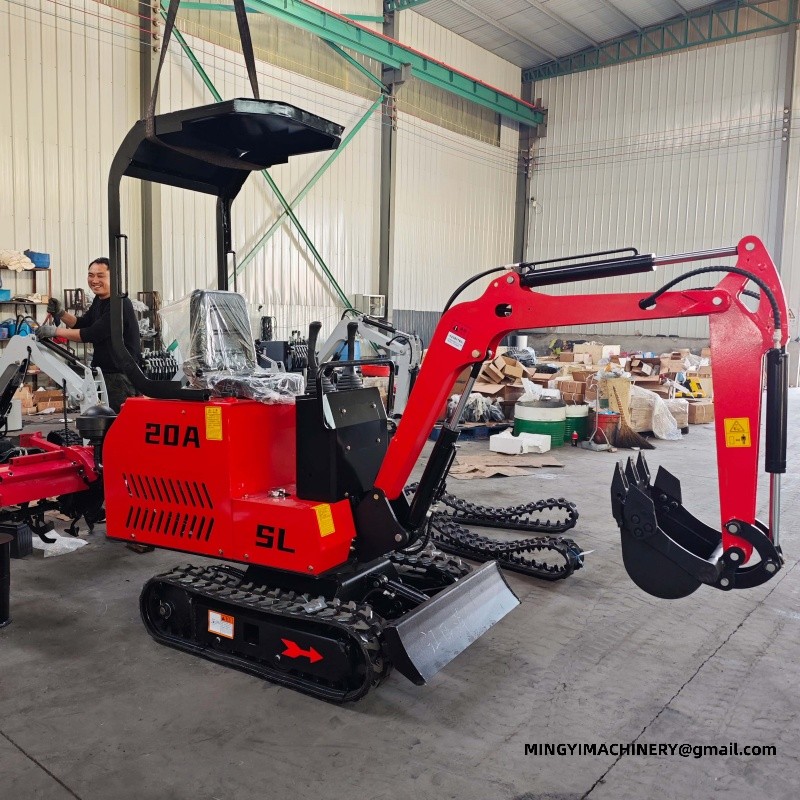
MINGYI builds excavators small enough to pass through domestic access and control precisely enough for garden-scale work.
The work it handles
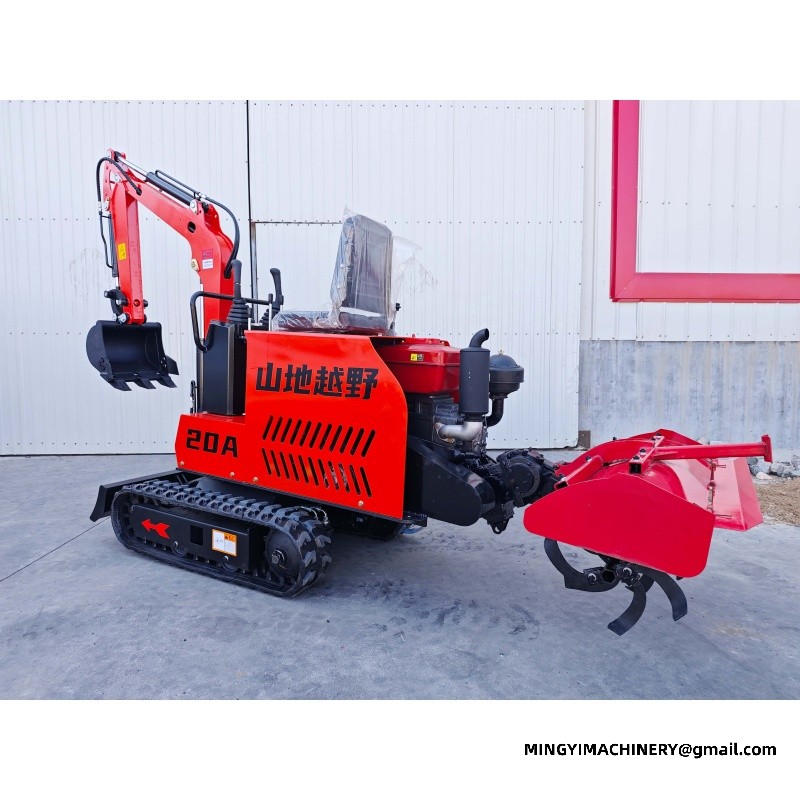
Garden remodelling and ground shaping, pond and water feature excavation, planting bed preparation and small drainage runs.
It also covers the removal of stumps, old paving and garden structures, which is often the first job on a garden project.
Working in a garden
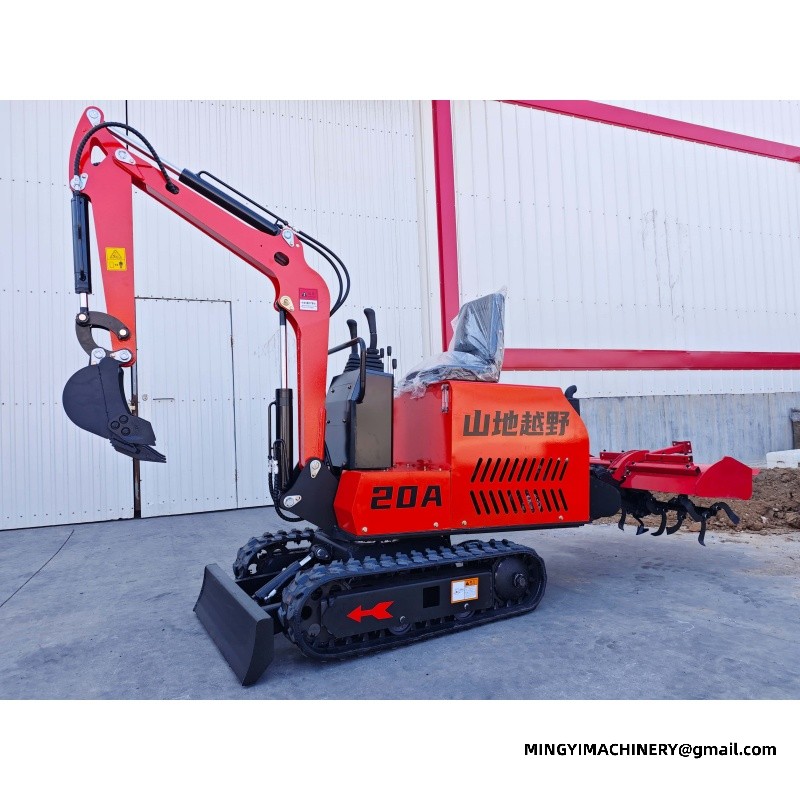
Access through a side passage or a gate is the constraint that decides which machine can be used at all, and the narrowest classes are sized for it.
Rubber tracks and a light machine mean lawns and paving survive the job, which is usually what the client cares about most.
Send MINGYI the access width and the garden work you need to do, and we will confirm which model will fit.
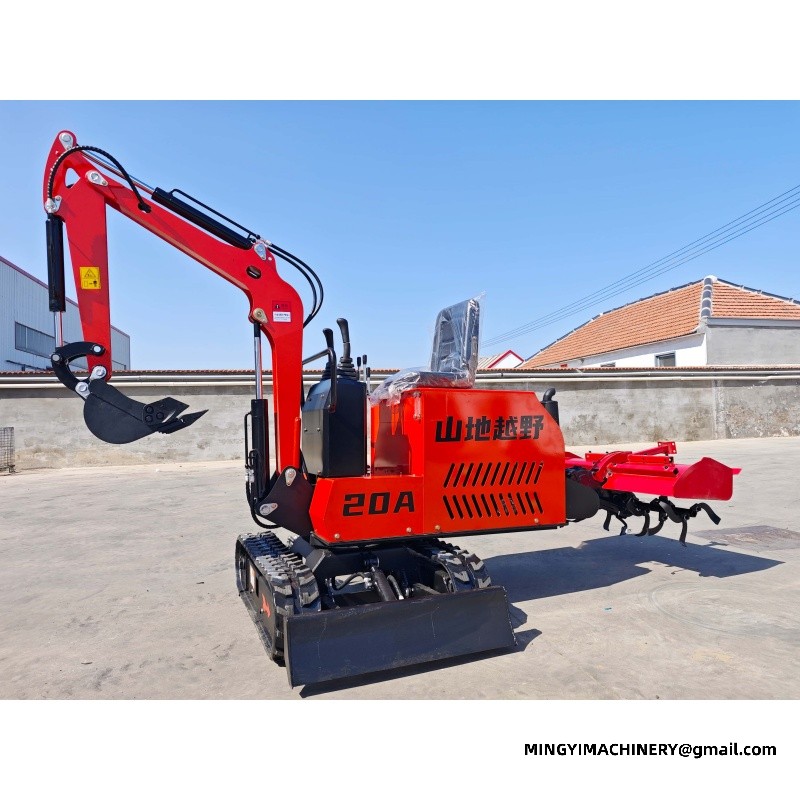
E-mail : Lifting and material handling with this class of machine Lifting with a machine built to dig needs a plan. The load, the radius and the ground under the machine of this size all matter, and the safe figure is the one on the chart rather than the one that looks possible. Ground condition under the machine is part of every lift. Soft or uneven support is the common factor in handling incidents, and checking it takes less time than recovering the unit in daily use that has settled. Operator technique for mini excavator for garden remodelling Output on a compact machine comes from placement rather than power. An experienced operator keeps the equipment on site working inside the swing arc, positions once and digs a full run instead of repositioning for every bucket. The second habit is tool discipline. Running the machine itself with the right bucket width for the trench means less spoil, less reinstatement and a cleaner job than a wide bucket and a lot of trimming. Landscaping and ground care with mini excavator for garden remodelling Landscape contractors use the model in question for planting holes, pond excavation, grading and retaining work. The machine is light enough to cross finished lawn and narrow enough to work between established trees. On soft landscape work the surface is the constraint. The machine in that duty on rubber tracks crosses turf without stripping it, which is why the same jobs are not given to a wheeled machine. Canopy or enclosed cab on a mini excavator for garden remodelling The cab decision follows the climate and the hours. Operators working a full shift in the unit on the job benefit from a sealed cab with wipers and heating; operators stepping on and off every few minutes usually prefer the canopy for the visibility and the quick exit. Enclosure also changes noise and dust exposure. A sealed cab on a machine built for the work keeps dust out on dry sites and lets the machine work through weather that would otherwise stop a canopy machine for the day. Attachments that turn mini excavator for garden remodelling into several machines Attachment lists are best written before delivery. Specifying the equipment in service with the tools the job list needs avoids the work and delay of adding hydraulics later, and a quick coupler makes the swap a few minutes instead of a workshop job. Most of the daily variety on this class of machine comes from the attachment rack rather than from the machine itself. Bucket, breaker, auger, ripper, rake and grab cover the large majority of the work a contractor will see. Boom configuration for mini excavator for garden remodelling Extended and offset boom configurations change reach and working range. The unit in daily use with a longer arm reaches further but lifts less at full extension, so the specification is set against the deepest and furthest point on the job list. Detachable boom sections are used where transport length matters. A machine of this size that has to travel on a standard trailer can be built so the arm comes off for the road and goes back on at the site. Road and paving work for mini excavator for garden remodelling Patching and reinstatement favour a machine that can work in a lane closure. The equipment on site occupies less road than a full-size excavator, which reduces the traffic management needed and the length of the closure. Breaking out a failed slab and backfilling the same hole in one visit is normal work for the machine itself. The breaker and the bucket come off the same coupler, so the road is reopened the same day. Daily checks and maintenance on the model in question Daily maintenance on the machine in that duty is a short list: engine oil level, coolant, track tension, hydraulic oil level and a look at the hoses. Ten minutes at the start of the shift prevents most of the failures that stop a machine. Track tension is the item most often neglected. The unit on the job run with slack tracks wears the undercarriage and can throw a track on a turn; run too tight, the same components wear from the other direction. Hiring versus owning a machine built for the work The choice follows the hours. Work that fills a few weeks a year is usually better hired, while the equipment in service that would be on site most weeks starts to justify ownership once the transport and booking time is counted. Ownership brings obligations that hiring does not. Storage, servicing, insurance and an operator are the items to set against the hire rate before deciding which way this class of machine should be supplied. Interior and light demolition with the unit in daily use Interior demolition is an access and a weight question. A machine of this size that fits through a doorway and works on a suspended floor does jobs that would otherwise be done by hand or by a larger machine that cannot enter. Dust, debris clearance and floor loading all argue for a compact machine indoors. The equipment on site spreads its weight over a wider track footprint than a wheeled machine of similar capacity. Specifying the machine itself against a job list Buyers who skip this step either over-buy or under-buy. The model in question specified only from machine size tends to arrive without the coupler, the circuits or the track type the work actually needs. Useful information to send with an enquiry includes working width, required digging depth, ground conditions and the attachment set. Those four items let the factory specify the machine in that duty that fits rather than a generic build. Matching the unit on the job to ground conditions Hard and abrasive ground reverses the specification. On rock, demolition rubble or sharp gravel, steel tracks with rubber blocks on a machine built for the work survive conditions that cut a rubber belt quickly. Mixed sites are common and argue for a compromise specification. Most buyers choose rubber for the equipment in service and accept the wear, unless the majority of the work is on material that will damage it. Municipal and public works with this class of machine Municipal crews work on streets, footpaths and parks where the public is present. The unit in daily use is specified because it occupies little space, works inside a small exclusion zone and can be moved on a standard trailer. Drainage repair, tree planting, footway reconstruction and cemetery work are all within the range of a machine of this size. The jobs are small individually and continuous across the year. Hydraulic circuits on the equipment on site Flow and pressure are matched to the tool, not to the machine size. Asking for the attachment list first means the machine itself leaves the factory with circuits that suit the heaviest tool the buyer intends to run. Hydraulic specification is easier to settle at build time than to correct later. The model in question delivered without auxiliary lines can still dig, but every additional tool becomes a retrofit project. Working near live services with the machine in that duty Digging near water, gas and cable is a precision job. The unit on the job is used here because the operator can work in short controlled cuts and because the machine can be positioned without driving over the run being exposed. The risk on utility work is not machine power but machine placement. A machine built for the work that fits the working width leaves the surrounding ground undisturbed, which keeps the trench stable and the reinstatement small. Specification data for the equipment in service Where this class of machine is being specified for a job list, the table below gives the factory figures that matter most: what the machine weighs, how deep and how far it works, and what it measures on a trailer. These are the reference figures for the unit in daily use. MINGYI confirms the final build sheet, including engine and attachment choices, against the destination and the job list before production. Storage and long idle periods for a machine of this size Rubber, seals and hoses age whether the machine works or not. Keeping the equipment on site out of direct sun and off damp ground slows that, and running it briefly at intervals keeps everything moving. Fuel, oil and fluid quality for the machine itself Contamination is easier to prevent than to cure. Keeping the filler caps sealed, the funnels clean and the containers closed around the model in question is unglamorous work that shows up as reliability later. Access decides the machine before output does. With the machine in that duty the limiting dimension is usually the widest point on the way in, so measuring the gate, the corridor and the turning space first saves a wasted delivery and a second visit. Contractors who buy the unit on the job normally have one job in mind that nothing else reaches. The purchase order follows the access measurement, not the other way round, and the build sheet is then settled around it.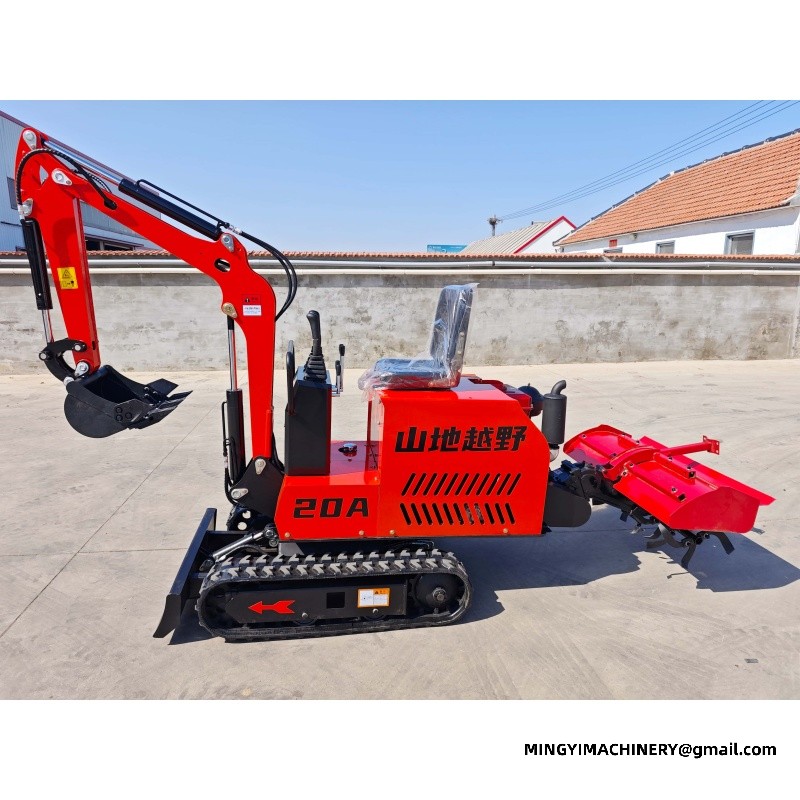
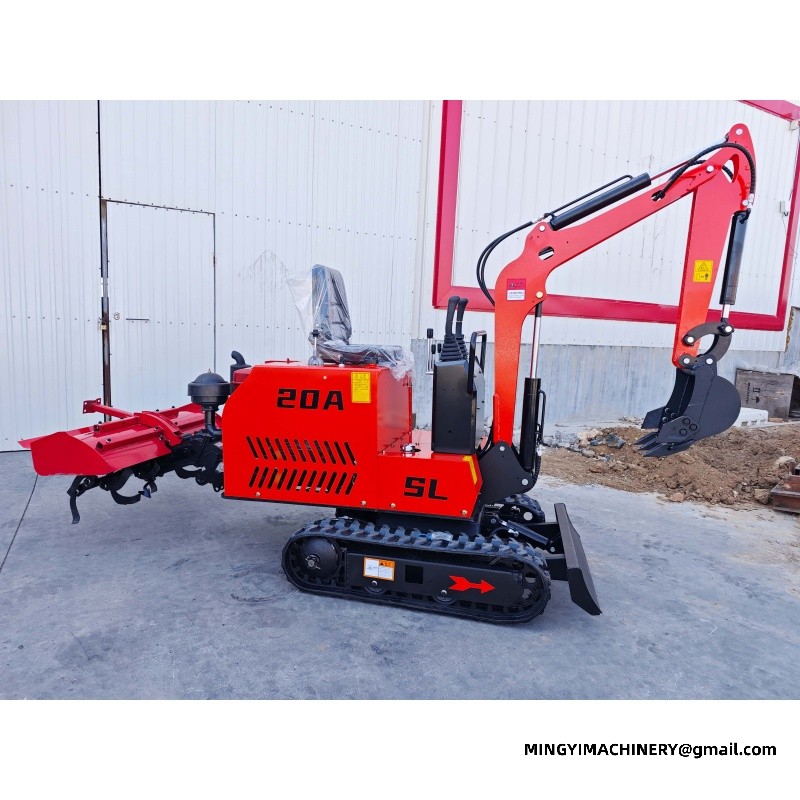
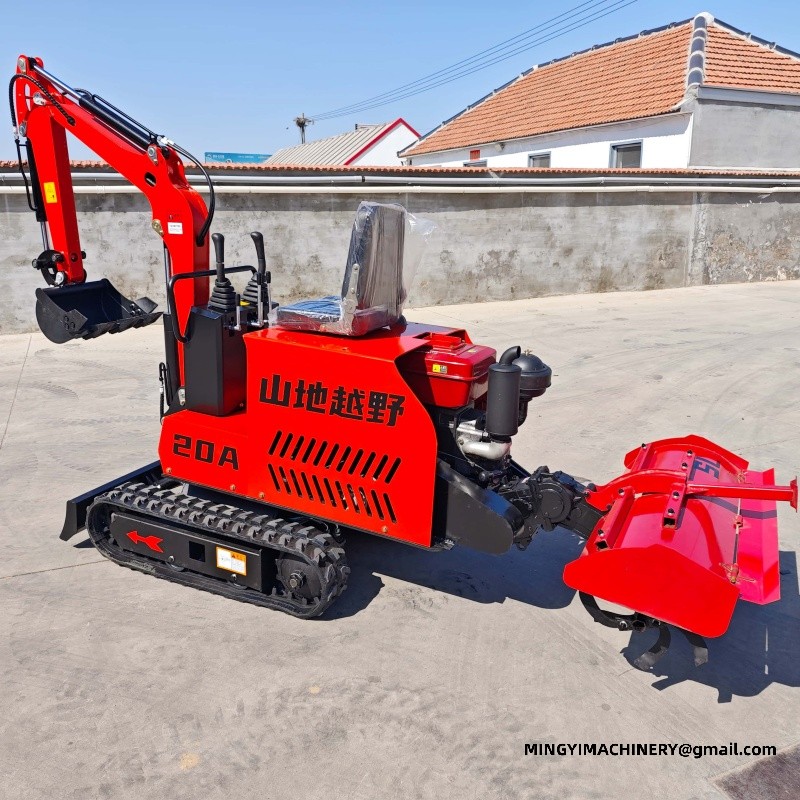
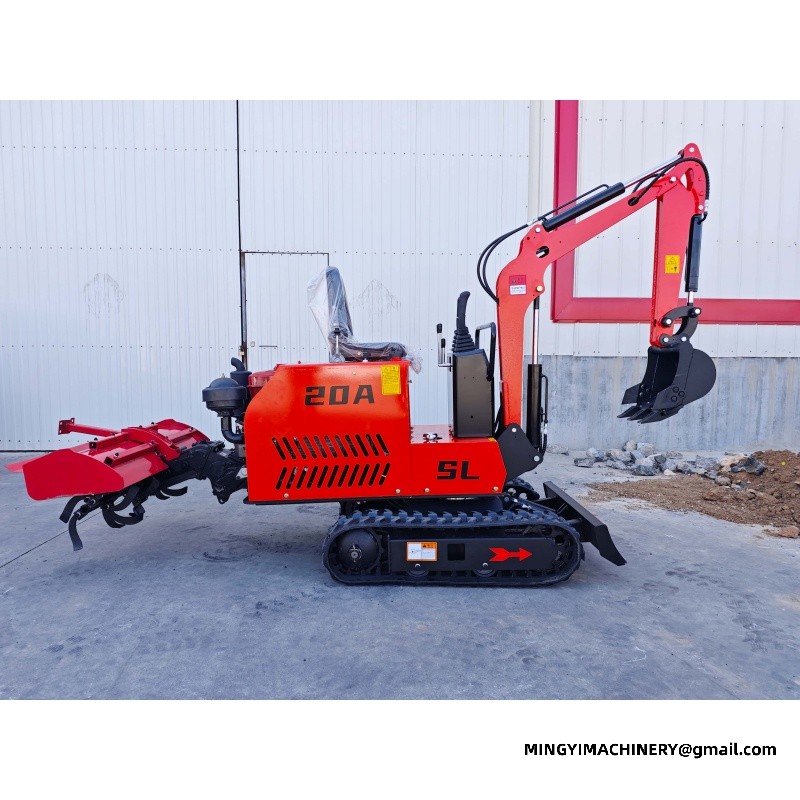
Reference specification — mini excavator range 09W 20-1WL 30-2W 25L Operating weight 1100 kg (2425.08 lb) 1900 kg (4188.78 lb) 2700 kg (5952.48 lb) 2200 kg (4850.17 lb) Transport size (L×W×H) 1800 × 750 × 1970 mm 2550 × 1100 × 2200 mm 3000 × 1100 × 2700 mm 3000 × 1300 × 2700 mm Max digging depth 1250 mm (49.21 in) 1800 mm (70.87 in) 2200 mm (86.61 in) 2300 mm (90.55 in) Max digging height 2800 mm (110.24 in) 2820 mm (111.02 in) 3000 mm (118.11 in) 3100 mm (122.05 in) Max dumping height 1700 mm (66.93 in) 2050 mm (80.71 in) 2000 mm (78.74 in) 2050 mm (80.71 in) Max digging radius 2570 mm (101.18 in) 3050 mm (120.08 in) 3800 mm (149.61 in) 3900 mm (153.54 in) Max digging distance 1869 mm (73.58 in) 2300 mm (90.55 in) 3050 mm (120.08 in) 3100 mm (125.05 in) Minimum turning radius 1000 mm (39.37 in) 1450 mm (57.09 in) 1750 mm (68.9 in) 1800 mm (70.87 in) Travel speed 3 km/h (1.86 mph) 5 km/h (3.11 mph) 7 km/h (4.35 mph) 7 km/h (4.35 mph) Gradeability 30° 30° 30° 30° Fuel consumption 1-1.3 L/h (0.264—0.343 gal) 2-3 L/h (0.528—0.793 gal) 2-3 L/h (0.528—0.793 gal) 2-3 L/h (0.528—0.793 gal) Fuel tank capacity 8 L (2.11 gal) 16 L (4.23 gal) 16 L (4.23 gal) 16 L (4.23 gal) Hydraulic oil tank 16 L (4.23 gal) 18 L (4.76 gal) 20 L (5.28 gal) 18 L (4.76 gal) Dozer blade lift height 180 mm (7.09 in) 180 mm (7.09 in) 230 mm (9.06 in) 230 mm (9.06 in) Dozer blade drop depth 210 mm (8.27 in) 210 mm (8.27 in) 280 mm (11.02 in) 280 mm (11.02 in)
LINE ( ID ): mingyicn
Common operator mistakes with mini excavator for garden remodelling
Over-greasing is as unhelpful as under-greasing, because sealed bearings and belts do not benefit from it.
Ignoring a small change in sound or feel is the mistake that turns a service item into a repair, and reporting it early is the habit worth building.
Filling the tank at the end of the shift rather than the start reduces condensation in the tank overnight.
Related pages
Crawler Tractor with Rear Plough can be rotary tilled and excavated · Adding a Tracked Rotary Plough to a Small Excavator · mini excavator factory direct supply · PRODUCTS









