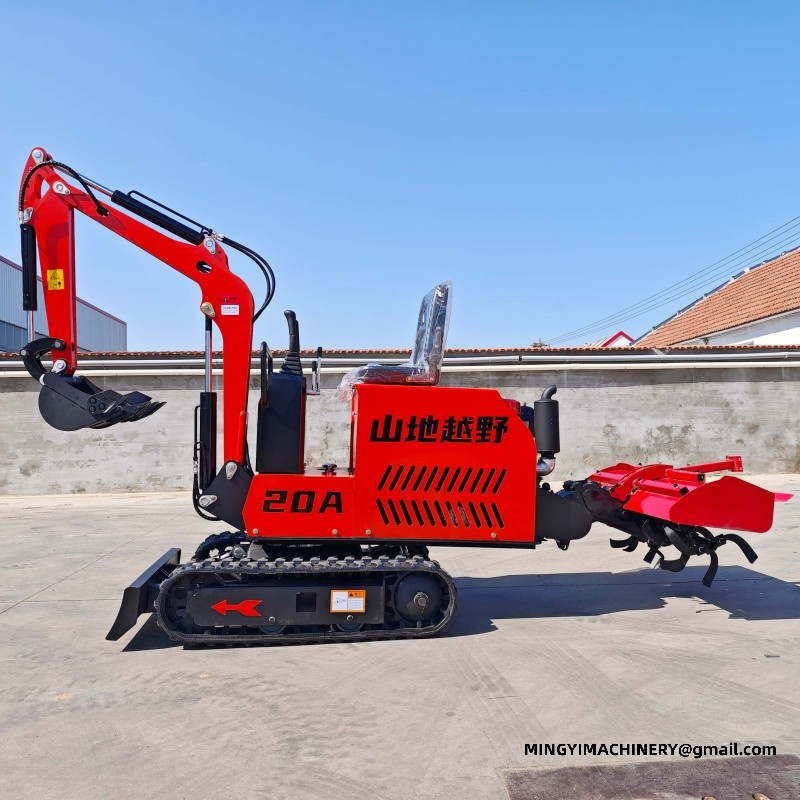
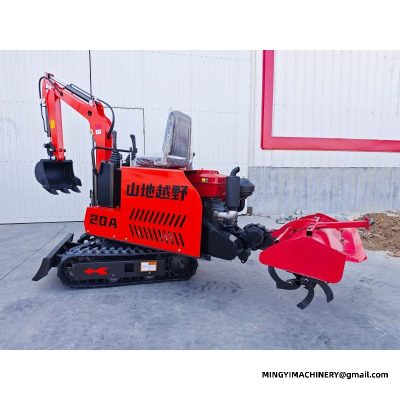
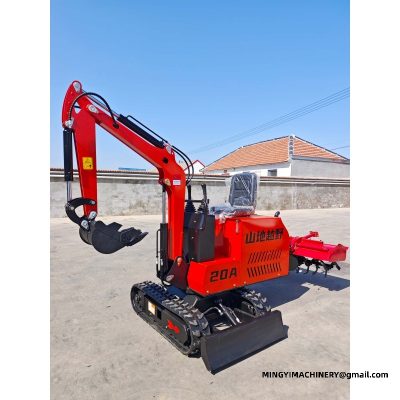
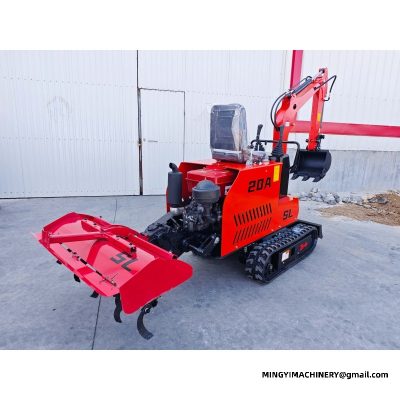
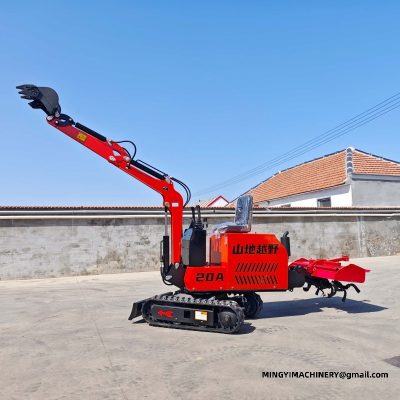
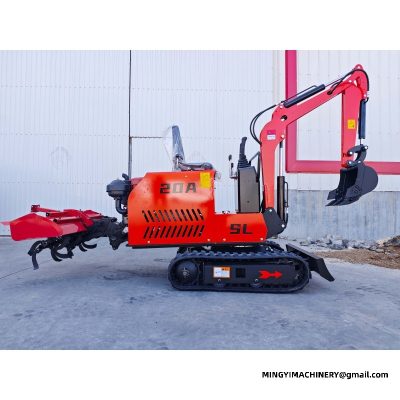
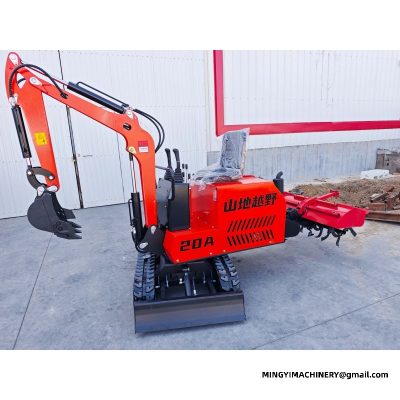
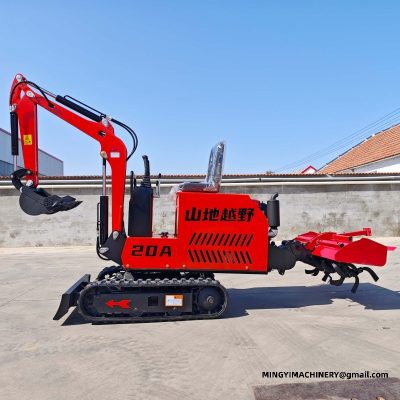
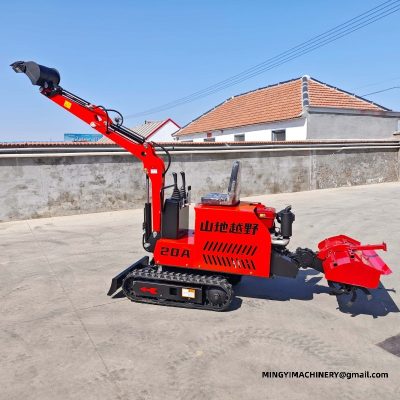
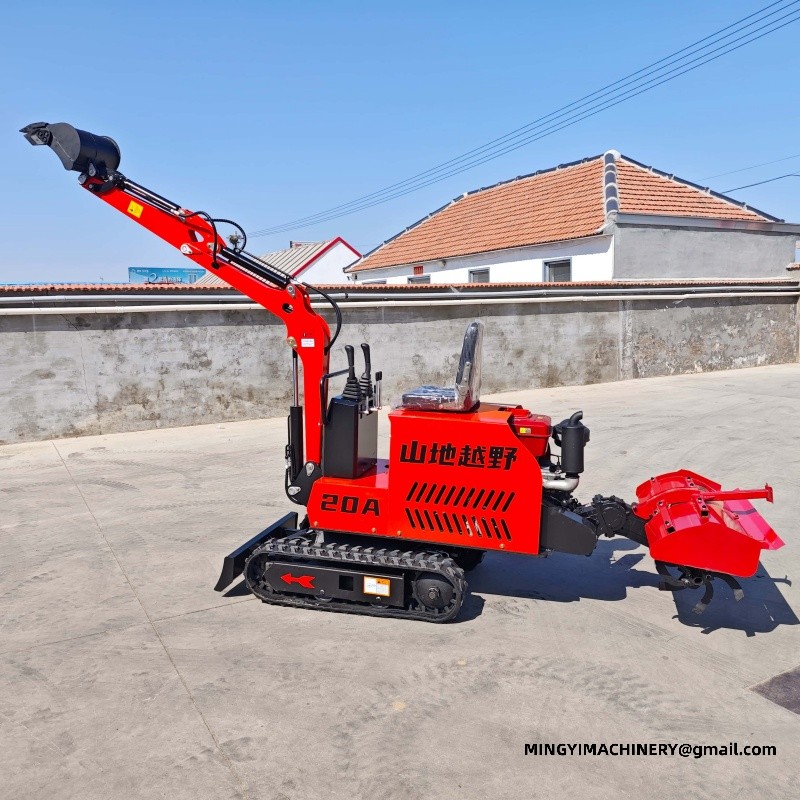
A crawler machine fitted with a rear plough and an excavating attachment covers the two jobs that dominate small-scale agricultural work: turning soil for cultivation and digging for drainage, irrigation and planting.
MINGYI supplies this combination of tracked traction, rear ploughing capability and compact excavating equipment.
Traction is the point
On hillside, terraced and wet ground, traction decides whether an implement works at all. A tracked machine spreads its weight over a long contact area and holds grip where a wheeled tractor slips, which is why crawler machines are used for cultivation on the ground where these plots are found.
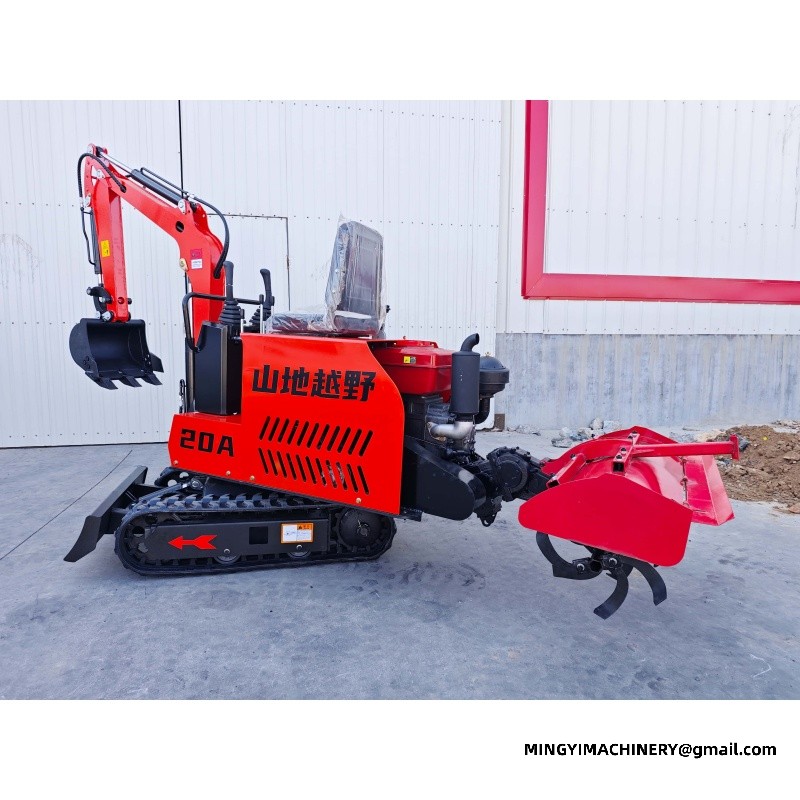
The same undercarriage then carries the excavating equipment, so drainage and ditch work is carried out on the same machine and in the same conditions.
Alternating between the two duties
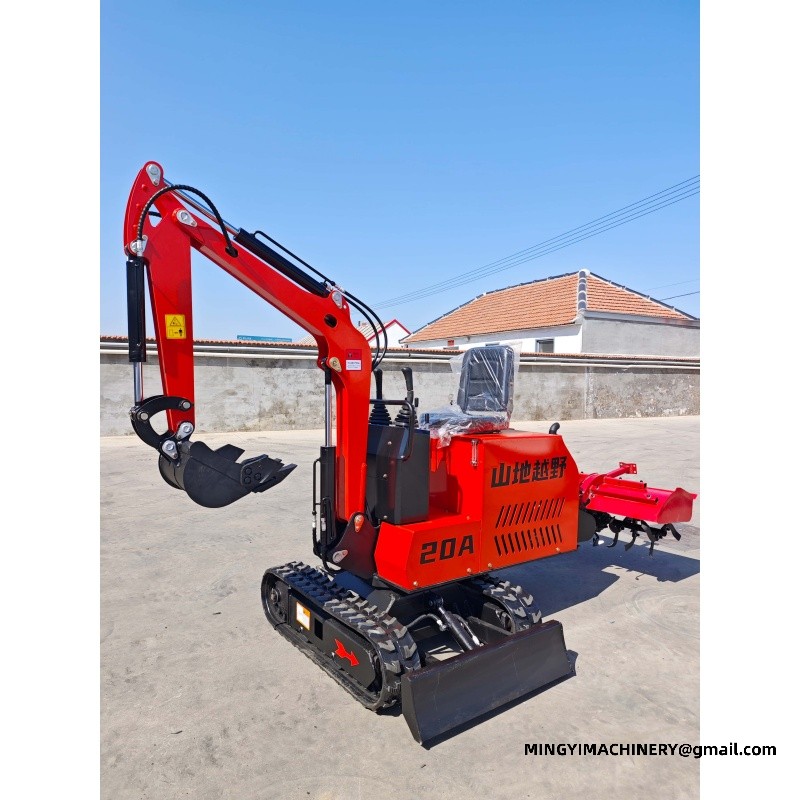
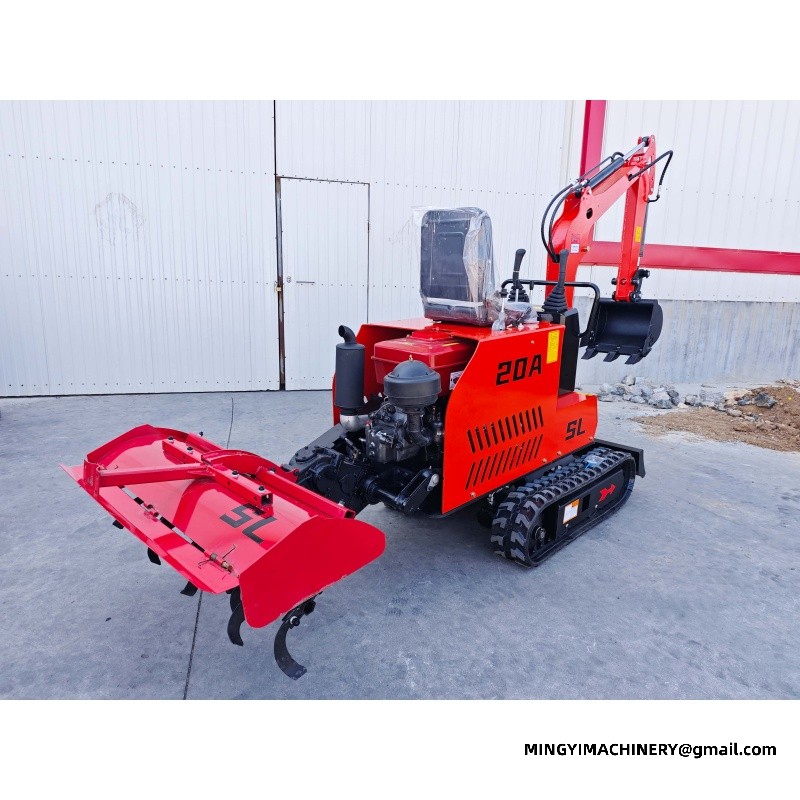
Rear ploughing prepares ground for planting; the excavating attachment opens and maintains the drainage, irrigation and planting trenches that the same ground needs. Because both mount on the machine’s attachment interface, moving between them is a tool change rather than a machine change.
Combined duties
• Rotary tillage and soil preparation with a rear plough
• Drainage and irrigation trench excavation
• Ditch and watercourse maintenance
• Planting holes and bed preparation
• Clearance of scrub before cultivation
Tell us the plot size, the crop and the ground conditions and we will confirm the machine and implement configuration.
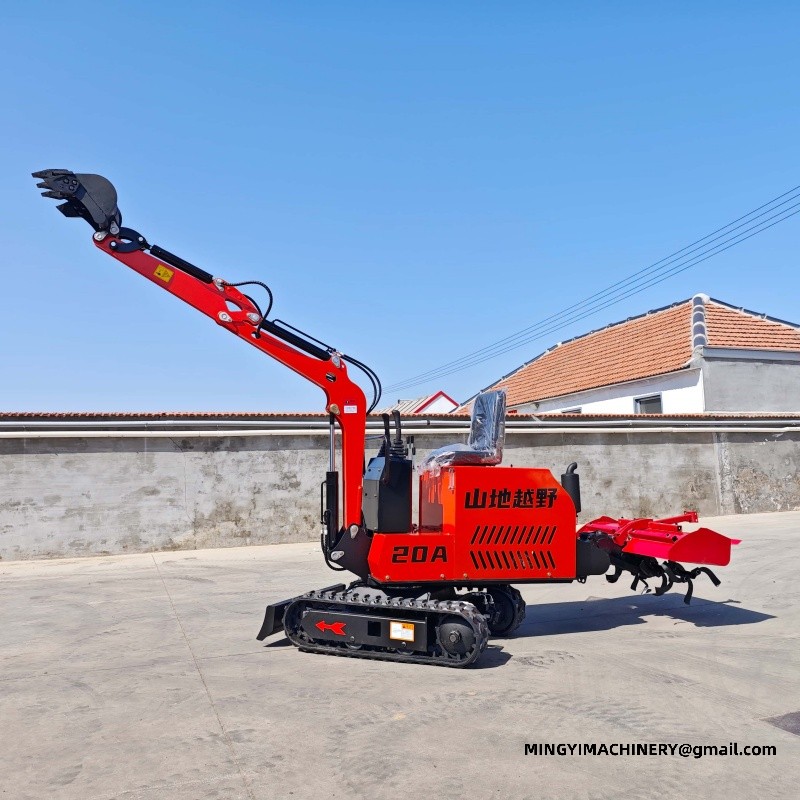
Working on slopes and uneven ground with Crawler Tractor with Rear Plough can be rotary tilled and excavated Ground that looks level often is not. This class of machine crossing a filled trench, a soft edge or a hidden void behaves differently from one on undisturbed ground, and those are the places worth walking before driving. Planning the direction of travel helps. Working so that the unit in daily use is stable under load and not required to turn on a slope is a decision made before the job starts, not a correction made during it. Engine options behind Crawler Tractor with Rear Plough can be rotary tilled and excavated Power unit selection is settled against the service network the buyer already uses. MINGYI offers Kubota D722, Kubota D902, YANMAR, Changchai, Laidong, Runtong, YARMAX, Youpu 2V80 and Youpu 195, so a fleet running one brand of engine can keep the same filters, the same parts supplier and the same mechanic. Two buyers can order the same a machine of this size and receive different engines. The decision is rarely about peak power; it is about which parts counter is closest to the site and which engine the local mechanic already knows. Working a Crawler Tractor with Rear Plough can be rotary tilled and excavated through the seasons Weather decides which days are productive. Rain turns some ground unusable and cold changes how the equipment on site starts and warms up, so planning the wet months around maintenance is more useful than planning around output. Seasonal planning smooths the workload. Machines that are busy for a few months and idle for the rest benefit from a service slot in the quiet period, and the machine itself prepared in the off-season starts the busy months reliably. Trailering and moving Crawler Tractor with Rear Plough can be rotary tilled and excavated Transport weight and width decide whether a machine needs a specialist haulier. The model in question sized to travel on a standard plant trailer behind a suitable vehicle moves with the crew rather than on a scheduled low loader. Loading practice matters as much as the numbers. The machine in that duty is driven up ramps under its own power with the boom lowered and the tracks aligned, and secured at the points the manufacturer specifies. Boom configuration for Crawler Tractor with Rear Plough can be rotary tilled and excavated A swing boom lets the machine dig parallel to its tracks without repositioning, which is what makes trenching beside a wall or a fence practical. On the unit on the job this is often the option that decides whether a job is possible at all. Extended and offset boom configurations change reach and working range. A machine built for the work with a longer arm reaches further but lifts less at full extension, so the specification is set against the deepest and furthest point on the job list. What owners should plan for beyond the equipment in service Purchase decision is the visible part of the effort. Fuel, filters, tracks or tyres, the operator and the transport between sites are the items that decide what this class of machine actually demands over a few seasons, and they are worth listing before the order. Downtime is the hidden line item. The unit in daily use waiting on a part earns nothing while it stands, so parts availability and service access belong in the plan as much as fuel does. Working a machine of this size in confined spaces Clearance above matters as much as around. Door heights, pipework and overhead services set the limit for the equipment on site indoors, and measuring them first avoids a machine that arrives and cannot be used. Ventilation is the other indoor constraint. Running the machine itself inside a closed structure needs air movement, and that is a planning item rather than something to discover after the first hour. Trenching work with the model in question Trench quality depends on the bucket width and the operator, not on machine size. The machine in that duty with a narrow bucket and a swing boom cuts a clean run along a boundary without disturbing the ground either side of it. Depth control matters more on service work than speed. The unit on the job working beside live services is chosen because it can be placed precisely and stopped instantly, which is what the job actually requires. Acceptance checks when a machine built for the work arrives Delivery day is the best time to find a problem. Checking the specification against the order, the fluid levels, the fasteners and any transport damage while the class of machine is still on the trailer is faster than claiming later. A function check before the machine goes to work is worth the hour. Running through the controls, the travel and the attachment circuit on the equipment in service confirms it is set up as specified and ready for the site. Municipal and public works with the unit in daily use Drainage repair, tree planting, footway reconstruction and cemetery work are all within the range of a machine of this size. The jobs are small individually and continuous across the year. Specification data for the equipment on site The figures below are the factory figures for the models most often matched to the machine itself. They are the numbers to check against the site: the depth the work needs, the reach from one position, and the width of the narrowest point on the route in. These are the reference figures for the model in question. MINGYI confirms the final build sheet, including engine and attachment choices, against the destination and the job list before production. Municipal crews work on streets, footpaths and parks where the public is present. The machine in that duty is specified because it occupies little space, works inside a small exclusion zone and can be moved on a standard trailer. Noise and surface protection matter on public work. The unit on the job on rubber tracks across paving, with a sealed cab for the operator, suits the conditions better than a larger tracked machine.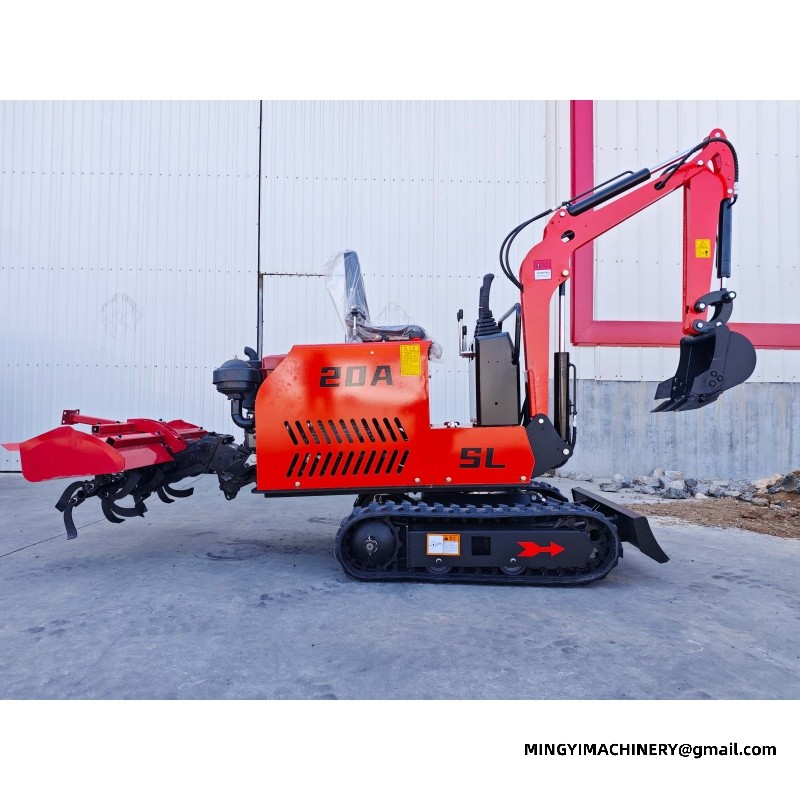
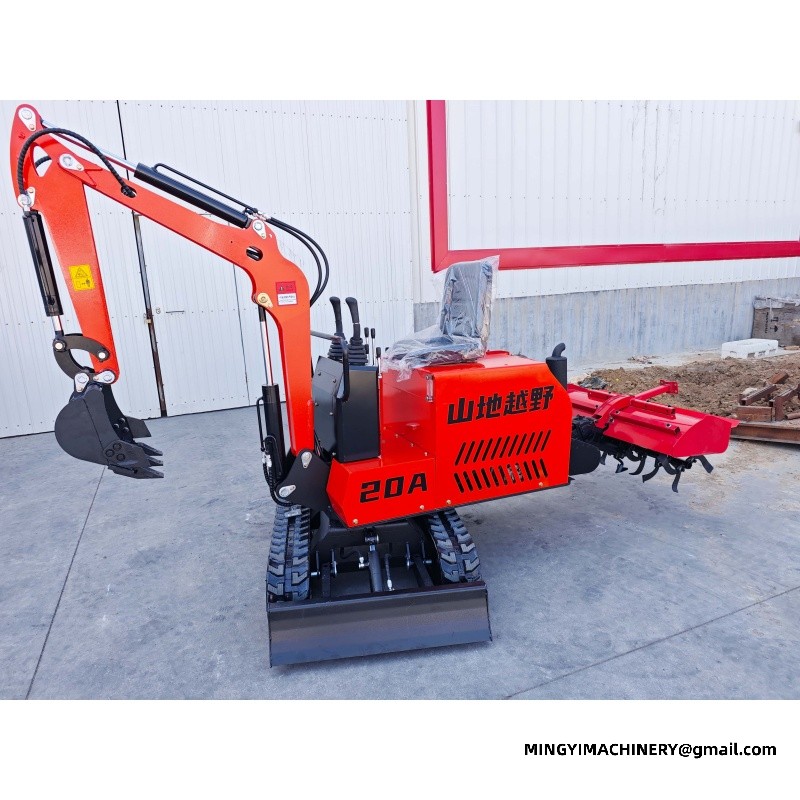
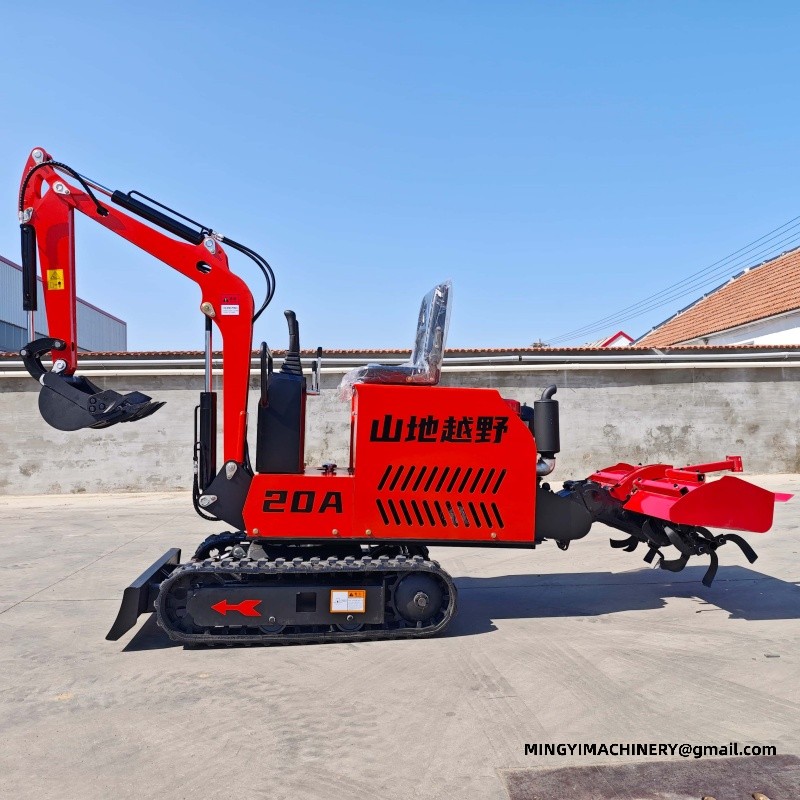
Reference specification — mini excavator range 09W 12W 20-1WL 20-3W Operating weight 1100 kg (2425.08 lb) 1200 kg (2645.55 lb) 1900 kg (4188.78 lb) 1900 kg (4188.78 lb) Transport size (L×W×H) 1800 × 750 × 1970 mm 2200 × 930 × 2250 mm 2550 × 1100 × 2200 mm 2550 × 1100 × 2200 mm Max digging depth 1250 mm (49.21 in) 1630 mm (64.17 in) 1800 mm (70.87 in) 1800 mm (70.87 in) Max digging height 2800 mm (110.24 in) 2750 mm (108.27 in) 2820 mm (111.02 in) 2820 mm (111.02 in) Max dumping height 1700 mm (66.93 in) 1960 mm (77.17 in) 2050 mm (80.71 in) 2050 mm (80.71 in) Max digging radius 2570 mm (101.18 in) 2900 mm (114.17 in) 3050 mm (120.08 in) 3050 mm (120.08 in) Max digging distance 1869 mm (73.58 in) 2100 mm (82.68 in) 2300 mm (90.55 in) 2300 mm (90.55 in) Minimum turning radius 1000 mm (39.37 in) 1300 mm (51.18 in) 1450 mm (57.09 in) 1450 mm (57.09 in) Travel speed 3 km/h (1.86 mph) 3 km/h (1.86 mph) 5 km/h (3.11 mph) 5 km/h (3.11 mph) Gradeability 30° 30° 30° 30° Fuel consumption 1-1.3 L/h (0.264—0.343 gal) 1-1.3 L/h (0.264—0.343 gal) 2-3 L/h (0.528—0.793 gal) 2-3 L/h (0.528—0.793 gal) Fuel tank capacity 8 L (2.11 gal) 10 L (2.64 gal) 16 L (4.23 gal) 16 L (4.23 gal) Hydraulic oil tank 16 L (4.23 gal) 16 L (4.23 gal) 18 L (4.76 gal) 18 L (4.76 gal) Dozer blade lift height 180 mm (7.09 in) 180 mm (7.09 in) 180 mm (7.09 in) 180 mm (7.09 in) Dozer blade drop depth 210 mm (8.27 in) 210 mm (8.27 in) 210 mm (8.27 in) 210 mm (8.27 in)
Q. What is a crawler tractor with rear plough used for?
A. It is a tracked machine set up with a plough at the rear for soil preparation on ground where a wheeled tractor cannot work: terraces, wet plots, orchards and greenhouse ground. The crawler base keeps the ground pressure low.
Q. Why a crawler rather than a wheeled tractor?
A. Ground pressure and traction. On wet, terraced or soft ground a wheeled tractor either sinks or cannot climb, while a crawler base spreads the weight and holds traction on the slope. That is what makes the plough usable on land a tractor has to avoid.
Q. How is the plough matched to the machine?
A. The plough has to suit the machine's hydraulics and the width of the bed being worked. MINGYI builds to order, so tell us the plot size, the row spacing and the soil, and we will propose the machine and plough combination that fits.
Documents that travel with a machine built for the work
A clear parts book saves more time than any other document. When the equipment in service needs a replacement, the illustration and the part number are what turn a phone call into a shipment instead of a description.
Pre-delivery inspection before this class of machine leaves the shop
What the customer sees on arrival is decided before departure. The walk-around given to the unit in daily use covers the same points the operator will check on day one, so there are no surprises when the crate is opened at the destination.
Hot, humid and dusty conditions around a machine of this size
Humidity attacks the parts that are not used. Storage in a damp climate means the equipment on site needs the exposed metal protected and the machine run regularly, because standing still does more damage than working.
Later additions and retrofits on the machine itself
Later changes are easier when they were anticipated. Asking for the extra hydraulic circuit or the heavier mounting plate on the model in question at build time adds little and leaves the option open.
E-mail : sales@mingycn.com
LINE ( ID ): mingyicn
Wear limits and replacement points on Crawler Tractor with Rear Plough can be rotary tilled and excavated
Every wearing part has a measurable point where it should come off rather than be watched, and that point is published by the manufacturer.
Measuring at the same place each time turns a guess into a trend, and a trend is what tells a workshop when to order.
The decision to stop using a part is easier to make during a scheduled check than in the middle of a job.
Water, mud and recovery planning for Crawler Tractor with Rear Plough can be rotary tilled and excavated
Water is the enemy of bearings, electrical connectors and anything that is supposed to be sealed, and it rarely announces where it got in.
Greasing before and after wet work pushes water out of the pins, and it is the single habit most worth keeping through a muddy season.
Related pages
Adding a Tracked Rotary Plough to a Small Excavator · Modification of Excavator to Rotary Plough · mini excavator built for export · PRODUCTS









