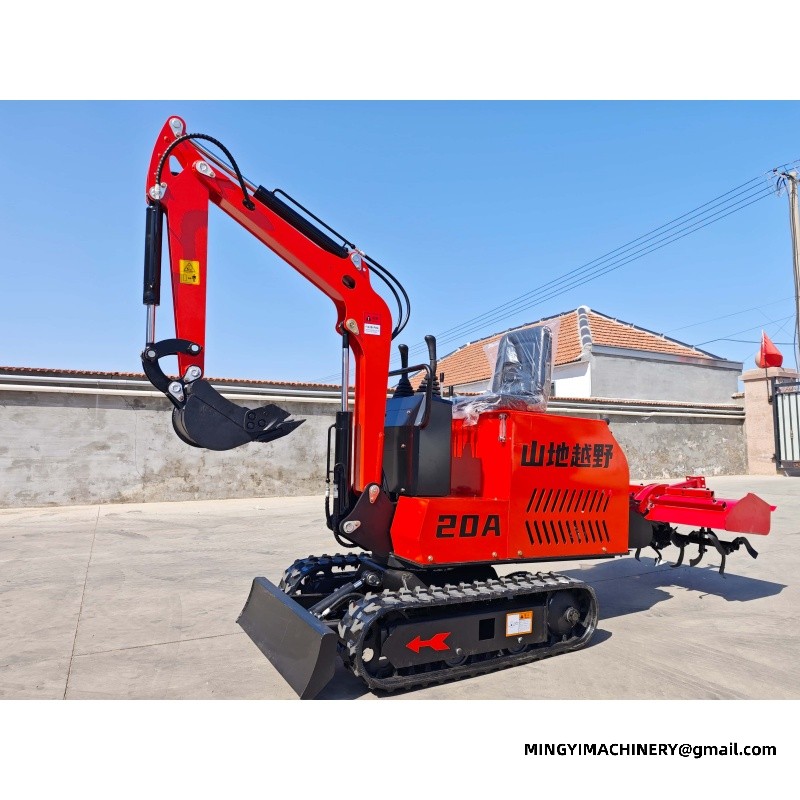
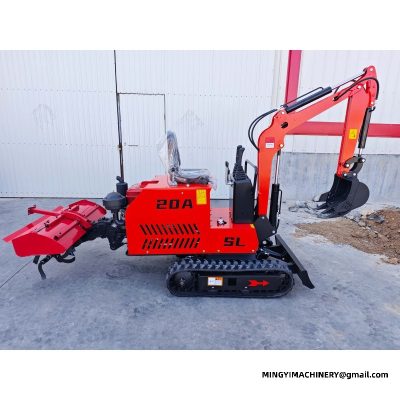
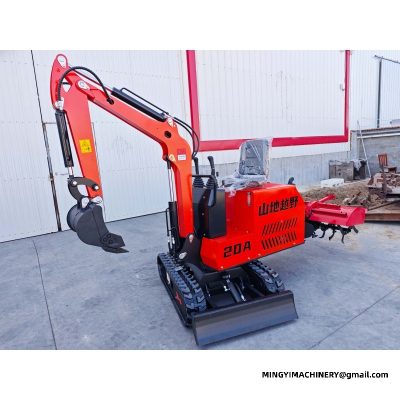
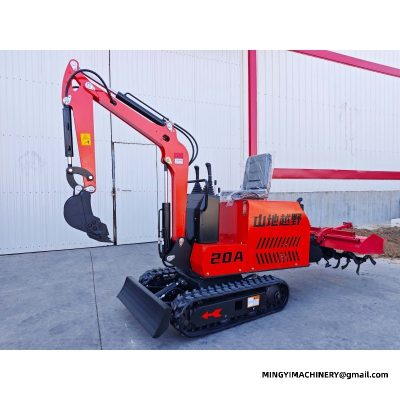
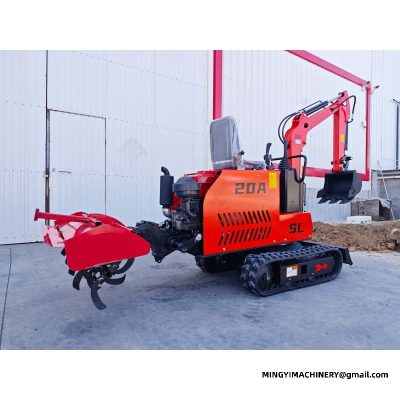
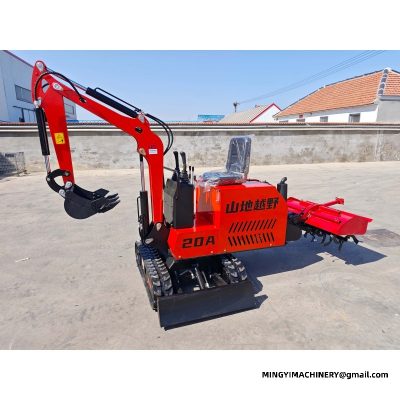
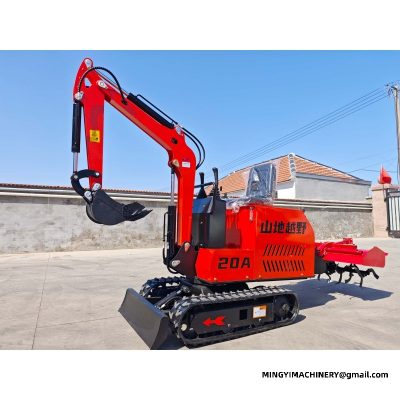
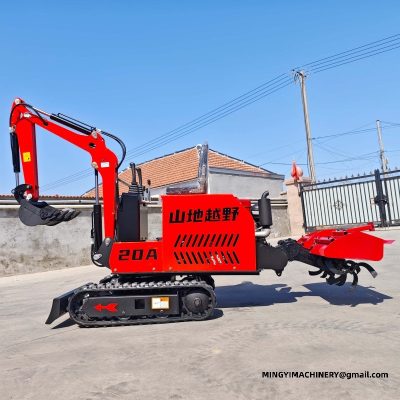
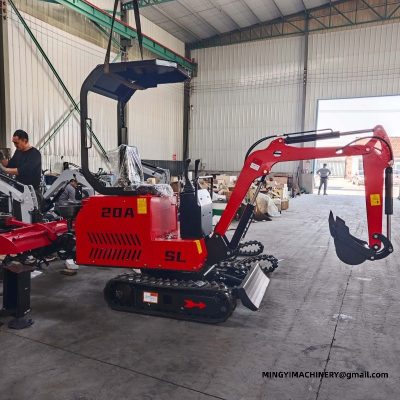
Municipal utility work covers water, sewer, gas, electricity and telecommunications, and a machine bought for it has to earn its place across all of them rather than excel at one.
That is why public works fleets tend to buy a small number of sizes and fit them out with a common attachment set, so any machine can be sent to any job without re-equipping.
One machine across the whole service range
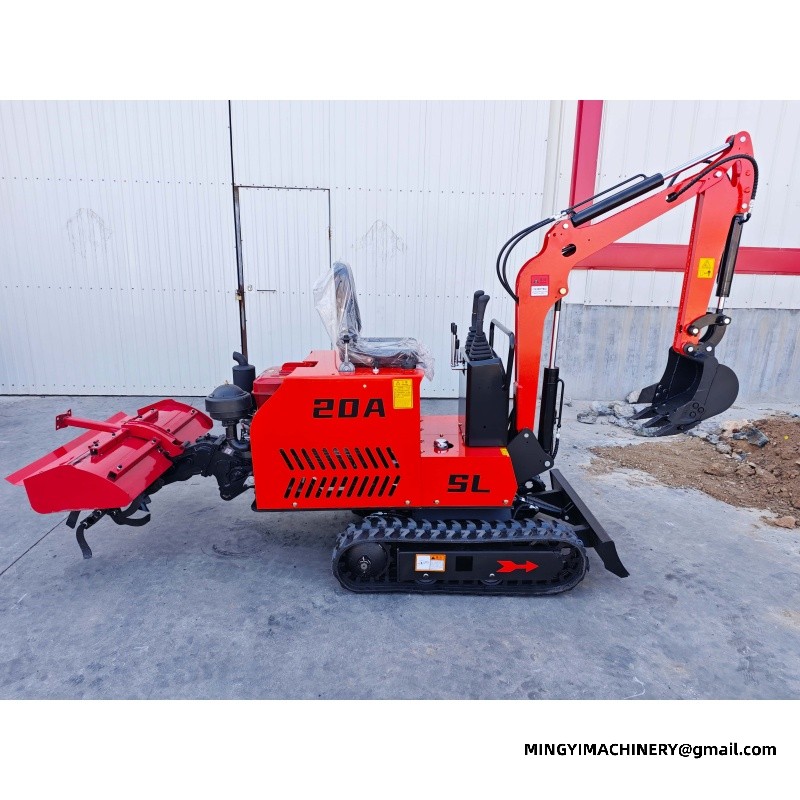
The working range runs from shallow service connections to deeper mains, so the machine needs enough reach for the deep end and enough fine control for the shallow end.
Attachments are shared across the fleet: a breaker for road crossings, an auger for pole and post positions, and a range of bucket widths for the different pipe and duct sizes.
What public works buyers look for
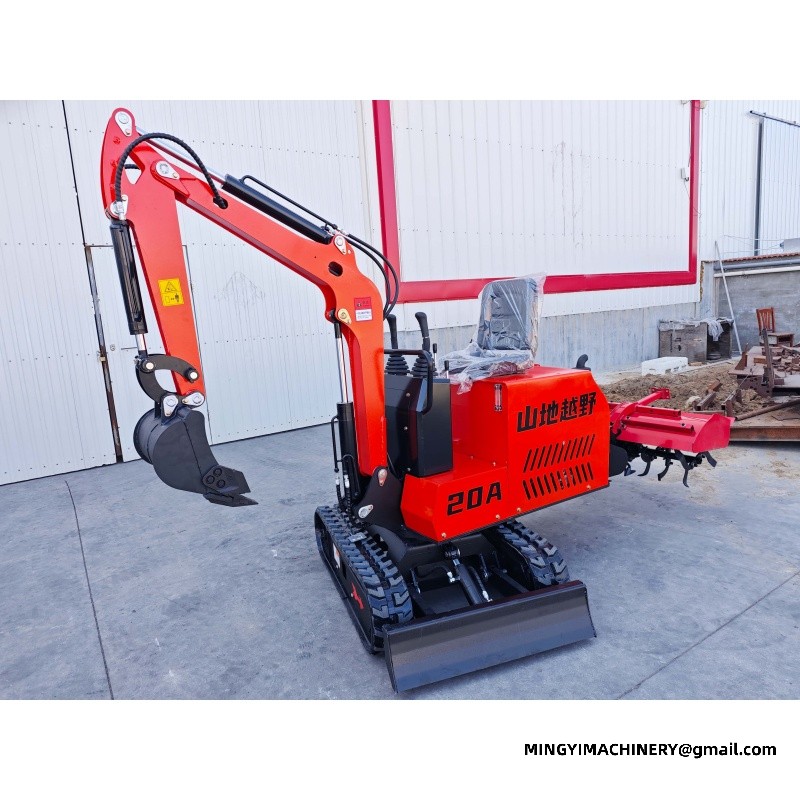
Municipal buyers look for machines that are simple to service, keep working across a long season, and can be repaired from parts that are readily available.
Standardising on one engine family and one hydraulic layout keeps workshop stock small and keeps operators familiar with the controls, whichever machine they are assigned.
Tell MINGYI which services your crews cover and how deep the deepest trench runs, and we will propose the size and attachment package that fits the fleet.
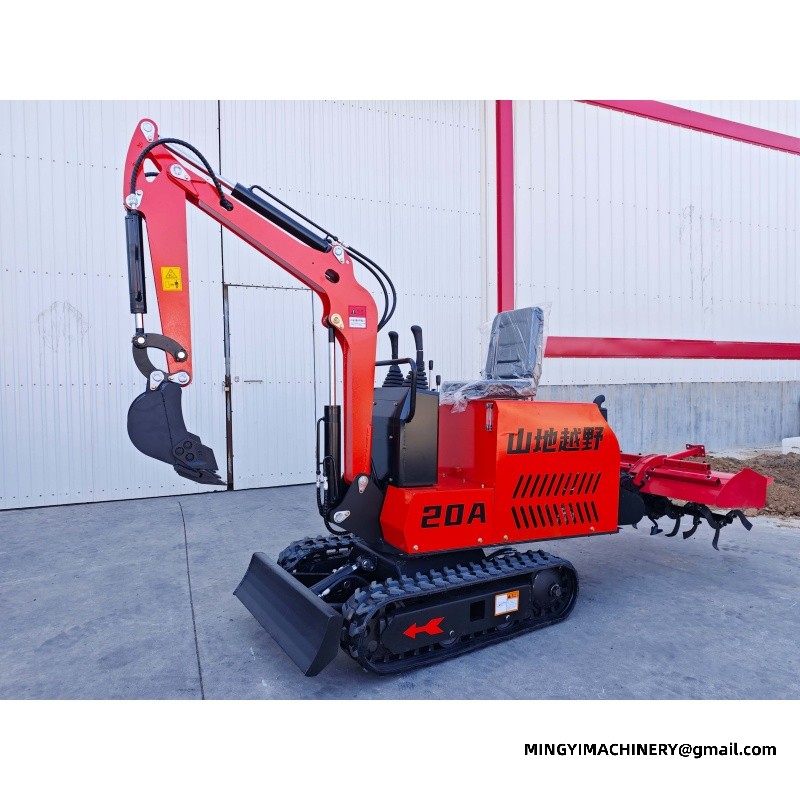
E-mail : Engine options behind this class of machine Power unit selection is settled against the service network the buyer already uses. MINGYI offers Kubota D722, Kubota D902, YANMAR, Changchai, Laidong, Runtong, YARMAX, Youpu 2V80 and Youpu 195, so a fleet running one brand of engine can keep the same filters, the same parts supplier and the same mechanic. Two buyers can order the same the unit in daily use and receive different engines. The decision is rarely about peak power; it is about which parts counter is closest to the site and which engine the local mechanic already knows. Landscaping and ground care with mini excavator for municipal utilities Landscape contractors use a machine of this size for planting holes, pond excavation, grading and retaining work. The machine is light enough to cross finished lawn and narrow enough to work between established trees. On soft landscape work the surface is the constraint. The equipment on site on rubber tracks crosses turf without stripping it, which is why the same jobs are not given to a wheeled machine. Lifting and material handling with a mini excavator for municipal utilities Lifting with a machine built to dig needs a plan. The load, the radius and the ground under the model in question all matter, and the safe figure is the one on the chart rather than the one that looks possible. Ground condition under the machine is part of every lift. Soft or uneven support is the common factor in handling incidents, and checking it takes less time than recovering the machine itself that has settled. Attachments that turn mini excavator for municipal utilities into several machines The base machine is a carrier; the tool on the end of the arm decides the task. The machine in that duty fitted with a toothed bucket digs, and the same machine with a breaker, an auger or a grab does work that would otherwise need a second unit on site. Most of the daily variety on the unit on the job comes from the attachment rack rather than from the machine itself. Bucket, breaker, auger, ripper, rake and grab cover the large majority of the work a contractor will see. Trailering and moving mini excavator for municipal utilities Transport weight and width decide whether a machine needs a specialist haulier. A machine built for the work sized to travel on a standard plant trailer behind a suitable vehicle moves with the crew rather than on a scheduled low loader. Loading practice matters as much as the numbers. The equipment in service is driven up ramps under its own power with the boom lowered and the tracks aligned, and secured at the points the manufacturer specifies. Quick coupler practice on mini excavator for municipal utilities Couplers are specified early because they affect the arm and the hydraulic kit. Adding one to this class of machine after delivery means new pins, new hoses and a fitment session; adding it at build time is a line on the sheet. For a fleet that shares attachments between machines, a common coupler standard matters more than the coupler brand. The unit in daily use that picks up the same tools as the larger machines keeps the rack usable across the yard. Canopy or enclosed cab on a mini excavator for municipal utilities The cab decision follows the climate and the hours. Operators working a full shift in a machine of this size benefit from a sealed cab with wipers and heating; operators stepping on and off every few minutes usually prefer the canopy for the visibility and the quick exit. Enclosure also changes noise and dust exposure. A sealed cab on the equipment on site keeps dust out on dry sites and lets the machine work through weather that would otherwise stop a canopy machine for the day. Road and paving work for the machine itself Road repair generates short, interrupted jobs - a patch, a drainage connection, a kerb line. The model in question is economical here because it travels on a small trailer and starts working minutes after arriving. Breaking out a failed slab and backfilling the same hole in one visit is normal work for the machine in that duty. The breaker and the bucket come off the same coupler, so the road is reopened the same day. What owners should plan for beyond the unit on the job Purchase decision is the visible part of the effort. Fuel, filters, tracks or tyres, the operator and the transport between sites are the items that decide what a machine built for the work actually demands over a few seasons, and they are worth listing before the order. The useful comparison is demand per working hour, not demand per machine. The equipment in service that works more hours a year spreads its standing takes over more output, which is why utilisation usually matters more than the invoice figure. Working on slopes and uneven ground with this class of machine Slope work is a stability question before it is a traction question. Knowing the gradient the unit in daily use is rated for, and working across rather than straight up where the ground allows, removes most of the risk. Planning the direction of travel helps. Working so that the a machine of this size is stable under load and not required to turn on a slope is a decision made before the job starts, not a correction made during it. Daily checks and maintenance on the equipment on site Daily maintenance on the machine itself is a short list: engine oil level, coolant, track tension, hydraulic oil level and a look at the hoses. Ten minutes at the start of the shift prevents most of the failures that stop a machine. Track tension is the item most often neglected. The model in question run with slack tracks wears the undercarriage and can throw a track on a turn; run too tight, the same components wear from the other direction. Trenching work with the machine in that duty Service trenches are the most common reason the unit on the job is hired. Water, sewage, cable and gas runs are narrow, shallow and often close to existing services, which is exactly the work a full-size machine cannot do safely. Trench quality depends on the bucket width and the operator, not on machine size. A machine built for the work with a narrow bucket and a swing boom cuts a clean run along a boundary without disturbing the ground either side of it. Boom configuration for the equipment in service A swing boom lets the machine dig parallel to its tracks without repositioning, which is what makes trenching beside a wall or a fence practical. On this class of machine this is often the option that decides whether a job is possible at all. Detachable boom sections are used where transport length matters. The unit in daily use that has to travel on a standard trailer can be built so the arm comes off for the road and goes back on at the site. Export packing and shipping of a machine of this size Machines leave the factory prepared for container or flat rack shipment. The equipment on site is normally shipped with the attachment set and the spare parts list agreed in advance so the container is planned once. Export documentation, decals and paint are settled before packing. Asking for them with the machine itself order avoids a second handling session and keeps the machine on the booked vessel. Specification data for the model in question Where the machine in that duty is being specified for a job list, the table below gives the factory figures that matter most: what the machine weighs, how deep and how far it works, and what it measures on a trailer. Figures are factory figures and are confirmed on the build sheet for the unit on the job. Where a job sits between two models, the larger machine usually takes less time than the smaller one spends on rework. Moving a machine built for the work between sites Loading is where most damage happens. Ramps, angle of approach and the condition of the ground under them matter more than the machine when the equipment in service is being loaded, and a careful driver is worth more than a fast one. Reading the early symptoms on this class of machine Operators notice things first because they hear the machine every day. Encouraging the person on the unit in daily use to report small changes, and acting on them, is the most effective maintenance programme there is. Ditching, fertilising and drainage on farmland suit a machine of this size because the work is spread over a large area in short bursts. The machine travels behind a pickup and works where it stops. Farms also use the equipment on site for general maintenance - clearing a watercourse, repairing a track, loading a spreader. One carrier with a few attachments covers most of the jobs that would otherwise wait for a contractor.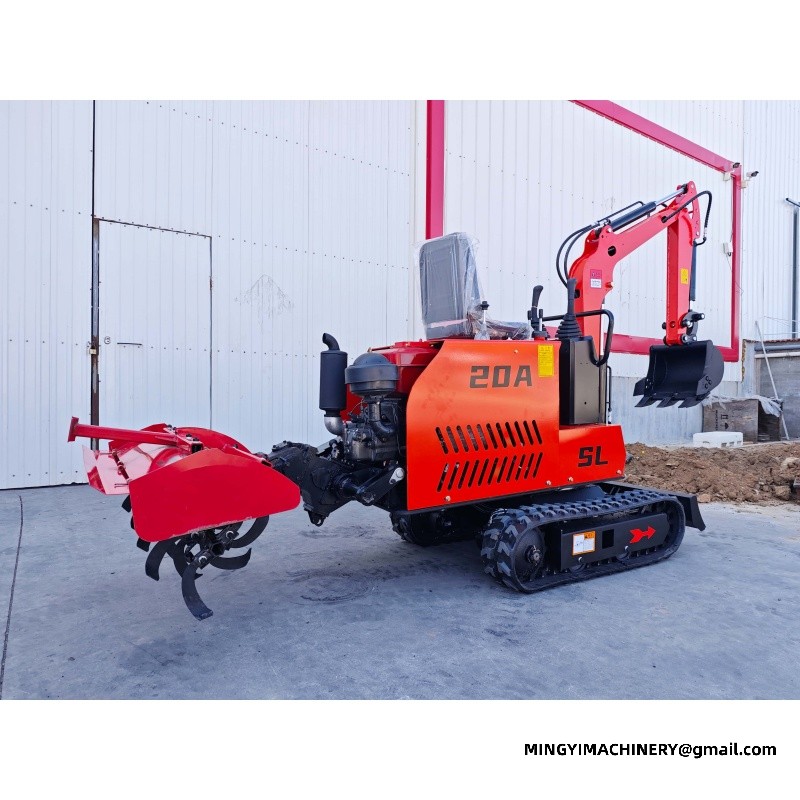
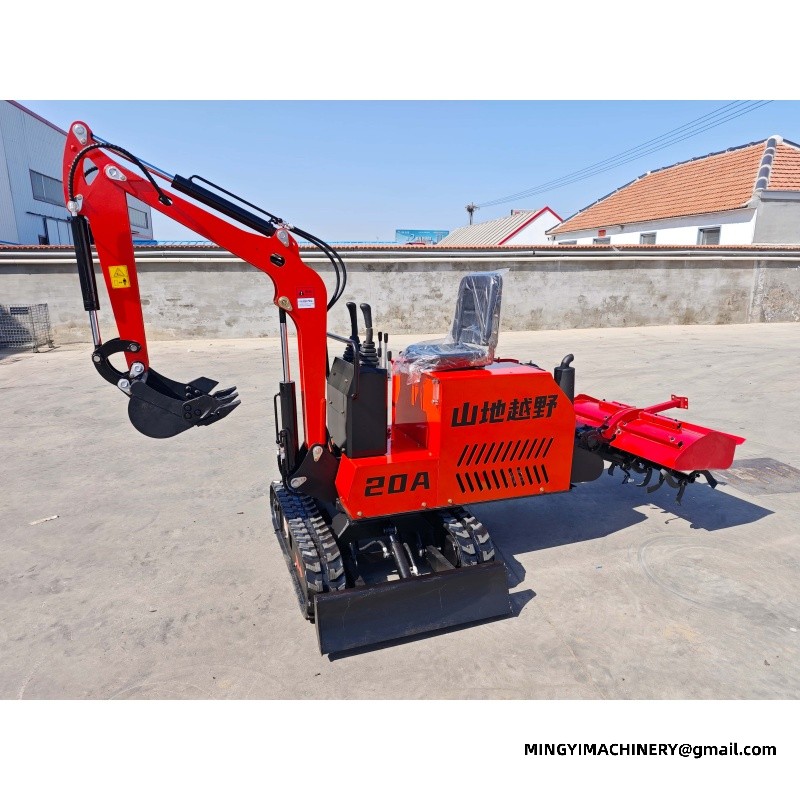
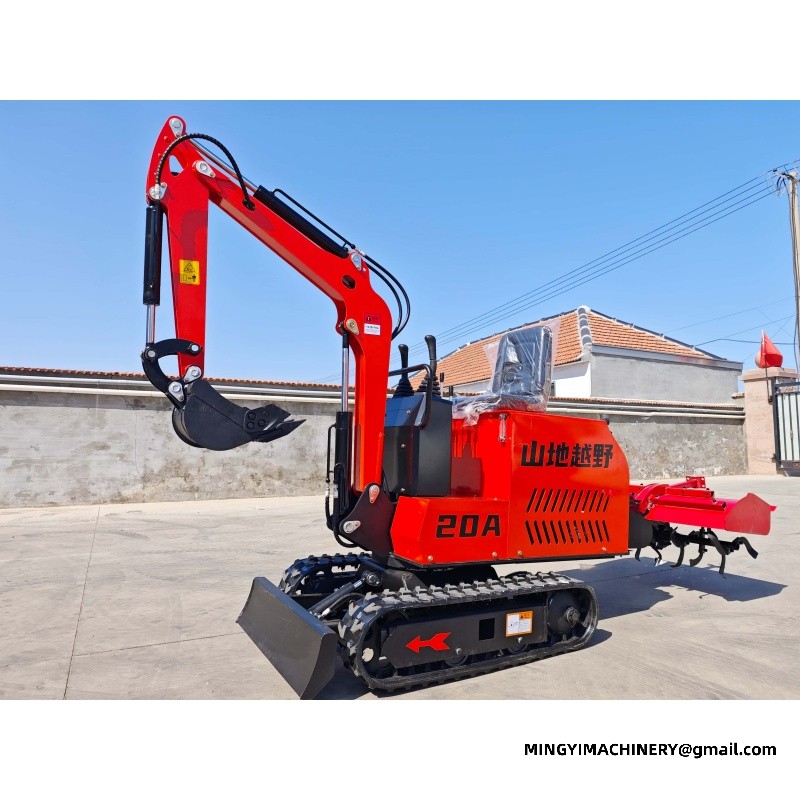
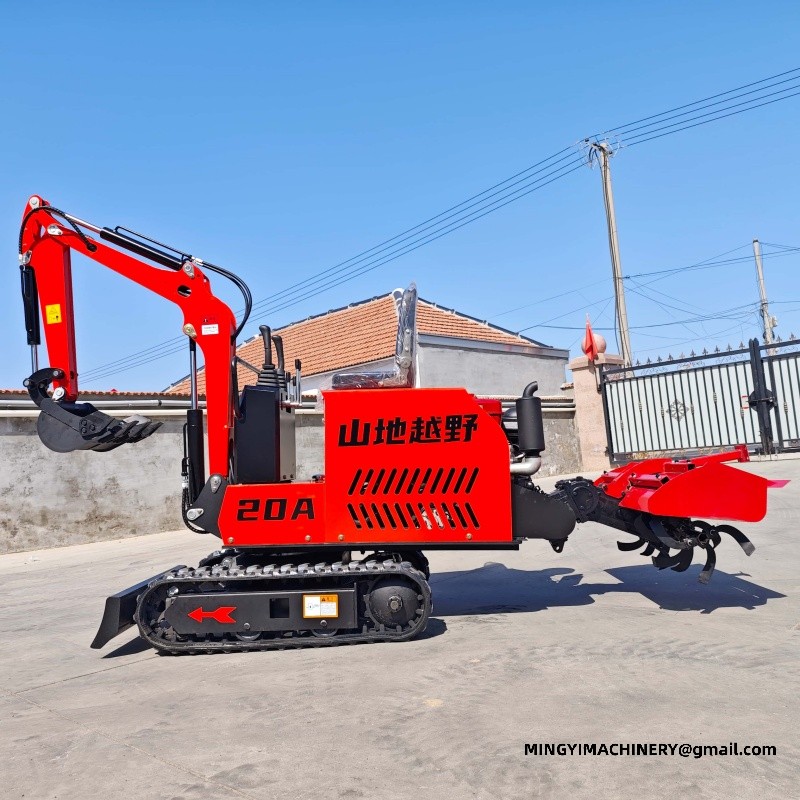
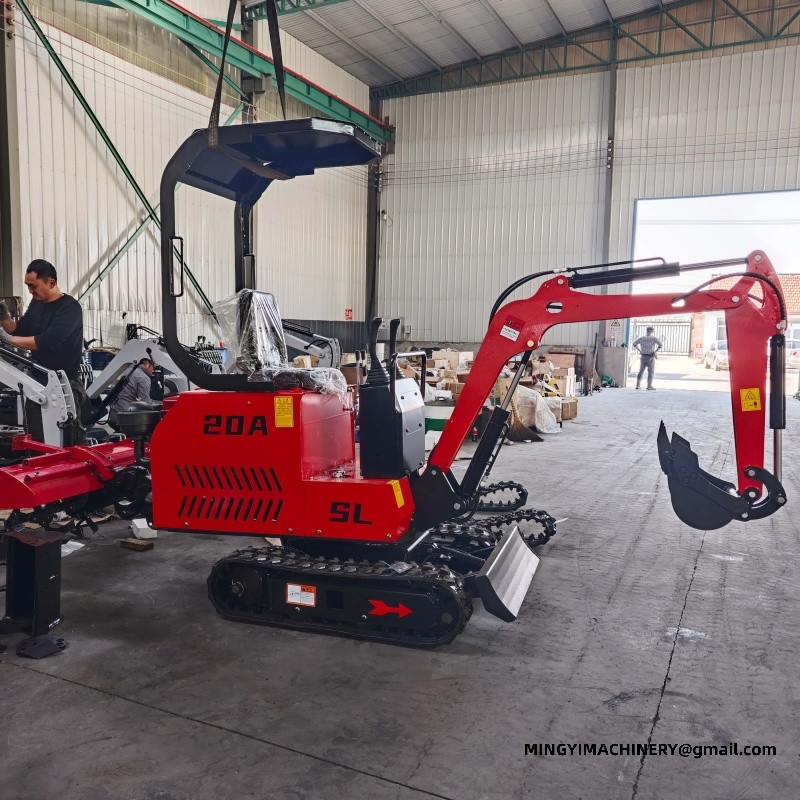
Reference specification — mini excavator range 20-3W 30-1W 15L 20-2L Operating weight 1900 kg (4188.78 lb) 2900 kg (6393.41 lb) 1400 kg (3086.47 lb) 1900 kg (4188.78 lb) Transport size (L×W×H) 2550 × 1100 × 2200 mm 3000 × 1250 × 2780 mm 2200 × 930 × 2250 mm 2600 × 1300 × 2344 mm Max digging depth 1800 mm (70.87 in) 2200 mm (86.61 in) 1700 mm (66.93 in) 2100 mm (82.68 in) Max digging height 2820 mm (111.02 in) 3400 mm (133.86 in) 2750 mm (108.27 in) 2880 mm (113.39 in) Max dumping height 2050 mm (80.71 in) 2400 mm (94.49 in) 1960 mm (77.17 in) 2100 mm (82.68 in) Max digging radius 3050 mm (120.08 in) 4000 mm (157.48 in) 2900 mm (114.17 in) 3215 mm (126.57 in) Max digging distance 2300 mm (90.55 in) 2800 mm (110.24 in) 2300 mm (90.55 in) 2460 mm (96.85 in) Minimum turning radius 1450 mm (57.09 in) 2000 mm (78.74 in) 1450 mm (57.09 in) 1587 mm (62.48 in) Travel speed 5 km/h (3.11 mph) 5 km/h (3.11 mph) 3 km/h (1.86 mph) 5 km/h (3.11 mph) Gradeability 30° 30° 30° 30° Fuel consumption 2-3 L/h (0.528—0.793 gal) 2-3 L/h (0.528—0.793 gal) 1-1.3 L/h (0.264—0.343 gal) 2-3 L/h (0.528—0.793 gal) Fuel tank capacity 16 L (4.23 gal) 16 L (4.23 gal) 10 L (2.64 gal) 16 L (4.23 gal) Hydraulic oil tank 18 L (4.76 gal) 20 L (5.28 gal) 16 L (4.23 gal) 18 L (4.76 gal) Dozer blade lift height 180 mm (7.09 in) 420 mm (16.54 in) 180 mm (7.09 in) 180 mm (7.09 in) Dozer blade drop depth 210 mm (8.27 in) 210 mm (8.27 in) 210 mm (8.27 in) 210 mm (8.27 in)
LINE ( ID ): mingyicn
Related pages
mini excavator for pothole repair · narrow mini excavator for tight access · small crawler excavator · PRODUCTS









