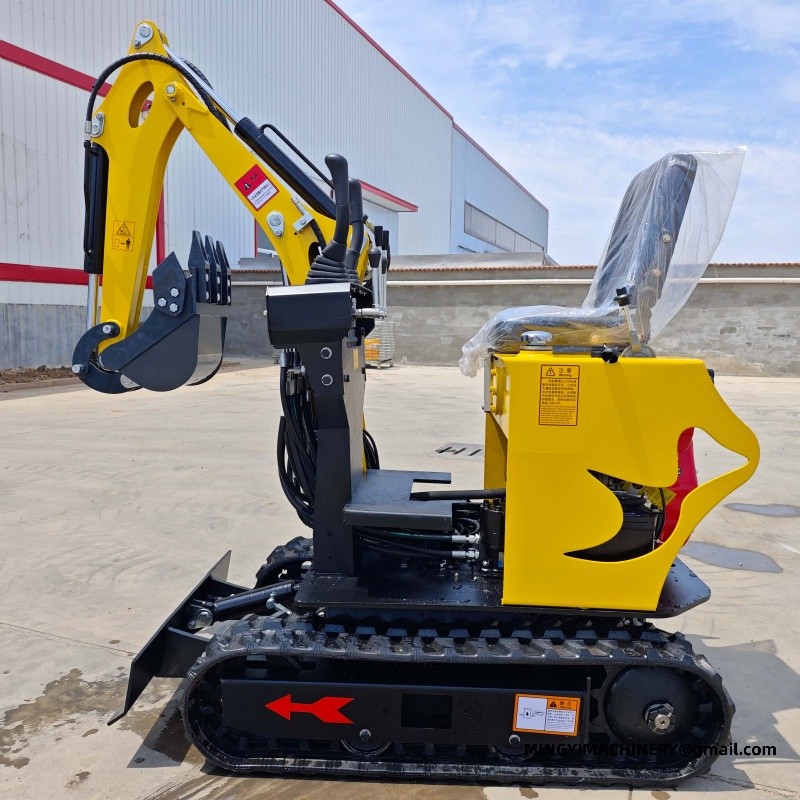
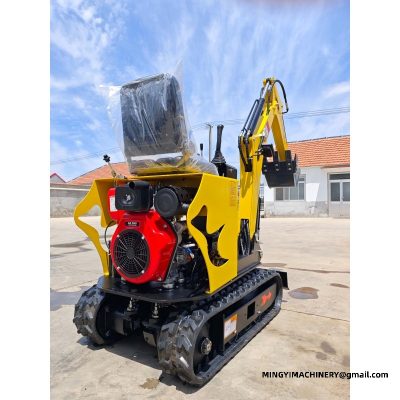
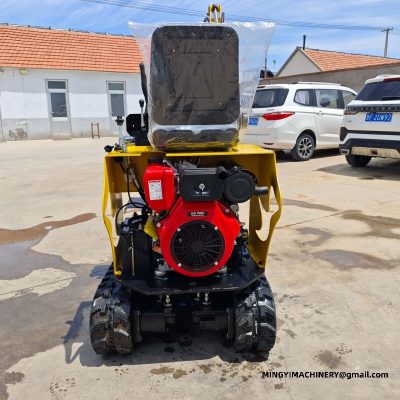
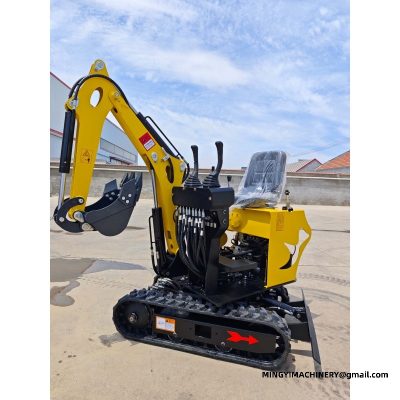
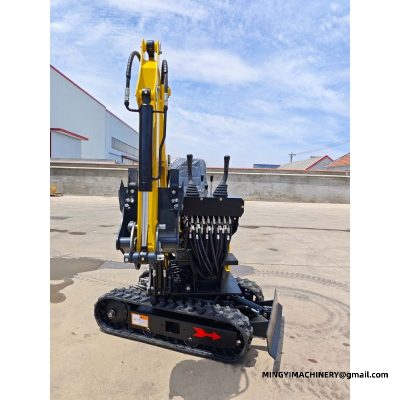
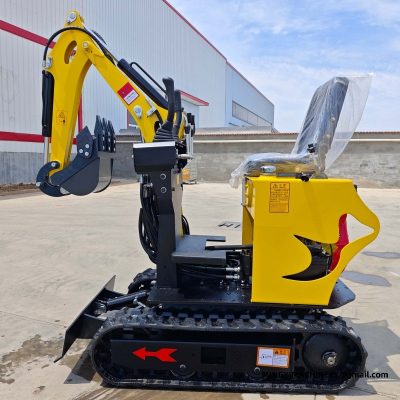
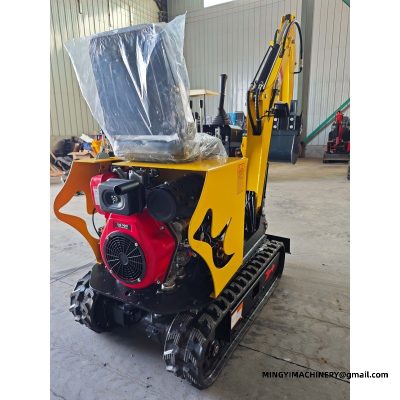
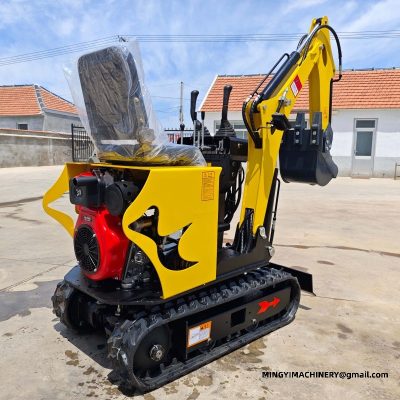
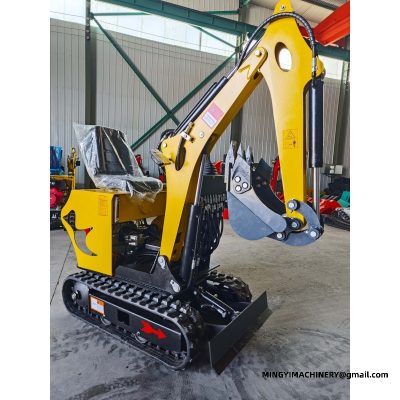
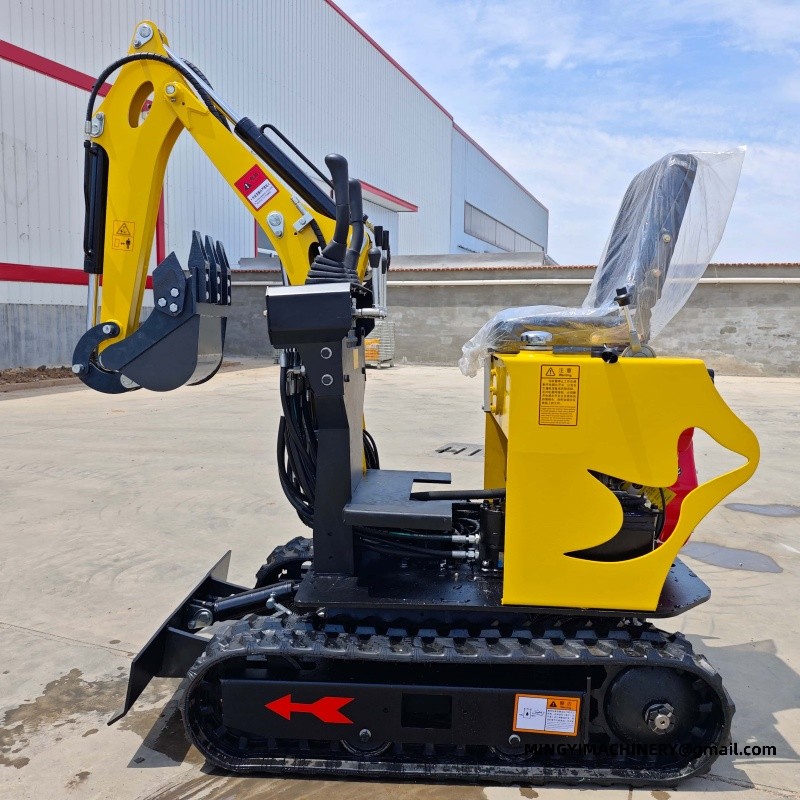
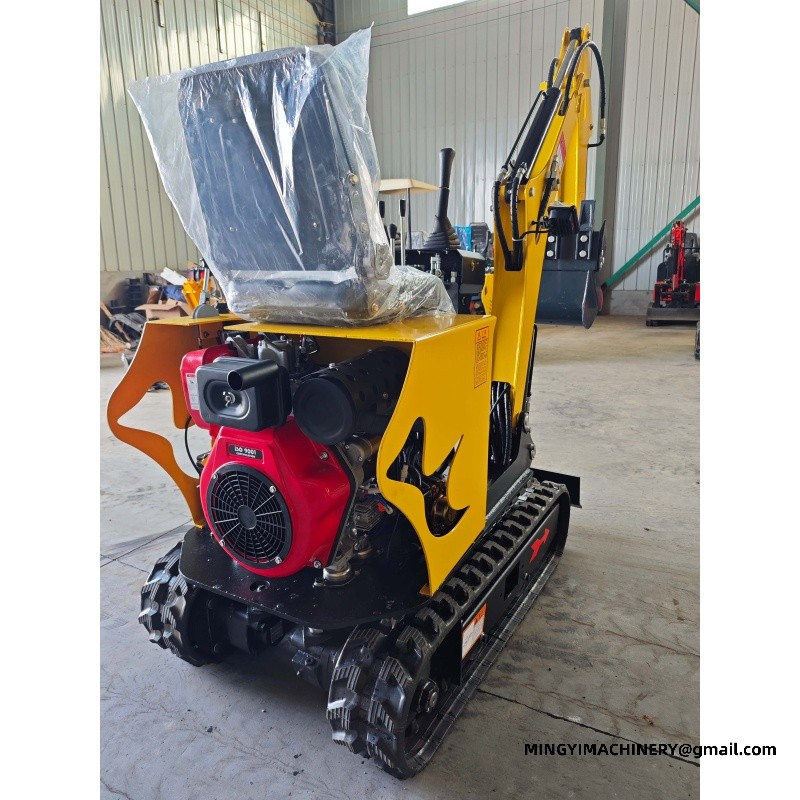
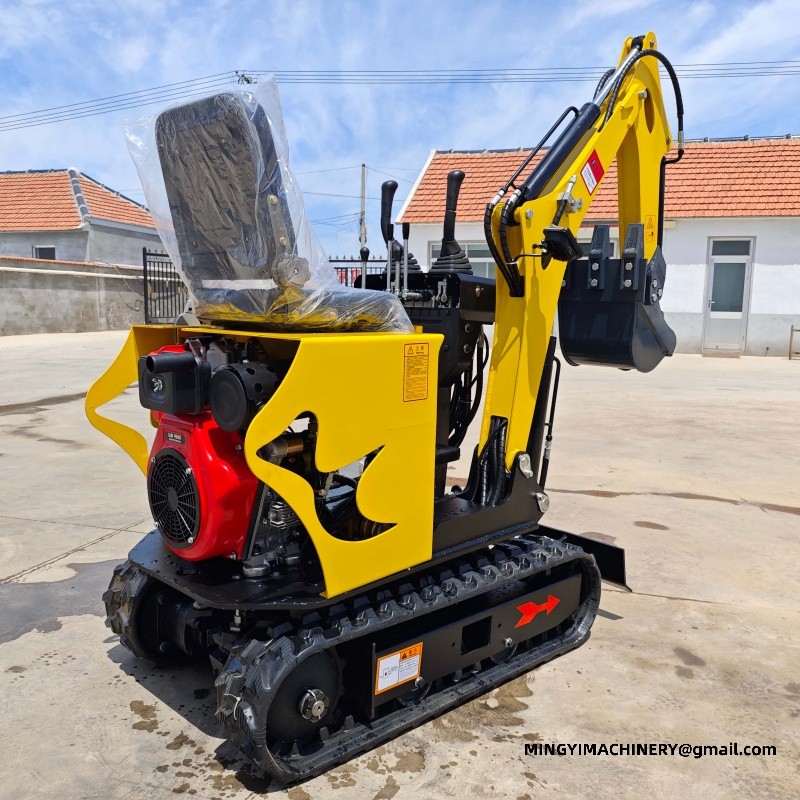
A photograph of a machine in work says more about it than a specification sheet, which is why the images on this page show MINGYI mini excavators on site rather than in a yard.
They show the machine in the situations it was built for: cutting service trenches, working close to buildings, and handling the small earthworks that fill a working day.
What the images show
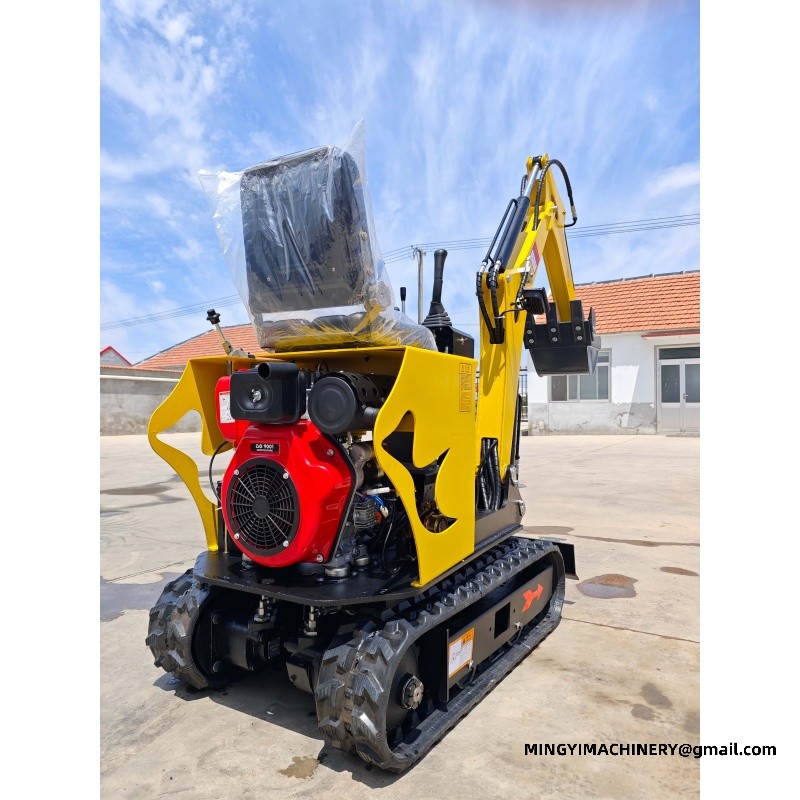
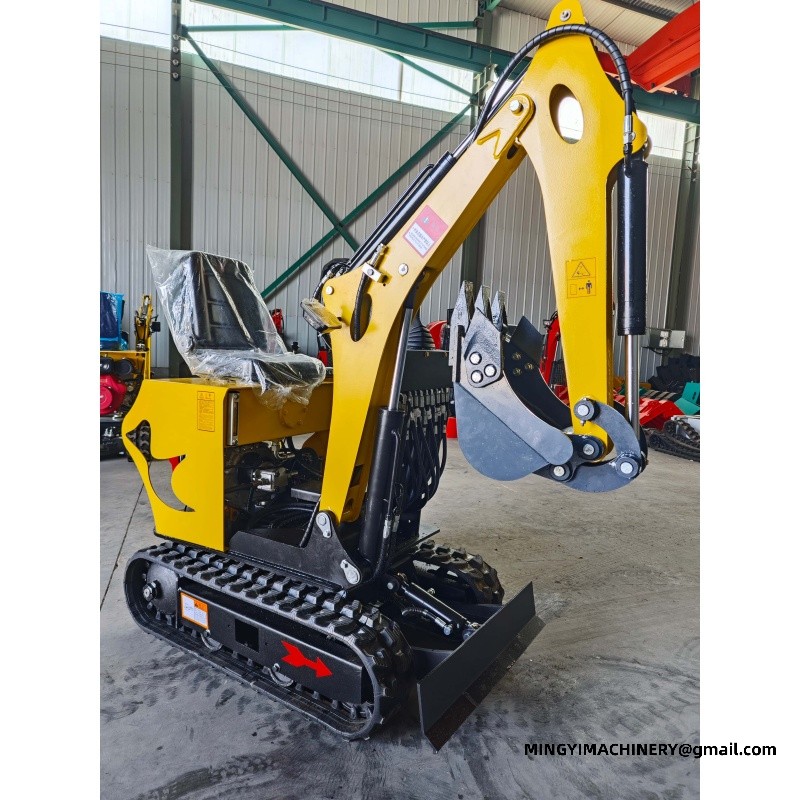
The machines are the compact tracked type, working with buckets and attachments in conditions that range from finished paving to raw ground.
They also show the working positions the design is intended for, including work alongside a wall or with the machine turned within its own tracks.
Reading the machine from the photograph
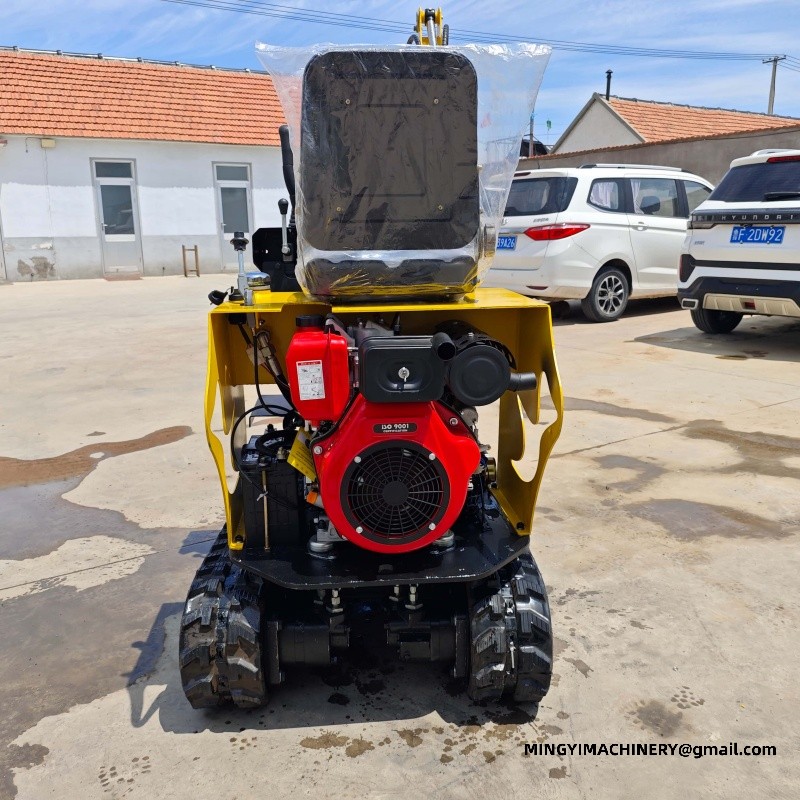
Size against the surrounding objects gives the best indication of class, and track type shows whether the machine is set up for finished or rough ground.
The operator station indicates whether the machine is a canopy or a cab version, which in turn suggests the climate and duration of work it was ordered for.
If you want to see machines working in your kind of ground and application, tell MINGYI what you do and we will point you to the relevant images.
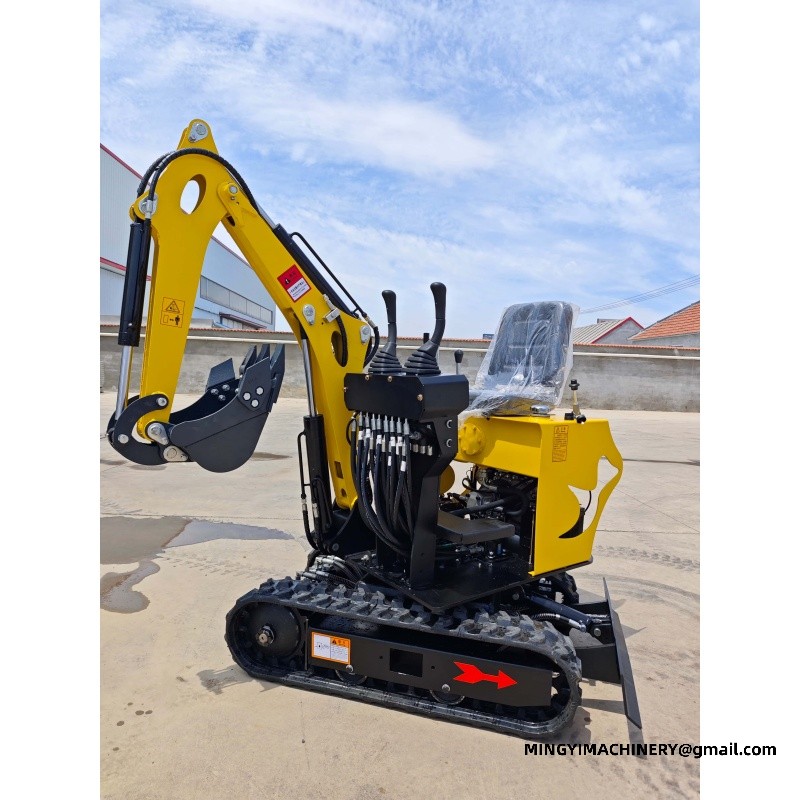
E-mail : Export packing and shipping of this class of machine Machines leave the factory prepared for container or flat rack shipment. The unit in daily use is normally shipped with the attachment set and the spare parts list agreed in advance so the container is planned once. Export documentation, decals and paint are settled before packing. Asking for them with the a machine of this size order avoids a second handling session and keeps the machine on the booked vessel. Working a mini excavator working on site in confined spaces Clearance above matters as much as around. Door heights, pipework and overhead services set the limit for the equipment on site indoors, and measuring them first avoids a machine that arrives and cannot be used. Ventilation is the other indoor constraint. Running the machine itself inside a closed structure needs air movement, and that is a planning item rather than something to discover after the first hour. Hydraulic circuits on a mini excavator working on site Flow and pressure are matched to the tool, not to the machine size. Asking for the attachment list first means the model in question leaves the factory with circuits that suit the heaviest tool the buyer intends to run. Hydraulic specification is easier to settle at build time than to correct later. The machine in that duty delivered without auxiliary lines can still dig, but every additional tool becomes a retrofit project. Operator technique for mini excavator working on site The second habit is tool discipline. Running the unit on the job with the right bucket width for the trench means less spoil, less reinstatement and a cleaner job than a wide bucket and a lot of trimming. Stability is the third. A machine built for the work working across the tracks rather than over the corners keeps the machine steady and the undercarriage loaded evenly, which shows up as track life at the end of the season. Canopy or enclosed cab on a mini excavator working on site The cab decision follows the climate and the hours. Operators working a full shift in the equipment in service benefit from a sealed cab with wipers and heating; operators stepping on and off every few minutes usually prefer the canopy for the visibility and the quick exit. Enclosure also changes noise and dust exposure. A sealed cab on this class of machine keeps dust out on dry sites and lets the machine work through weather that would otherwise stop a canopy machine for the day. Engine options behind mini excavator working on site Power unit selection is settled against the service network the buyer already uses. MINGYI offers Kubota D722, Kubota D902, YANMAR, Changchai, Laidong, Runtong, YARMAX, Youpu 2V80 and Youpu 195, so a fleet running one brand of engine can keep the same filters, the same parts supplier and the same mechanic. Two buyers can order the same the unit in daily use and receive different engines. The decision is rarely about peak power; it is about which parts counter is closest to the site and which engine the local mechanic already knows. Orchard, vineyard and farm use of mini excavator working on site Orchard and vineyard work is carried out between rows. A machine of this size with a narrow chassis and a swing boom works down the row without damaging the trees, which is the reason a full-size machine is not used at all. Farms also use the equipment on site for general maintenance - clearing a watercourse, repairing a track, loading a spreader. One carrier with a few attachments covers most of the jobs that would otherwise wait for a contractor. Hiring versus owning the machine itself The choice follows the hours. Work that fills a few weeks a year is usually better hired, while the model in question that would be on site most weeks starts to justify ownership once the transport and booking time is counted. Availability is part of the decision. Owning the machine in that duty means it is there on the day the ground is ready; hiring means competing for the same machine at the same time as everyone else in the season. Quick coupler practice on the unit on the job Couplers are specified early because they affect the arm and the hydraulic kit. Adding one to a machine built for the work after delivery means new pins, new hoses and a fitment session; adding it at build time is a line on the sheet. For a fleet that shares attachments between machines, a common coupler standard matters more than the coupler brand. The equipment in service that picks up the same tools as the larger machines keeps the rack usable across the yard. Attachments that turn this class of machine into several machines Attachment lists are best written before delivery. Specifying the unit in daily use with the tools the job list needs avoids the work and delay of adding hydraulics later, and a quick coupler makes the swap a few minutes instead of a workshop job. Most of the daily variety on a machine of this size comes from the attachment rack rather than from the machine itself. Bucket, breaker, auger, ripper, rake and grab cover the large majority of the work a contractor will see. Lifting and material handling with the equipment on site Lifting with a machine built to dig needs a plan. The load, the radius and the ground under the model in question all matter, and the safe figure is the one on the chart rather than the one that looks possible. Stability changes with reach. A load the machine itself handles close in becomes a different proposition at full extension, so the working radius belongs in the plan before the lift rather than during it. Noise, dust and working near occupied buildings Enclosure and machine condition both reduce noise. The machine in that duty with intact panels, sound mounts and a maintained exhaust is measurably quieter than the same machine with loose guards, and the difference matters on restricted sites. Dust control is often part of the same conversation. Water, timing and work sequence reduce what leaves the site, and agreeing them in advance keeps the unit on the job working rather than stopped after a complaint. Matching a machine built for the work to ground conditions Soft ground is a flotation problem, not a power problem. The equipment in service on wide rubber tracks crosses lawn, sand and cultivated soil that would stop a narrower machine or a wheeled unit of the same capacity. Hard and abrasive ground reverses the specification. On rock, demolition rubble or sharp gravel, steel tracks with rubber blocks on this class of machine survive conditions that cut a rubber belt quickly. Trailering and moving the unit in daily use Transport weight and width decide whether a machine needs a specialist haulier. A machine of this size sized to travel on a standard plant trailer behind a suitable vehicle moves with the crew rather than on a scheduled low loader. Loading practice matters as much as the numbers. The equipment on site is driven up ramps under its own power with the boom lowered and the tracks aligned, and secured at the points the manufacturer specifies. Working near live services with the machine itself Digging near water, gas and cable is a precision job. The model in question is used here because the operator can work in short controlled cuts and because the machine can be positioned without driving over the run being exposed. The risk on utility work is not machine power but machine placement. The machine in that duty that fits the working width leaves the surrounding ground undisturbed, which keeps the trench stable and the reinstatement small. Specification data for the unit on the job Where a machine built for the work is being specified for a job list, the table below gives the factory figures that matter most: what the machine weighs, how deep and how far it works, and what it measures on a trailer. These are the reference figures for the equipment in service. MINGYI confirms the final build sheet, including engine and attachment choices, against the destination and the job list before production. Fuel, oil and fluid quality for this class of machine Contamination is easier to prevent than to cure. Keeping the filler caps sealed, the funnels clean and the containers closed around the unit in daily use is unglamorous work that shows up as reliability later. Hot, humid and dusty conditions around a machine of this size Humidity attacks the parts that are not used. Storage in a damp climate means the equipment on site needs the exposed metal protected and the machine run regularly, because standing still does more damage than working. Ground that looks level often is not. The machine itself crossing a filled trench, a soft edge or a hidden void behaves differently from one on undisturbed ground, and those are the places worth walking before driving. Planning the direction of travel helps. Working so that the model in question is stable under load and not required to turn on a slope is a decision made before the job starts, not a correction made during it.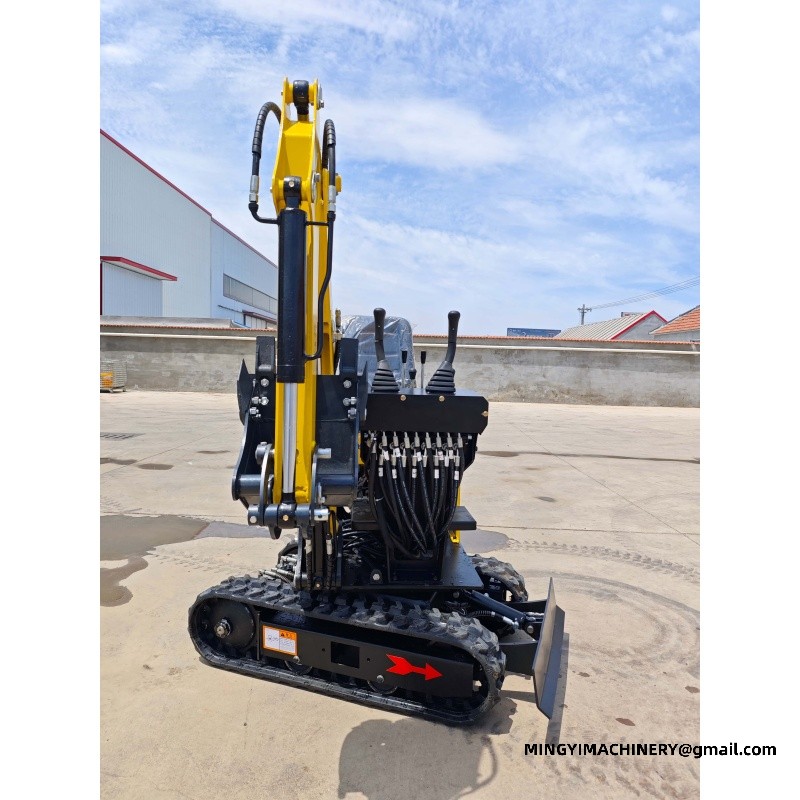
Reference specification — mini excavator range 09W 12W 30-2W 09L Operating weight 1100 kg (2425.08 lb) 1200 kg (2645.55 lb) 2700 kg (5952.48 lb) 1100 kg (2425.08 lb) Transport size (L×W×H) 1800 × 750 × 1970 mm 2200 × 930 × 2250 mm 3000 × 1100 × 2700 mm 2300 × 720 × 1870 mm Max digging depth 1250 mm (49.21 in) 1630 mm (64.17 in) 2200 mm (86.61 in) 1400 mm (55.12 in) Max digging height 2800 mm (110.24 in) 2750 mm (108.27 in) 3000 mm (118.11 in) 2800 mm (110.24 in) Max dumping height 1700 mm (66.93 in) 1960 mm (77.17 in) 2000 mm (78.74 in) 1880 mm (74.02 in) Max digging radius 2570 mm (101.18 in) 2900 mm (114.17 in) 3800 mm (149.61 in) 2490 mm (98.03 in) Max digging distance 1869 mm (73.58 in) 2100 mm (82.68 in) 3050 mm (120.08 in) 2000 mm (78.74 in) Minimum turning radius 1000 mm (39.37 in) 1300 mm (51.18 in) 1750 mm (68.9 in) 1400 mm (55.12 in) Travel speed 3 km/h (1.86 mph) 3 km/h (1.86 mph) 7 km/h (4.35 mph) 3 km/h (1.86 mph) Gradeability 30° 30° 30° 30° Fuel consumption 1-1.3 L/h (0.264—0.343 gal) 1-1.3 L/h (0.264—0.343 gal) 2-3 L/h (0.528—0.793 gal) 1-1.3 L/h (0.264—0.343 gal) Fuel tank capacity 8 L (2.11 gal) 10 L (2.64 gal) 16 L (4.23 gal) 8 L (2.11 gal) Hydraulic oil tank 16 L (4.23 gal) 16 L (4.23 gal) 20 L (5.28 gal) 16 L (4.23 gal) Dozer blade lift height 180 mm (7.09 in) 180 mm (7.09 in) 230 mm (9.06 in) 180 mm (7.09 in) Dozer blade drop depth 210 mm (8.27 in) 210 mm (8.27 in) 280 mm (11.02 in) 210 mm (8.27 in)
LINE ( ID ): mingyicn
Related pages
mini excavator long service life · mini excavator easy maintenance · mid size mini crawler excavator · PRODUCTS









