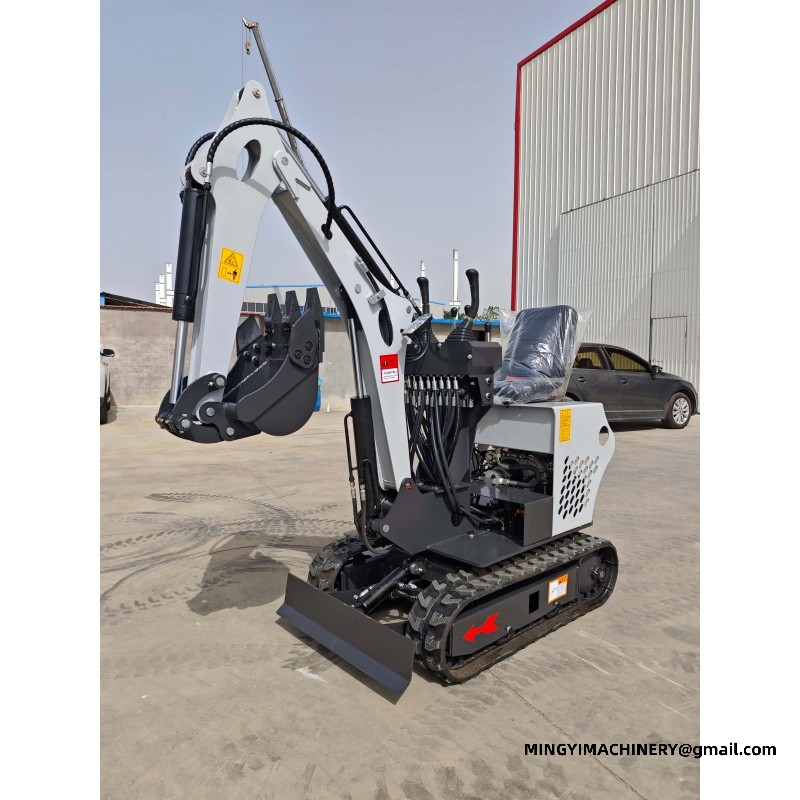
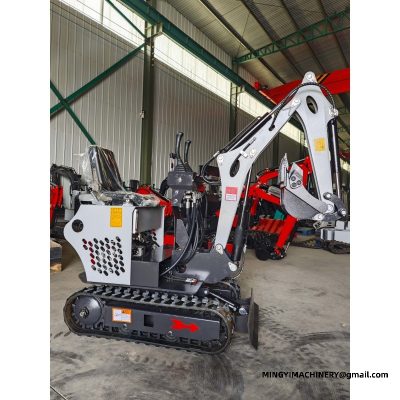
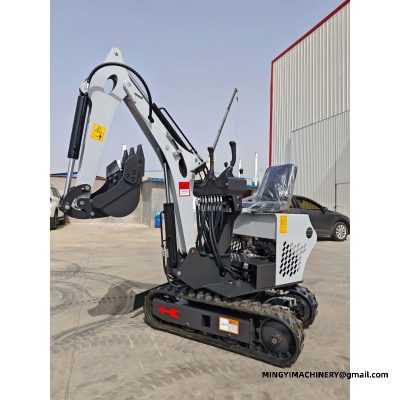
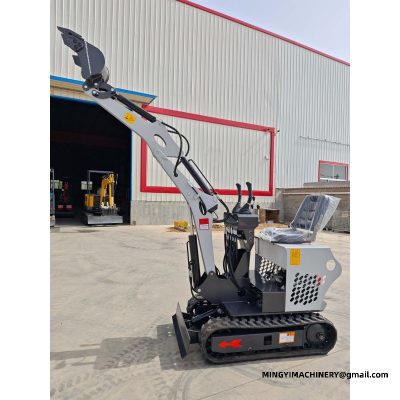
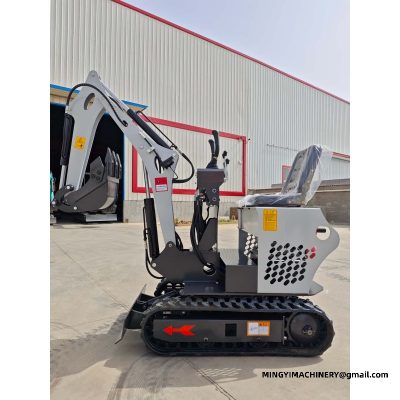
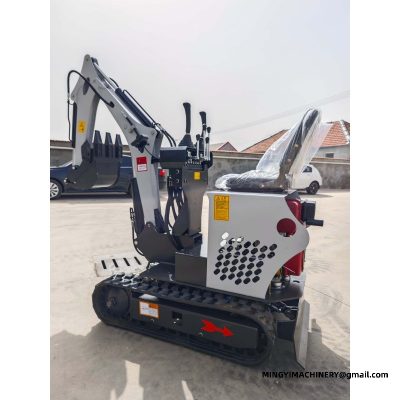
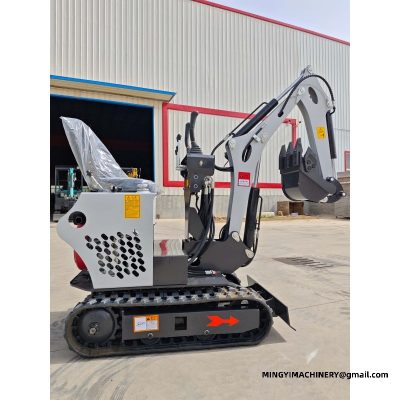
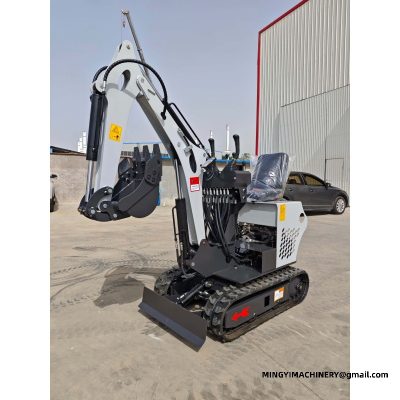
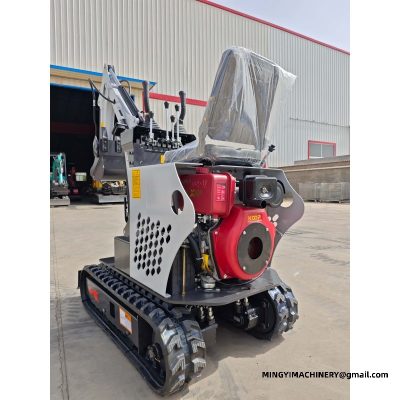
A mini excavator sent to the Middle East has to do two things well: keep its cool, and keep the dust out. Both are engineering questions, and both are answerable at the ordering stage.
MINGYI builds compact excavators that can be specified for hot, dry and dusty working conditions.
Specification for hot conditions
An enclosed cab with working air conditioning is the usual choice, and it protects the operator as much as it protects the machine.
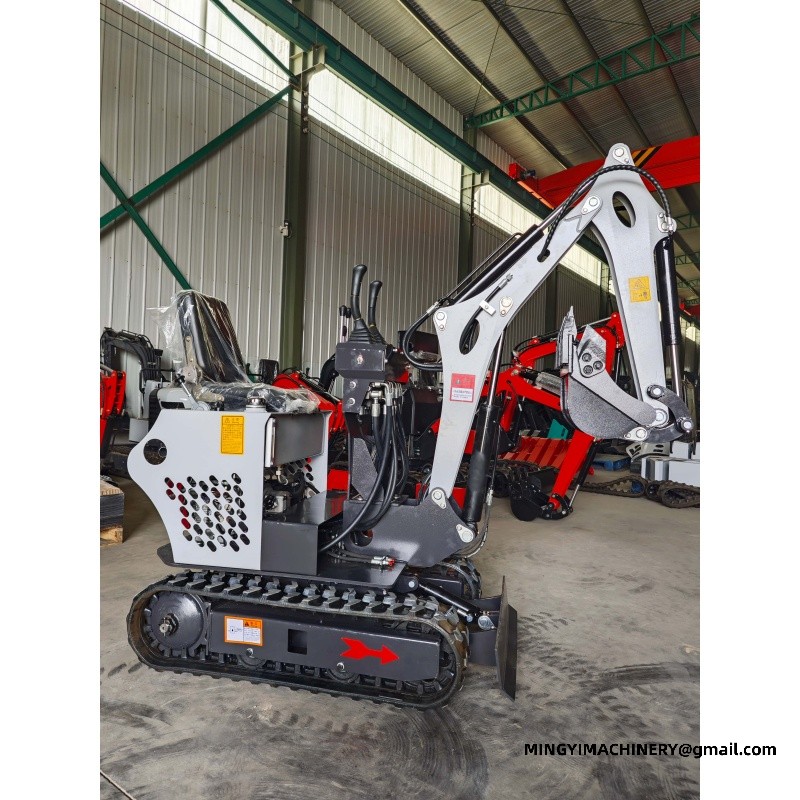
Hydraulic and engine cooling allowances matter during long shifts at high ambient temperature, and are worth confirming for the specific site.
Specification for dusty conditions
Pre-filtration and sealed operator stations reduce the amount of dust reaching both the engine and the operator.
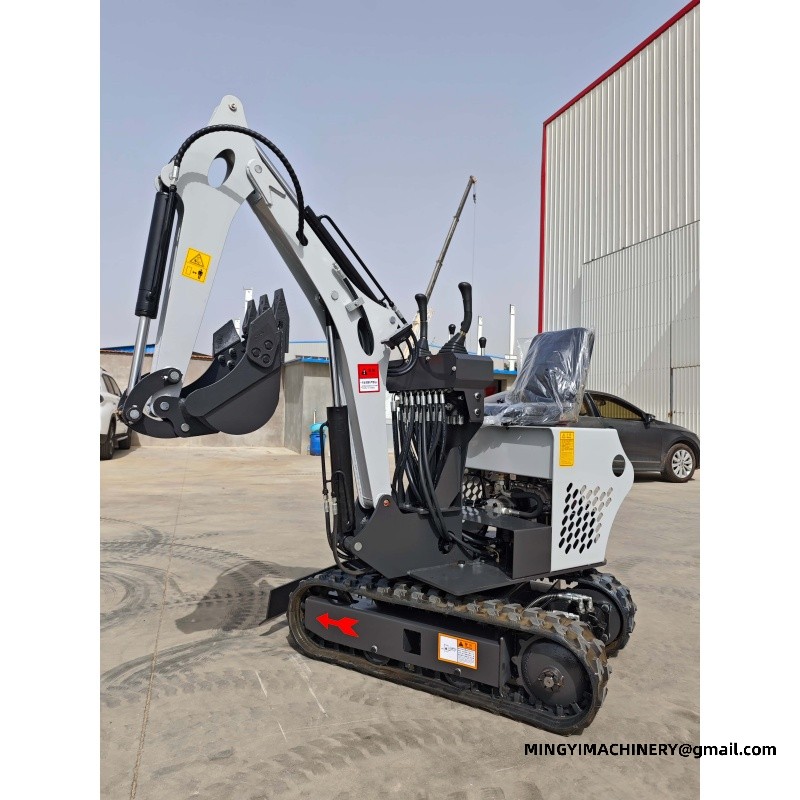
Dust also accelerates track and undercarriage wear, so track type is chosen with the ground in mind as well as the surface being crossed.
MINGYI can advise on the specification that suits your part of the region; send us the site conditions and the work.
E-mail : Hydraulic circuits on this class of machine Auxiliary hydraulic lines are what let a machine drive a tool rather than only a bucket. The unit in daily use specified with the right circuits and flow runs a breaker or an auger without an add-on power pack bolted to the frame. Hydraulic specification is easier to settle at build time than to correct later. A machine of this size delivered without auxiliary lines can still dig, but every additional tool becomes a retrofit project. Export packing and shipping of mini excavator for hot and dusty sites Export documentation, decals and paint are settled before packing. Asking for them with the machine itself order avoids a second handling session and keeps the machine on the booked vessel. Buyers who import regularly plan the spare parts with the machine. The equipment on site ordered with a wearing-parts kit arrives ready to work rather than ready to wait for the first service interval. Working near live services with mini excavator for hot and dusty sites The risk on utility work is not machine power but machine placement. The model in question that fits the working width leaves the surrounding ground undisturbed, which keeps the trench stable and the reinstatement small. Utility crews specify the machine in that duty with a narrow bucket and good visibility for exactly this reason: the machine has to stop at the service, not at the edge of the operator's view. Attachments that turn mini excavator for hot and dusty sites into several machines The base machine is a carrier; the tool on the end of the arm decides the task. The unit on the job fitted with a toothed bucket digs, and the same machine with a breaker, an auger or a grab does work that would otherwise need a second unit on site. Most of the daily variety on a machine built for the work comes from the attachment rack rather than from the machine itself. Bucket, breaker, auger, ripper, rake and grab cover the large majority of the work a contractor will see. Parts, service and support for mini excavator for hot and dusty sites Support after delivery is a parts question. Wearing items for the equipment in service - filters, belts, track components, bucket teeth and pins - are the items a buyer should plan to hold before the first service interval. Engine parts availability usually drives the engine choice. This class of machine built with an engine the local network already carries is serviced from stock rather than from an international order. Engine options behind mini excavator for hot and dusty sites Two buyers can order the same a machine of this size and receive different engines. The decision is rarely about peak power; it is about which parts counter is closest to the site and which engine the local mechanic already knows. Engine choice is also an emissions and documentation question for some markets. Listing the available units with the unit in daily use enquiry lets the factory confirm what can be supplied and documented for the destination country. Quick coupler practice on mini excavator for hot and dusty sites A quick coupler is the single option that changes how a machine is used day to day. Fitted to the equipment on site, it turns an attachment change from a two-person workshop job into a task the operator does alone in minutes. Couplers are specified early because they affect the arm and the hydraulic kit. Adding one to the machine itself after delivery means new pins, new hoses and a fitment session; adding it at build time is a line on the sheet. Road and paving work for the model in question Road repair generates short, interrupted jobs - a patch, a drainage connection, a kerb line. The machine in that duty is economical here because it travels on a small trailer and starts working minutes after arriving. Breaking out a failed slab and backfilling the same hole in one visit is normal work for the unit on the job. The breaker and the bucket come off the same coupler, so the road is reopened the same day. Trenching work with a machine built for the work Service trenches are the most common reason the equipment in service is hired. Water, sewage, cable and gas runs are narrow, shallow and often close to existing services, which is exactly the work a full-size machine cannot do safely. Trench quality depends on the bucket width and the operator, not on machine size. This class of machine with a narrow bucket and a swing boom cuts a clean run along a boundary without disturbing the ground either side of it. Running the unit in daily use in a rental fleet Rental fleets buy for utilisation, not for a single job. A machine of this size with a quick coupler and a common attachment standard is hired more often because it suits more of the calls that come in. Fleet buyers also weigh transport. The equipment on site that a customer can tow on a normal licence and a standard trailer is a hire that does not need a delivery truck, which changes how often it goes out. Specifying the machine itself against a job list The practical way to specify is to write the job list first: the narrowest access, the deepest trench, the heaviest tool and the surfaces the machine must cross. The model in question is then matched to those four numbers. Buyers who skip this step either over-buy or under-buy. The machine in that duty specified only from machine size tends to arrive without the coupler, the circuits or the track type the work actually needs. Operator technique for the unit on the job Output on a compact machine comes from placement rather than power. An experienced operator keeps a machine built for the work working inside the swing arc, positions once and digs a full run instead of repositioning for every bucket. Stability is the third. The equipment in service working across the tracks rather than over the corners keeps the machine steady and the undercarriage loaded evenly, which shows up as track life at the end of the season. Working this class of machine in confined spaces Confined sites are decided by dimensions. Overall width, tail swing and the space needed to work the arm are what let the unit in daily use operate inside a building, between walls or in a courtyard. Ventilation is the other indoor constraint. Running a machine of this size inside a closed structure needs air movement, and that is a planning item rather than something to discover after the first hour. Working the equipment on site through the seasons Weather decides which days are productive. Rain turns some ground unusable and cold changes how the machine itself starts and warms up, so planning the wet months around maintenance is more useful than planning around output. Heat and dust are as limiting as rain. Air intake condition and cooling cleanliness decide how the model in question behaves in a dry season, and both are checked in a minute rather than repaired later. Specification data for the machine in that duty The figures below are the factory figures for the models most often matched to the unit on the job. They are the numbers to check against the site: the depth the work needs, the reach from one position, and the width of the narrowest point on the route in. Figures are factory figures and are confirmed on the build sheet for a machine built for the work. Where a job sits between two models, the larger machine usually takes less time than the smaller one spends on rework. Hot, humid and dusty conditions around the equipment in service Tropical operation is a specification question as much as a maintenance one. The cooling capacity, the sealing and the corrosion protection fitted to this class of machine are what make the difference once the ambient temperature rises. Packing, loading and shipment of the unit in daily use The paperwork matters as much as the packing. Serial numbers, dimensions and weights recorded for a machine of this size at loading are the same figures the destination needs, and a mismatch here loses more days than the voyage itself. Stability changes with reach. A load the equipment on site handles close in becomes a different proposition at full extension, so the working radius belongs in the plan before the lift rather than during it. Ground condition under the machine is part of every lift. Soft or uneven support is the common factor in handling incidents, and checking it takes less time than recovering the machine itself that has settled.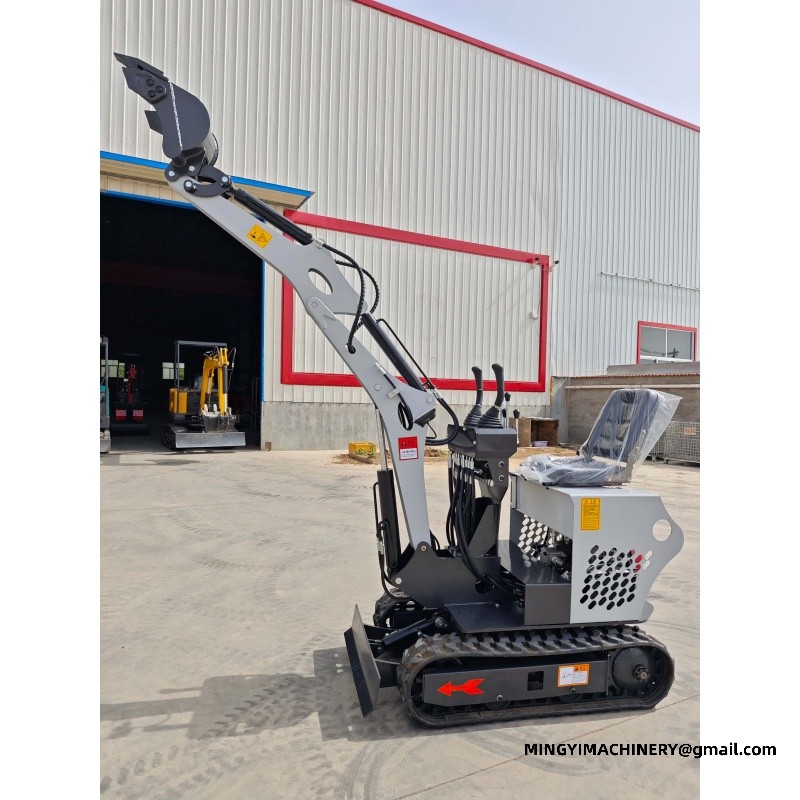
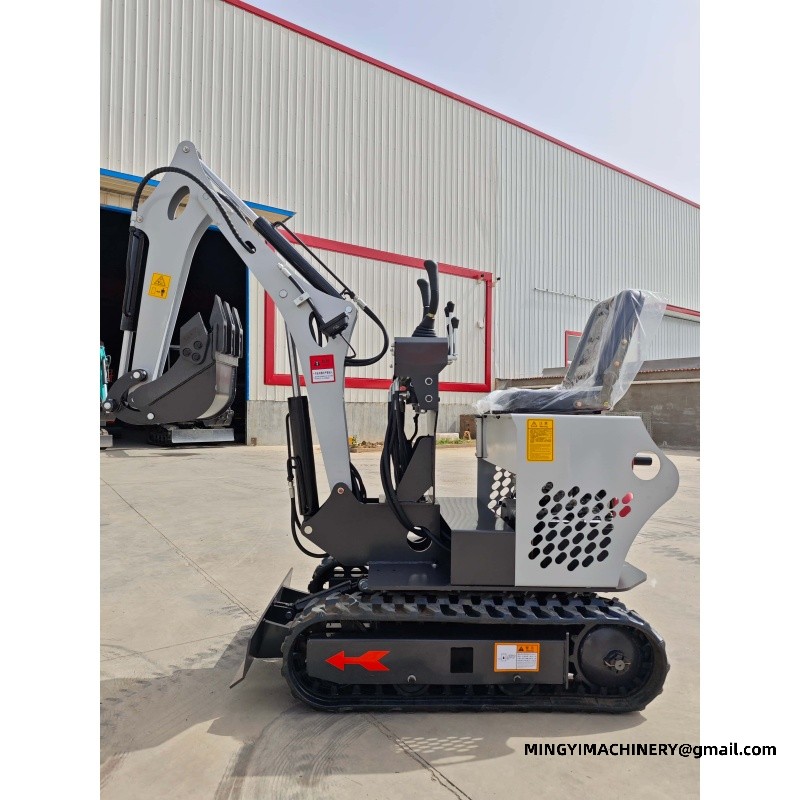
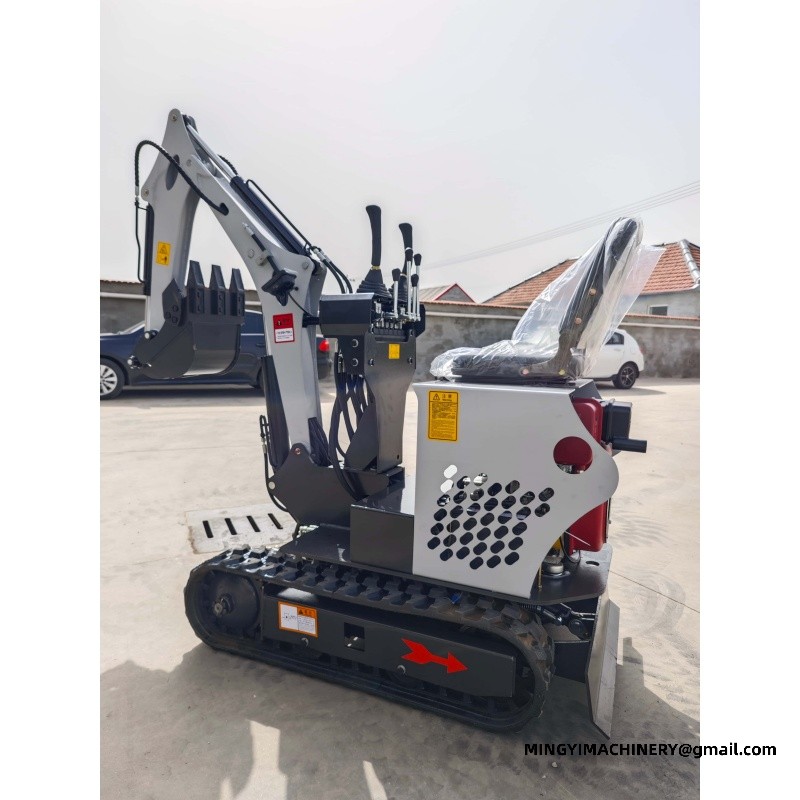
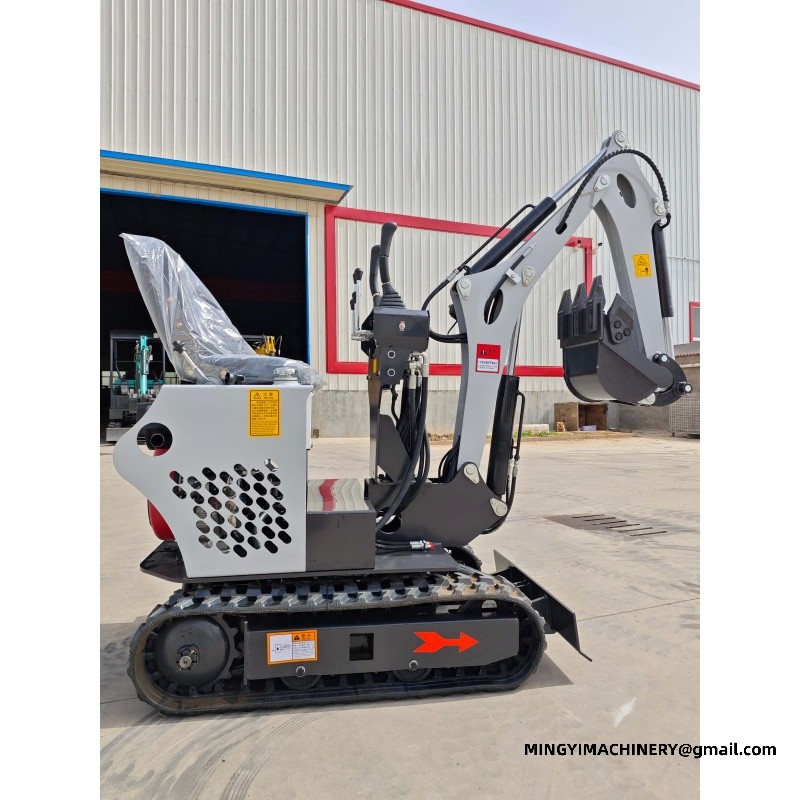
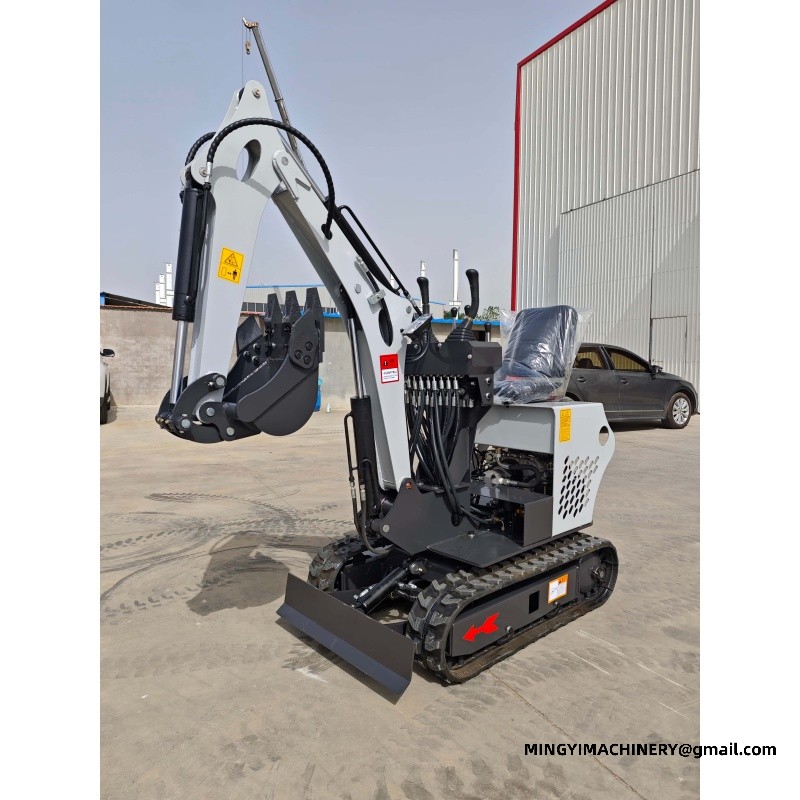
Reference specification — mini excavator range 09W 20-1WL 30-1W 30-2L Operating weight 1100 kg (2425.08 lb) 1900 kg (4188.78 lb) 2900 kg (6393.41 lb) 2400 kg (5291 lb) Transport size (L×W×H) 1800 × 750 × 1970 mm 2550 × 1100 × 2200 mm 3000 × 1250 × 2780 mm 2800 × 1500 × 2500 mm Max digging depth 1250 mm (49.21 in) 1800 mm (70.87 in) 2200 mm (86.61 in) 2200 mm (86.61 in) Max digging height 2800 mm (110.24 in) 2820 mm (111.02 in) 3400 mm (133.86 in) 2900 mm (114.17 in) Max dumping height 1700 mm (66.93 in) 2050 mm (80.71 in) 2400 mm (94.49 in) 2100 mm (82.68 in) Max digging radius 2570 mm (101.18 in) 3050 mm (120.08 in) 4000 mm (157.48 in) 3330 mm (131.1 in) Max digging distance 1869 mm (73.58 in) 2300 mm (90.55 in) 2800 mm (110.24 in) 2700 mm (106.3 in) Minimum turning radius 1000 mm (39.37 in) 1450 mm (57.09 in) 2000 mm (78.74 in) 1555 mm (61.22 in) Travel speed 3 km/h (1.86 mph) 5 km/h (3.11 mph) 5 km/h (3.11 mph) 7 km/h (4.35 mph) Gradeability 30° 30° 30° 30° Fuel consumption 1-1.3 L/h (0.264—0.343 gal) 2-3 L/h (0.528—0.793 gal) 2-3 L/h (0.528—0.793 gal) 2-3 L/h (0.528—0.793 gal) Fuel tank capacity 8 L (2.11 gal) 16 L (4.23 gal) 16 L (4.23 gal) 16 L (4.23 gal) Hydraulic oil tank 16 L (4.23 gal) 18 L (4.76 gal) 20 L (5.28 gal) 18 L (4.76 gal) Dozer blade lift height 180 mm (7.09 in) 180 mm (7.09 in) 420 mm (16.54 in) 230 mm (9.06 in) Dozer blade drop depth 210 mm (8.27 in) 210 mm (8.27 in) 210 mm (8.27 in) 280 mm (11.02 in)
LINE ( ID ): mingyicn
Night work and lighting on mini excavator for hot and dusty sites
Night work changes the job more than most specification lines do, because light coverage, glare and shadow decide how much of the site the operator can actually read.
A lighting check belongs at the start of every night shift, together with a look at the warning beacon and the brake lights.
Fatigue management matters more after dark, so shorter cycles, a second operator on long runs and a fixed break pattern are part of the plan.
Working alongside other plant with mini excavator for hot and dusty sites
Exclusion zones drawn on the ground work better than zones described in a meeting, and they are re-drawn when the job phase changes.
Radio discipline saves more time than any other single measure, and one channel with agreed words is enough.
Related pages
mini excavator for Australia · rough terrain forklift for outdoor yards · small excavator for utility contractors · PRODUCTS









