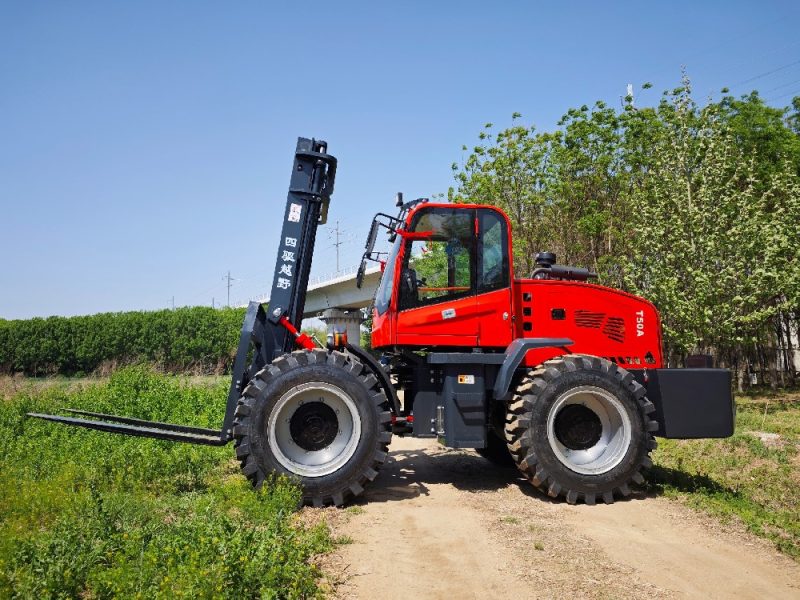
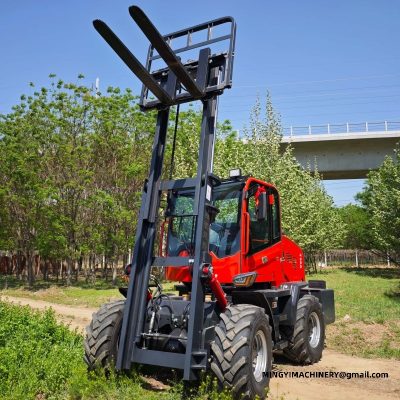
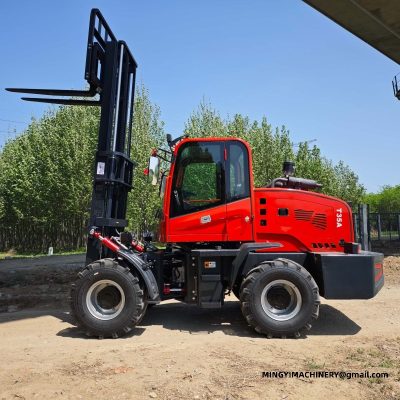
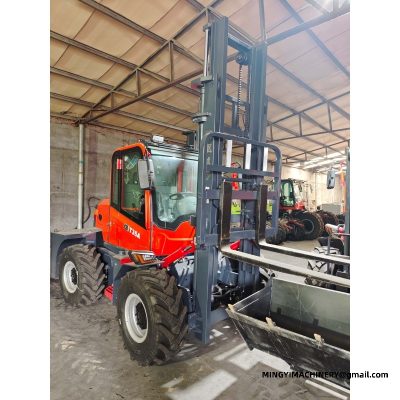
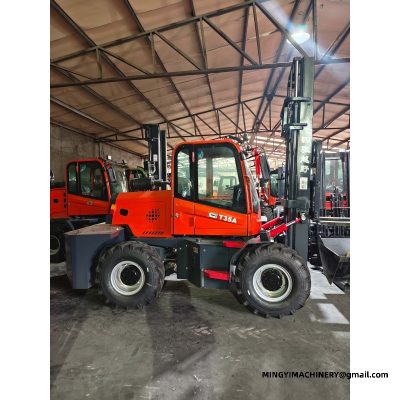
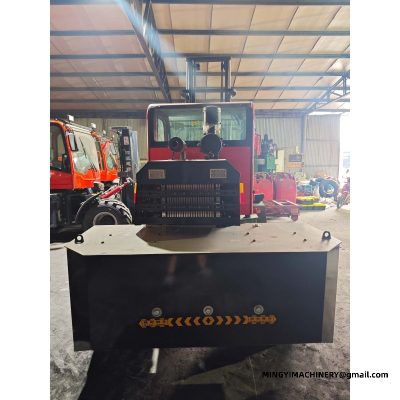
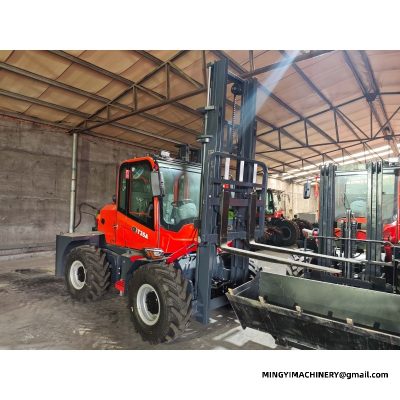
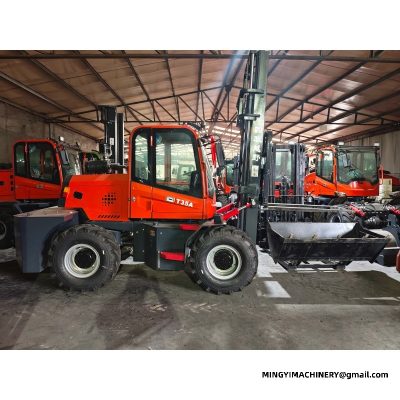
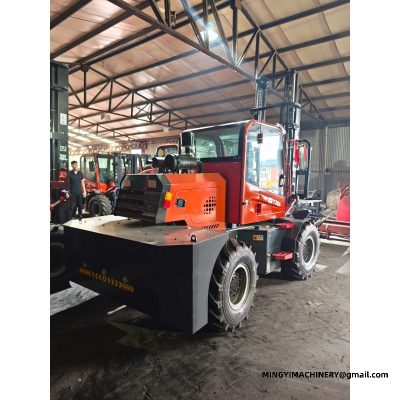
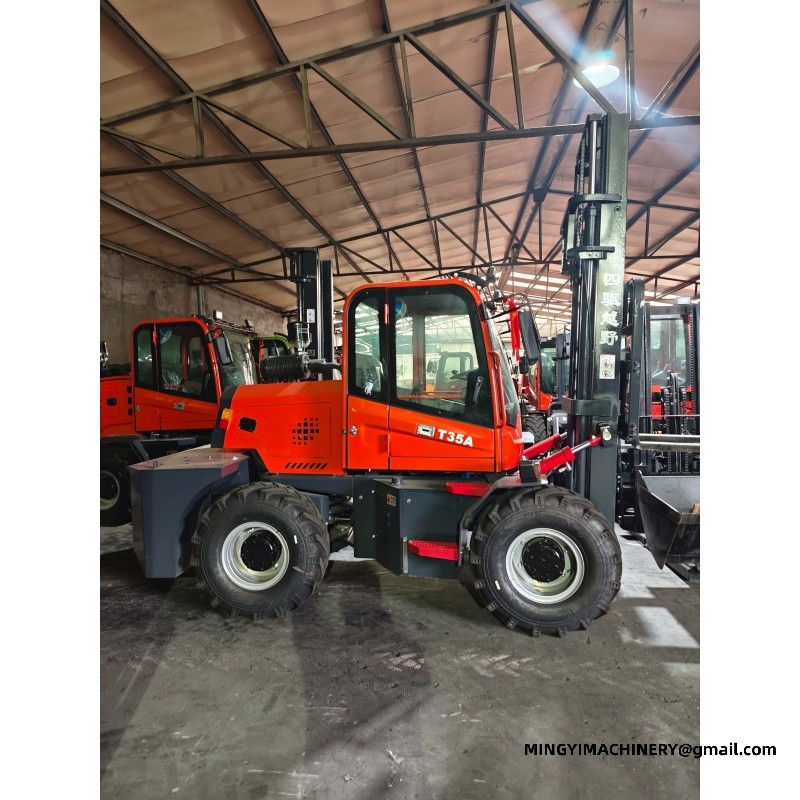
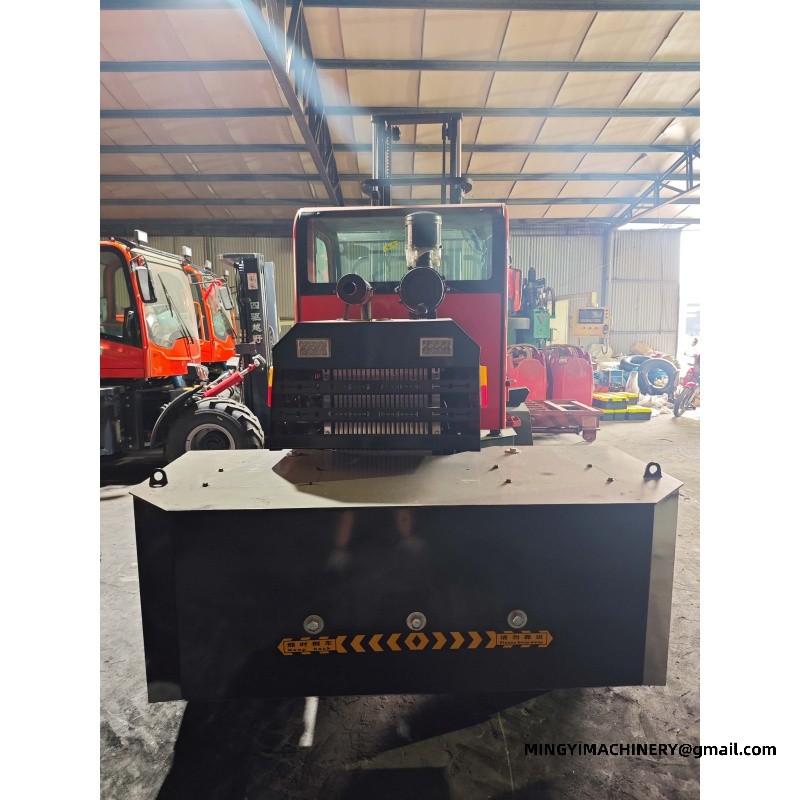
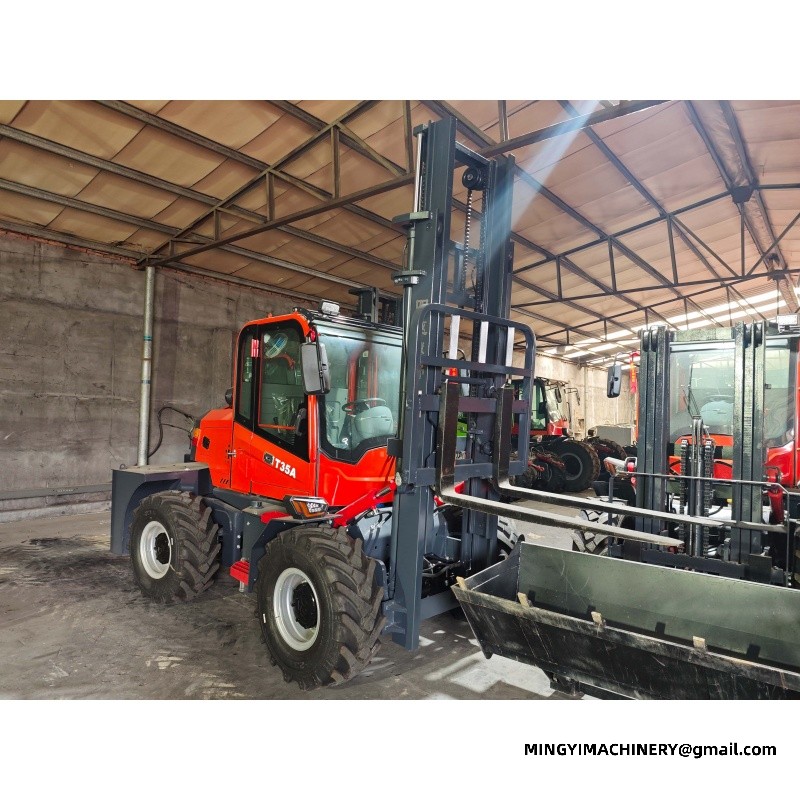
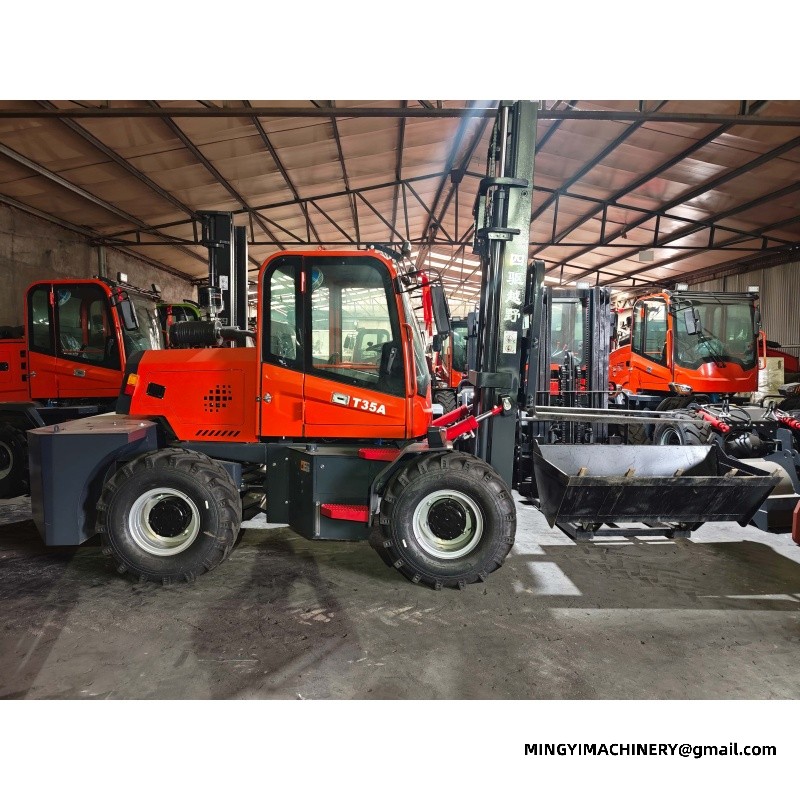
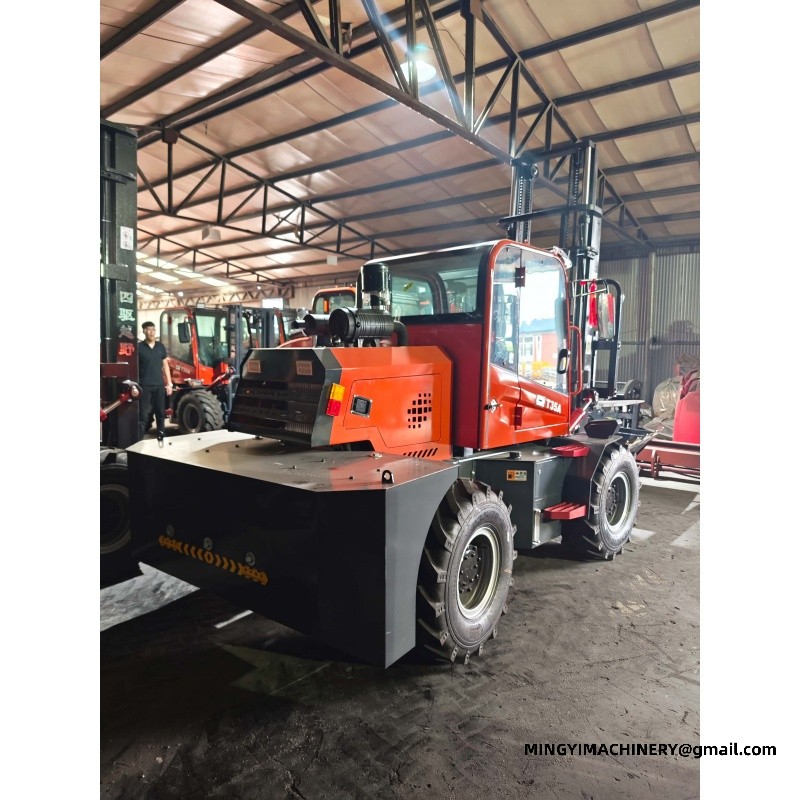
Mingyi 4x4 rough terrain forklifts are built for unprepared ground, where an ordinary warehouse forklift cannot work. Full-time four-wheel drive, high ground clearance and a high-torque diesel engine let the machine travel and lift on mud, gravel, sand and slopes instead of staying on a paved yard.
The counterweight and mast are sized for outdoor material handling: unloading steel and bricks at a construction site, moving pallets and fertilizer bags on a farm, stacking timber at a sawmill, or supporting loads around a mine or quarry. A rough terrain forklift keeps the lifting function of a warehouse truck while adding the traction and durability of an off-road chassis.
Front and side visibility, a simple hydraulic system and a reinforced frame keep daily maintenance straightforward. Optional forks, buckets and lifting hooks allow one machine to serve several jobs. OEM colours, decals and mast configurations are available for distributors and rental fleets.
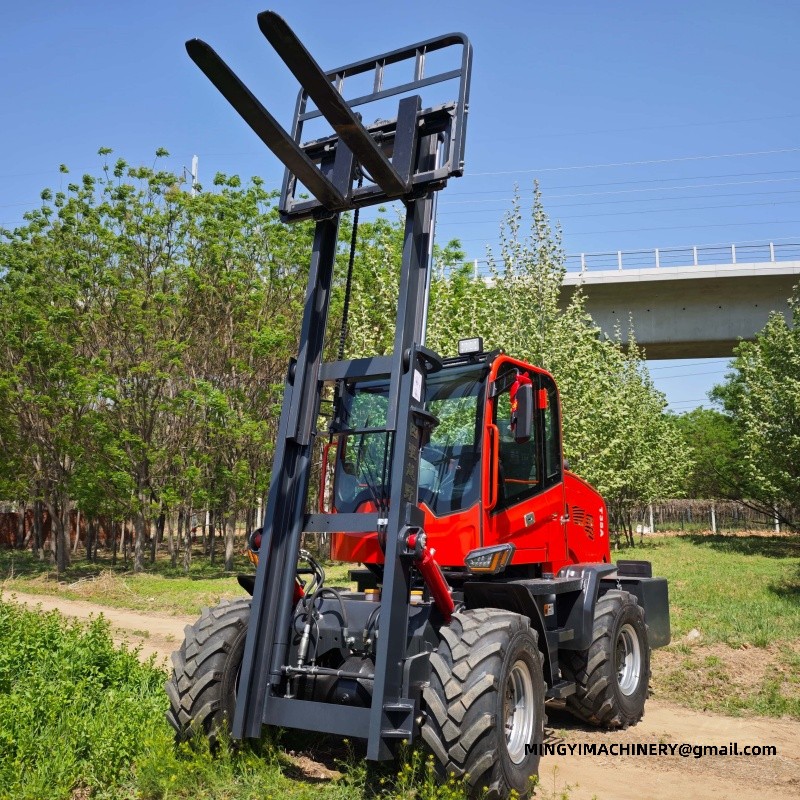
Tell us your working surface, the load you handle and the lifting height you need, and we will recommend the right configuration.
Fuel use and running demands of rough terrain forklift for outdoor yards
Fuel is usually the largest controllable running demand. Operating style, correct tyre or track condition and a clean air supply all move consumption on this class of machine by more than most buyers expect. Planning the work to reduce empty movement is free. Fewer repositioning cycles on the unit in daily use means less fuel, less wear on the undercarriage or tyres and more of the shift spent on productive work.
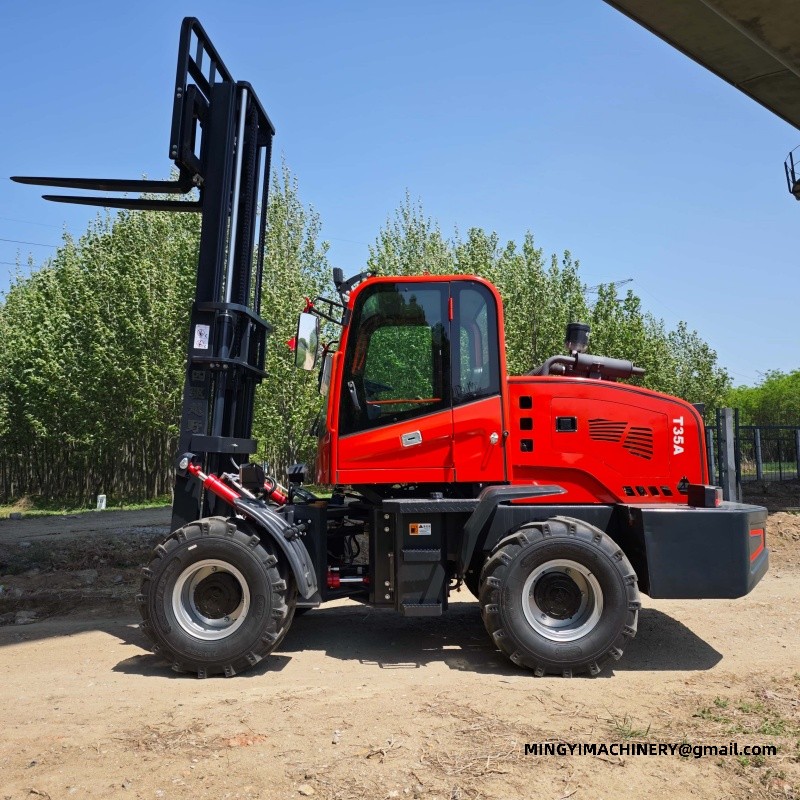
Load, ballast and stability on rough terrain forklift for outdoor yards
Stability follows the load and its position. Knowing the rated capacity of a machine of this size at the working radius, rather than at its best case, is what keeps handling predictable and the machine upright. Carrying and travelling with a load needs its own plan. Speed, gradient and surface all matter more once the equipment on site is loaded, and the safe combination is the conservative one.
Upgrading and reconfiguring rough terrain forklift for outdoor yards
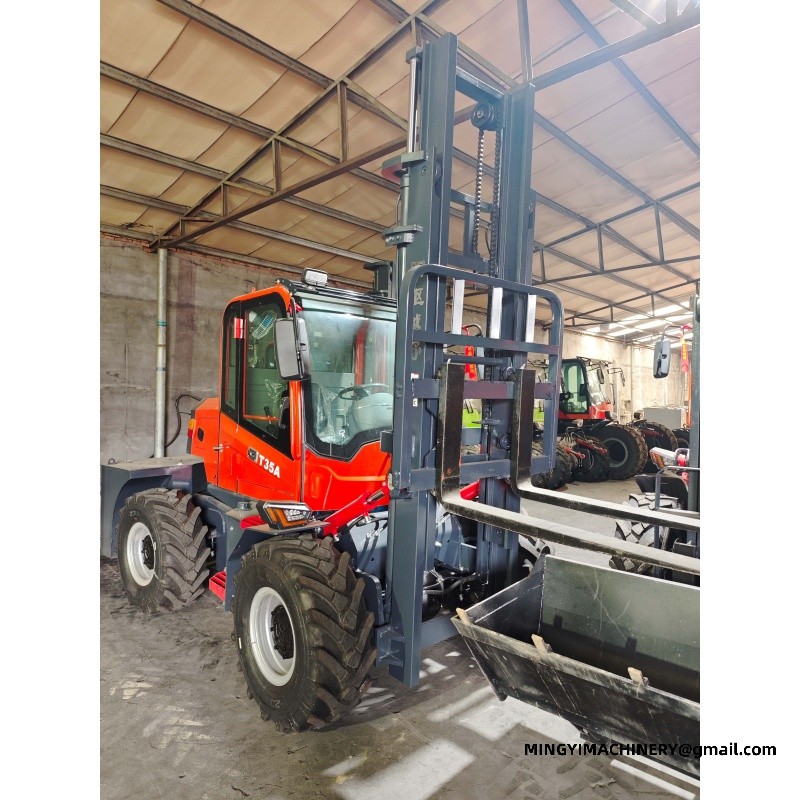
Upgrades should be checked against the base machine. Hydraulic capacity, mounting interface and stability all limit what can reasonably be added to the machine itself, and confirming those limits avoids an unsatisfactory result. The decision is economic as well as technical. Comparing the work of reconfiguring the model in question against a different machine is a short calculation that usually gives a clear answer.
Cold weather and low temperature work with rough terrain forklift for outdoor yards
Batteries and fluids are the parts that notice the cold first. The machine in that duty kept on a maintainer through a freezing spell starts on the first turn, while one left standing is the usual cause of a lost morning. Low temperatures also make materials behave differently. Ground that is frozen hard in the morning can be soft by midday, and planning the sequence around that is easier than fighting it with the unit on the job.
Parts, service and support for rough terrain forklift for outdoor yards
Support after delivery is a parts question. Filters, belts, hoses and the wearing items specific to a machine built for the work are what a buyer should plan to hold before the first service interval rather than order after a failure. Remote diagnosis shortens most faults. A walk-around on video with the panels open often identifies the cause on the equipment in service without waiting for a visit, and avoids shipping a part that turns out not to be needed.
Storage and downtime care for rough terrain forklift for outdoor yards
Standing still is hard on machinery. This class of machine left for weeks benefits from a clean, dry, covered space, a charged battery and a fuel system prepared for the layoff, and all three effort very little. A periodic start is better than none. Running the unit in daily use to operating temperature during a long layoff keeps seals and the charging system in better condition than leaving it untouched until the next job.
Export packing and shipping of rough terrain forklift for outdoor yards
Container loading is a planning exercise. Confirming how a machine of this size is packed and how many units fit a container is what turns a per-unit freight estimate into a delivered figure the buyer can actually plan against. Documentation should be agreed at order stage. The commercial invoice, packing list and any certificate required at destination are part of shipping the equipment on site, and missing papers delay clearance longer than the voyage takes.
Safe working practice around rough terrain forklift for outdoor yards
Most incidents around machinery come from the space rather than the machine. Exclusion zones, a clear signal person and a check on what is behind the model in question before it moves cover the large majority of the risk on a working site. Slopes and edges deserve a separate check. The machine itself that is stable on level ground behaves differently across a gradient, and the safe working angle is a number worth knowing rather than estimating.
Running the machine in that duty in a mixed fleet
Fleet value comes from interchangeability. Operators who can step between machines without retraining, and a workshop that stocks one set of filters, keep utilisation higher than a fleet of individually optimised units. Standardising where possible simplifies everything downstream. When several units of the unit on the job share a service schedule and a parts list, the fleet becomes easier to plan and easier to sell on at replacement time.
Fitting a machine built for the work into the wider site plan
Machine productivity depends on what happens around it. Deliveries, other trades and the sequence of work decide how much of the shift the equipment in service spends actually working rather than waiting. Sequencing avoids rework. Doing the work in the order that suits the ground and the following trades keeps this class of machine productive and prevents finishing a task that then has to be opened up again.
Working hours and duty cycle of the unit in daily use
Duty cycle is the honest measure of a machine. A machine of this size working a few hours a week has different needs from one working two shifts, and the cooling, filtration and service intervals should follow the hours rather than the calendar. Seasonal work changes the maintenance calendar. Machines that work hard for two months and stand for ten need preparation before storage and a check before returning to work, and both are simpler than the repairs they prevent.
Customisation and build options for the equipment on site
Build options are where a standard machine becomes the right machine. Colour, guarding, lighting, seating and hydraulic provisions can usually be set at build time on the machine itself, and are far simpler then than as a retrofit. Fleet buyers often want consistency rather than variety. Specifying the model in question so that several units share controls, filters and service points reduces training time and keeps the parts shelf small.
Ordering, lead time and delivery of the machine in that duty
Lead time is part of the specification. Confirming build time, shipping method and what is included before ordering the unit on the job prevents the common gap between when the machine is needed and when it can arrive. The order should state the configuration in writing. Engine, attachments, colour, documents and any market requirement are clearer on the build sheet for a machine built for the work than in a conversation after delivery.
Warranty, commissioning and early checks
Commissioning is the point where most avoidable issues are found. Checking levels, fasteners and function on the equipment in service before it goes to work takes an hour and prevents a claim conversation later. Early faults are usually simple. This class of machine that behaves differently in its first few hours is more often mis-set than defective, and a call to the supplier at that point usually resolves it the same day.
Engine and power options behind the unit in daily use
Emissions documentation is part of engine selection for some destinations. Confirming which units can be supplied and documented for the destination country is worth doing at enquiry stage rather than after the build sheet is signed. Matching the engine to the duty matters more than the peak rating. A machine of this size that spends its day at part load benefits from a different setup than one that works at full output, and the difference shows in fuel use over a season.
Attachments and working tools for the equipment on site
The base machine is only as useful as the tool on the end of it. Matching the attachment to the task - rather than to what arrived with the machine - is what lets one the model in question cover several jobs across a week. Most owners find that the second attachment changes how often the machine is used. The machine itself that was bought for one task often becomes the general machine on site once a second tool is available.
Daily checks and maintenance on the machine in that duty
Service intervals exist because wear is predictable. Following the maker schedule on the unit on the job takes far less time than repairing the damage that follows a missed oil change or a filter left in place past its life. A simple log helps. Recording hours, fuel and any adjustment made to a machine built for the work gives the workshop a history, and that history is what turns an intermittent fault into a one-visit repair instead of three.
Resale value and replacement planning
Resale starts at purchase. Specification choices, service records and the condition of wearing parts are what a buyer looks at, and the equipment in service that has been maintained on schedule is worth more than one that merely looks clean. Replacement timing is a planning decision. Knowing the intended working life of this class of machine lets an owner sell while the machine still has value rather than after a major repair becomes due.
Moving the unit in daily use between sites
Securing the load is not optional. Lashing a machine of this size at the points intended for it, checking the tension before the vehicle moves and rechecking after the first kilometres is standard practice rather than extra care.
Storage and long idle periods for the equipment on site
A stored machine should be brought back carefully. Before the machine itself returns to work the fluids, the brakes and the controls are checked, because months of standing change more than a weekend does.
Documents that travel with the model in question
A clear parts book saves more time than any other document. When the machine in that duty needs a replacement, the illustration and the part number are what turn a phone call into a shipment instead of a description.
Wear items and spares worth holding for the unit on the job
The parts that stop a machine are rarely the parts that are hardest to find. Filters, belts, seals and the ground engaging tools on a machine built for the work are easy to hold and slow to replace, which is why they belong on the shelf rather than on an order.
Hot, humid and dusty conditions around the equipment in service
Humidity attacks the parts that are not used. Storage in a damp climate means this class of machine needs the exposed metal protected and the machine run regularly, because standing still does more damage than working.
Visibility and blind spots around rough terrain forklift for outdoor yards
Mirrors, cameras and a signal person cover what the seat cannot. Walk the route before the first load and mark the corners where sight is lost.
Dust, low sun and rain all shorten sight lines, and the sensible response is to slow the cycle rather than to work on memory.
The seat position, the mirror setting and the camera angle are worth recording once the operator is settled, so a change of driver does not undo them.
Night work and lighting on rough terrain forklift for outdoor yards
Work lamps should cover the working area and the travel path separately, since a beam set for loading usually leaves the route dark.
Related pages
diesel cargo tricycle for farm and site haulage · skid-steer loader attachments and applications · engineering small excavator from china · PRODUCTS









