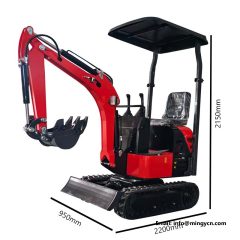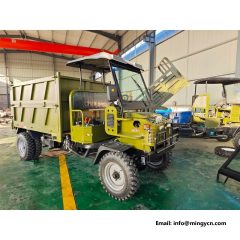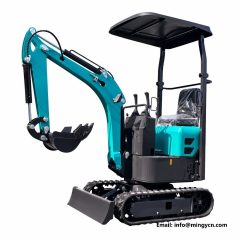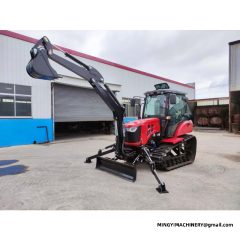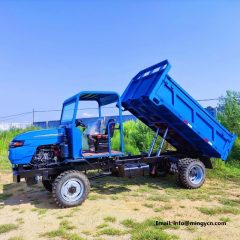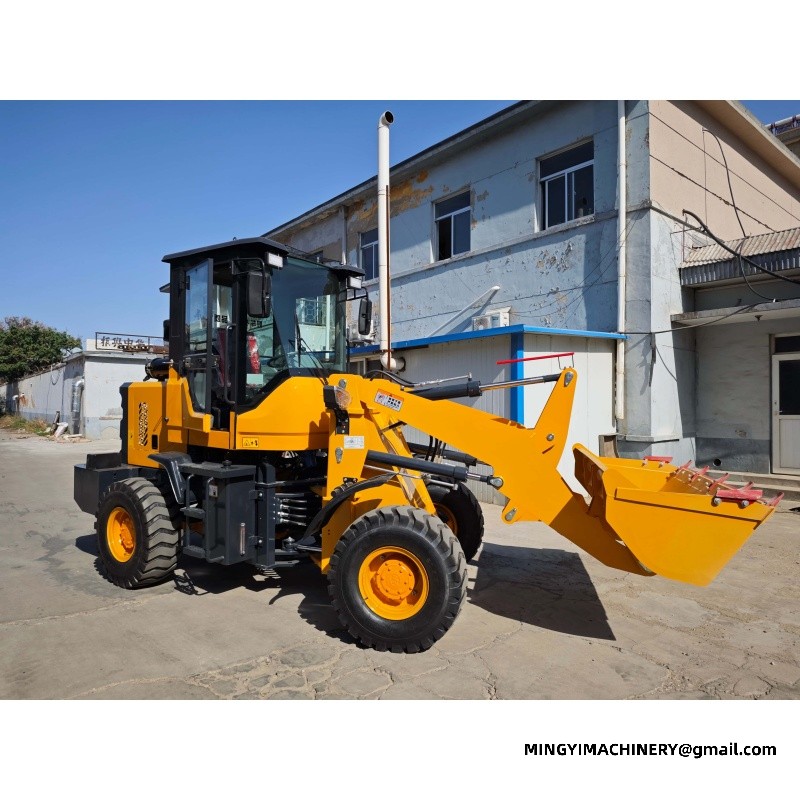
A wheel loader looks like the simplest machine in the yard: a bucket on wheels. Then the choices arrive — loader only or loader plus fork carriage, standard boom or extended, articulated or skid-steer, which tyres, and which engine family. This guide works through the decisions in the order they actually constrain each other, so the machine that arrives matches the material you move and the ground you move it across.
Start With Material Density
The first question is what you are lifting, because bucket volume only means something relative to density. Sand, gravel, topsoil, mulch, feed, manure, and demolition rubble all behave differently, and the same bucket that fills cleanly with dry mulch can stall a small loader if it is filled with wet sand. Describe your heaviest regular material, not your lightest, and let that set the machine class.
Material and the machine it implies
- Light materials (mulch, grain, dry wood chips): volume-limited, so larger buckets and standard booms suit the work.
- Medium materials (gravel, soil, sand): the classic case for a compact or mid-size wheel loader with a standard bucket.
- Heavy or blocky materials (rubble, wet sand, rock): mass-limited, favoring smaller buckets, stronger frames, and sometimes fork or grapple work instead.
Density also drives cycle time. A machine that must nurse a full bucket up every ramp loses more time than the extra bucket volume gains, which is why experienced operators routinely under-fill heavy material and over-fill light material.
Articulated Wheel Loader or Skid Steer
This is the biggest structural decision, and it is about ground and maneuvering space more than lifting ability.
| Factor | Articulated wheel loader | Skid steer |
|---|---|---|
| Turning | Articulated frame, larger turning circle | Spins within its own footprint |
| Ground | Friendly to soft ground and grass, larger tyres spread load | Pushes surface hard, marks paved areas |
| Speed and distance | Travels between piles comfortably | Slow over distance |
| Attachment range | Buckets, forks, grapples, swept winter gear | Widest range of hydraulic tools |
| Typical site | Yards, quarries, farms, stockpiles | Tight sites, indoor work, landscaping |
If your work is moving material across a yard all day, the articulated loader wins on speed, ground contact, and operator comfort. If your work is working a confined site and changing tools every hour, a skid-steer configuration is the correct answer, as discussed for compact jobs in the compact machine comparison.
Boom Configuration: Standard or Extended
Standard booms favour breakout force and stable loaded travel. Long and extended booms trade some stability for reach and dump clearance, which matters when loading high-sided trucks, hoppers, or mixing plants. Buyers often default to standard and then discover their truck fleet outgrows it; check the dump clearance against the tallest trailer you will load across the next few years, not the one you use today.
Practical dump-clearance test
Measure the side height of the tallest thing you load, add the clearance needed to aim rather than scrape, and compare that figure with the machine's dump height at the required forward reach. Reach measured at the bucket pivot without forward distance is not the number you need. Ask for both figures on paper.
Bucket Types: One Machine, Several Jobs
| Bucket type | Best for | Trade-off |
|---|---|---|
| General purpose | Soil, gravel, stockpile work | Compromise shape, adequate everywhere |
| Light material | Mulch, grain, chips, snow | Too large and weak for dense material |
| Rock / heavy duty | Quarry, rubble, shot rock | Heavier, reduces usable payload |
| Multipurpose (4-in-1) | Grading, clamping, dozing, cleanup | Moving parts need greasing and inspection |
| Pallet fork carriage | Yard handling, deliveries, bagged material | Changes load behaviour and visibility |
Forks, Grapples, and the Quick Coupler Question
A loader is only rarely a loader-only machine. Pallet forks turn it into a yard handler, a grapple handles brush and demolition debris, a multipurpose bucket scrapes and clamps, and snow equipment extends the working year. The practical requirement is a quick coupler and the hydraulic lines to match, specified at order time rather than retrofitted. Attachment planning follows the same logic as the attachment guide written around excavators, with the difference that loader tools face forward and rely on lift rather than dig force.
Ask specifically about third-function hydraulics. Most useful loader tools beyond a simple bucket need another set of lines and a control. Adding them later means pipes, brackets, valves, and a day of workshop time; adding them at build time is a line item.
Where the Machine Will Work: Ground and Surface
Surface dictates tyres and, indirectly, machine size. Firm yards tolerate aggressive tread and full loads; grass, sand, and cultivated strips demand wider, lower-pressure tyres and lighter machines. If the loader works both a hard yard and soft ground, ask about tyre options designed to span both rather than creating two problems with one tyre.
| Surface | Tyre direction | Note |
|---|---|---|
| Concrete or asphalt yard | Industrial or solid-elastic options | Puncture resistance matters more than grip |
| Gravel yard, mixed work | Standard pneumatic, moderate tread | The default for a reason |
| Soft ground, sand, grass | Wide, low-pressure, flotation pattern | Reduces rutting and improves flotation |
| Quarry, sharp rock | Heavy-duty or foam-filled options | Puncture risk dominates every other concern |
Slope matters more than most buyers expect. Loaders work loaded across grades every day, and stability when turning with a raised bucket is the primary safety variable. Describe your worst-case slope honestly, including the wet condition, so the machine can be specified with appropriate counterweight and tyre configuration.
Axles, Differentials, and Braking
Traction hardware separates machines that work in mud from machines that phone a tractor. Ask whether the machine offers a limited-slip or locking differential on at least one axle, and what happens to turning radius when it engages. Then ask about the service brake arrangement and whether a parking brake holds reliably on your worst slope with a loaded bucket. These are not showroom topics, but they decide whether the machine works after rain.
Engine Selection and Service Reality
The same selection logic applies as on compact excavators: choose an engine family with parts and service knowledge in your country. Loader engines work at sustained high load in hot, dusty conditions, which rewards simple, robust injection systems and generous filtration. Air cleaner condition becomes a daily habit rather than a weekly one, which is also why the dust-tolerant filtration strategy is worth raising explicitly in the order conversation.
Cooling capacity deserves a specific question. Loaders working a stockpile in summer run at high load for hours with poor airflow and constant dust. A marginally sized radiator shows up as reduced power in the afternoon, then as an overheating problem nobody connects back to the specification.
Cab Comfort Is a Productivity Feature
A loader operator spends the whole shift in the seat, changing direction constantly. Visibility over the bucket at full height, easy-to-read gauges, effective wipers and demisters, and comfortable forward-reverse control decide how much usable work comes out of each hour. Enclosed cabs with filtration matter in dusty environments, where an open canopy turns an eight-hour shift into a health problem rather than a comfort one.
Servicing Access and Daily Checks
Before agreeing to a machine, imagine the walkaround your crew will perform each morning. Are daily check points reachable from the ground, can filters be changed without dismantling panels, can the radiator core be blown out quickly, and are grease points accessible rather than hidden behind articulation joints? Daily access is the difference between first-month discipline and third-month shortcuts, and the routine itself is set out in the maintenance guide.
Transport, Dimensions, and Export Packing
Loaders are wide, tall, and heavy for their size. Confirm shipping dimensions, transport weight, and whether the machine travels complete or partially dismantled. Factories plan this routinely, and the wheel loader container planning page shows how it is documented before loading. The wider order sequence is described in the ordering and shipping guide, and the checks to perform before the machine is released are described in the pre-delivery inspection guide.
Reading Load Charts Honestly
Published lifting figures assume level ground, a specified attachment, and a defined load position in front of the machine. Real work happens on a slight slope, often with a heavier tool than the chart used, and frequently with the load swung slightly to one side. Read the chart at the position you actually work at and treat the printed figure as a ceiling rather than a target. If attachment weights are significant in your yard, ask for figures including the tool rather than for the bare machine.
Safety Specification Is Part of Selection
Some items should never depend on later decisions. Confirm at order time that the machine has appropriate lighting for dawn and dusk work, audible travel alarm, reversing aids suited to your yard layout, clear emergency stops, and guards on exposed rotating parts. Visibility from the seat — especially over the bucket at full height and to the rear during reversing — is a specification item, not an accessory list item.
Cycle Time: Where Loaders Actually Gain and Lose
Two machines with similar specifications can differ noticeably across a shift. The differences come from cycle details: how fast the boom lifts loaded, how quickly the bucket returns to digging attitude, how well the transmission shifts between forward and reverse, and how much hunting the operator does to place the bucket. Ask about these behaviours rather than only about figures, because this is what the operator feels for eight hours. Where possible, watch a demonstration doing your own material rather than a neat demonstration pile.
Matching Loader and Excavator in the Same Fleet
Owners adding a loader next to an existing excavator should size the pair by workload rather than by symmetry. If the excavator digs all day and the loader clears spoil occasionally, a compact loader is enough. If both run continuously, the loader wants to be at least as productive as the excavator's output, or the excavator waits. Sizing the carrier that digs is a separate exercise, covered in the excavator sizing guide.
Selection Checklist
- Name your heaviest regular material and set the class from it.
- Decide articulated versus skid-steer based on turning space and ground.
- Check dump clearance and forward reach against your tallest daily load target.
- Choose the bucket set that matches material range, not just one bucket.
- Specify coupler, third function, and hydraulic lines for tools you expect within two years.
- Describe the worst ground and slope the machine will see, wet included.
- Confirm axle, differential, and brake specification for that ground.
- Choose the engine by local parts availability, not by output figures alone.
- Walk the servicing access before agreeing to the machine.
- Confirm shipping dimensions, dismantling, and documentation content per the spare parts guide.
Common Buying Mistakes
- Sizing for the lightest material. The machine must handle your heaviest load, not your easiest one.
- Ignoring dump clearance. Reach that stops short of the truck side turns every load into two moves.
- Ordering without a coupler. Then discovering attachments cannot change quickly enough to be useful.
- Choosing tyres for appearance. Tyre choice is the cheapest safety and ground-protection variable you control.
- Skipping the brake and axle conversation. Everything works fine on level ground, where nobody needs those features.
- Accepting a radiator size by default. Sustained load in dust punishes margin that was never specified.
- Buying without a demonstration on real material. Neat demonstration piles hide cycle-time problems that appear in week one.
Bring your material list, yard surface description, and transport dimensions to the contact page, and the factory can propose a loader configuration rather than assigning a model number against an unknown job.