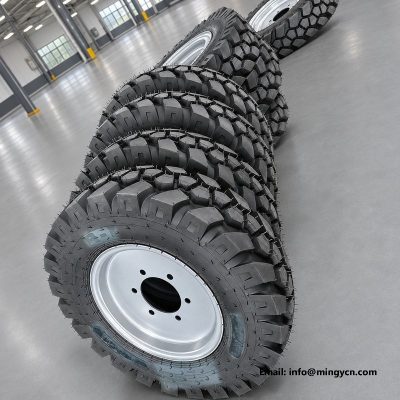
825-16 deep lug tyre specification and fitting
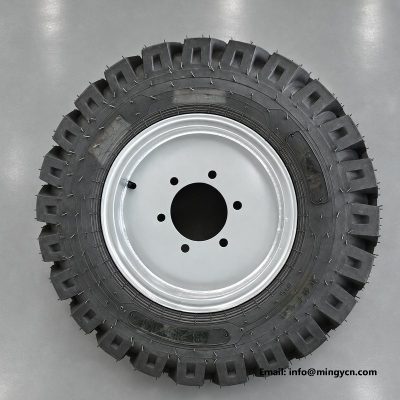
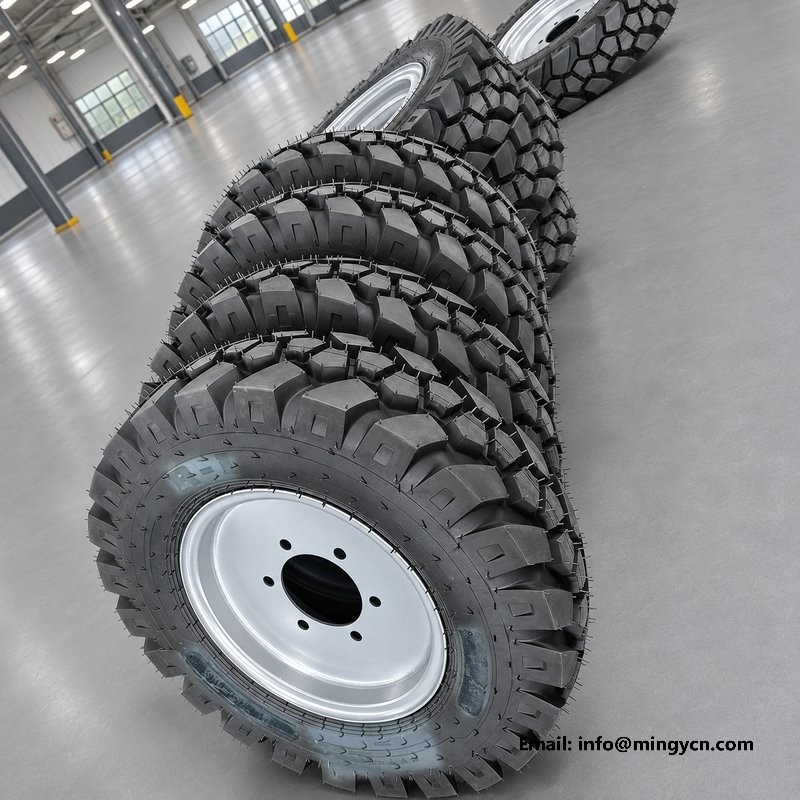
The tyres on a self loading mixer are the one part that touches the ground, and the ground a mixer works on is usually the worst surface on the site. This page examines the 825-16 deep lug tyre fitted to the mixer's wheels, shown in close-up from the sidewall markings to the tread blocks and in place on the complete machines. The text explains why the tread is deep and open, how the blocks clean themselves in mud, what the 825-16 size means in practice, and how a buyer should check pressure, wear, the rim fit and the spare. No dimensions or load figures are invented anywhere on this page; the photographs and the supplier's own data sheet are the specification, and this page teaches you how to read both.
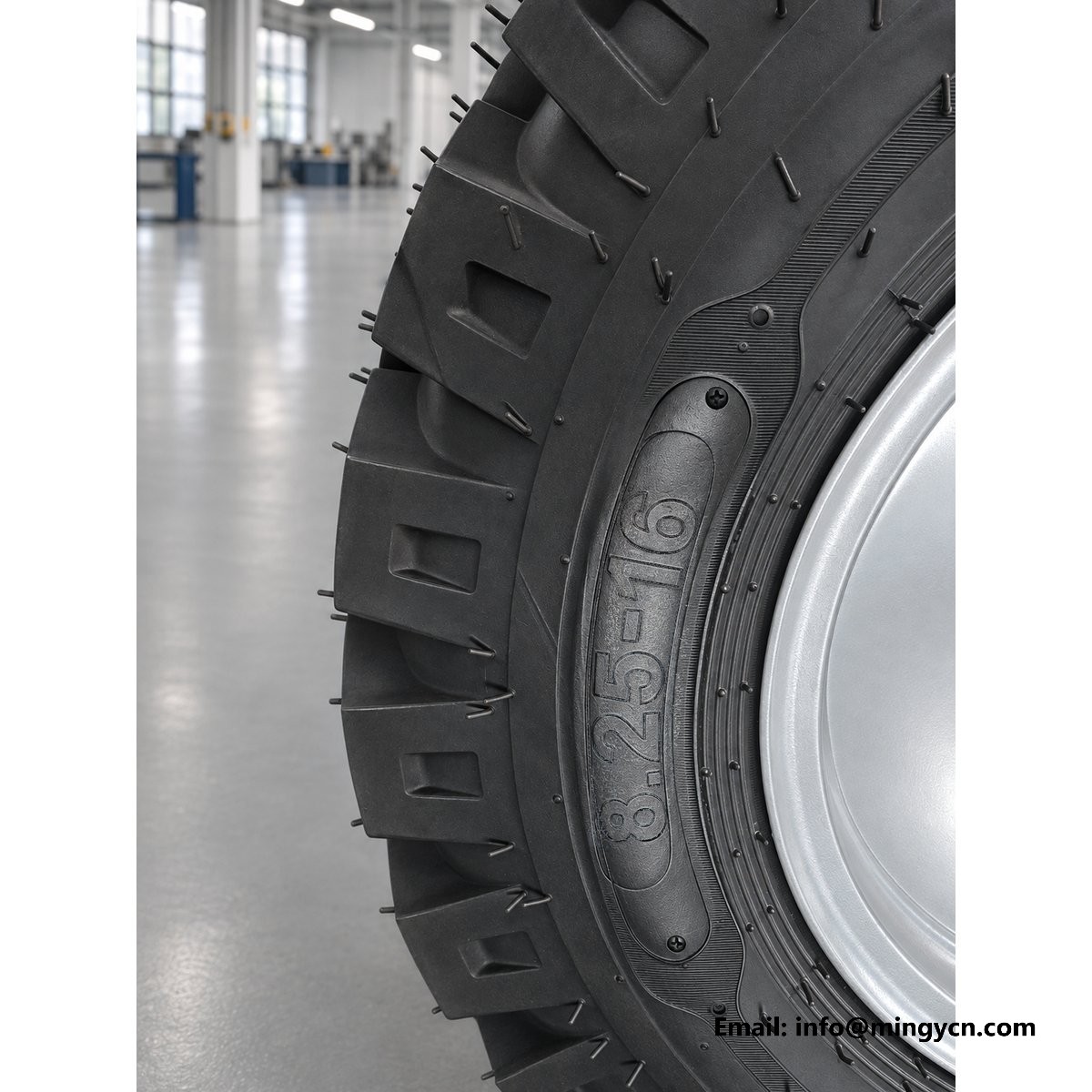
A self loading mixer spends much of its life where a truck will not go: on soft fill, on wet clay, on the rutted track between the aggregate pile and the pour. On ground like that the machine's real limit is not the drum or the engine but the four patches of rubber under the chassis. The 825-16 deep lug tyres shown on this page are the answer to that ground. Their open tread is built to bite into material that would pack the finer tread of a road tyre into a slick, and to shed what it picks up rather than carry it around the wheel. The photographs show the tyres from the sidewall markings to the mounted machines, and the text below explains what each detail means and what a buyer should check before accepting a set.
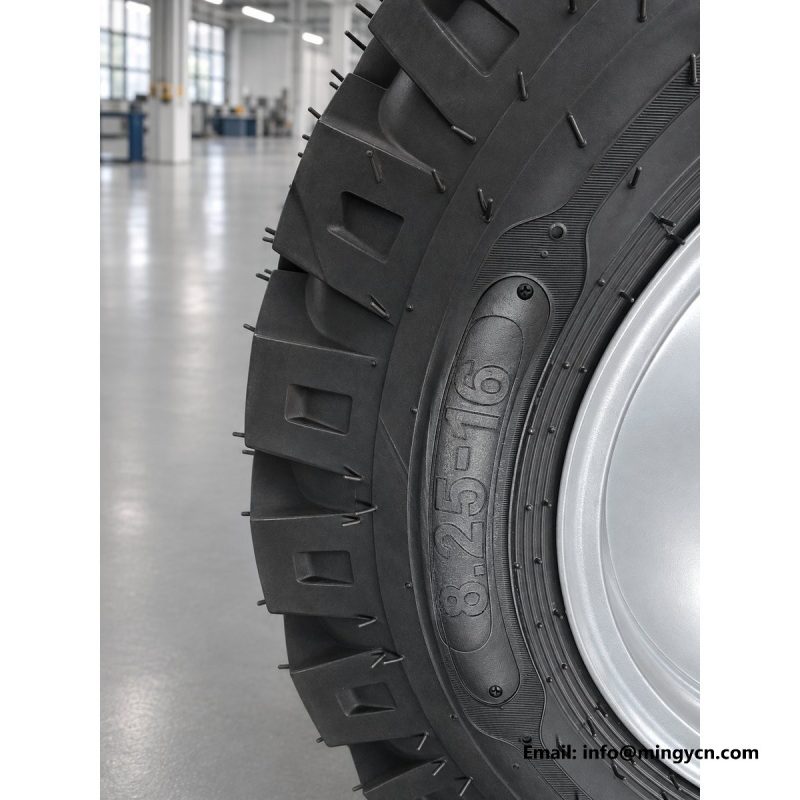
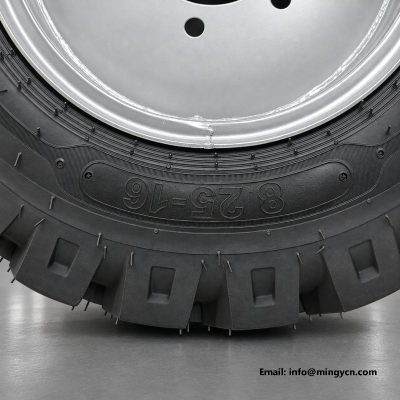
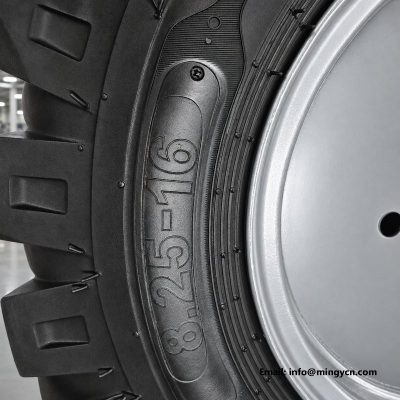
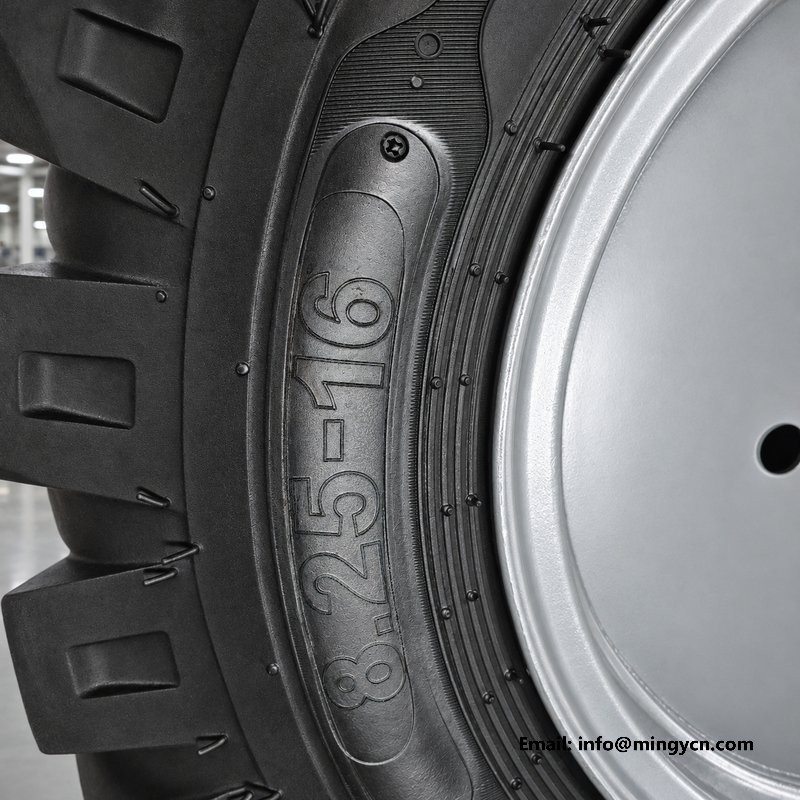
The numbers on a tyre sidewall name a standard rather than a promise of millimetres, and it is worth reading them without pretending to measure. The 825-16 designation identifies a tyre built for light truck and industrial duty with a nominal cross-section and a sixteen-inch rim diameter, and on a mixer that sizing balances flotation with load capacity. A wider tyre spreads the machine's weight over more ground and sinks less on soft fill, while a tyre that is too wide steers heavily and strains the front axle. This size sits in the middle of that trade-off, wide enough to carry a full drum across loose soil, narrow enough to steer without fighting. Ask the supplier for the actual fitted diameter and section only if the machine must pass under a particular lintel or through a specific gate.
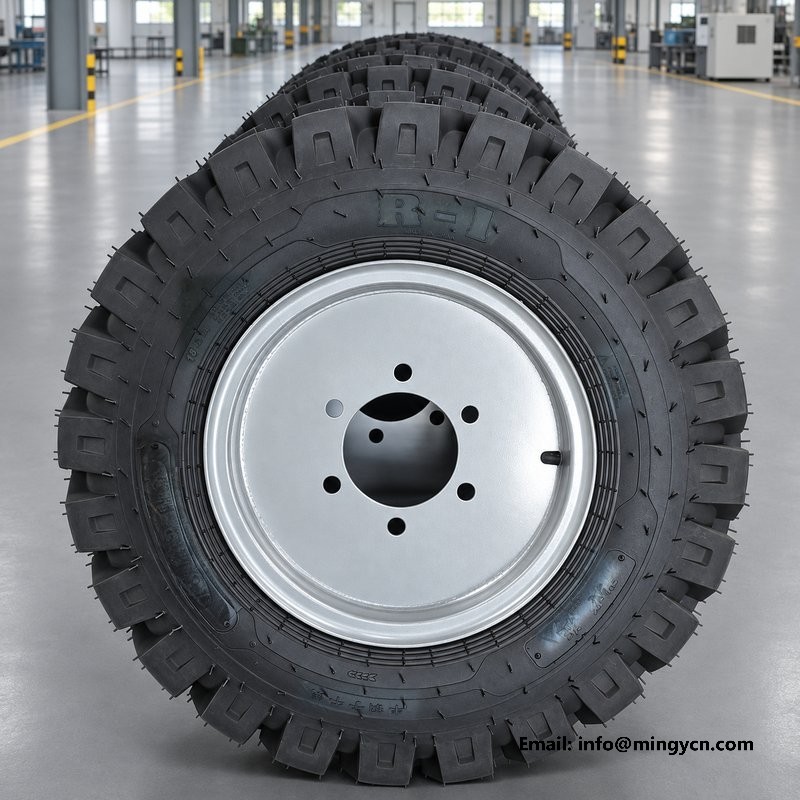
The photographs show a tread made of deep, widely spaced blocks rather than a continuous rib, and that shape is chosen for one reason: self-cleaning. When a deep lug rolls into mud it presses the soil into the void between blocks, and as the tyre leaves the ground the block flexes and flicks the mud out behind. A shallow road tread cannot do this; it fills, packs and then spins. The depth of the lug also sets how long the tyre works, because a deep block has material to wear away over many seasons before it reaches the wear bars. On the close-up photographs, look at the space between blocks and the sharp leading edges of each lug. A good deep-lug tyre shows clean, square edges, not rounded, polished shoulders that are already half worn.
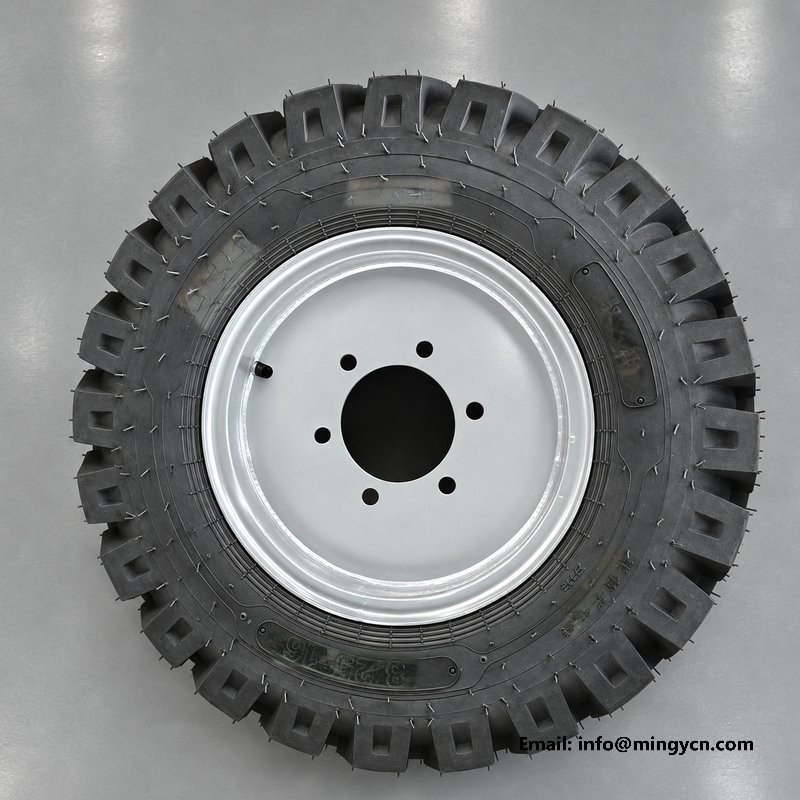
The three surfaces that decide a mixer's day are mud, soft fill and a loading ramp, and the deep lug tyre answers each differently. On mud the open tread finds what little shear strength the ground has and pushes against it, which is why a mixer on deep lugs will keep walking where a machine on worn tyres spins in place. On soft fill the wider footprint and the biting edges together let the machine carry a partial load without digging itself a trench. On a ramp the trailing edge of each lug catches the slope and holds the machine on the way up and the way down, which matters when the drum is full and the whole mass is trying to roll backwards. These are the working conditions the tyre was designed around, not the smooth yard.
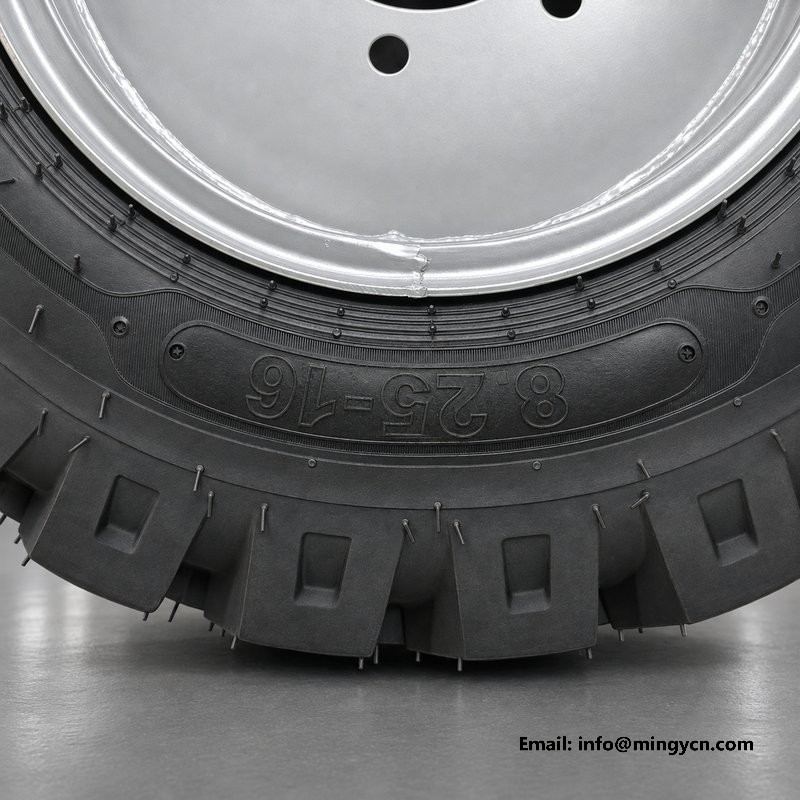
A deep lug tyre only works when the pressure is right, and pressure is the cheapest maintenance item on the whole machine. Too little air lets the sidewall flex beyond its design, overheats the casing on the road and lets the machine wander on a slope; too much air rounds the footprint, lifts the lug edges off the ground and throws away exactly the grip the tread was built for. The correct pressure for the load and the ground should come from the supplier and be checked cold, before the machine has worked. Wear is read from the lug edges: if the blocks are wearing fast at the shoulders but not the centre, the pressure is wrong or the wheels are out of alignment. A weekly look at the tread costs nothing and predicts every tyre failure before it happens.
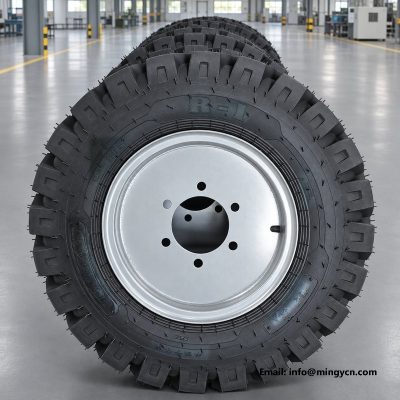
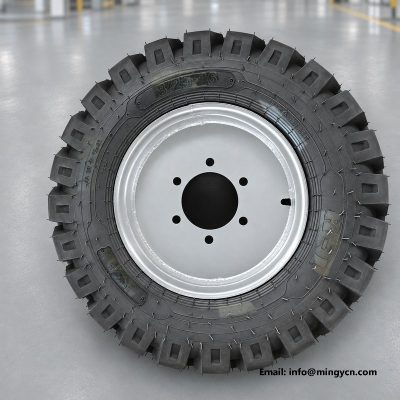
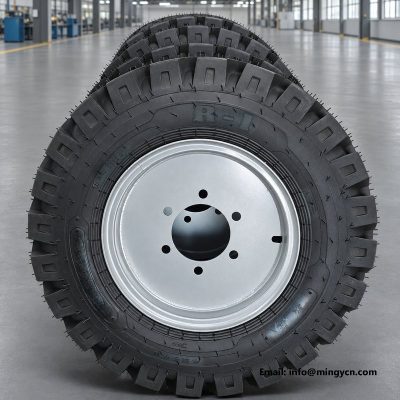
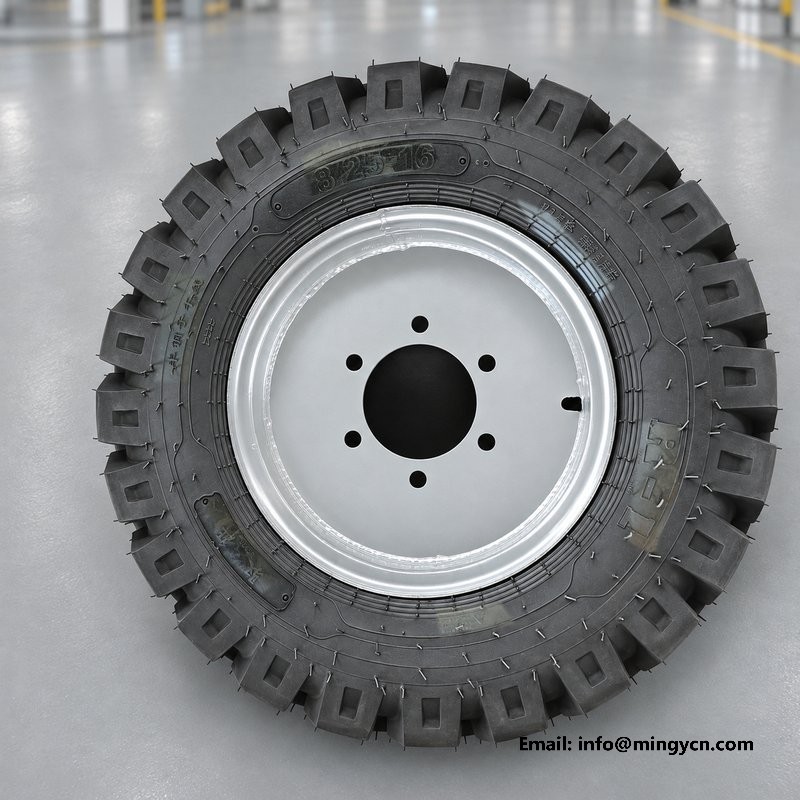
The photographs of the mounted machines show the tyre seated on its rim, and the joint between the two is where most slow pressure losses begin. A deep lug tyre works hard at the bead, the inner edge that locks into the rim, because every lug impact tries to move the casing on the wheel. The bead must sit evenly all the way round, the valve must be straight and clear, and the rim must be free of the dents that come from striking kerbs or rocks. When a wheel is fitted, the mating faces should be clean and the wheel nuts drawn down evenly in a crossing pattern, because a wheel that is pulled down crooked wobbles, works the studs and eventually loosens itself. This is a fitting job, not a tyre problem, and it deserves the same care as the engine.
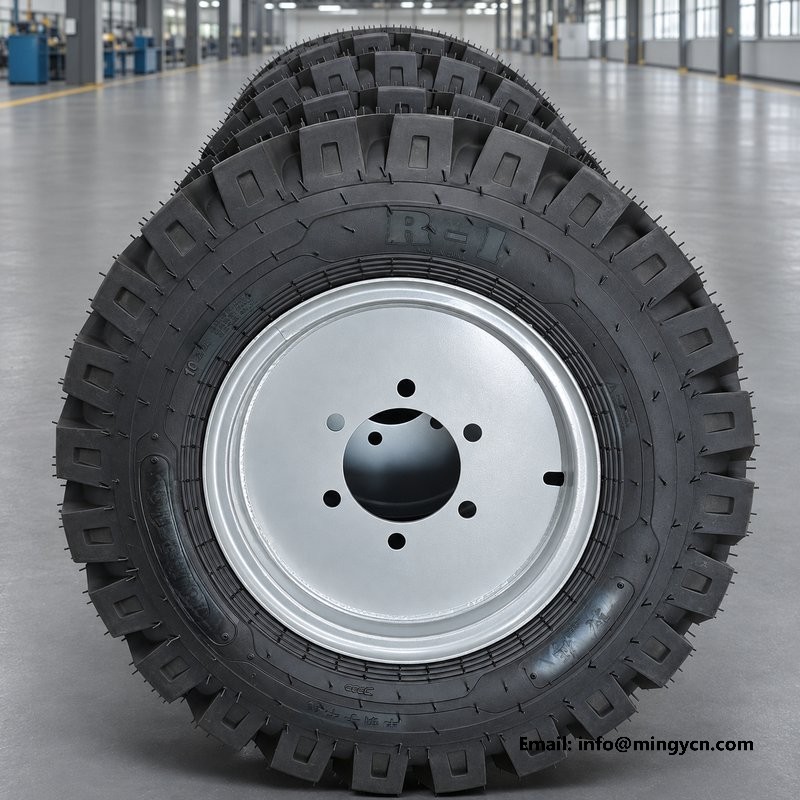
A self loading mixer on this layout steers with the front wheels and drives with the rear, and the deep lug tyres are chosen to suit that division of work. The front tyres carry the turning loads, so they need tread that holds a line on loose ground and does not slide sideways when the wheels are turned on a slope. The rear tyres do the pulling, so their lugs must bite under torque, especially when the shovel is loading and the rear wheels are pushing into the pile. Because both ends are on the same size and pattern, the machine tracks straight, and a spare tyre fits any corner. The pattern works hardest on the drive wheels, which is why the rear tyres will usually wear first, and that is worth remembering when you plan replacements.
One tyre of the same size and pattern, carried as a spare, is cheap insurance on a machine that works far from a workshop, and the change-out should be rehearsed before it is ever needed. The mixer's own weight is the challenge: the wheel being changed must be jacked and the machine chocked before any nut is loosened, and the nuts should be cracked while the wheel is still on the ground. A deep lug tyre on a rim is heavy, and fitting it means lifting it square onto the studs rather than levering it into place against the bead. After fitting, the nuts are tightened in a crossing pattern and checked again after a short run, because a newly seated bead always settles. A spare that is stored flat and dry is ready when the day comes.
Every word about grip and wear is set by the load the tyre carries, and on a mixer that load changes by the minute. When the drum is full and the machine is climbing, the rear tyres carry not only their share of the weight but the extra thrust of climbing, which is why they are the first to show wear. When the drum is empty and the shovel is lifted, the load shifts toward the front, and the front tyres take a turn at the hard work. A tyre is sized for the heaviest combination, not the average, so a buyer should ask what load each axle is rated for and keep the heaviest conditions in mind when setting pressures. The tyres in the photographs are fitted to machines that are loaded this way every day.
The sidewall photographs show the tyre's nameplate, and it is worth reading a sidewall the way a buyer reads an invoice. The size designation gives the section and the rim diameter, the load index and speed rating state what the tyre is certified to carry, and the ply or load-range marking describes the casing strength in the supplier's standard. None of these should be guessed; they should be read off the tyre and checked against what the machine's specification sheet says it needs. A mixer tyre is usually chosen at the heavier end of the range, because the load is high and the road work is short and slow. When the markings are legible and consistent across all four wheels, the set has been fitted properly and not mixed from odd stock.
The close-up photographs show the two parts of the tyre that fail first and are easiest to miss from a distance: the shoulder and the bead. The shoulder is where the tread meets the sidewall, and it takes the scuffing that comes from turning on abrasive ground and from brushing against kerbs and stockpiles. A sound shoulder shows clean rubber with no chunking; a tyre that is losing shoulder blocks has been over-stressed or run at the wrong pressure. The bead sits down on the rim and seals the air, and it should show no exposed cords and no cracks where it flexes. These two zones are exactly what a buyer should photograph and examine when the tyres arrive, because damage here cannot be repaired; it can only be replaced.
A deep lug tyre earns its keep until the lugs are worn near the wear bars, and the decision to retread or replace is a matter of what is left underneath. If the casing, the bead and the sidewalls are sound, a worn tread can be retreaded and returned to service at a fraction of the cost of a new tyre, and a deep lug pattern is particularly well suited to retreading because the blocks are large and the casing is heavy. If the casing shows cuts, bulges or exposed cords, no retread will save it, and it should be retired. On a mixer, the rear drive tyres will reach this decision first, and a sensible owner replaces them in pairs on the axle so the machine keeps its balance and its grip.
Because the mixer works on soft fill, wet clay and loading ramps, where a road tyre's fine tread packs with mud and spins. A deep lug tread has open, widely spaced blocks that bite into soft ground and flex to flick the mud out as they leave it, so the machine keeps traction. The deep blocks also wear for many seasons before reaching the wear bars. On a ramp the lug edges catch the slope and hold a full machine. Road tyres are smooth and cheap, but they surrender exactly where a mixer needs grip most.
Keep the pressure correct and check it cold, before the machine works, because wrong pressure destroys both grip and the casing. Watch the tread weekly: shoulders wearing faster than the centre means the pressure is wrong or the wheels are out of line. Examine the bead and sidewall for cuts, bulges or exposed cords, which cannot be repaired. When the lugs reach the wear bars, retread if the casing is sound, otherwise replace in pairs on the axle. The rear drive tyres wear first and are the ones to watch.
For the current specification, build options and a formal quotation for your market, contact MINGYI Machinery. E-mail: sales@mingycn.com | LINE (ID): mingyicn
Tyres, Tubes and Rims: Fitting 7.50-16 and 8.25-16 Wheels · 750-16 Tyres and Isuzu Front Axle on the 1.5m3 Mixer · 1.5 m3 Self Loading Concrete Mixer: Full Specification and Walkaround









