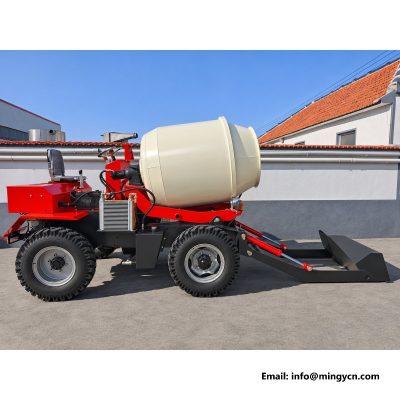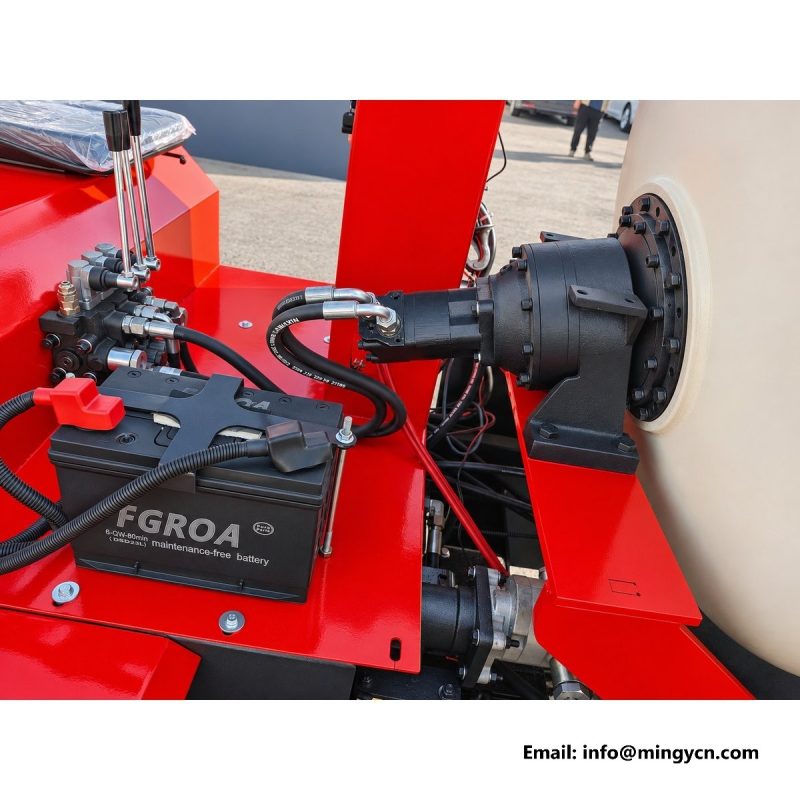
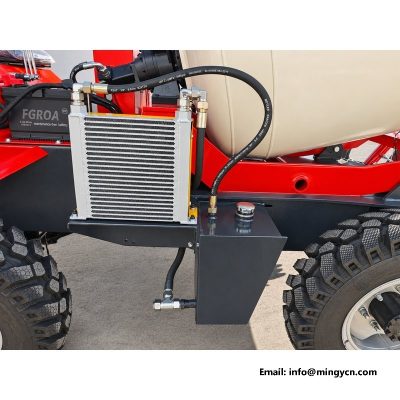
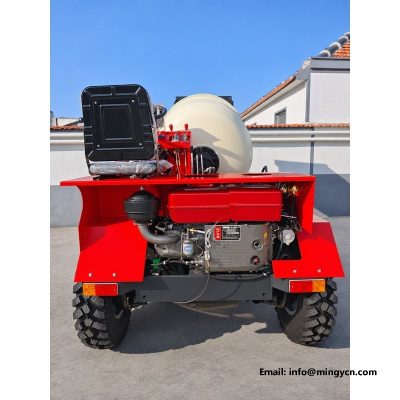
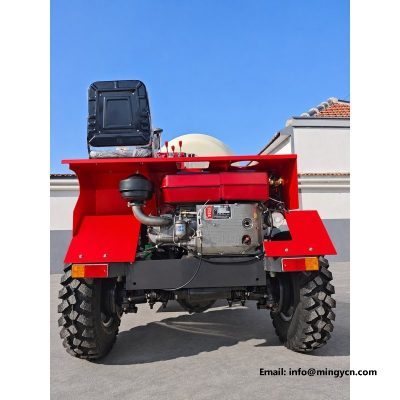
engine bay radiator and cooling on 1.5m3 self loading mixer
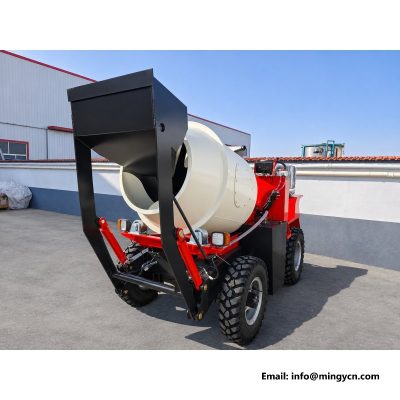
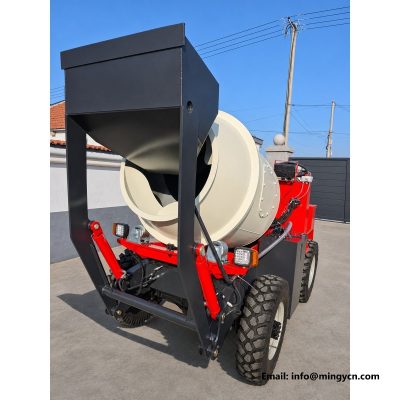
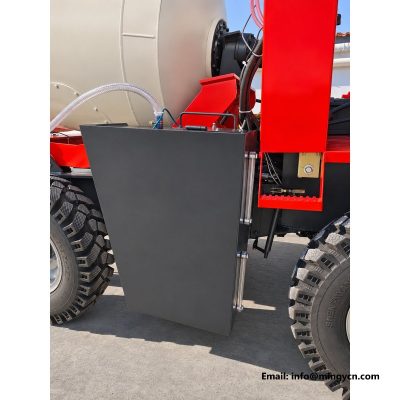
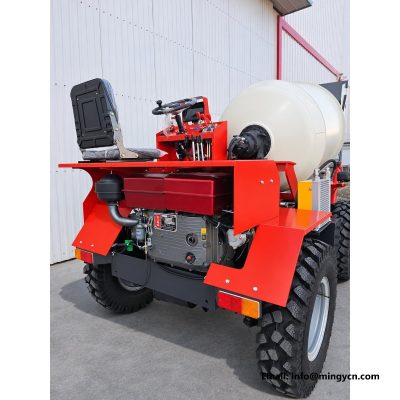
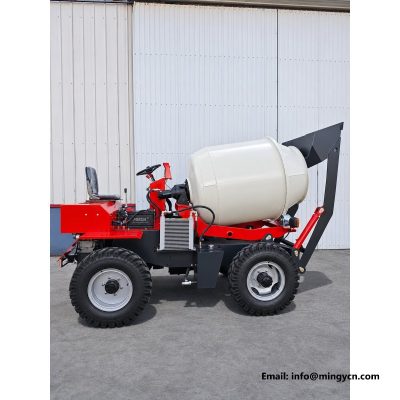
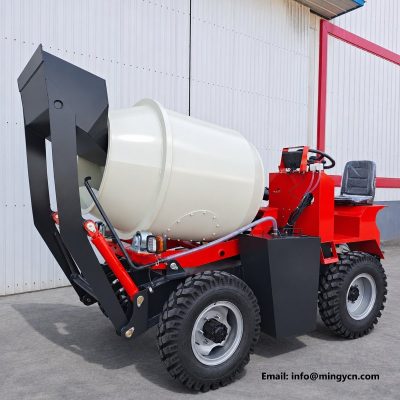
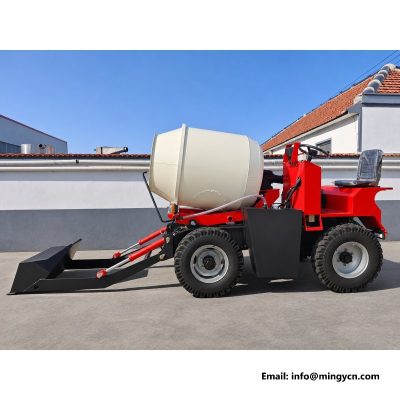
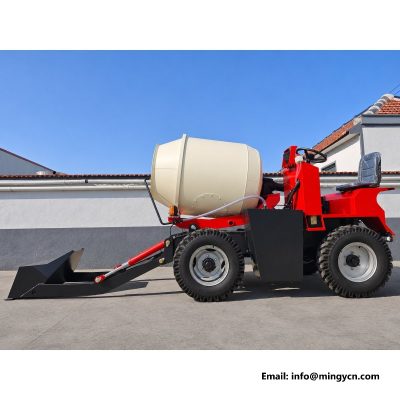
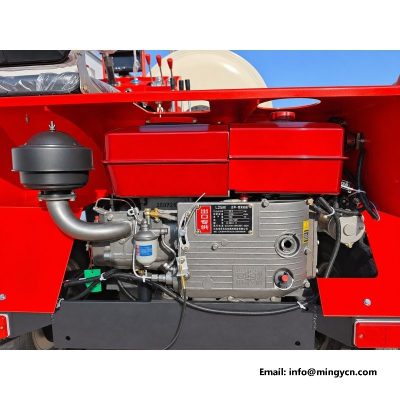
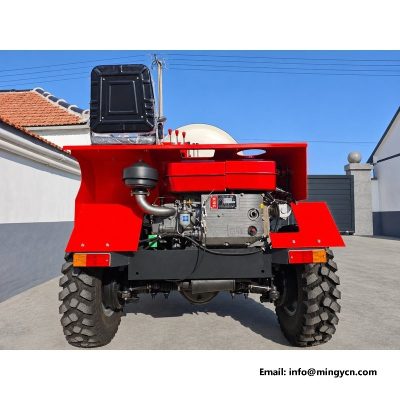
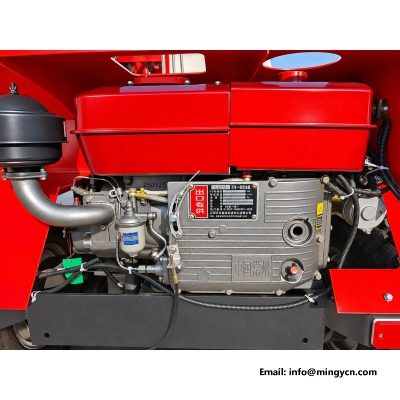
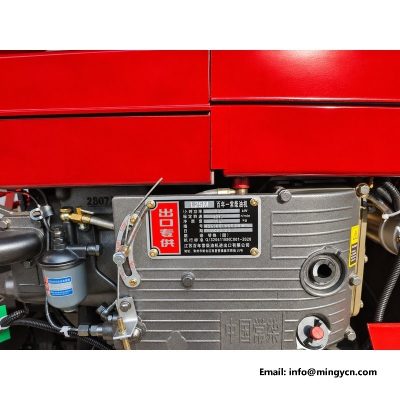
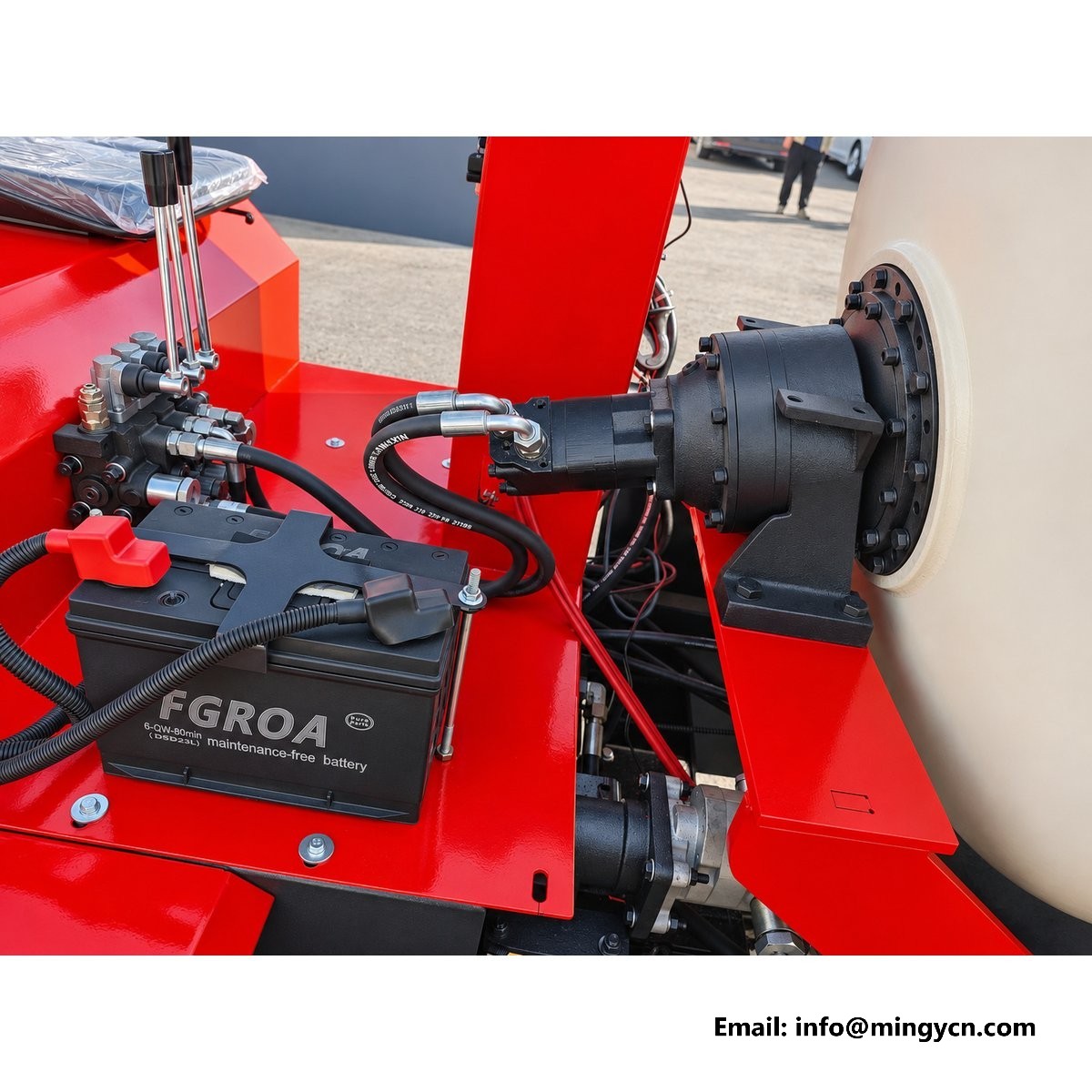
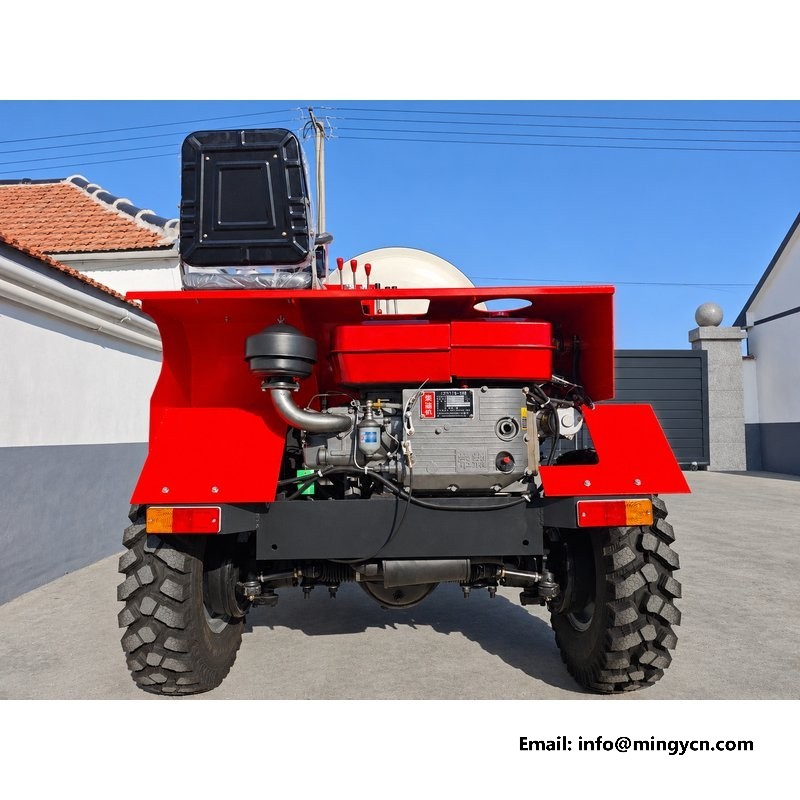
A mixer spends its working life in dust, at low speed, with the engine under load for hours at a time. That makes the engine bay the part of the machine a buyer should inspect most closely, and the part most often photographed badly. This page follows the 25 hp single-cylinder diesel from the air inlet to the exhaust, past the radiator and the fan that pulls air across it, and explains what each component needs in service. The photographs show a 1.5 m3 machine in the factory yard: the engine itself, the radiator and grille, the side of the bay with its pipes and harness, and the view an operator has from the seat.
| Specification | 1.5 m³ self loading mixer |
|---|---|
| Operating weight | 1,900 kg |
| Transmission | 4WD, 3 forward + 1 reverse + road gear |
| Maximum travel speed | 24 km/h |
| Engine | Single-cylinder diesel, 25 hp |
The engine in this machine is a single-cylinder diesel rated at 25 hp, and it has two jobs that pull in opposite directions. One is travel: through the four-wheel-drive gearbox with three forward ratios, one reverse and a road gear, it moves a 1,900 kg machine and its rated 5,000 kg load at up to 24 km/h. The other is hydraulic work, because the same crank drives the pump that turns the drum, raises the hopper and assists the steering. A single cylinder delivers its effort in distinct impulses rather than a smooth stream, which is why mounting rails, pulley alignment and belt condition matter more here than on a multi-cylinder unit. What the buyer gets in return is a power unit one fitter can strip, one that tolerates ordinary site fuel, and one whose parts are stocked in most agricultural towns.
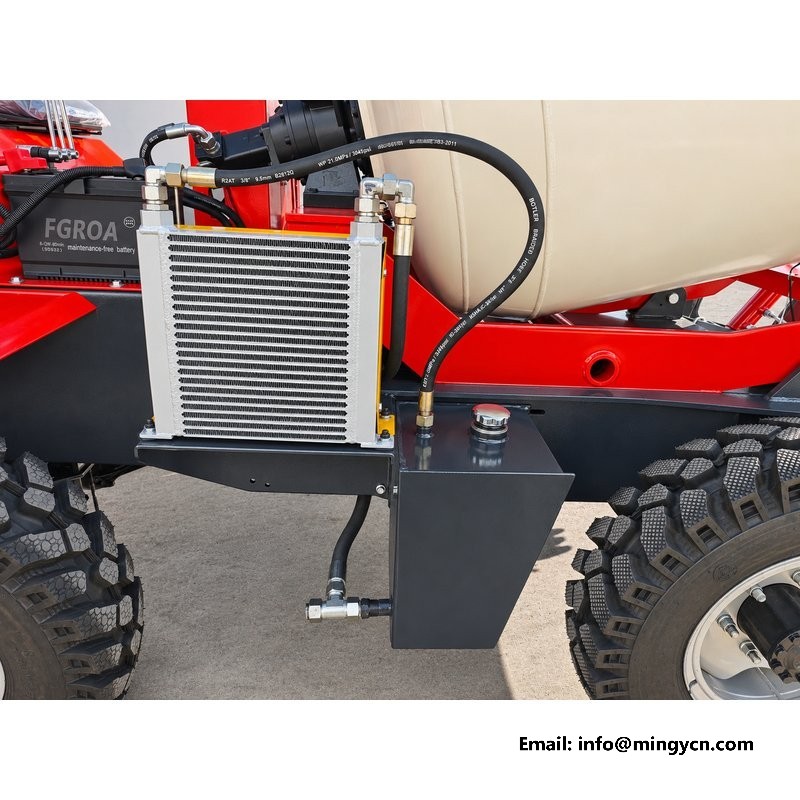
The radiator sits at the front of the engine bay, and everything about the cooling system depends on that position staying useful. The fan draws air through the core, and the core can only pass what the grille ahead of it lets through. On a mixer this matters more than on a road vehicle, because the machine spends its day beside a stockpile, inside the dust cloud its own hopper makes, and often at low travel speed where there is no ram air to help. The photographs of the grille and the fan show the working gap between the two: a straight, unobstructed path from outside to fins. Bend that path, or block it with chaff or a rag left on the guard, and the fan simply recirculates hot air inside the bay. The airflow is designed around a clean core, not a dirty one.
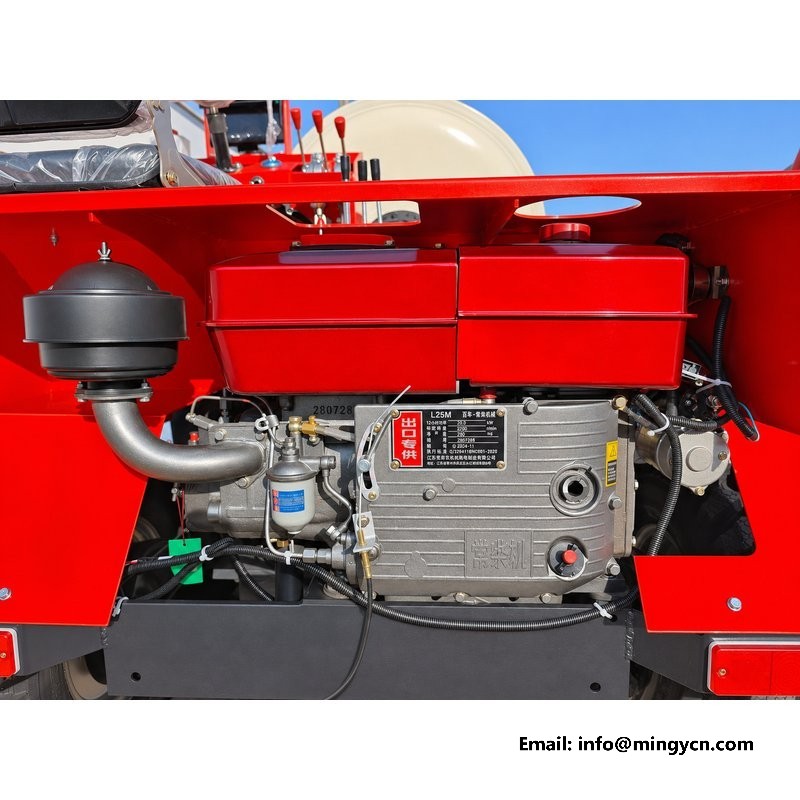
Grille blockage is the most common cooling fault on any site machine, and it is the cheapest to put right. On this mixer the grille is a screen rather than a filter, and the difference is practical: a screen catches leaves, straw, plastic sheet and the coarse dust a batching area produces, and it lets the fine dust through to the fins, where it mixes with any oil mist and sets into a felt. That felt is what actually stops the air. A grille that looks half clear can sit in front of a core that is completely blind. The symptom arrives slowly, which is the trap. The engine runs a little warmer each week, the operator shortens the cycles to compensate, and nobody connects the two until a hot afternoon and a long pour. Cleaning the screen takes a brush and two minutes; cleaning the core needs the guard off.
The fan and its belt are the parts of the cooling system that fail with warning, and the warning is usually audible. A slack belt slips under load, and a slipping belt chirps or squeals when the engine is asked for power, then goes quiet at idle. Left alone, the slip glazes the pulley grooves and the belt stops driving properly even after it has been tightened. A belt that is too tight is quieter and more expensive, because it loads the bearings at each end of the run from the first day. Check tension on the longest unsupported span, using thumb pressure, and compare the deflection with the workshop manual rather than with memory. Look at the blade edges too: a fan that has touched the shroud shows a bright scuff, and a cracked blade is a replacement, not a repair.
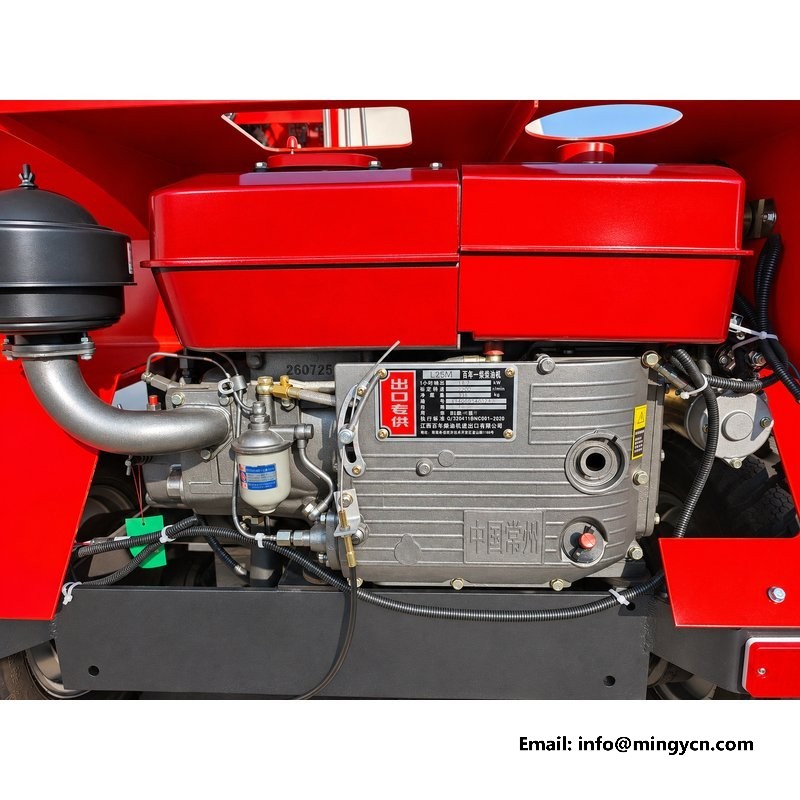
The air cleaner rarely appears in a buyer's questions, and it is the part most likely to shorten an engine's life on a batching site. A single-cylinder diesel pulls a large gulp of air on every revolution, and the cloud around a hopper filling with sand or dry cement is exactly the environment a paper element was not built to meet for long. Two habits keep it working. The first is to check the dust cup or the restriction indicator at the start of a shift rather than at the end of the week, because a loaded element richens the mixture and the first symptom is usually black smoke, not a loss of power. The second is to clean the element by blowing from the inside out, never by tapping it against a tyre, which drives dust deeper into the pleats and can split the paper.
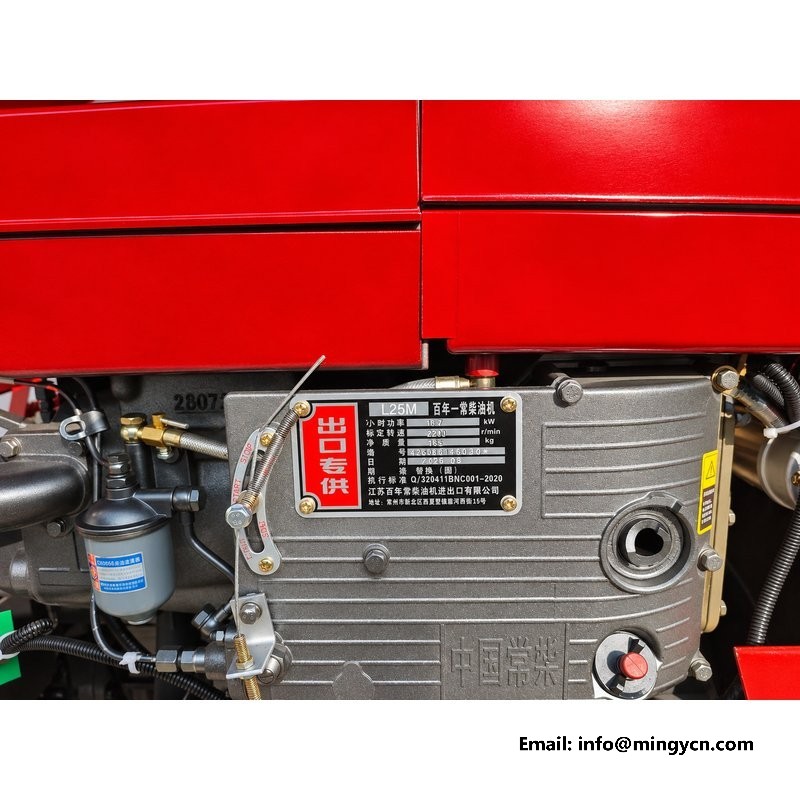
Two checks at the start of a shift prevent most of the breakdowns that stop a pour halfway. The first is fuel: open the tank valve, look at the sediment bowl, and drain any water that has gathered at the bottom before the engine is started, because water in a diesel injection system does more damage than dirt. The second is oil: pull the dipstick on level ground, wipe it, reseat it and read the level again, then look at the oil itself. Black oil on a diesel is normal; gritty oil, oil that smells of fuel, or a level that has climbed since the last check is not. Around the engine, look for fresh drips under the sump and around the filter housing. A small weep that is ignored becomes a low-oil shutdown at the worst possible moment.
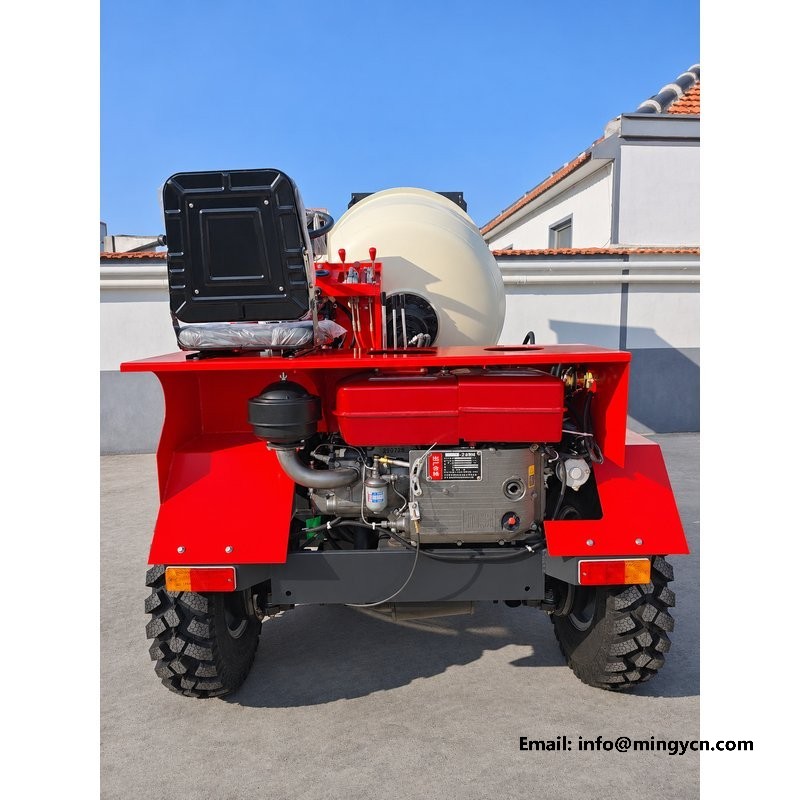
A cold morning start tells you more about the condition of a diesel than any other single event. A healthy single-cylinder engine should catch within a few turns once fuel reaches the injector, and it should settle into a steady idle without hunting. If it needs repeated cranking, the cause is usually one of four things, and they are worth checking in a fixed order: fuel not reaching the injector, air in the fuel line, a battery turning the engine too slowly to build compression heat, or a compression fault. Work through them in that order instead of reaching for an aerosol starting aid. Ether helps a worn engine start once and damages it in the process. Hold a fast idle after it catches, let oil pressure come up, and warm the block before the drum is asked to turn a full batch.
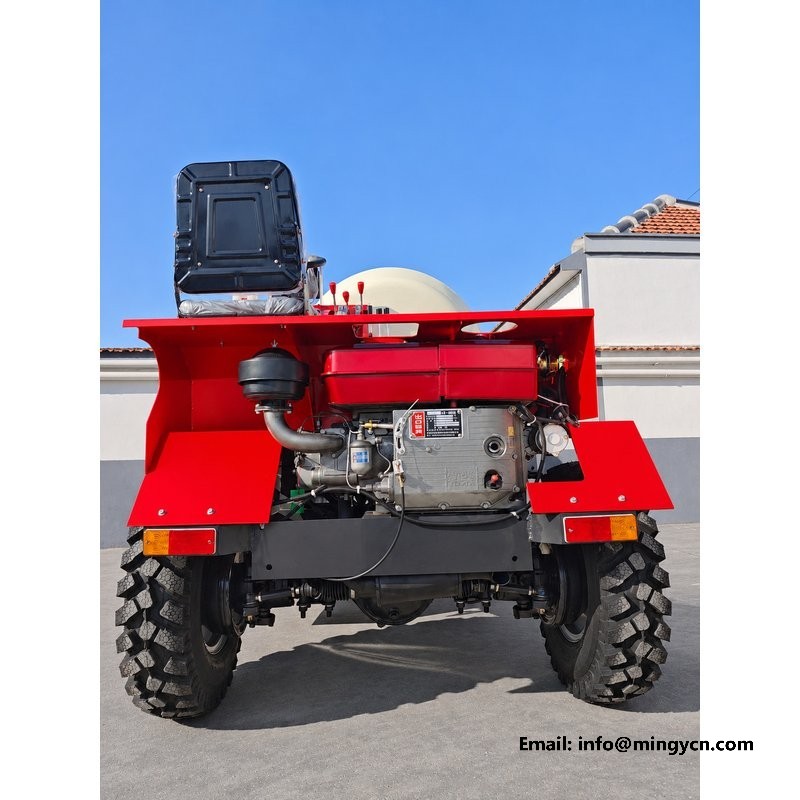
Overheating on a mixer rarely arrives without notice. The first sign is usually a smell: hot paint, hot rubber, or a sweetish steam that is not exhaust. The second is the temperature gauge climbing above its normal position and staying there at idle, when airflow is lowest and there is no travel wind to help. The third is steam from under the guard. The order of response matters. Stop the drum and the travel drive, park on level ground, and let the engine idle for a couple of minutes before shutting down; killing a hot engine immediately stops coolant circulation and leaves the heat in the casting. Do not open the radiator cap while the system is hot. Once it has cooled, check coolant level, belt, grille and fan, in that order, before restarting.
The engine bay on this mixer is a working space, not a sealed compartment, and what collects in it decides how long the pipes and the wiring last. Dust holds moisture against steel, and moisture under a clamp is where a pipe starts to weep. Oil mist from a minor leak turns that dust into a paste that lifts paint and hides the leak that produced it. Cleaning is therefore a diagnostic act, not cosmetic work. Use low-pressure air or a brush rather than a pressure washer, keep water away from the connectors and the intake, and never direct a jet at the radiator fins, which bend flat and stop passing air. While the bay is clean, trace each hose from end to end and look for rubbing where it crosses a bracket. A chafed hose is cheap to replace.
A gauge that reads high is not the same thing as an engine that is overheating, and the difference saves a lot of unnecessary work. Start at the sender and the gauge: a loose terminal or a chafed wire produces a reading that climbs and falls with vibration, and it does so without any real heat. If the reading is steady and high, check the coolant level when cold, then look for the simple mechanical causes before the radiator is condemned: a slack belt, a blocked grille, a hose that closes under suction, a cap that no longer holds pressure, or air trapped after a refill. Only when those are excluded is the core itself suspect, and a core is usually blocked from the outside rather than the inside. Clean it before replacing it.
Black smoke means unburnt fuel, and on a mechanically injected single-cylinder diesel the usual reason is that the engine is being asked for more fuel than it can burn with the air it is getting. That is why the first check is the air side: a clogged element, a collapsed intake hose or a rag left in the pipe all produce the same grey-black plume under load, and all three clear up without touching the injection pump. The second check is the load itself, because a drum packed beyond its rated capacity and a hopper lifted on a slope both ask for power the engine cannot deliver cleanly. Blue smoke is a different fault and usually means oil. White smoke at a cold start that clears is normal. Persistent black smoke with a clean filter deserves a look at the injector.
The order in which you check things is worth more than any single test, because it stops you replacing parts at random. Begin with fuel delivery at the injector: crack the line and crank, and see whether fuel pulses. If it does not, work back through the filter, the lift pump and the tank outlet, looking for a blocked strainer or a closed valve. If fuel arrives, the problem is compression or cranking speed: a tired battery, a starter that drags, or valve clearance that has closed up. Cold weather makes all of these worse without creating them. Only after fuel and cranking speed are proven should the injector come out. Keep a written note of what you checked and what you found, because the same fault returns next winter and the note saves the whole sequence.
At the start of every shift in dry weather, and again whenever the gauge begins to climb. A batching site produces more airborne material than a road job, so a screen that would last a week elsewhere can blind in a day. Carry a soft brush on the machine and clean the screen from the outside, working downwards so debris falls away rather than into the core. If the gauge still rises after the screen is clear, stop and check the core, belt and fan before the next pour.
Not necessarily. A reading that rises under load and falls again once the machine stops is normal behaviour for a diesel working at low travel speed with no ram air. What matters is whether the reading settles back or keeps climbing. If it keeps climbing at idle, stop and investigate. If it settles but sits higher than it used to, clean the grille and check the belt tension, then look at the core from the engine side, because a partially blocked core shows up first under sustained load.
Only with care, and preferably not at all. High-pressure water drives dust into seals, lifts paint at edges and bends radiator fins flat, and a jet aimed at the electrical connectors will leave moisture where it cannot dry. Use low-pressure water or a brush and a cloth, keep the lance away from the radiator, the intake and the wiring, and let the bay dry before the engine is started. If a pressure washer is the only option, use the widest nozzle at a distance and never aim at a seal.
For the current specification, build options and a formal quotation for your market, contact MINGYI Machinery. E-mail: sales@mingycn.com | LINE (ID): mingyicn
25hp Single-Cylinder Diesel Engine on the 0.8m3 Self Loading Mixer · 1.5 m3 Self Loading Concrete Mixer: Full Specification and Walkaround · Welded Chassis Frame on the 1.5m3 Self Loading Mixer