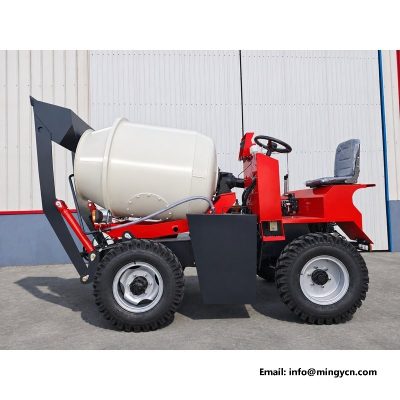
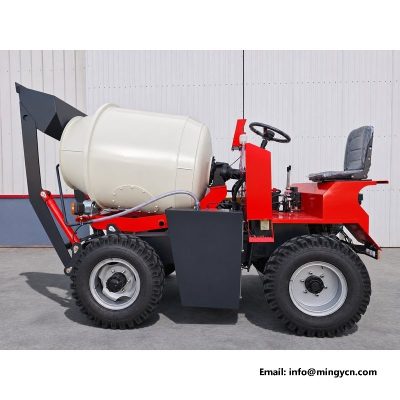
drum mouth discharge and pour control 1.5m3 self loading mixer
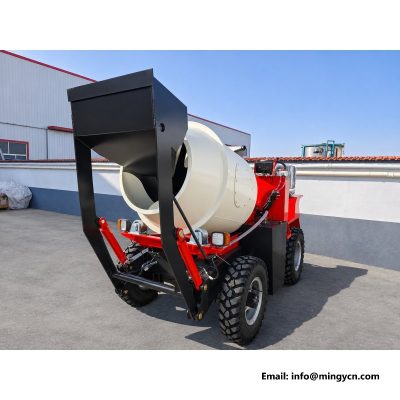
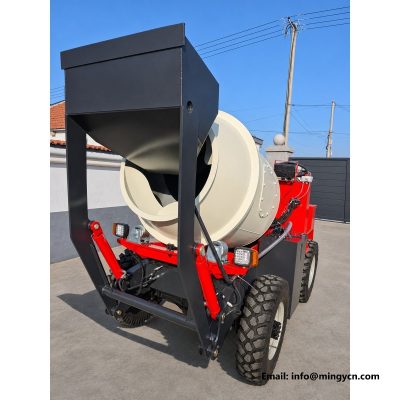
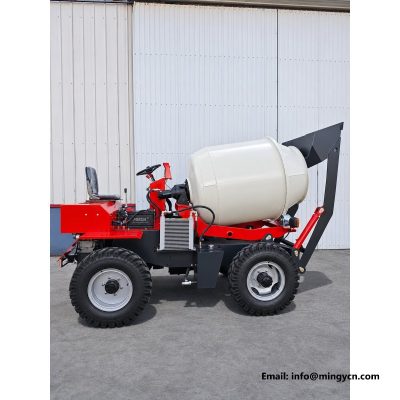
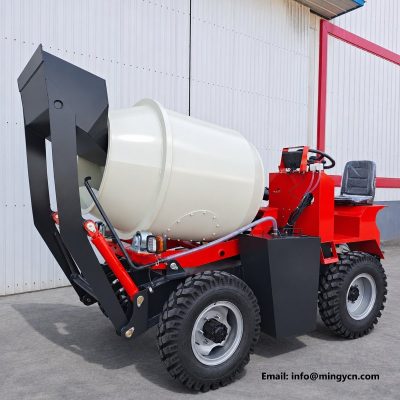
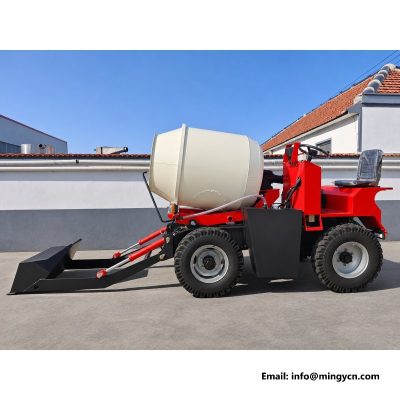
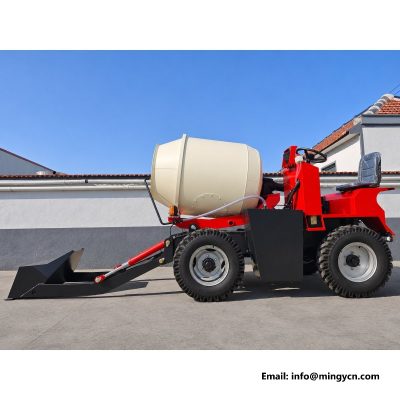
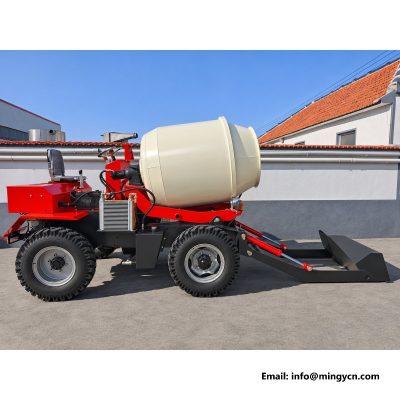
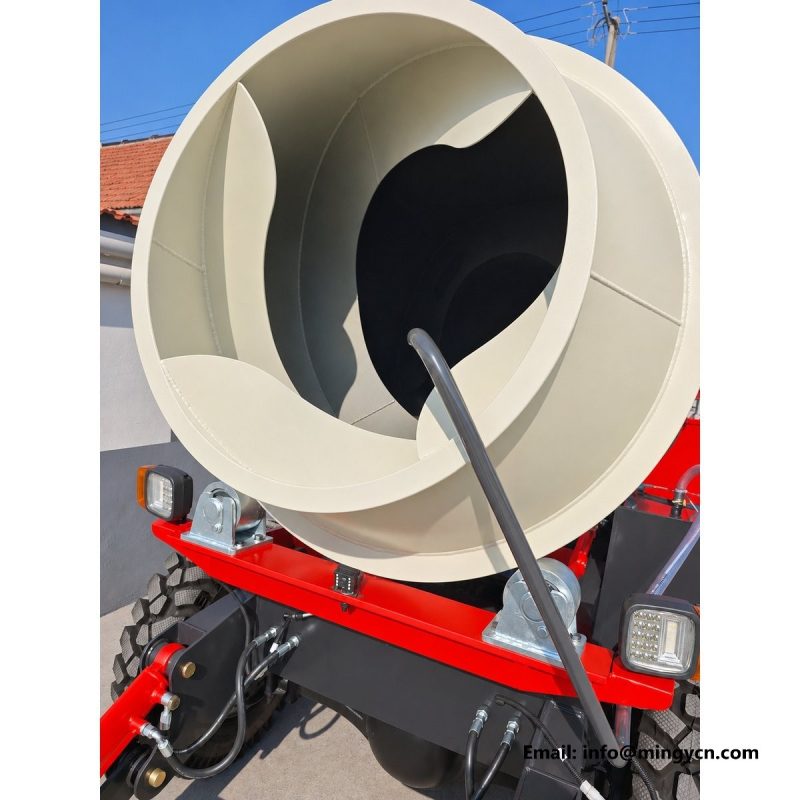
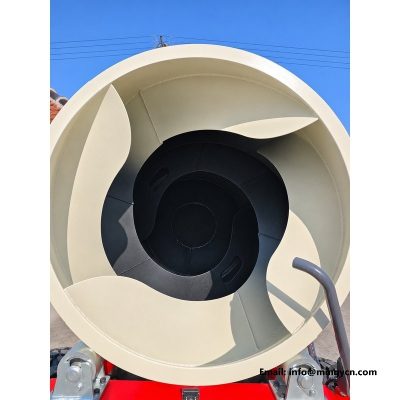
Everything a self loading mixer does with concrete passes through one opening. The drum mouth receives the load from the hopper and gives it back at the pour, and the way that mouth, the blades behind it and the chute in front of it work together decides how cleanly the machine empties and how much of the batch reaches the formwork. This page looks at the mouth and the discharge end of the 1.5 m3 machine in detail: the flight ends visible through the opening, the chute mounting, the pour technique, and the faults that show up at the end of a load. The photographs were taken at the factory with the drum empty.
| Specification | 1.5 m³ self loading mixer |
|---|---|
| Rated load | 5,000 kg |
| Drum capacity | 1.5 m³ (1,500 L) |
| Overall dimensions (L x W x H) | 3,500 x 1,600 x 2,200 mm |
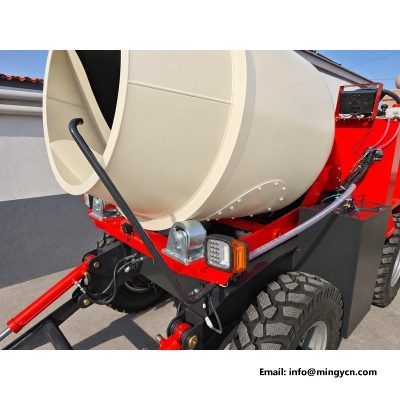
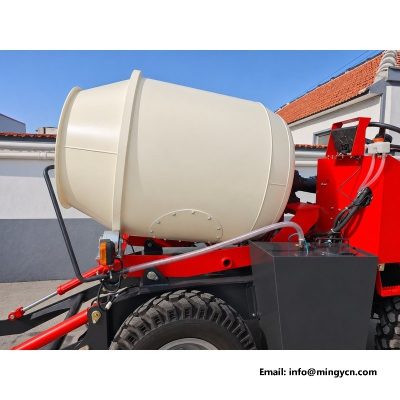
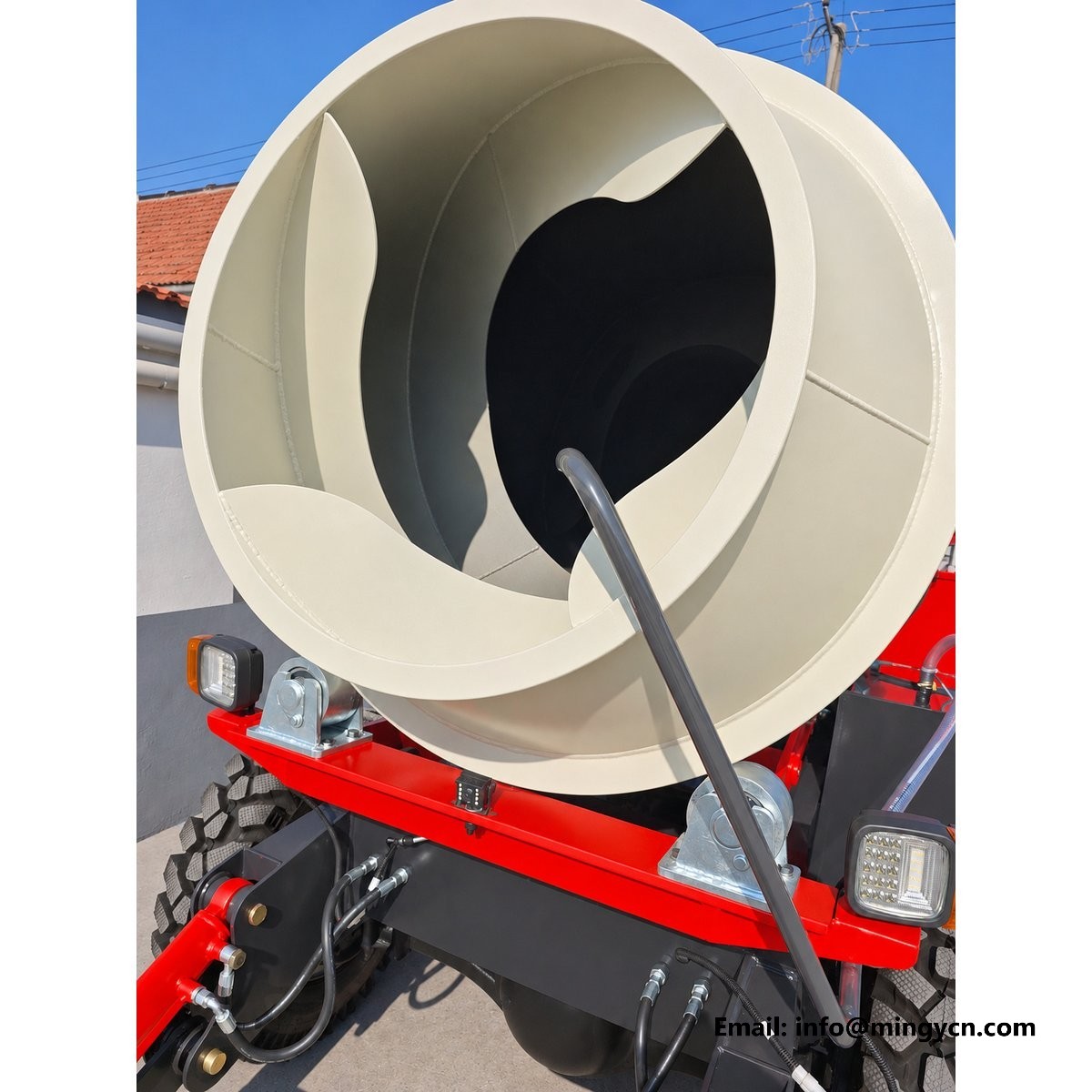
The drum mouth is the one opening through which the machine is both loaded and emptied, and its geometry sets the rhythm of the whole cycle. It faces the hopper when the drum is charged and it faces the pour when the drum is reversed, so the lip has to stay stiff enough to hold its shape after thousands of loads of gravel, and stiff enough that a chute can hang from it without the mounting points closing up. In the photographs the mouth reads as a plain circle with a raised edge; in service that edge is what a loaded hopper aims at. A bent or peened lip is the first thing to check on a used machine, because a distorted mouth throws the mix sideways instead of into the drum and leaves a ridge on the ground at every charge.
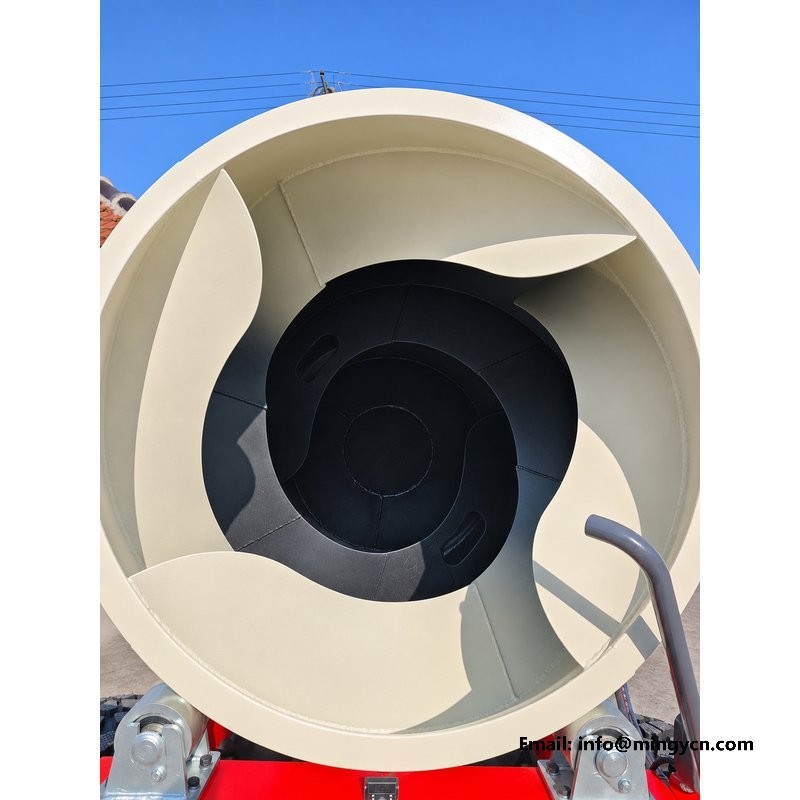
The spiral blades inside the drum do two jobs, and the mouth is where both become visible. In one direction of rotation they lift material away from the opening and roll it back into the batch, which is mixing. In the other they walk the mix along the shell towards the opening, which is discharge. What a buyer can judge from a photograph taken straight into the mouth is the condition of the flight ends: the section closest to the opening works hardest, because it is the last part to touch the mix on the way out and the first to meet the shovel load on the way in. Worn flight ends reduce the drum's ability to empty itself, and a machine that leaves a heel behind after every pour is usually showing exactly that, long before the wear is obvious from outside.
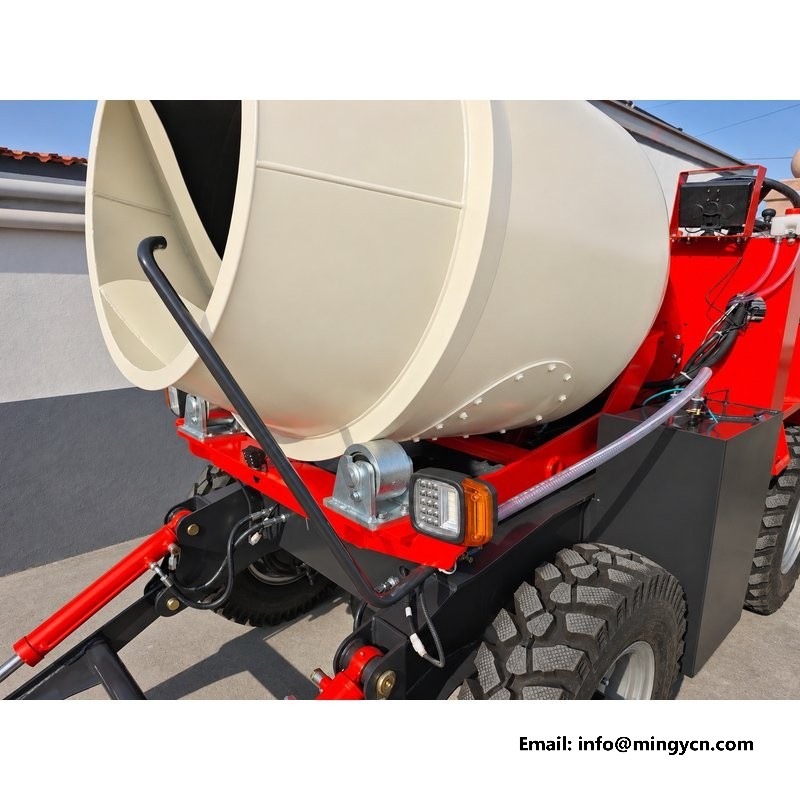
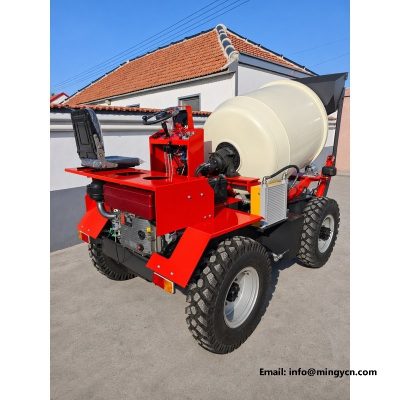
Loading looks simple from the seat and is easy to get wrong. The hopper has to be raised until its lip clears the drum mouth and tipped so that material slides rather than drops, because a free fall from height separates the mix: coarse aggregate lands first and mortar follows, and the drum then has to work harder to bring the batch back together. The machine should be square to the drum, not angled, so the stream enters the cone evenly and does not pile against one side of the shell. Watch the mouth while pouring rather than the hopper, because the mouth tells you when the drum is full. Stop before the mix reaches the lip; a drum charged to the brim spills on the first turn and puts the load over the front of the chassis instead of into the batch.
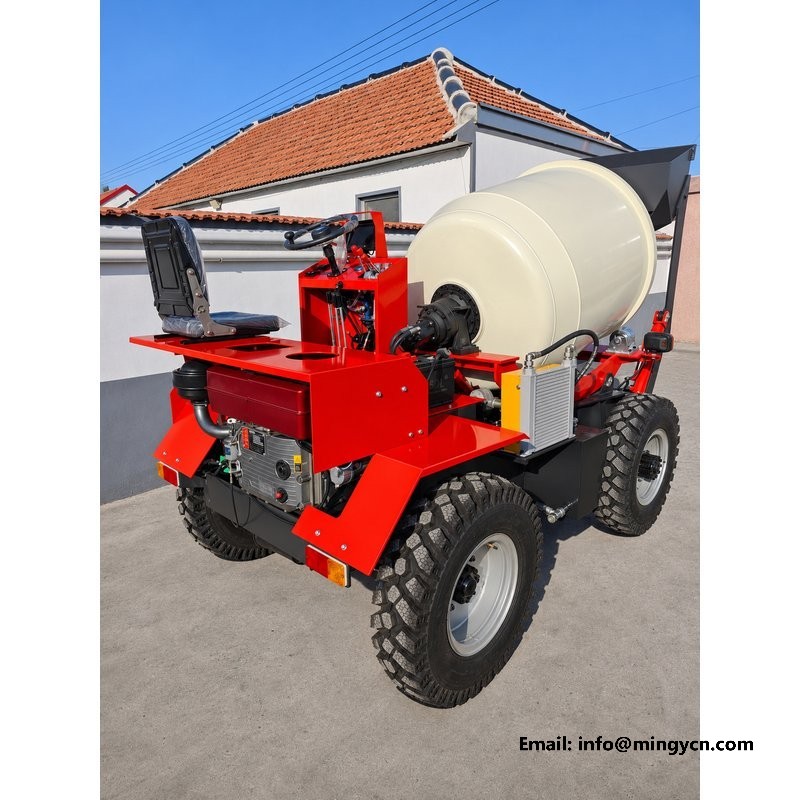
Direction is the whole control system on a drum like this, and operators who understand it make fewer mistakes than those who memorise lever positions. One direction of rotation folds the mix back on itself and keeps it alive on the way to site; the opposite direction walks the material towards the mouth and out. Between the two there is a moment when the drum is still turning but the mix is no longer moving either way, and that is the moment to stop and think rather than to change direction against a full load. The habit worth building is to let the drum come to rest before reversing it. Slamming a loaded drum from mix to pour puts the whole mass against the blades in the opposite sense, and the noise it makes is a bearing and a gearbox being asked for something they were not built to give.
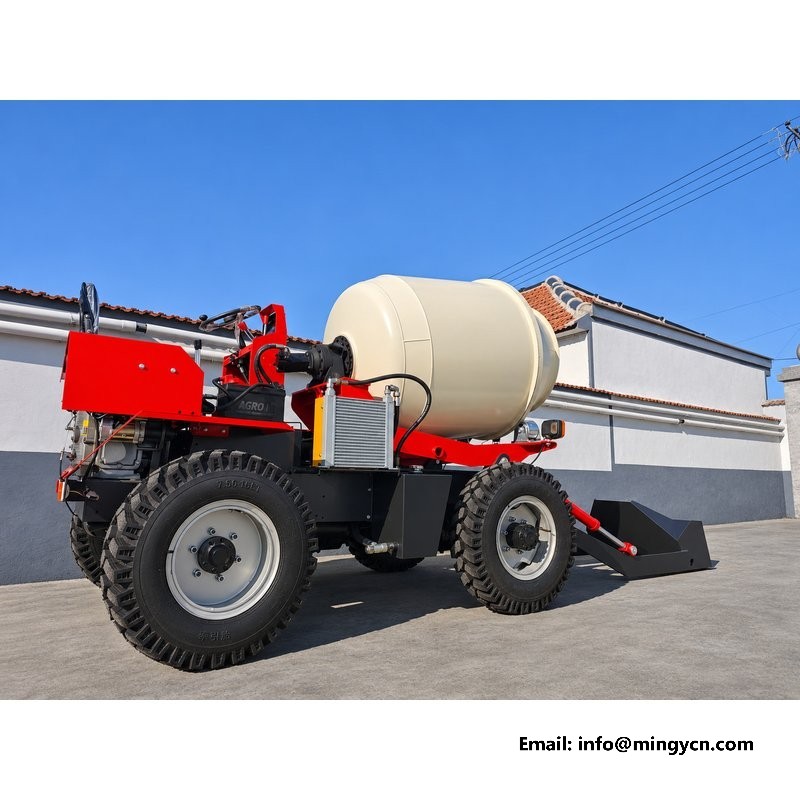
Pour rate is set with two things: how fast the drum turns and how steeply the chute sits. Drum speed decides how much material arrives at the mouth each second; chute angle decides how quickly it leaves. For a stiff mix, a faster drum and a steeper chute keep the material moving. For a wet mix, a slower drum and a flatter chute stop the pour running away from the man placing it. The two adjustments work together, so change one at a time and watch the result before touching the other. The aim is a steady, controllable stream that the receiving end can direct with a shovel, not a surge followed by a trickle. On the last part of the load, slow the drum deliberately: the final fraction leaves faster because there is less mass behind it to hold it back.
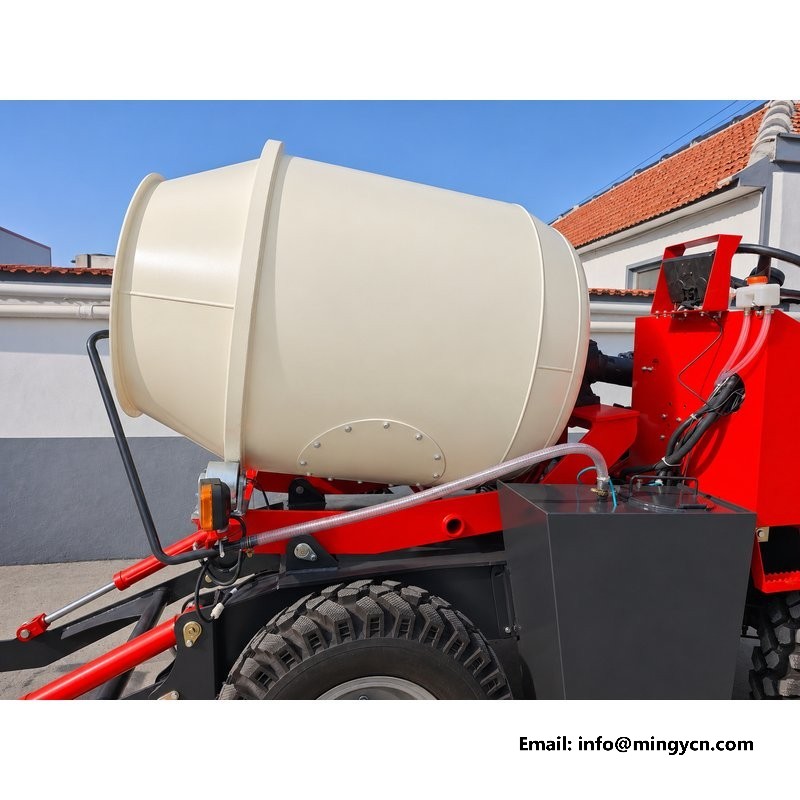
Every centimetre of unnecessary drop costs mix quality. A stream that falls freely from the chute separates in the air: stone goes down first, sand and cement follow, and the result in the formwork is a patchy pour that is hard to compact and prone to honeycombing at the edges. Keep the chute outlet as close to the receiving point as the formwork allows, and move the machine rather than the chute as the pour progresses. A chute set too steep does the same damage as a free fall, so steepness is a means of starting the flow, not of speeding it up. Where the pour has to be placed in layers, let each layer settle before the next begins; a drum emptied in one long surge into a deep section will segregate however carefully the chute is set.
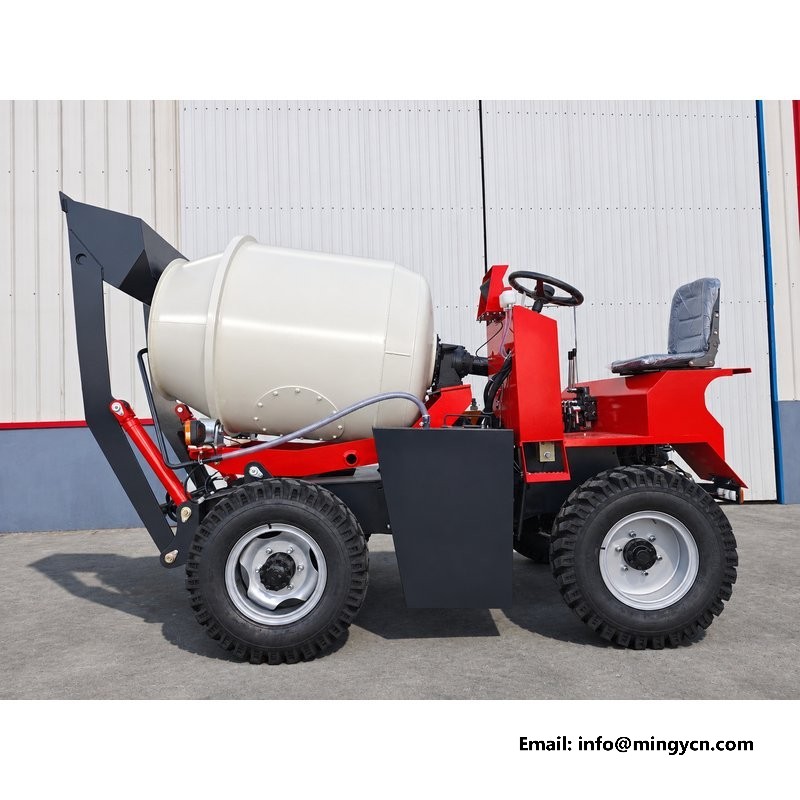
The area around the drum mouth is the most dangerous part of the machine, and the hazard is not obvious because the drum turns slowly. A slow-turning drum with a full load has enough force at the lip to take a hand, a sleeve or a shovel handle and pull it into the shell before anyone can react. Nobody stands between the mouth and the receiving point while the drum is turning, and nobody reaches into the mouth to clear a blockage with the engine running. The operator stays at the controls, where the drum can be stopped in an instant, and the man at the pour stands to the side, out of the line the material would take if the chute slipped. High-visibility clothing and an agreed hand signal between the two positions remove most of the risk in a two-man pour.
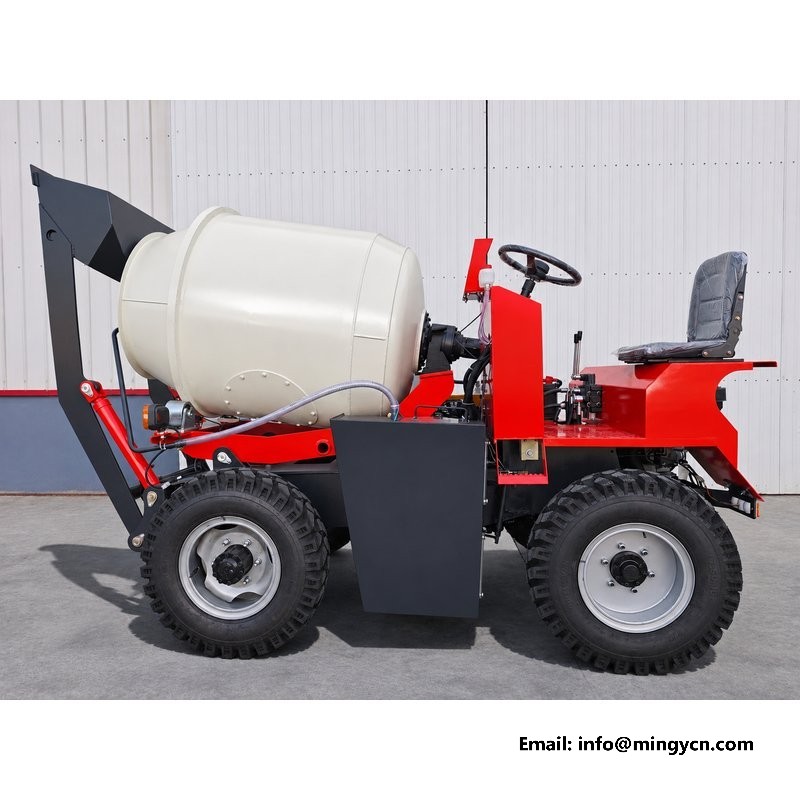
Concrete that sets on the drum mouth is a maintenance problem that turns into a capacity problem. The mix left on the lip and on the first section of the shell dries quickly, and the next load has to push past it; each pour leaves a slightly smaller opening than the one before. The cure is a hose and a scraper at the end of the shift, while the material is still green, not a chisel the following morning. Work around the mouth with the drum turning slowly in the discharge direction so water and loosened material are carried out rather than back into the drum. Pay attention to the joint between shell and mouth ring, where material collects in the corner and is easy to miss. A drum cleaned every shift also shows wear earlier, because the surface stays visible.
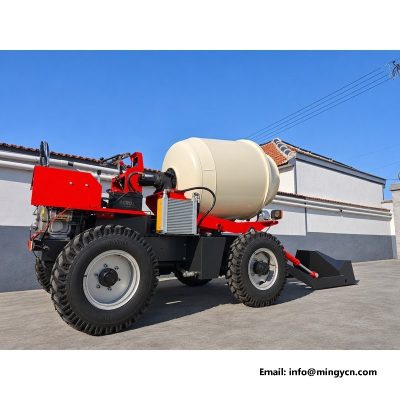
The discharge chute takes more abrasion per square centimetre than any other part of the machine. It is the last surface the mix touches, and it is asked to slide a load of sand and aggregate across itself at every pour. That is why the mounting points matter as much as the plate: a chute bolted through a reinforced bracket can be removed and replaced without cutting or welding on the drum, while one held by two hooks and a chain will move under load and wear its own fixings oval. Look at how the chute sits on the mouth in the photographs, and ask what the wear surface is made of. A replaceable liner costs a little more at the start and turns a workshop job into a two-spanner task in the yard.
A drum that leaves material behind after every pour is telling you something, and it is usually not the drum. The first suspect is technique: if the drum is reversed for too short a time the mix never reaches the mouth, and the last part of the load stays in the shell. The second is slope. A machine parked with the mouth slightly downhill empties far more completely than one standing level, and on a stiff mix the difference is a wheelbarrow of material per load. The third is the mix itself: a lean, dry batch moves sluggishly and clings to a cold shell, while a wet batch runs out and takes the residue with it. Only when those three are excluded does blade wear become the likely cause, and by then the evidence is visible through the mouth.
Blade wear is gradual, invisible from the outside, and expensive in a way that never appears on an invoice. A worn flight still turns, still lifts and still discharges, but it no longer folds the batch efficiently. The mix that leaves the drum is less uniform, with aggregate that has been rolled rather than folded into the mortar, and the man placing it notices before the operator does. In a structural pour that difference is a real risk; in a paving mix it shows as an uneven surface that gets blamed on the finish. Wear concentrates where the flight meets the shell and at the leading edge near the mouth, so those are the two places to inspect with a lamp through the opening. A blade worn thin at the weld is a blade about to crack.
When a drum will not discharge, the cause is easier to find than it looks if you separate flow problems from material problems. No flow at all with the drum turning usually means the mix is too dry or the drum is turning the wrong way; check the direction first, because it costs nothing. A surge followed by a stop suggests the material is bridging at the mouth, which happens with a lean mix and a cold shell. A pour that runs wet and then stiffens suggests the batch was not mixed evenly before discharge, and the remedy is more mixing time, not more water. Water added at the mouth to make the last of the load slide out is the most common self-inflicted fault on any drum. If a batch needs water, add it in the drum and let the blades fold it through, rather than at the mouth where it reaches only the material already leaving.
Usually because the drum was not reversed long enough for the last of the batch to reach the mouth, or because the machine was standing level with a stiff mix that clings to a cold shell. Try parking with the mouth slightly downhill and giving the drum more time in the discharge direction. If the drum still holds a heel with a wet mix, look at the flight ends through the opening; worn blades near the mouth lose their ability to sweep the shell clean.
On a machine built with a bolted chute bracket, yes. The chute lifts off its mounting points and a replacement goes on with the same bolts, which is the arrangement to ask for when specifying a machine. Where the chute is welded to the mouth ring, replacement becomes a cutting and welding job that has to be done off the machine. Ask the supplier to confirm the mounting method and to show the bracket in a photograph before the order is placed.
No. Never reach into the mouth while the engine is running, and never stand in the line the material would take if the blockage released. Stop the drum, shut the engine down, and use a bar or a scraper from the side rather than a hand from the front. Most blockages come from a mix that is too dry or a drum reversed before the batch was fully mixed, so correcting the batch and the technique prevents the next one.
For the current specification, build options and a formal quotation for your market, contact MINGYI Machinery. E-mail: sales@mingycn.com | LINE (ID): mingyicn
Mixing Blades and Drum Interior on the 1.5m3 Self Loading Mixer · Hydraulic Tipping 0.8m3 Mixer: The Discharge Arc · 1.5 m3 Self Loading Concrete Mixer: Full Specification and Walkaround