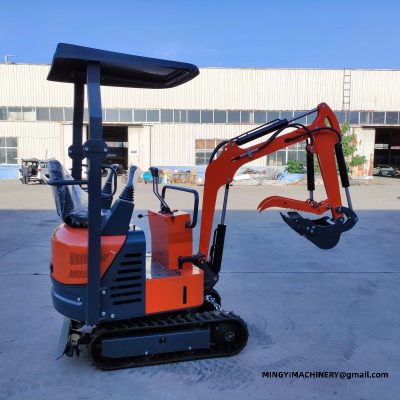
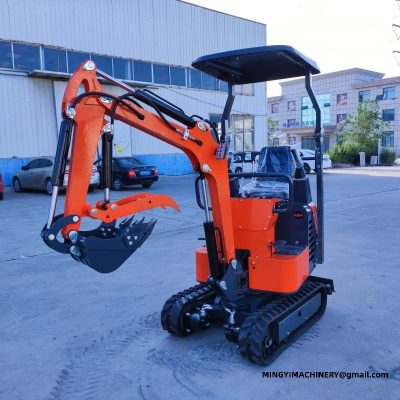
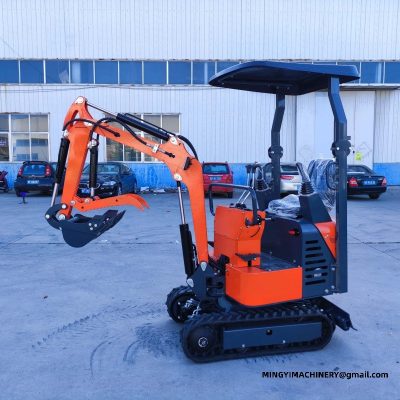
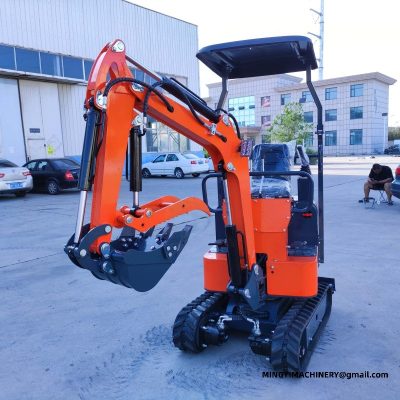
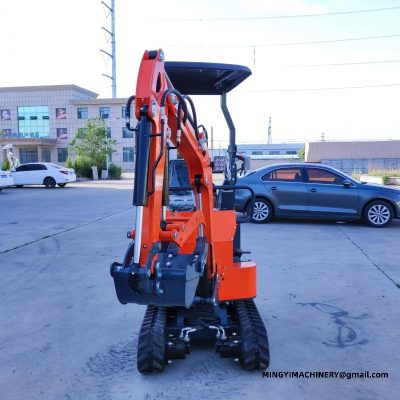
Buying plant from China is well established, and the questions buyers ask have moved on from whether the machines are capable to how the order, the shipment and the after-sales arrangements are handled.
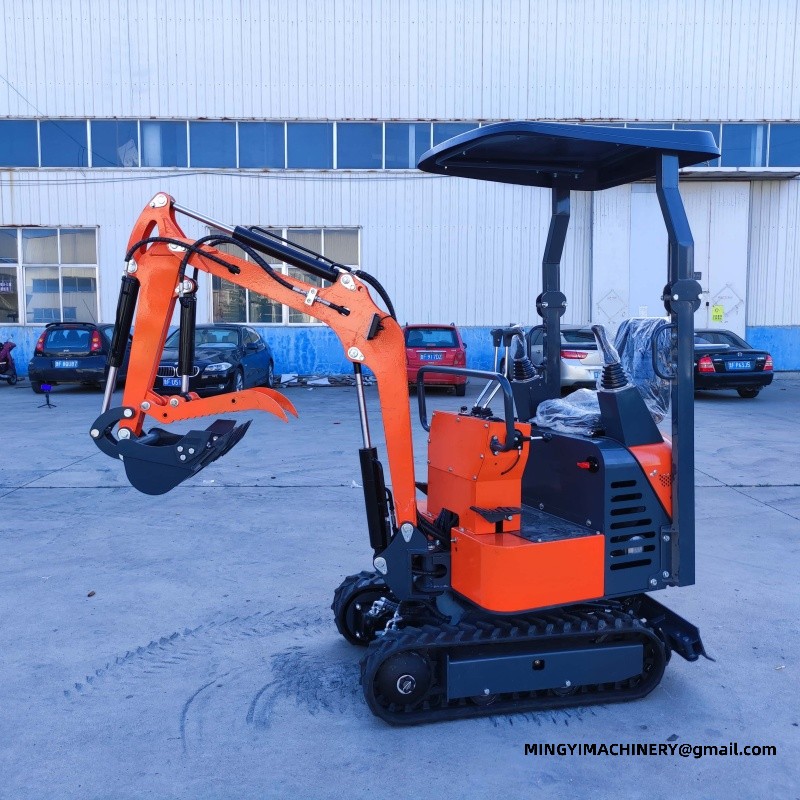
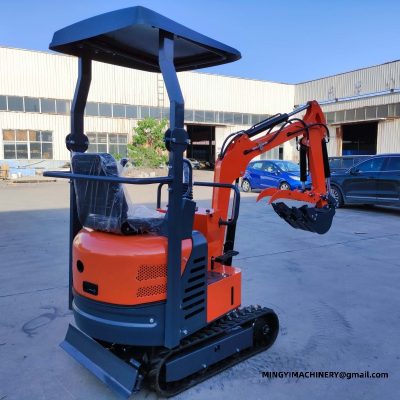
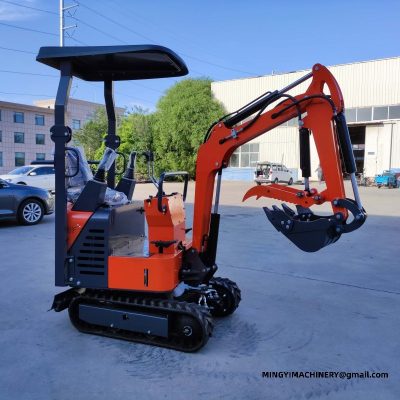
MINGYI exports mini excavators from China to buyers and distributors worldwide, with machines built to order and prepared for shipment.
How the order is handled
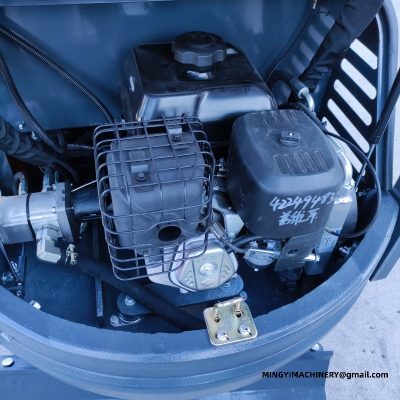
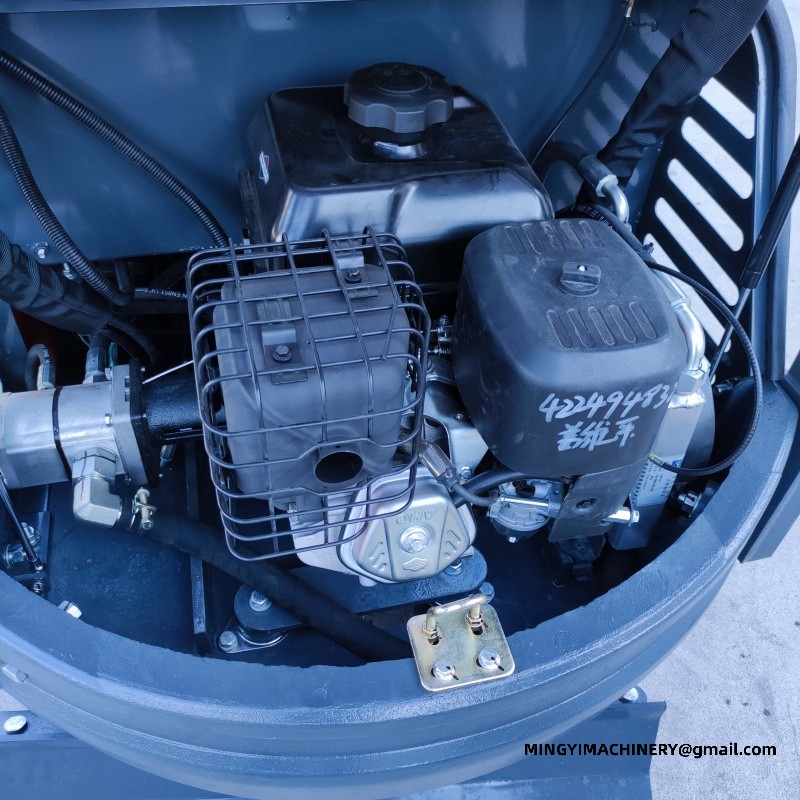
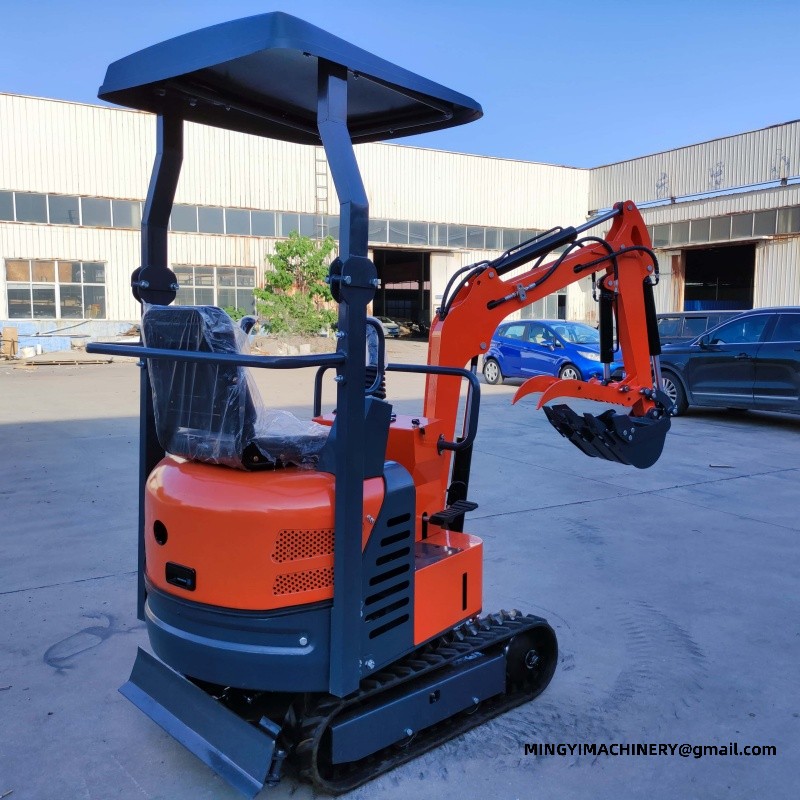
The order is set as a written specification covering model, engine family, track type, operator station, quick coupler type and attachment set. That specification is recorded against the machine, which is what allows wear parts and replacement components to be supplied correctly after the machine is in service.
Machines are then built to that specification, functionally tested, and prepared and packed for sea freight. Both container and flat-rack loading are used depending on machine size and quantity, and orders can be consolidated so machines and attachments travel together.
What to agree before ordering
Agree the specification list in full, including attachments and track type. Confirm the engine family against the parts supply you can reach in your own market. Confirm the delivery schedule and the loading arrangement, and confirm the documents required at the destination.
After delivery
Parts and technical questions are handled directly against the machine record. Holding the common consumables — teeth, cutting edges, hoses and filters — locally keeps the machine working without waiting on an international shipment.
Export process
• Written build specification recorded against each machine
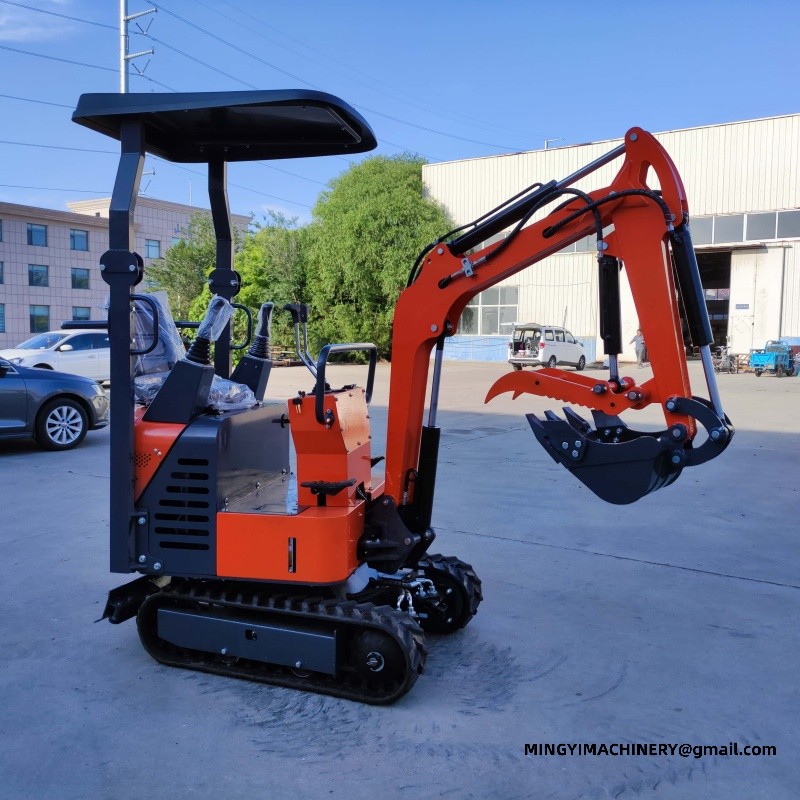
• Functional testing before dispatch
• Freight preparation and container or flat-rack loading
• Consolidated shipments with attachments
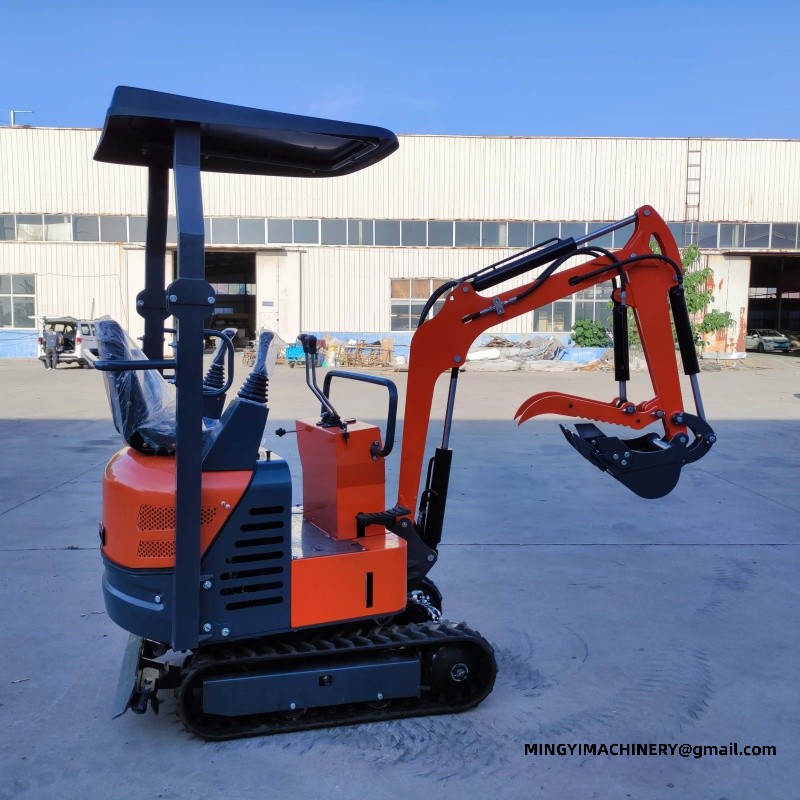
• Direct parts and technical support after delivery
Tell us the models, quantities, destination port and preferred engine family and we will specification the specification and schedule.
Daily checks and maintenance on mini excavator for export from China Track tension is the item most often neglected. This class of machine run with slack tracks wears the undercarriage and can throw a track on a turn; run too tight, the same components wear from the other direction. Greasing is the second item. The slew ring, the boom and arm pins and the bucket linkage on the unit in daily use take grease daily in dusty work, and the intervals shorten further when the machine is used in water or mud. Working a mini excavator for export from China in confined spaces Confined sites are decided by dimensions. Overall width, tail swing and the space needed to work the arm are what let a machine of this size operate inside a building, between walls or in a courtyard. Clearance above matters as much as around. Door heights, pipework and overhead services set the limit for the equipment on site indoors, and measuring them first avoids a machine that arrives and cannot be used. Parts, service and support for mini excavator for export from China Support after delivery is a parts question. Wearing items for the machine itself - filters, belts, track components, bucket teeth and pins - are the items a buyer should plan to hold before the first service interval. Remote support is handled by video. The model in question fault can often be diagnosed on a walk-around call with the panel open, which is faster than waiting for a visit and avoids shipping a part that is not needed. Operator technique for mini excavator for export from China Output on a compact machine comes from placement rather than power. An experienced operator keeps the machine in that duty working inside the swing arc, positions once and digs a full run instead of repositioning for every bucket. Stability is the third. The unit on the job working across the tracks rather than over the corners keeps the machine steady and the undercarriage loaded evenly, which shows up as track life at the end of the season. Hiring versus owning a machine built for the work Availability is part of the decision. Owning the equipment in service means it is there on the day the ground is ready; hiring means competing for the same machine at the same time as everyone else in the season. Ownership brings obligations that hiring does not. Storage, servicing, insurance and an operator are the items to set against the hire rate before deciding which way this class of machine should be supplied. Trenching work with the unit in daily use Service trenches are the most common reason a machine of this size is hired. Water, sewage, cable and gas runs are narrow, shallow and often close to existing services, which is exactly the work a full-size machine cannot do safely. Trench quality depends on the bucket width and the operator, not on machine size. The equipment on site with a narrow bucket and a swing boom cuts a clean run along a boundary without disturbing the ground either side of it. Hydraulic circuits on the machine itself Auxiliary hydraulic lines are what let a machine drive a tool rather than only a bucket. The model in question specified with the right circuits and flow runs a breaker or an auger without an add-on power pack bolted to the frame. Flow and pressure are matched to the tool, not to the machine size. Asking for the attachment list first means the machine in that duty leaves the factory with circuits that suit the heaviest tool the buyer intends to run. Running the unit on the job in a rental fleet Rental fleets buy for utilisation, not for a single job. A machine built for the work with a quick coupler and a common attachment standard is hired more often because it suits more of the calls that come in. Fleet buyers also weigh transport. The equipment in service that a customer can tow on a normal licence and a standard trailer is a hire that does not need a delivery truck, which changes how often it goes out. Interior and light demolition with this class of machine Interior demolition is an access and a weight question. The unit in daily use that fits through a doorway and works on a suspended floor does jobs that would otherwise be done by hand or by a larger machine that cannot enter. Breaking out a floor slab, a wall footing or a concrete step is routine work for a machine of this size with a breaker. The machine is small enough to work inside and heavy enough to run the tool at a practical rate. Getting the equipment on site through a narrow gap The first question on most job lists is whether the machine can reach the work at all. The machine itself is chosen against the narrowest point on the route - a garden gate, a doorway, a gap between two walls - because a machine that arrives and then cannot pass loses a day, not an hour. Access decides the machine before output does. With the model in question the limiting dimension is usually the widest point on the way in, so measuring the gate, the corridor and the turning space first saves a wasted delivery and a second visit. Working near live services with the machine in that duty The risk on utility work is not machine power but machine placement. The unit on the job that fits the working width leaves the surrounding ground undisturbed, which keeps the trench stable and the reinstatement small. Utility crews specify a machine built for the work with a narrow bucket and good visibility for exactly this reason: the machine has to stop at the service, not at the edge of the operator's view. Track choice for the equipment in service Rubber tracks suit paved and landscaped ground because they spread the machine weight and leave the surface intact. Steel tracks with rubber blocks are specified where the ground is rougher or the working day is longer, and the choice can be made per machine rather than accepted as a factory default. Specification data for this class of machine Where the unit in daily use is being specified for a job list, the table below gives the factory figures that matter most: what the machine weighs, how deep and how far it works, and what it measures on a trailer. These are the reference figures for a machine of this size. MINGYI confirms the final build sheet, including engine and attachment choices, against the destination and the job list before production. Undercarriage selection is a ground question, not a preference question. The equipment on site running on finished paving needs rubber; the same machine on demolition rubble or rock wears rubber quickly, so steel with rubber blocks becomes the better answer over a full season. Track type changes what the machine can cross and what it leaves behind. Buyers specify rubber for lawns, driveways and municipal work, and steel with rubber blocks for sites where sharp material would cut a rubber belt in a week.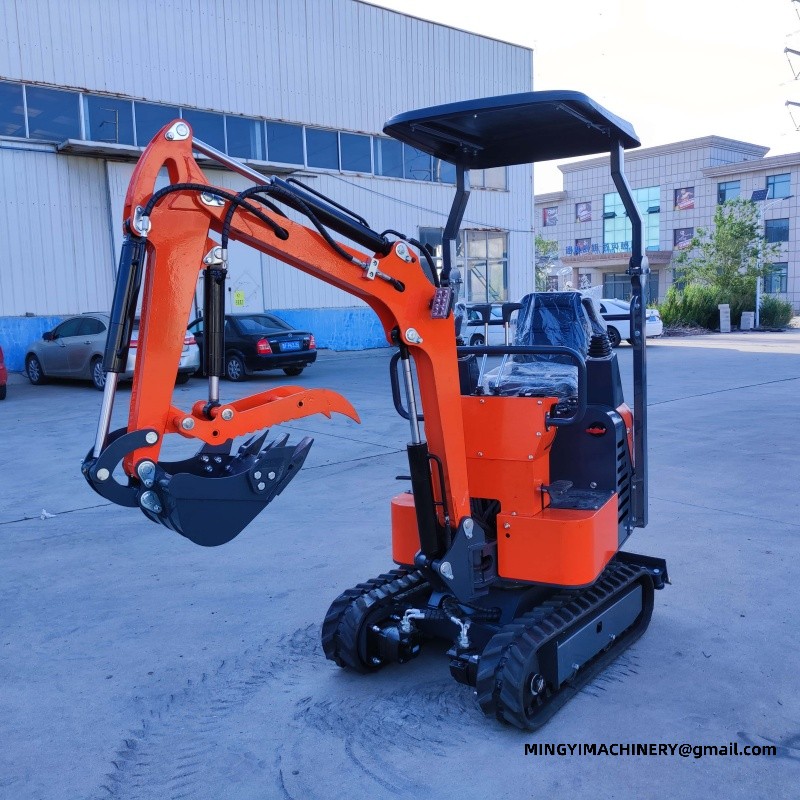
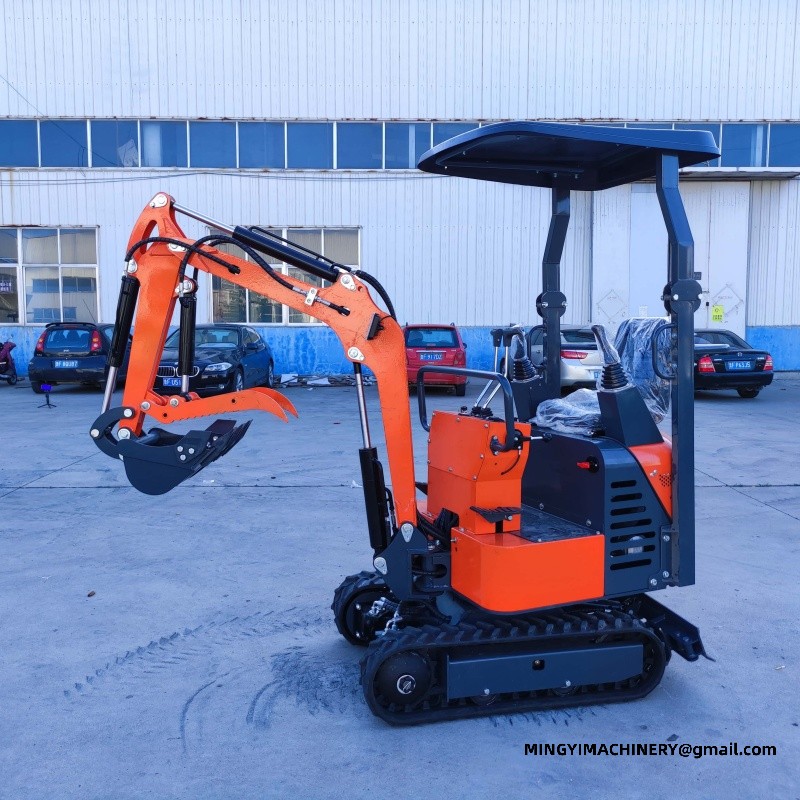
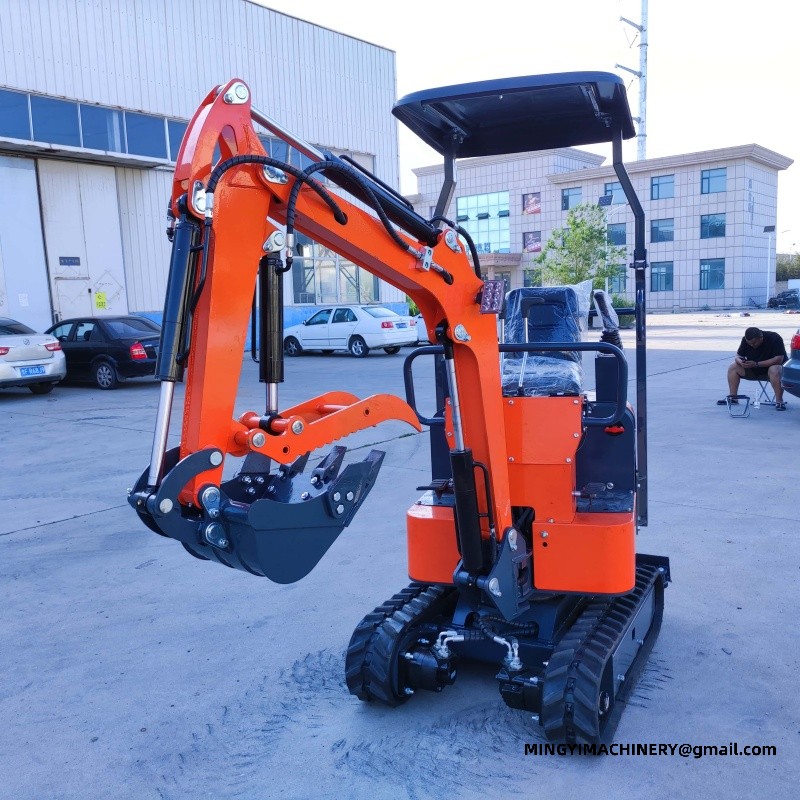
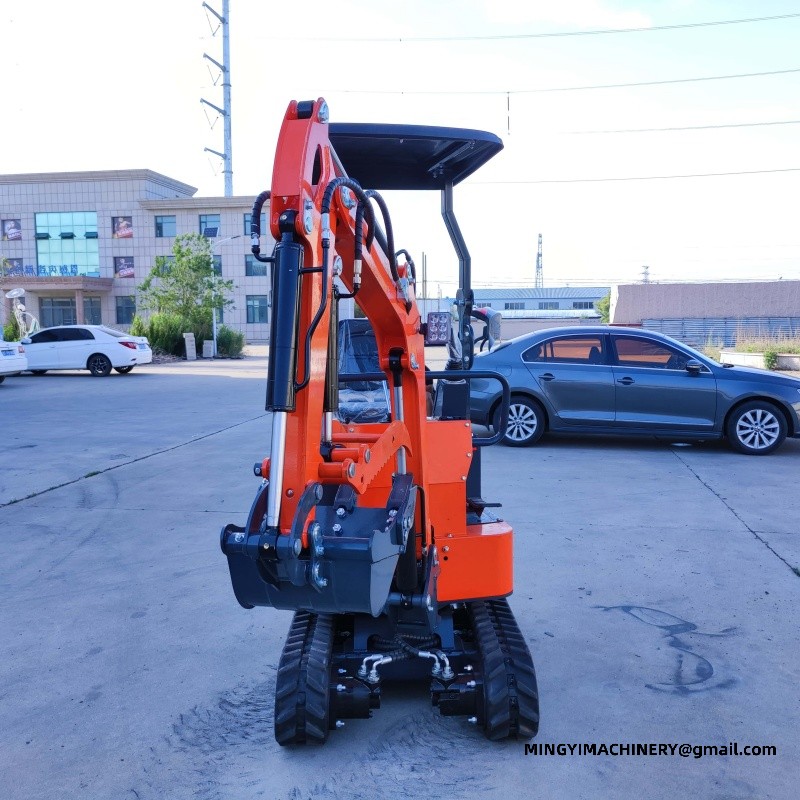
Reference specification — mini excavator range 09W 20-1W 20-1WL 15L Operating weight 1100 kg (2425.08 lb) 1800 kg (3968.32 lb) 1900 kg (4188.78 lb) 1400 kg (3086.47 lb) Transport size (L×W×H) 1800 × 750 × 1970 mm 2550 × 1100 × 2200 mm 2550 × 1100 × 2200 mm 2200 × 930 × 2250 mm Max digging depth 1250 mm (49.21 in) 1800 mm (70.87 in) 1800 mm (70.87 in) 1700 mm (66.93 in) Max digging height 2800 mm (110.24 in) 2820 mm (111.02 in) 2820 mm (111.02 in) 2750 mm (108.27 in) Max dumping height 1700 mm (66.93 in) 2050 mm (80.71 in) 2050 mm (80.71 in) 1960 mm (77.17 in) Max digging radius 2570 mm (101.18 in) 3050 mm (120.08 in) 3050 mm (120.08 in) 2900 mm (114.17 in) Max digging distance 1869 mm (73.58 in) 2300 mm (90.55 in) 2300 mm (90.55 in) 2300 mm (90.55 in) Minimum turning radius 1000 mm (39.37 in) 1450 mm (57.09 in) 1450 mm (57.09 in) 1450 mm (57.09 in) Travel speed 3 km/h (1.86 mph) 5 km/h (3.11 mph) 5 km/h (3.11 mph) 3 km/h (1.86 mph) Gradeability 30° 30° 30° 30° Fuel consumption 1-1.3 L/h (0.264—0.343 gal) 2-3 L/h (0.528—0.793 gal) 2-3 L/h (0.528—0.793 gal) 1-1.3 L/h (0.264—0.343 gal) Fuel tank capacity 8 L (2.11 gal) 16 L (4.23 gal) 16 L (4.23 gal) 10 L (2.64 gal) Hydraulic oil tank 16 L (4.23 gal) 18 L (4.76 gal) 18 L (4.76 gal) 16 L (4.23 gal) Dozer blade lift height 180 mm (7.09 in) 180 mm (7.09 in) 180 mm (7.09 in) 180 mm (7.09 in) Dozer blade drop depth 210 mm (8.27 in) 210 mm (8.27 in) 210 mm (8.27 in) 210 mm (8.27 in)
Q. Do you export mini excavators from China?
A. Yes. MINGYI exports the 08, 12 and 18 models from its own factory in China, container loaded with export documentation arranged. Machines can be ordered singly or as a mixed container.
Q. What is included in an export order?
A. The machine built to your specification, the attachment set you have chosen, and the export paperwork. A spare parts kit for the first service intervals is usually added, since the first service falls after the machine has left China.
Q. How is a container organised?
A. Loading is planned so that the machines and tooling are secured in the sequence you want and arrive together. Where several sizes are ordered, MINGYI will lay out a loading plan before the container is packed.
Hot, humid and dusty conditions around the machine itself
Humidity attacks the parts that are not used. Storage in a damp climate means the model in question needs the exposed metal protected and the machine run regularly, because standing still does more damage than working.
Pre-delivery inspection before the machine in that duty leaves the shop
What the customer sees on arrival is decided before departure. The walk-around given to the unit on the job covers the same points the operator will check on day one, so there are no surprises when the crate is opened at the destination.
Documents that travel with a machine built for the work
The machine is only half of what arrives. The parts book, the service schedule and the declarations that come with the equipment in service are what let the owner register, insure and maintain it without a second round of emails.
E-mail : sales@mingycn.com
LINE ( ID ): mingyicn
Related pages
1 ton mini excavator transport and setup · 1.5 ton mini excavator · mini excavator spare part kits · PRODUCTS









