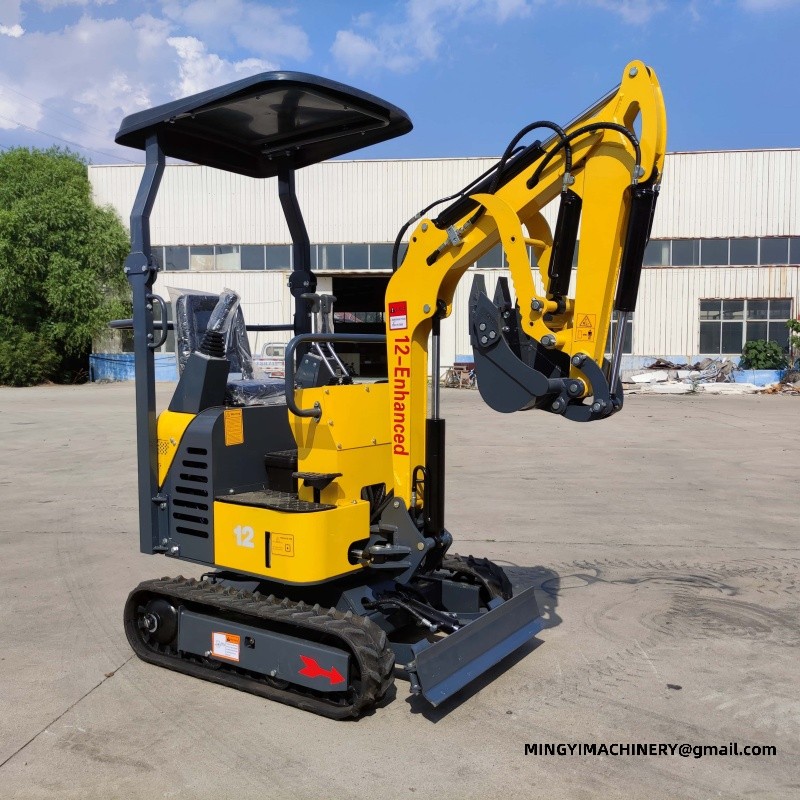
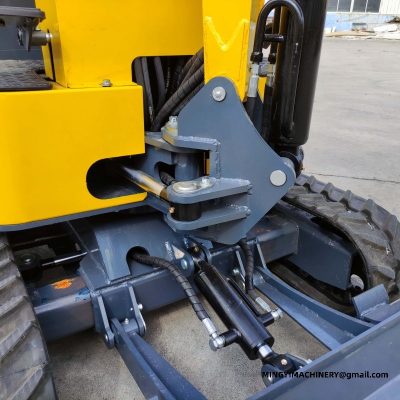
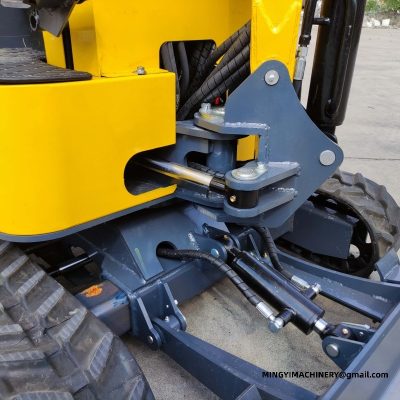
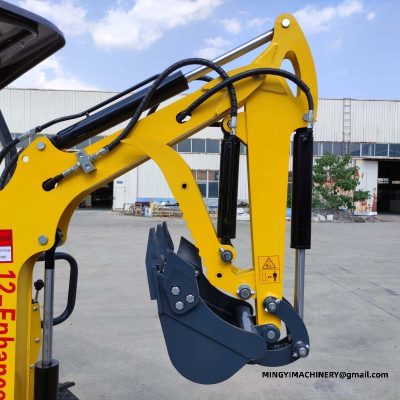
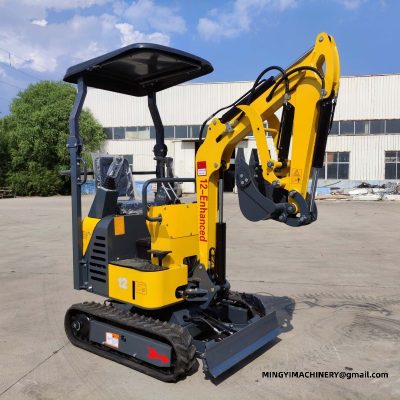
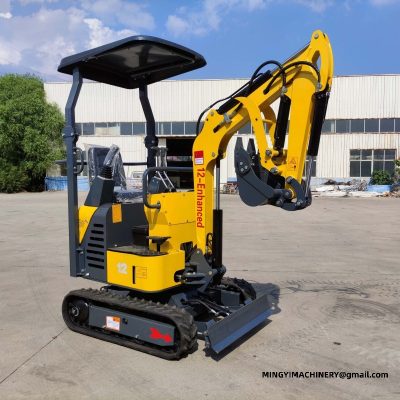
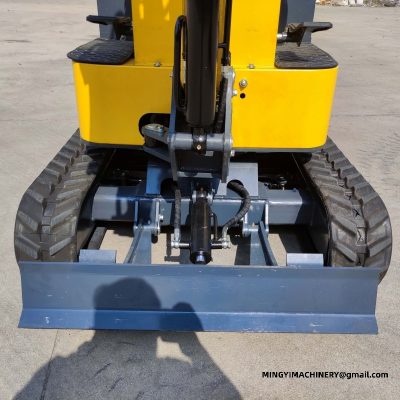
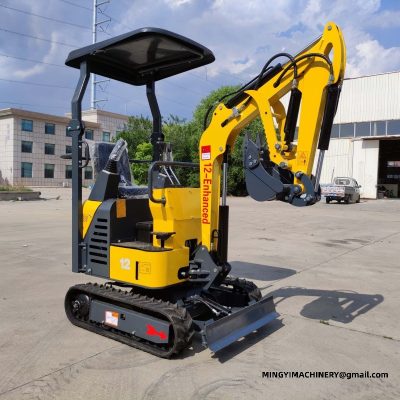
Landscaping work is judged by the finish, not just by the excavation. Turf, paving, planting beds and irrigation lines leave no room for a machine that churns the ground it drives over. That is why landscapers specify compact excavators on rubber tracks with the right attachment set.
MINGYI mini excavators are used for hard and soft landscaping, from garden construction to commercial grounds and public green space.
Protecting the surfaces you just built
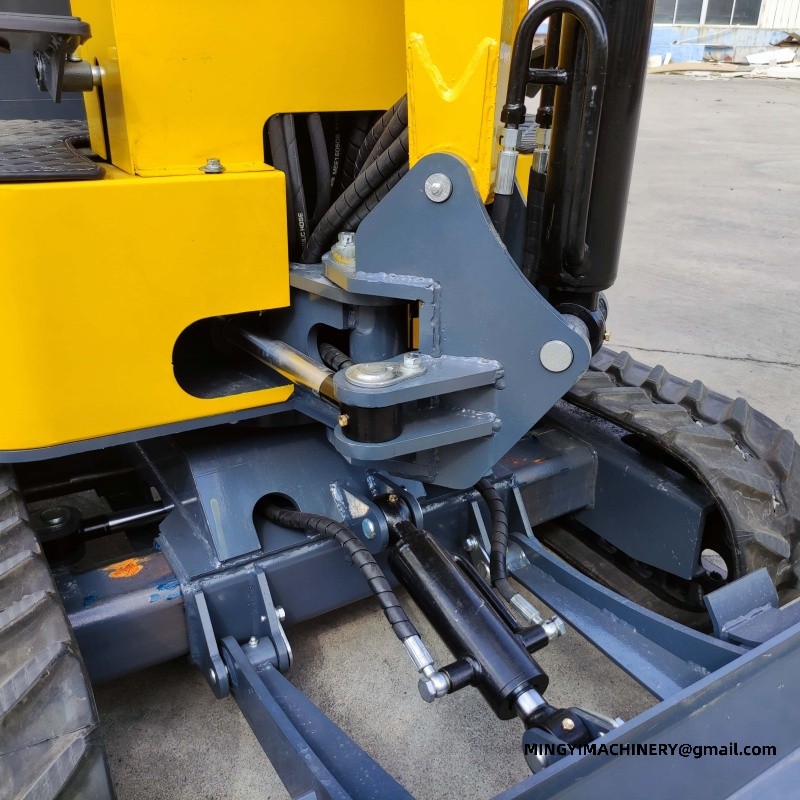
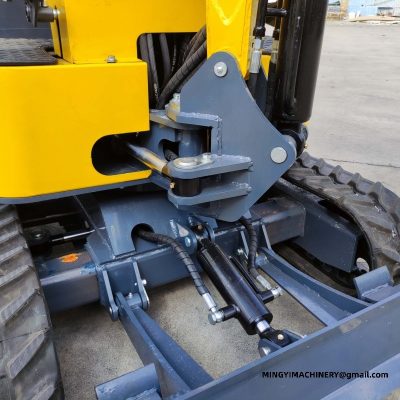
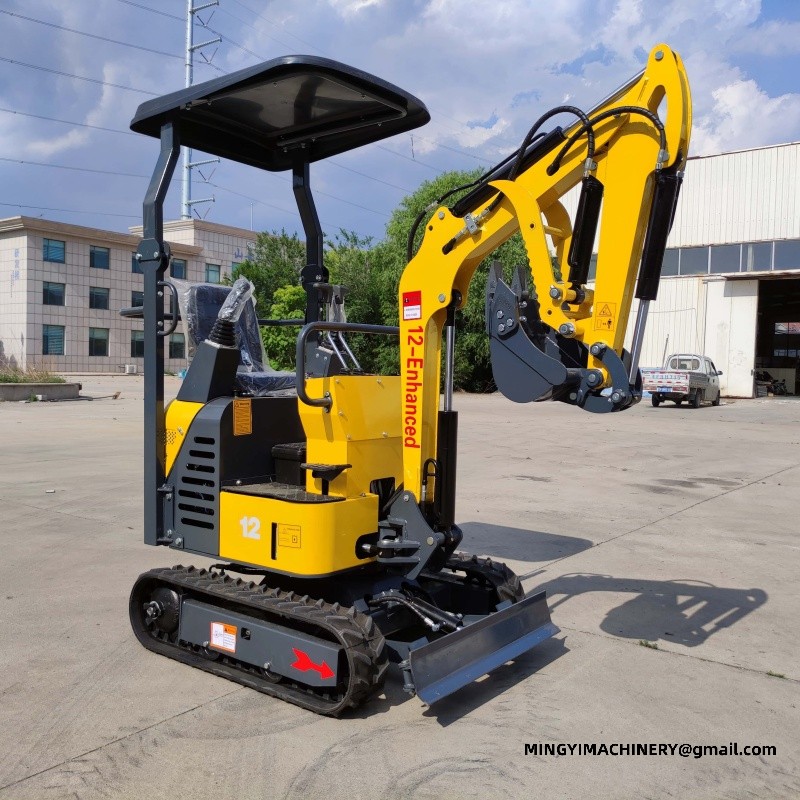
Rubber tracks carry the machine over finished paving, drives and lawns with minimal marking, so the excavator can work in a completed garden without rebuilding access afterward. The light footprint also means the machine can be used for planting and shaping without compacting the soil it drives over.
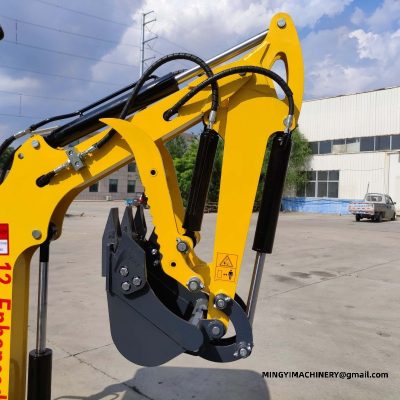
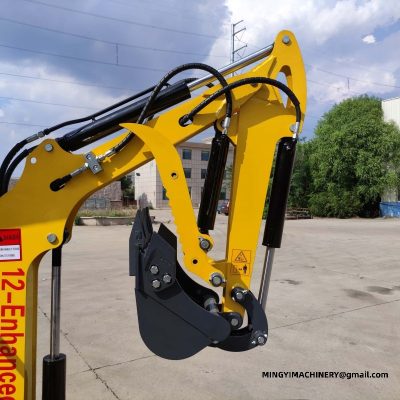
Narrow buckets keep spoil volume down and trench lines tight, which matters when the trench runs across a planted or paved area that has to be reinstated exactly.
Attachments that suit landscape work
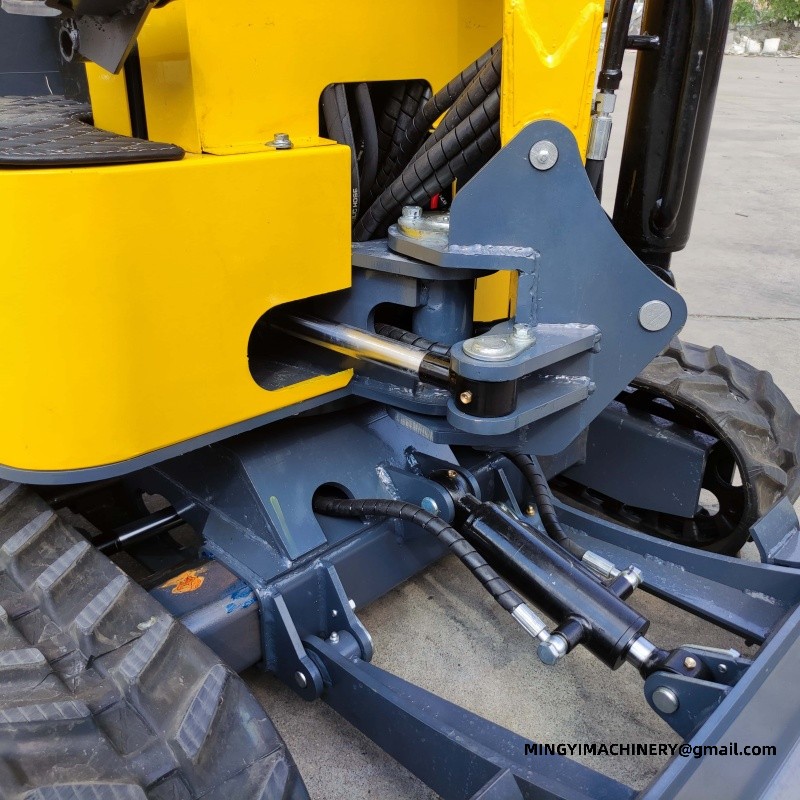
The grass rake and lawn mower attachments make the machine useful beyond excavation for vegetation clearance and finish work, while augers open planting holes and post holes at a set diameter. Front forks and thumb buckets allow material to be handled and placed without manual lifting.
Landscaping applications
• Hard landscaping sub-base, edging and drainage
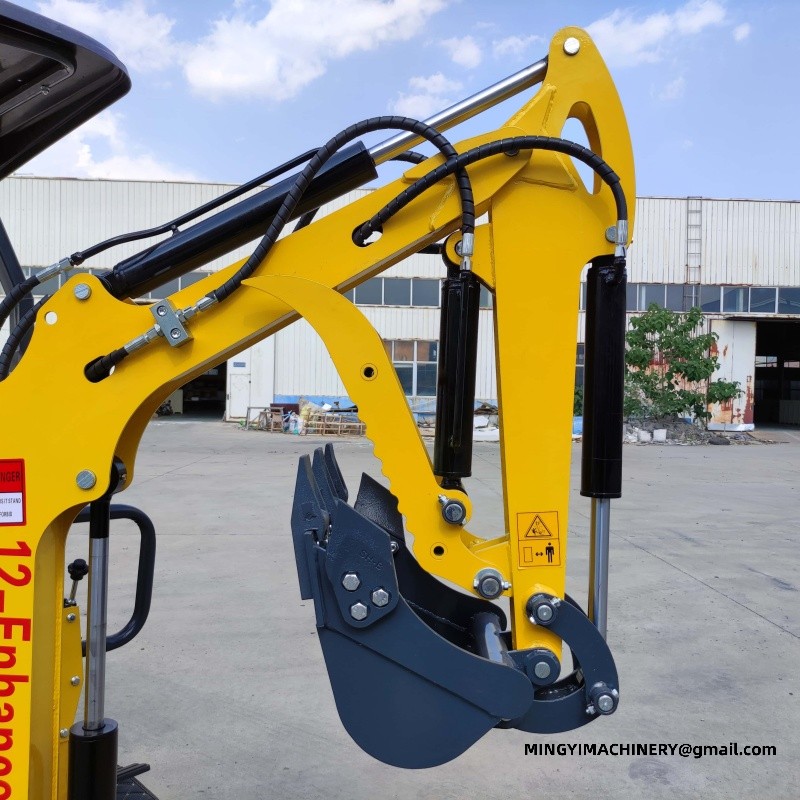
• Soft landscaping, planting beds and tree pits
• Irrigation and water feature trenches
• Vegetation clearance with rake and mower attachments
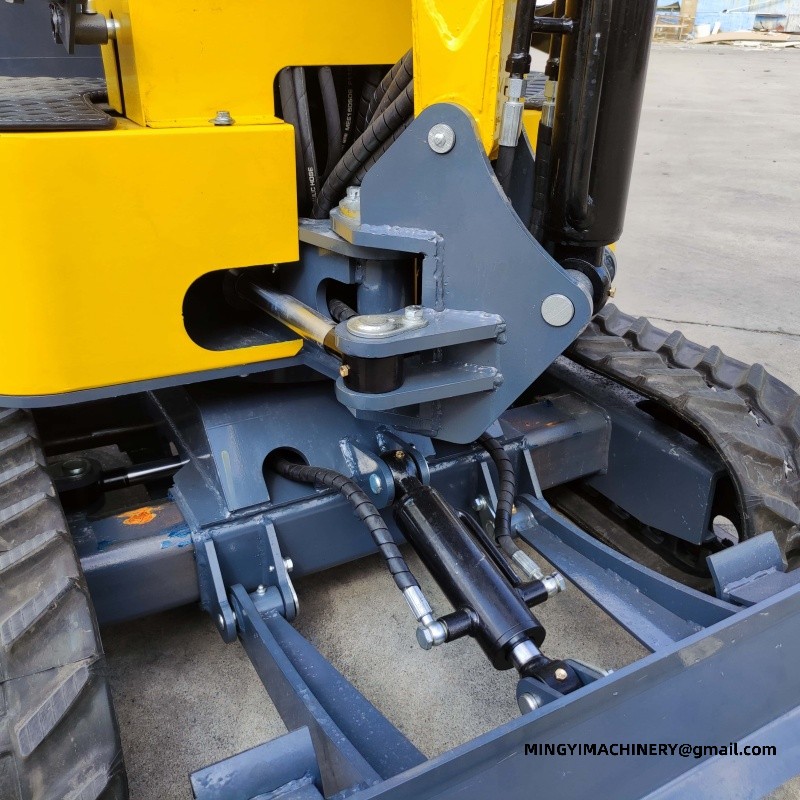
• Handling and placing stone, paving and planting material
Tell us what surfaces the machine will work on and what else it needs to do and we will specify the machine and attachment set.
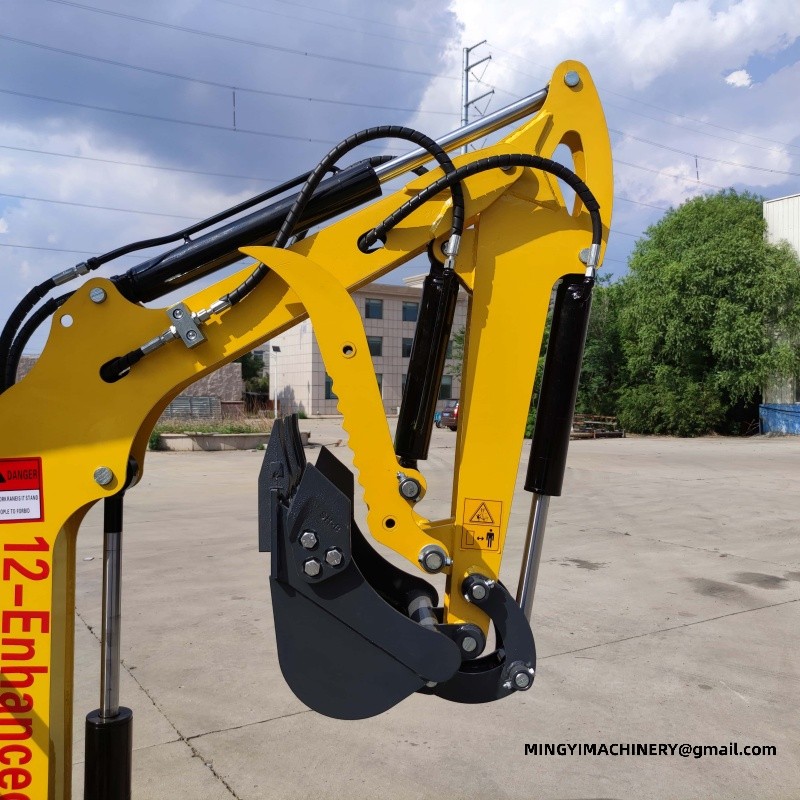
Landscaping and ground care with mini excavator for landscaping Landscape contractors use this class of machine for planting holes, pond excavation, grading and retaining work. The machine is light enough to cross finished lawn and narrow enough to work between established trees. On soft landscape work the surface is the constraint. The unit in daily use on rubber tracks crosses turf without stripping it, which is why the same jobs are not given to a wheeled machine. Parts, service and support for mini excavator for landscaping Engine parts availability usually drives the engine choice. A machine of this size built with an engine the local network already carries is serviced from stock rather than from an international order. Remote support is handled by video. The equipment on site fault can often be diagnosed on a walk-around call with the panel open, which is faster than waiting for a visit and avoids shipping a part that is not needed. Specifying mini excavator for landscaping against a job list Buyers who skip this step either over-buy or under-buy. The machine itself specified only from machine size tends to arrive without the coupler, the circuits or the track type the work actually needs. Useful information to send with an enquiry includes working width, required digging depth, ground conditions and the attachment set. Those four items let the factory specify the model in question that fits rather than a generic build. Track choice for mini excavator for landscaping Rubber tracks suit paved and landscaped ground because they spread the machine weight and leave the surface intact. Steel tracks with rubber blocks are specified where the ground is rougher or the working day is longer, and the choice can be made per machine rather than accepted as a factory default. Track type changes what the machine can cross and what it leaves behind. Buyers specify rubber for lawns, driveways and municipal work, and steel with rubber blocks for sites where sharp material would cut a rubber belt in a week. Engine options behind mini excavator for landscaping Power unit selection is settled against the service network the buyer already uses. MINGYI offers Kubota D722, Kubota D902, YANMAR, Changchai, Laidong, Runtong, YARMAX, Youpu 2V80 and Youpu 195, so a fleet running one brand of engine can keep the same filters, the same parts supplier and the same mechanic. Two buyers can order the same the machine in that duty and receive different engines. The decision is rarely about peak power; it is about which parts counter is closest to the site and which engine the local mechanic already knows. Interior and light demolition with the unit on the job Interior demolition is an access and a weight question. A machine built for the work that fits through a doorway and works on a suspended floor does jobs that would otherwise be done by hand or by a larger machine that cannot enter. Dust, debris clearance and floor loading all argue for a compact machine indoors. The equipment in service spreads its weight over a wider track footprint than a wheeled machine of similar capacity. What owners should plan for beyond the class of machine Purchase decision is the visible part of the effort. Fuel, filters, tracks or tyres, the operator and the transport between sites are the items that decide what the unit in daily use actually demands over a few seasons, and they are worth listing before the order. Downtime is the hidden line item. A machine of this size waiting on a part earns nothing while it stands, so parts availability and service access belong in the plan as much as fuel does. Trenching work with the equipment on site Trench quality depends on the bucket width and the operator, not on machine size. The machine itself with a narrow bucket and a swing boom cuts a clean run along a boundary without disturbing the ground either side of it. Depth control matters more on service work than speed. The model in question working beside live services is chosen because it can be placed precisely and stopped instantly, which is what the job actually requires. Running the machine in that duty in a rental fleet The specification that rents best is usually the simplest one to explain at the counter. The unit on the job with rubber tracks, a canopy and a coupler covers the majority of weekend and short-term hires. Fleet buyers also weigh transport. A machine built for the work that a customer can tow on a normal licence and a standard trailer is a hire that does not need a delivery truck, which changes how often it goes out. Canopy or enclosed cab on the equipment in service The cab decision follows the climate and the hours. Operators working a full shift in this class of machine benefit from a sealed cab with wipers and heating; operators stepping on and off every few minutes usually prefer the canopy for the visibility and the quick exit. Enclosure also changes noise and dust exposure. A sealed cab on the unit in daily use keeps dust out on dry sites and lets the machine work through weather that would otherwise stop a canopy machine for the day. Road and paving work for a machine of this size Patching and reinstatement favour a machine that can work in a lane closure. The equipment on site occupies less road than a full-size excavator, which reduces the traffic management needed and the length of the closure. Breaking out a failed slab and backfilling the same hole in one visit is normal work for the machine itself. The breaker and the bucket come off the same coupler, so the road is reopened the same day. Export packing and shipping of the model in question Machines leave the factory prepared for container or flat rack shipment. The machine in that duty is normally shipped with the attachment set and the spare parts list agreed in advance so the container is planned once. Export documentation, decals and paint are settled before packing. Asking for them with the unit on the job order avoids a second handling session and keeps the machine on the booked vessel. Specification data for a machine built for the work Buyers comparing the equipment in service usually start from four numbers - weight, digging depth, reach and transport width - because those are the ones that decide whether the machine can be delivered and whether it can do the job once it is there. Every value shown is as built for this class of machine; options such as cab, side swing or a telescopic undercarriage change the transport dimensions and are confirmed at order stage. A swing boom lets the machine dig parallel to its tracks without repositioning, which is what makes trenching beside a wall or a fence practical. On the unit in daily use this is often the option that decides whether a job is possible at all. Extended and offset boom configurations change reach and working range. A machine of this size with a longer arm reaches further but lifts less at full extension, so the specification is set against the deepest and furthest point on the job list.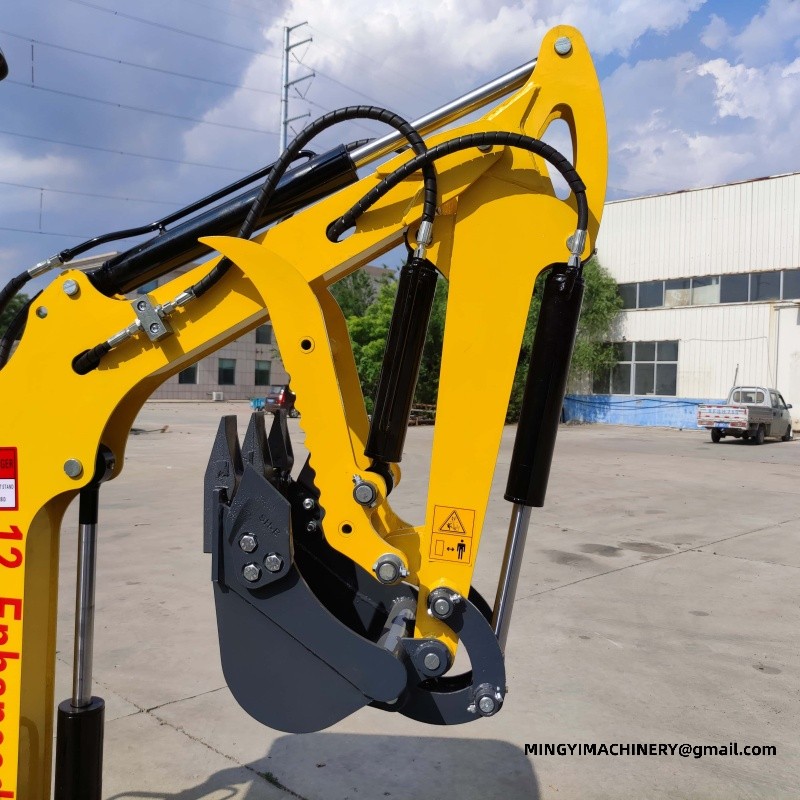
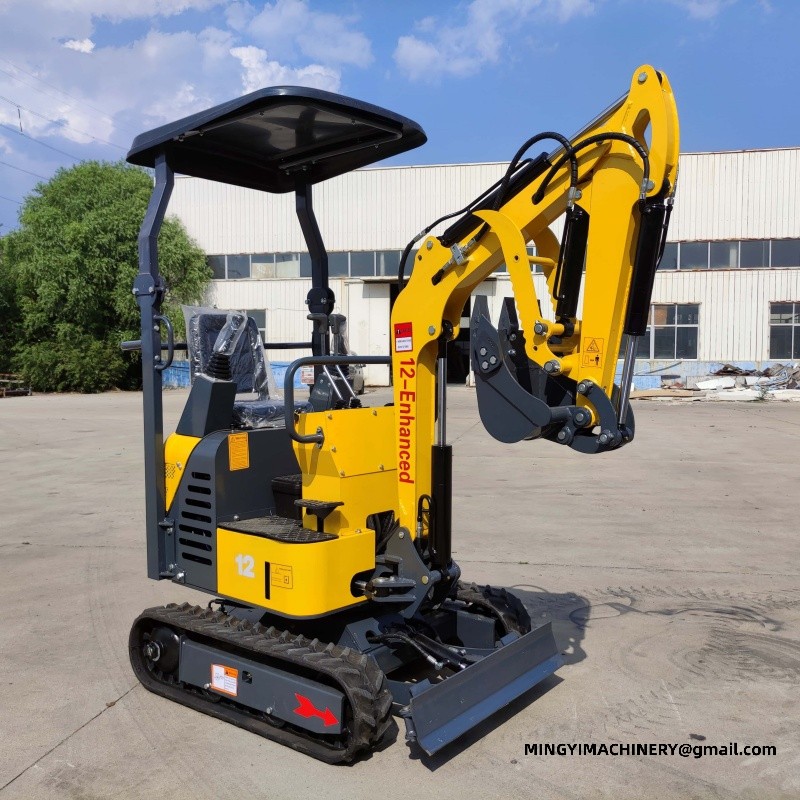
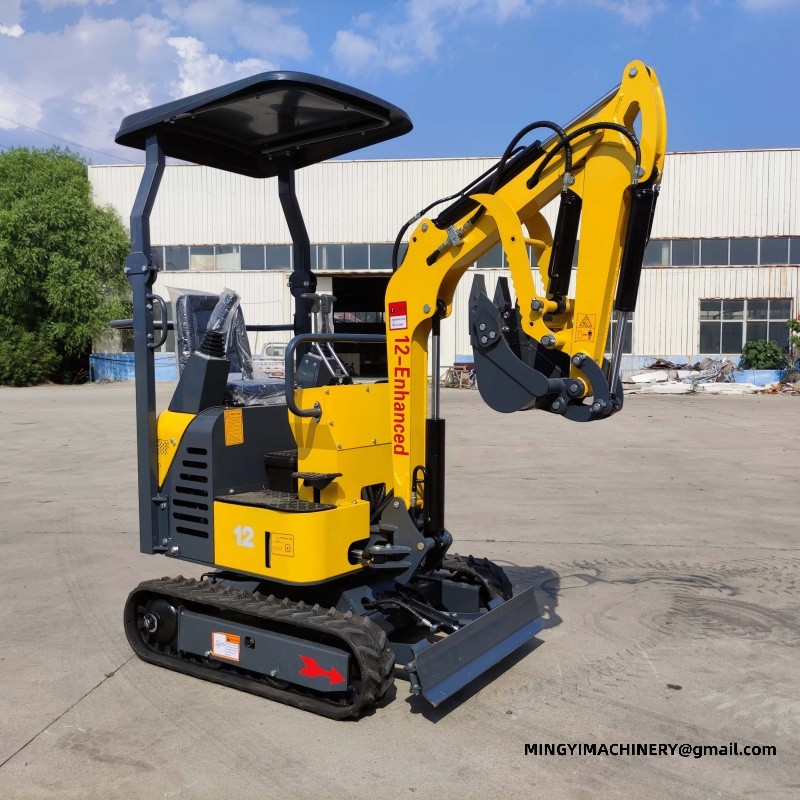
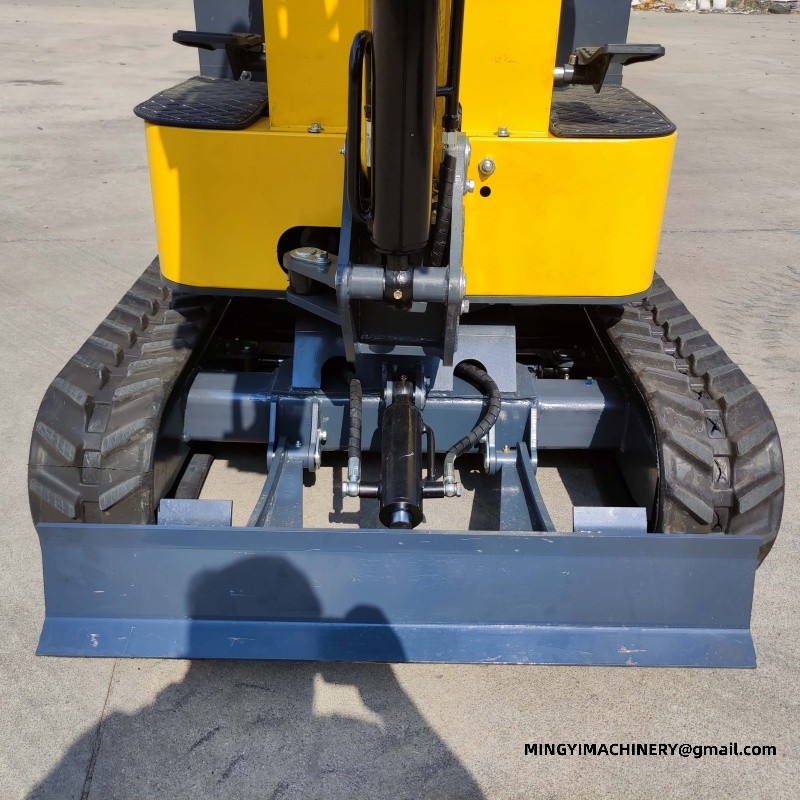
Reference specification — mini excavator range 15W 20-3W 30-1W 30-2L Operating weight 1400 kg (3086.47 lb) 1900 kg (4188.78 lb) 2900 kg (6393.41 lb) 2400 kg (5291 lb) Transport size (L×W×H) 2200 × 930 × 2250 mm 2550 × 1100 × 2200 mm 3000 × 1250 × 2780 mm 2800 × 1500 × 2500 mm Max digging depth 1630 mm (64.17 in) 1800 mm (70.87 in) 2200 mm (86.61 in) 2200 mm (86.61 in) Max digging height 2750 mm (108.27 in) 2820 mm (111.02 in) 3400 mm (133.86 in) 2900 mm (114.17 in) Max dumping height 1960 mm (77.17 in) 2050 mm (80.71 in) 2400 mm (94.49 in) 2100 mm (82.68 in) Max digging radius 2900 mm (114.17 in) 3050 mm (120.08 in) 4000 mm (157.48 in) 3330 mm (131.1 in) Max digging distance 2100 mm (82.68 in) 2300 mm (90.55 in) 2800 mm (110.24 in) 2700 mm (106.3 in) Minimum turning radius 1300 mm (51.18 in) 1450 mm (57.09 in) 2000 mm (78.74 in) 1555 mm (61.22 in) Travel speed 3 km/h (1.86 mph) 5 km/h (3.11 mph) 5 km/h (3.11 mph) 7 km/h (4.35 mph) Gradeability 30° 30° 30° 30° Fuel consumption 1-1.3 L/h (0.264—0.343 gal) 2-3 L/h (0.528—0.793 gal) 2-3 L/h (0.528—0.793 gal) 2-3 L/h (0.528—0.793 gal) Fuel tank capacity 10 L (2.64 gal) 16 L (4.23 gal) 16 L (4.23 gal) 16 L (4.23 gal) Hydraulic oil tank 16 L (4.23 gal) 18 L (4.76 gal) 20 L (5.28 gal) 18 L (4.76 gal) Dozer blade lift height 180 mm (7.09 in) 180 mm (7.09 in) 420 mm (16.54 in) 230 mm (9.06 in) Dozer blade drop depth 210 mm (8.27 in) 210 mm (8.27 in) 210 mm (8.27 in) 280 mm (11.02 in)
Q. What mini excavator is used for landscaping?
A. A compact machine on rubber tracks, normally in the 1.5 to 2.5 tonne class, because landscaping work happens on finished ground and the machine has to leave the surface as it found it. MINGYI builds the 08, 12 and 18 models across that range.
Q. Why rubber tracks for landscaping?
A. They spread the machine weight and mark the ground far less than steel, which matters when the machine tracks across lawns, paving and driveways between working positions.
Q. What attachments does landscaping work need?
A. A bucket set, a quick coupler and an auger cover most landscaping work, with a rake or a mower added where the work includes ground finishing. Tell us the mix of work and MINGYI will propose the tooling list.
Storage and long idle periods for the equipment on site
A stored machine should be brought back carefully. Before the machine itself returns to work the fluids, the brakes and the controls are checked, because months of standing change more than a weekend does.
Packing, loading and shipment of the model in question
Export packing is part of the machine, not an afterthought. The machine in that duty is blocked and braced inside the container so that it arrives in the same condition it left, and the load plan is decided by the dimensions rather than by what fits loosely.
Commissioning the unit on the job on site
The machine should be introduced to the site as well as the operator. Walking the route a machine built for the work will take, noting the soft spots and the turns, prevents the kind of first-day incident that has nothing to do with the machine.
E-mail : sales@mingycn.com
LINE ( ID ): mingyicn
Related pages
mini excavator for farming · mini excavator for gardening · cabin mini excavator for year round work · PRODUCTS









