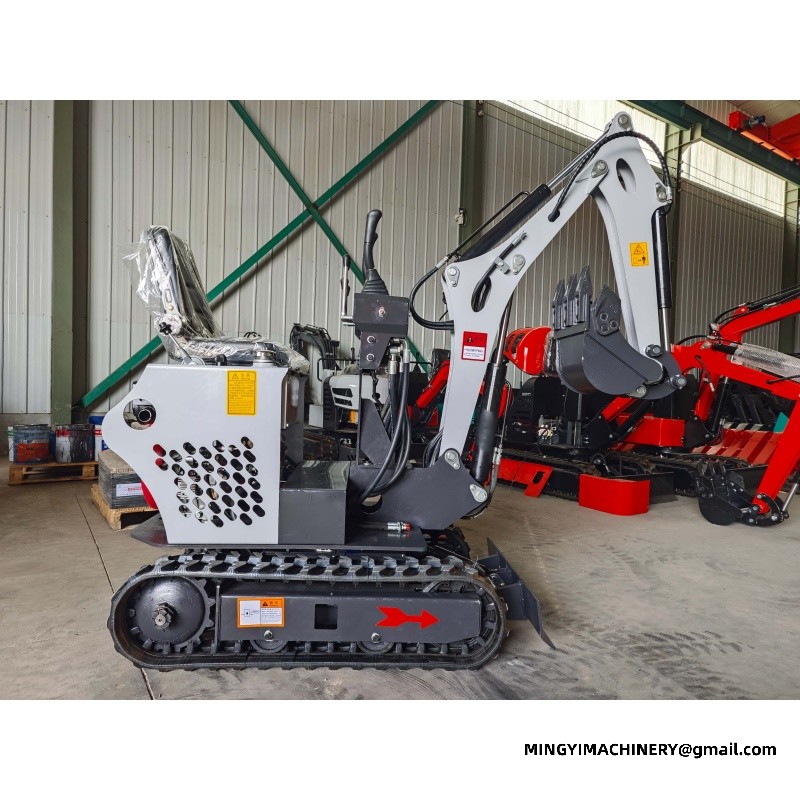
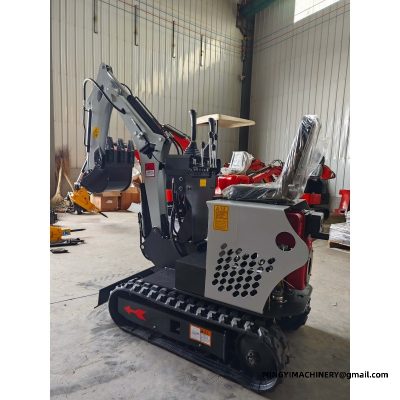
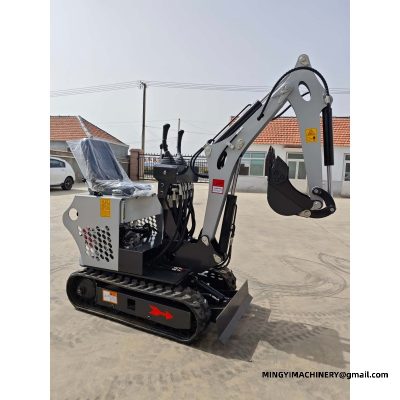
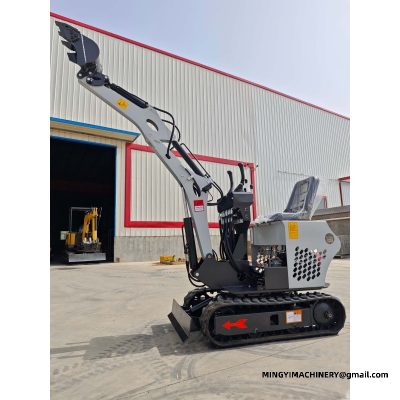
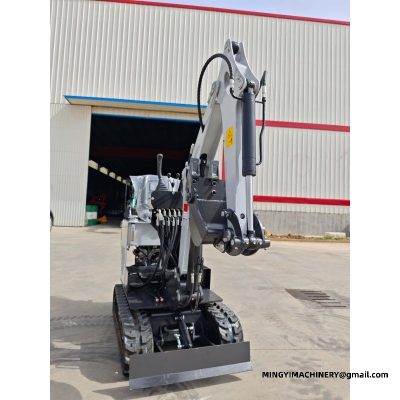
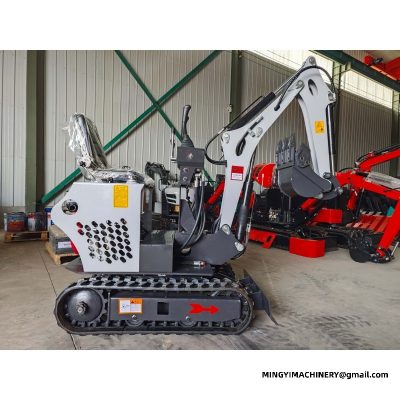
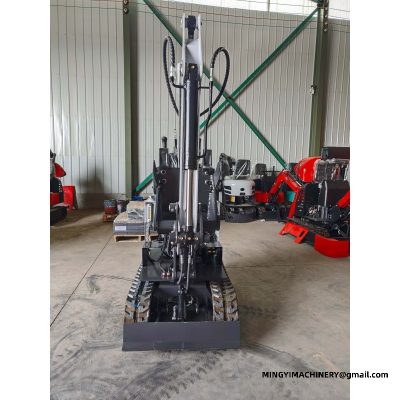
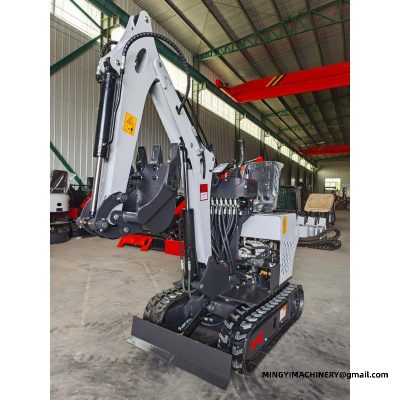
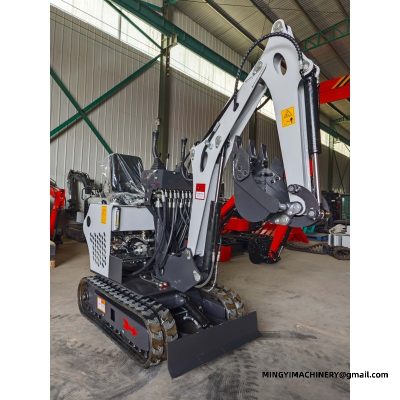
A contractor buys an excavator to win and complete work reliably. That means a machine that reaches the work, does it in one sequence, and keeps its running effort predictable across a season — not necessarily the largest or the simplest machine available.
MINGYI mini excavators in the 1.5 to 3 tonne classes are specified for contracting work across construction, municipal, landscaping and utility duties.
Winning work the machine can reach
Much of the work a contractor turns down is turned down on access rather than capability. A compact excavator with a swing boom and small tail swing can trench alongside a wall, work in a rear garden reached by a side passage, and cross finished surfaces on rubber tracks — which converts a category of domestic and municipal work from declined to quotable.
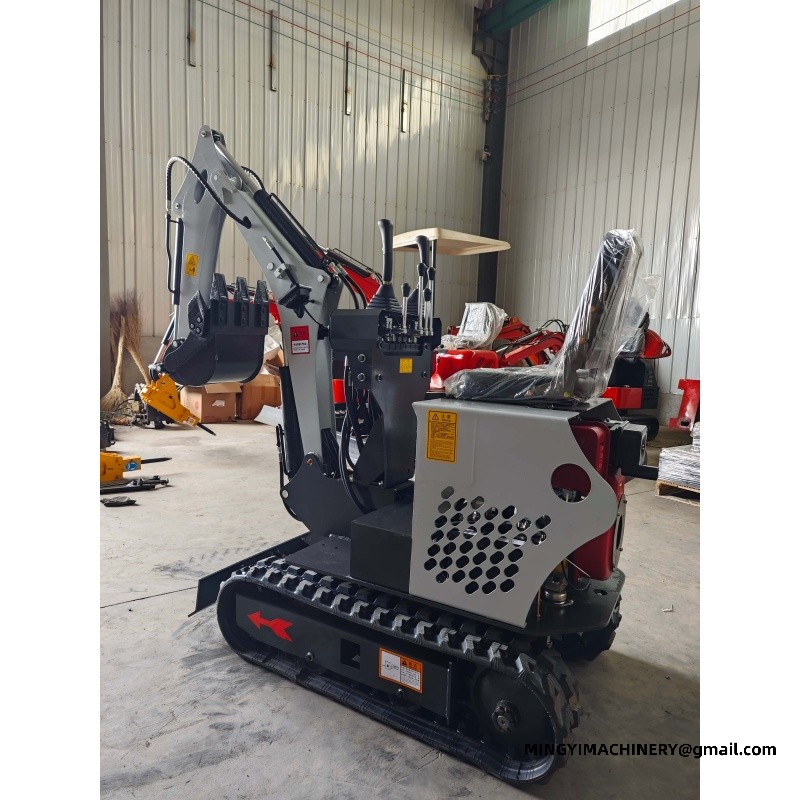
Completing work in one sequence
A quick coupler keeps the same machine on the job from breakout to backfill. Buckets, breaker hammers, augers and rakes share one mount, so the operator changes tools rather than waiting for a second machine, and the site programme is not interrupted.
Keeping the running effort predictable
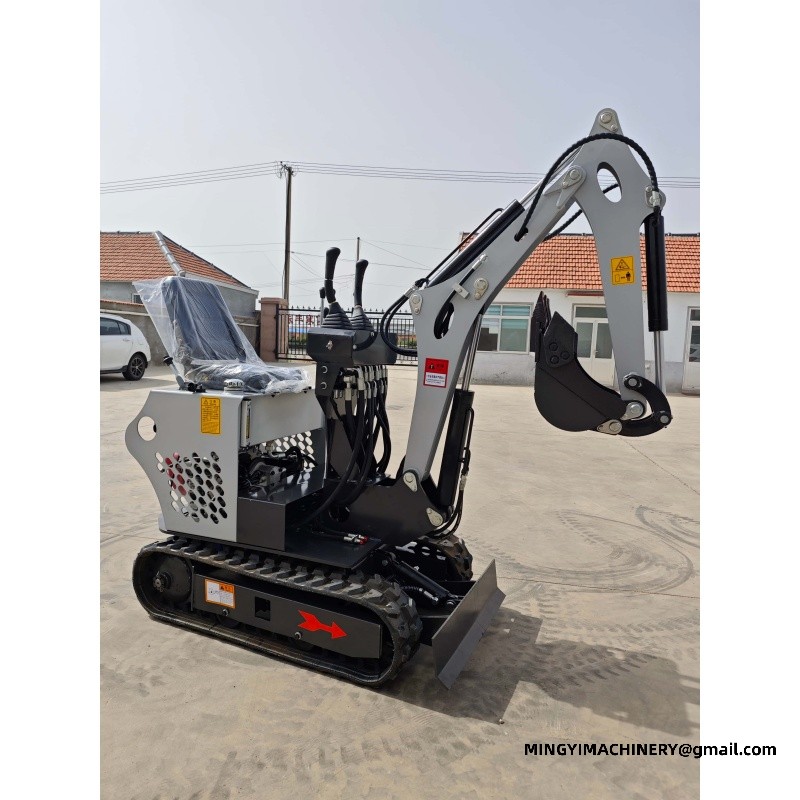
Diesel engines with a choice of family, matched hydraulic components and low-effort consumables keep the effort per hour stable. Specifying the engine family to match an existing fleet reduces the parts stock carried across the business.
Contractor priorities
• Access to work larger plant cannot reach
• One machine across digging, breaking, drilling and handling
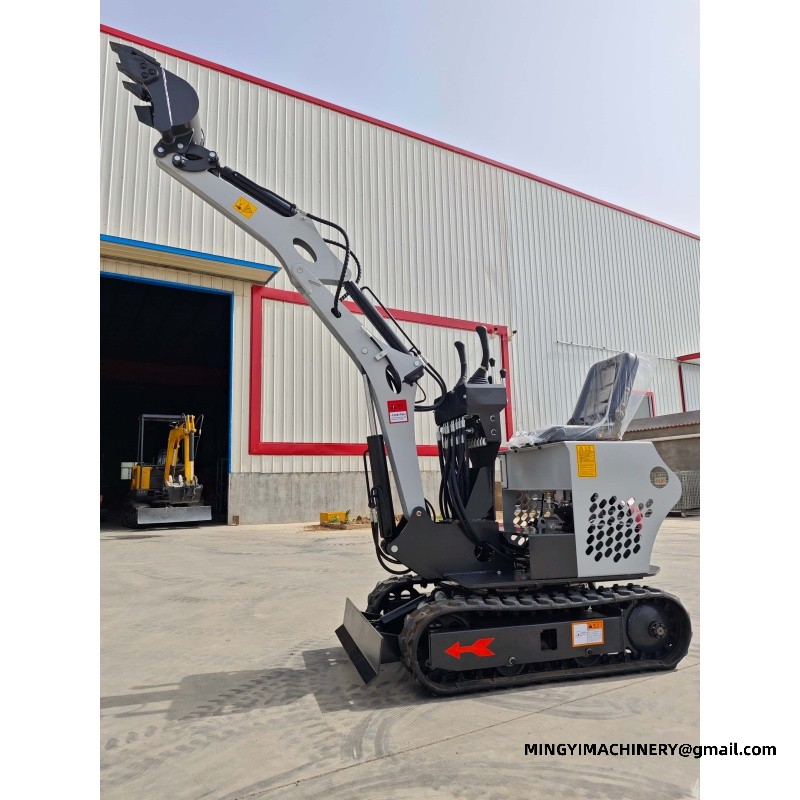
• Rubber tracks for domestic and municipal surfaces
• Low and predictable running effort
• Engine family matched to your existing fleet
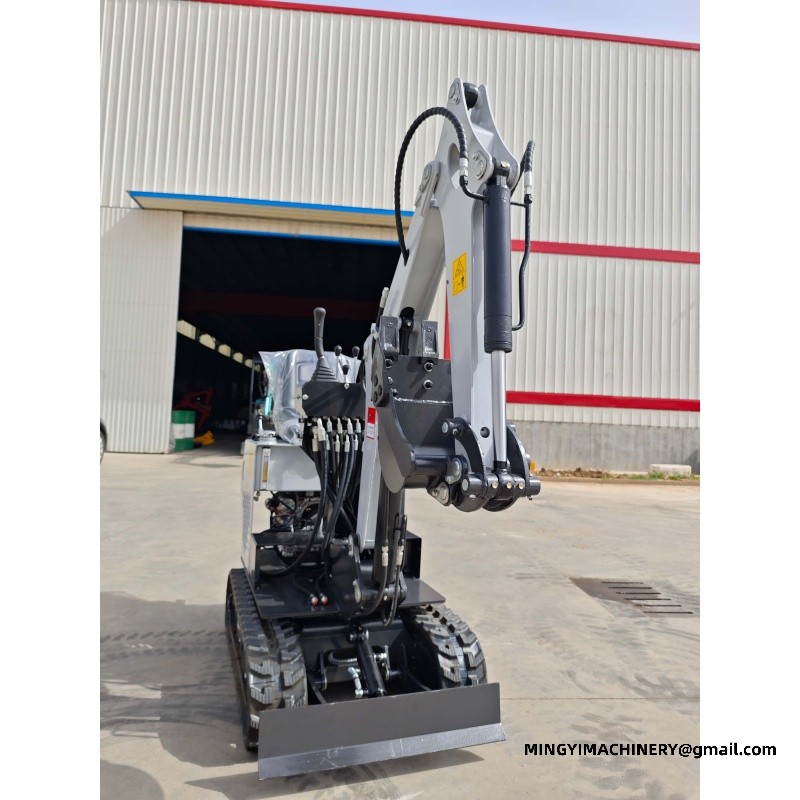
Tell us the work you specification for and the access it usually involves and we will specify a machine around it.
Parts, service and support for mini excavator for contractors Engine parts availability usually drives the engine choice. This class of machine built with an engine the local network already carries is serviced from stock rather than from an international order. Remote support is handled by video. The unit in daily use fault can often be diagnosed on a walk-around call with the panel open, which is faster than waiting for a visit and avoids shipping a part that is not needed. Attachments that turn mini excavator for contractors into several machines The base machine is a carrier; the tool on the end of the arm decides the task. A machine of this size fitted with a toothed bucket digs, and the same machine with a breaker, an auger or a grab does work that would otherwise need a second unit on site. Attachment lists are best written before delivery. Specifying the equipment on site with the tools the job list needs avoids the work and delay of adding hydraulics later, and a quick coupler makes the swap a few minutes instead of a workshop job. Engine options behind mini excavator for contractors Power unit selection is settled against the service network the buyer already uses. MINGYI offers Kubota D722, Kubota D902, YANMAR, Changchai, Laidong, Runtong, YARMAX, Youpu 2V80 and Youpu 195, so a fleet running one brand of engine can keep the same filters, the same parts supplier and the same mechanic. Engine choice is also an emissions and documentation question for some markets. Listing the available units with the machine itself enquiry lets the factory confirm what can be supplied and documented for the destination country. Trailering and moving mini excavator for contractors Transport weight and width decide whether a machine needs a specialist haulier. The model in question sized to travel on a standard plant trailer behind a suitable vehicle moves with the crew rather than on a scheduled low loader. Loading practice matters as much as the numbers. The machine in that duty is driven up ramps under its own power with the boom lowered and the tracks aligned, and secured at the points the manufacturer specifies. What owners should plan for beyond the unit on the job The useful comparison is demand per working hour, not demand per machine. A machine built for the work that works more hours a year spreads its standing takes over more output, which is why utilisation usually matters more than the invoice figure. Downtime is the hidden line item. The equipment in service waiting on a part earns nothing while it stands, so parts availability and service access belong in the plan as much as fuel does. Boom configuration for this class of machine A swing boom lets the machine dig parallel to its tracks without repositioning, which is what makes trenching beside a wall or a fence practical. On the unit in daily use this is often the option that decides whether a job is possible at all. Extended and offset boom configurations change reach and working range. A machine of this size with a longer arm reaches further but lifts less at full extension, so the specification is set against the deepest and furthest point on the job list. Daily checks and maintenance on the equipment on site Daily maintenance on the machine itself is a short list: engine oil level, coolant, track tension, hydraulic oil level and a look at the hoses. Ten minutes at the start of the shift prevents most of the failures that stop a machine. Greasing is the second item. The slew ring, the boom and arm pins and the bucket linkage on the model in question take grease daily in dusty work, and the intervals shorten further when the machine is used in water or mud. Quick coupler practice on the machine in that duty Couplers are specified early because they affect the arm and the hydraulic kit. Adding one to the unit on the job after delivery means new pins, new hoses and a fitment session; adding it at build time is a line on the sheet. For a fleet that shares attachments between machines, a common coupler standard matters more than the coupler brand. A machine built for the work that picks up the same tools as the larger machines keeps the rack usable across the yard. Working the equipment in service in confined spaces Clearance above matters as much as around. Door heights, pipework and overhead services set the limit for this class of machine indoors, and measuring them first avoids a machine that arrives and cannot be used. Ventilation is the other indoor constraint. Running the unit in daily use inside a closed structure needs air movement, and that is a planning item rather than something to discover after the first hour. Track choice for a machine of this size Rubber tracks suit paved and landscaped ground because they spread the machine weight and leave the surface intact. Steel tracks with rubber blocks are specified where the ground is rougher or the working day is longer, and the choice can be made per machine rather than accepted as a factory default. Undercarriage selection is a ground question, not a preference question. The equipment on site running on finished paving needs rubber; the same machine on demolition rubble or rock wears rubber quickly, so steel with rubber blocks becomes the better answer over a full season. Road and paving work for the machine itself Patching and reinstatement favour a machine that can work in a lane closure. The model in question occupies less road than a full-size excavator, which reduces the traffic management needed and the length of the closure. Breaking out a failed slab and backfilling the same hole in one visit is normal work for the machine in that duty. The breaker and the bucket come off the same coupler, so the road is reopened the same day. Specification data for the unit on the job The figures below are the factory figures for the models most often matched to a machine built for the work. They are the numbers to check against the site: the depth the work needs, the reach from one position, and the width of the narrowest point on the route in. These are the reference figures for the equipment in service. MINGYI confirms the final build sheet, including engine and attachment choices, against the destination and the job list before production. The practical way to specify is to write the job list first: the narrowest access, the deepest trench, the heaviest tool and the surfaces the machine must cross. This class of machine is then matched to those four numbers. Useful information to send with an enquiry includes working width, required digging depth, ground conditions and the attachment set. Those four items let the factory specify the unit in daily use that fits rather than a generic build.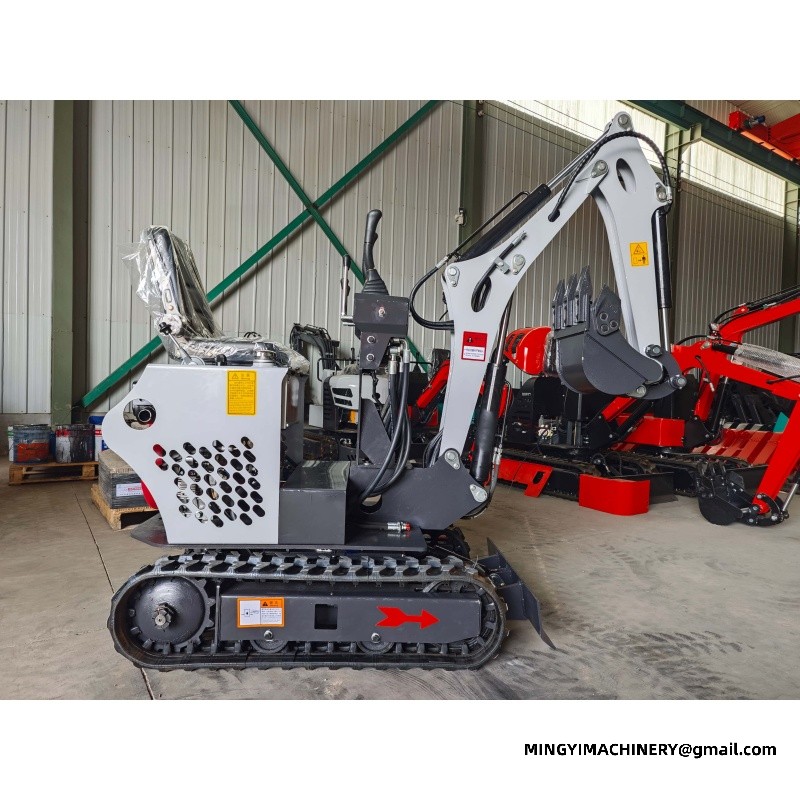
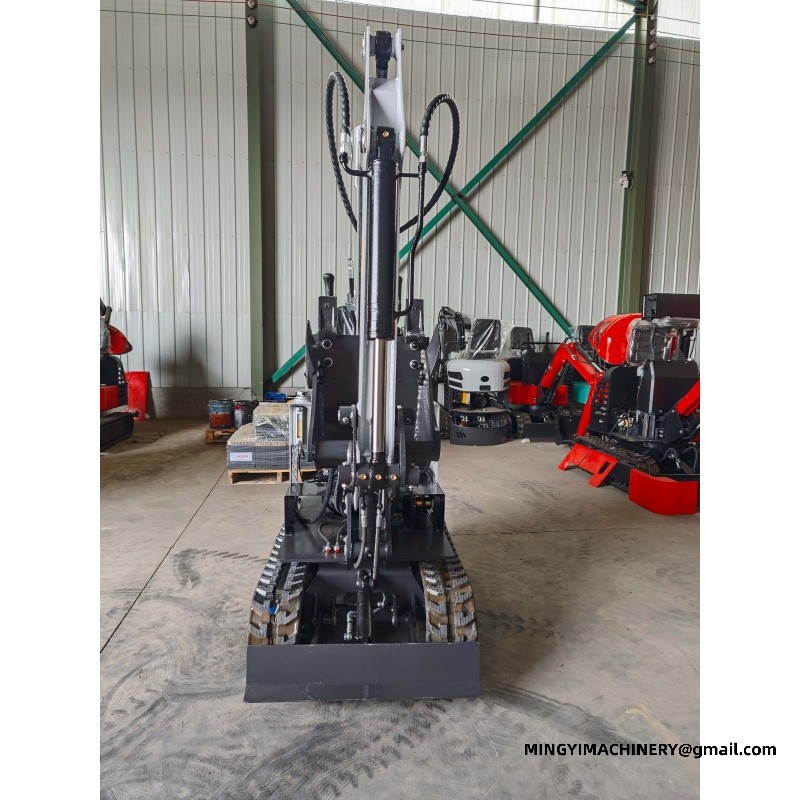
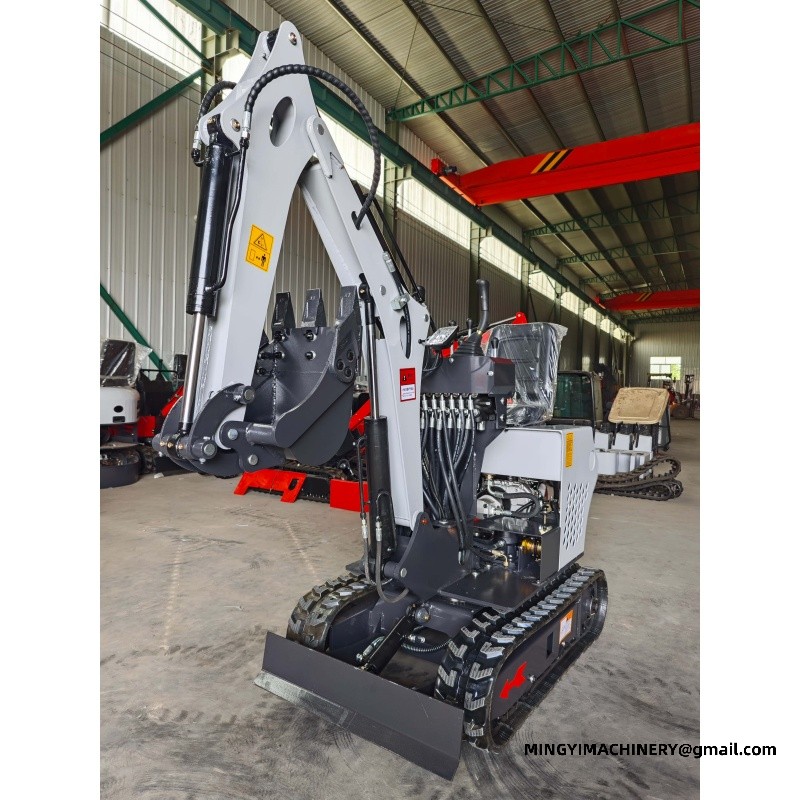
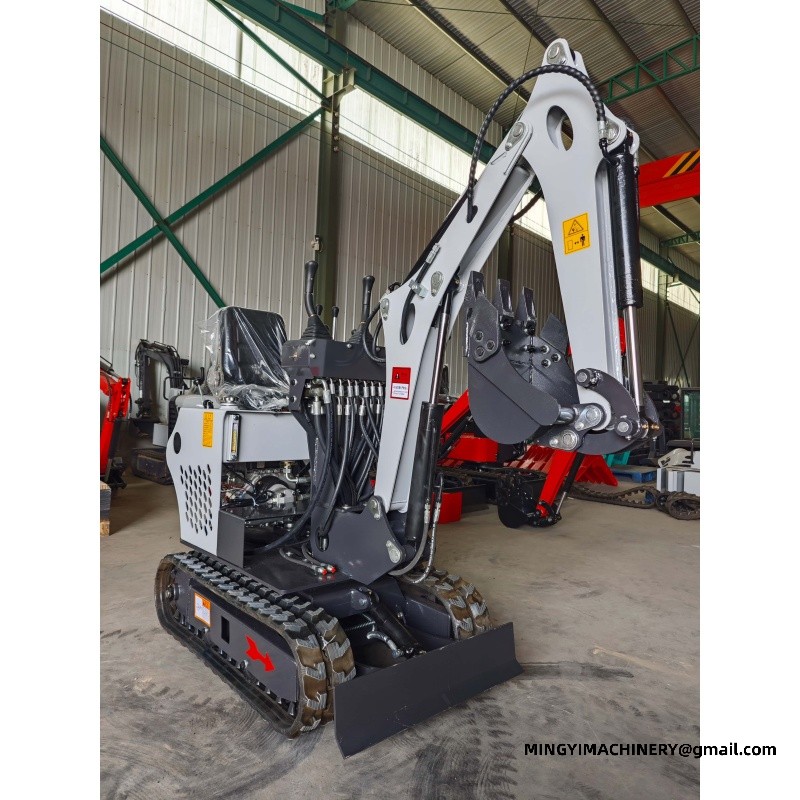
Reference specification — mini excavator range 09W 13W 20-3W 15L Operating weight 1100 kg (2425.08 lb) 1300 kg (2866.01 lb) 1900 kg (4188.78 lb) 1400 kg (3086.47 lb) Transport size (L×W×H) 1800 × 750 × 1970 mm 2200 × 930 × 2250 mm 2550 × 1100 × 2200 mm 2200 × 930 × 2250 mm Max digging depth 1250 mm (49.21 in) 1630 mm (64.17 in) 1800 mm (70.87 in) 1700 mm (66.93 in) Max digging height 2800 mm (110.24 in) 2750 mm (108.27 in) 2820 mm (111.02 in) 2750 mm (108.27 in) Max dumping height 1700 mm (66.93 in) 1960 mm (77.17 in) 2050 mm (80.71 in) 1960 mm (77.17 in) Max digging radius 2570 mm (101.18 in) 2900 mm (114.17 in) 3050 mm (120.08 in) 2900 mm (114.17 in) Max digging distance 1869 mm (73.58 in) 2100 mm (82.68 in) 2300 mm (90.55 in) 2300 mm (90.55 in) Minimum turning radius 1000 mm (39.37 in) 1300 mm (51.18 in) 1450 mm (57.09 in) 1450 mm (57.09 in) Travel speed 3 km/h (1.86 mph) 3 km/h (1.86 mph) 5 km/h (3.11 mph) 3 km/h (1.86 mph) Gradeability 30° 30° 30° 30° Fuel consumption 1-1.3 L/h (0.264—0.343 gal) 1-1.3 L/h (0.264—0.343 gal) 2-3 L/h (0.528—0.793 gal) 1-1.3 L/h (0.264—0.343 gal) Fuel tank capacity 8 L (2.11 gal) 10 L (2.64 gal) 16 L (4.23 gal) 10 L (2.64 gal) Hydraulic oil tank 16 L (4.23 gal) 16 L (4.23 gal) 18 L (4.76 gal) 16 L (4.23 gal) Dozer blade lift height 180 mm (7.09 in) 180 mm (7.09 in) 180 mm (7.09 in) 180 mm (7.09 in) Dozer blade drop depth 210 mm (8.27 in) 210 mm (8.27 in) 210 mm (8.27 in) 210 mm (8.27 in)
Q. What do contractors look for in a mini excavator?
A. Reliability across a working day, quick attachment changes, and a size that can be moved between sites without heavy transport. MINGYI builds the 08, 12 and 18 models for contractors who need one machine to cover several kinds of work in the same week.
Q. How important is a quick coupler to a contractor?
A. It is usually the difference between one machine doing three jobs and three machines standing idle. A coupler lets the operator switch between bucket, breaker and auger on site, which is what makes a compact machine economic across mixed work.
Q. What is the right size for a small contractor?
A. The mid size of the range fits most contractors, because it covers trenching, footings and planting while still passing through a garden gate. Contractors working mostly indoors or in very tight access go down a size, and those doing bulk work go up.
A second operator for a machine of this size
Training is simpler than repair. An hour spent with a new operator on the equipment on site, covering the limits and the awkward cases, is the least lengthy hour in the whole ownership.
Moving the machine itself between sites
A machine that works on one site still has to reach the next. The overall dimensions and the operating weight of the model in question decide what trailer or truck is needed, and that decision belongs before the job is booked.
Hot, humid and dusty conditions around the machine in that duty
Dust is the enemy of every rotating joint. Keeping the radiator and the air intake of the unit on the job clean, and cleaning them before they are blocked rather than after, is what separates a machine that lasts from one that overheats.
E-mail : sales@mingycn.com
LINE ( ID ): mingyicn
Related pages
mini excavator for Latin America · mini excavator for Africa market · mini crawler excavator · PRODUCTS









