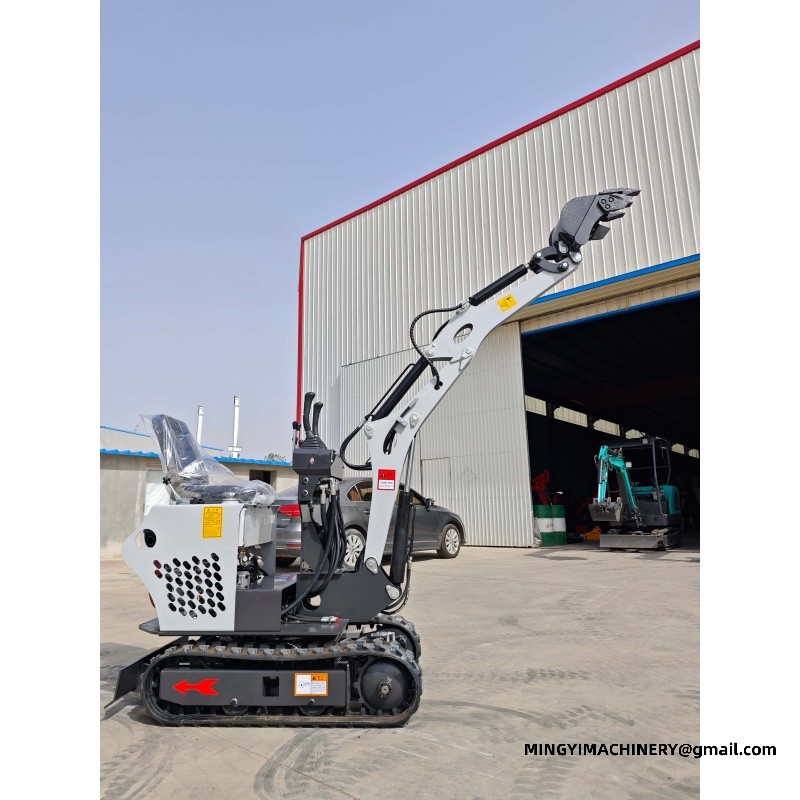
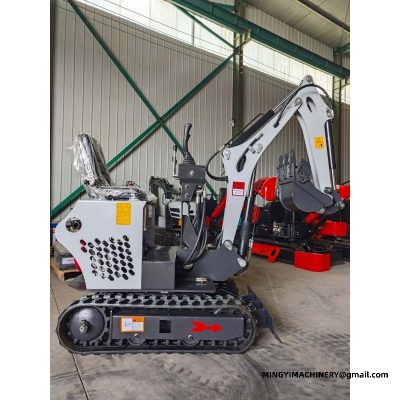
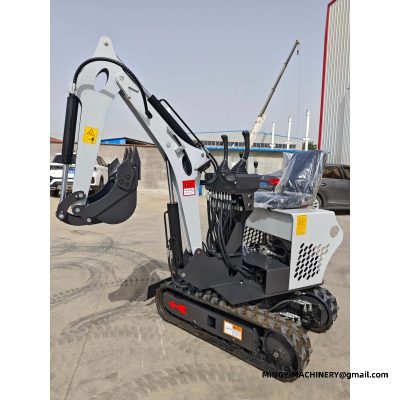
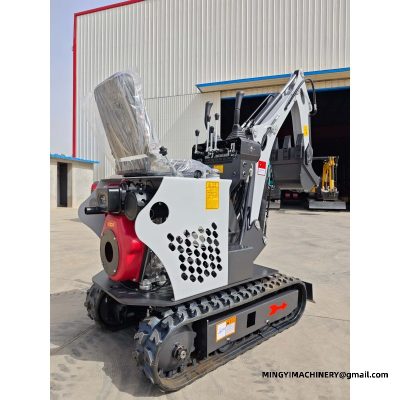
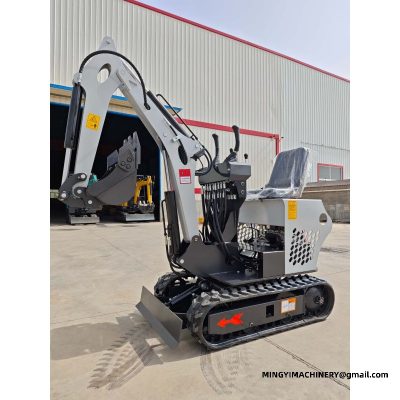
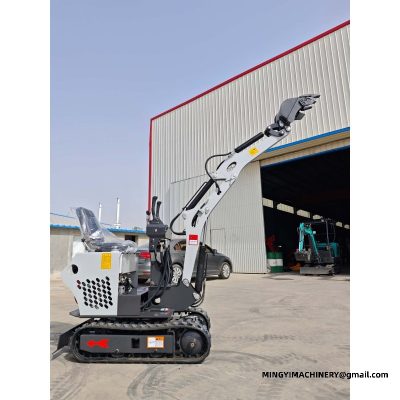
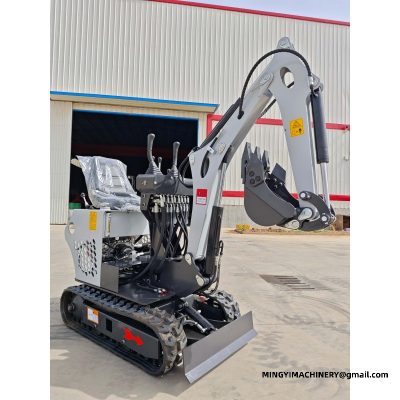
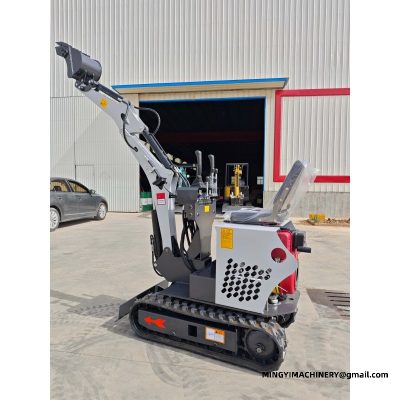
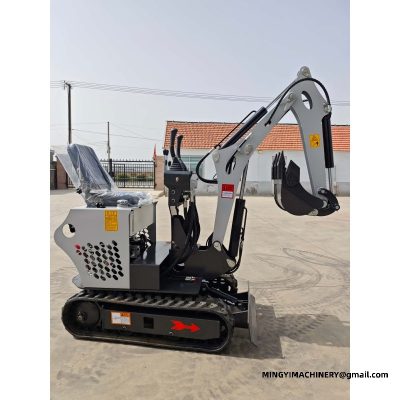
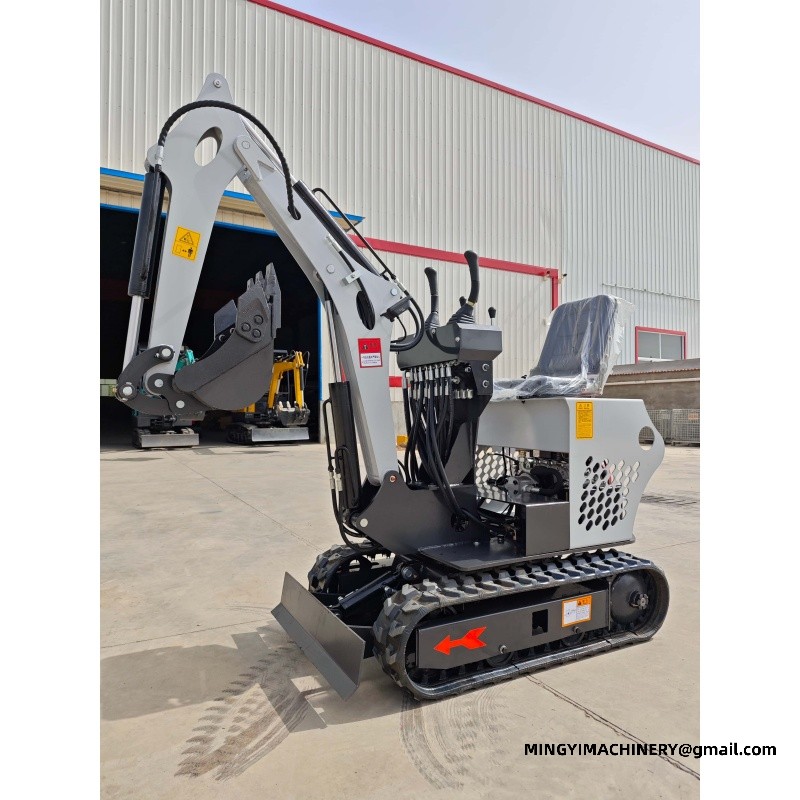
Compact excavators suit Latin American markets well: the machines are practical to buy and to transport, economical to run, and able to work on sites where access is restricted and larger plant cannot be brought in.
MINGYI supplies mini excavators to buyers and distributors in Latin America, built to order against the buyer’s work and service arrangements.
Where compact machines fit
Construction on constrained urban plots, municipal works, agricultural drainage, landscaping and utility connections all call for machines that fit through restricted access and can be moved on a small trailer. The one-tonne to 2.5 tonne classes cover most of that work, with the larger compact classes used where trench runs are longer and attachment duty is heavier.
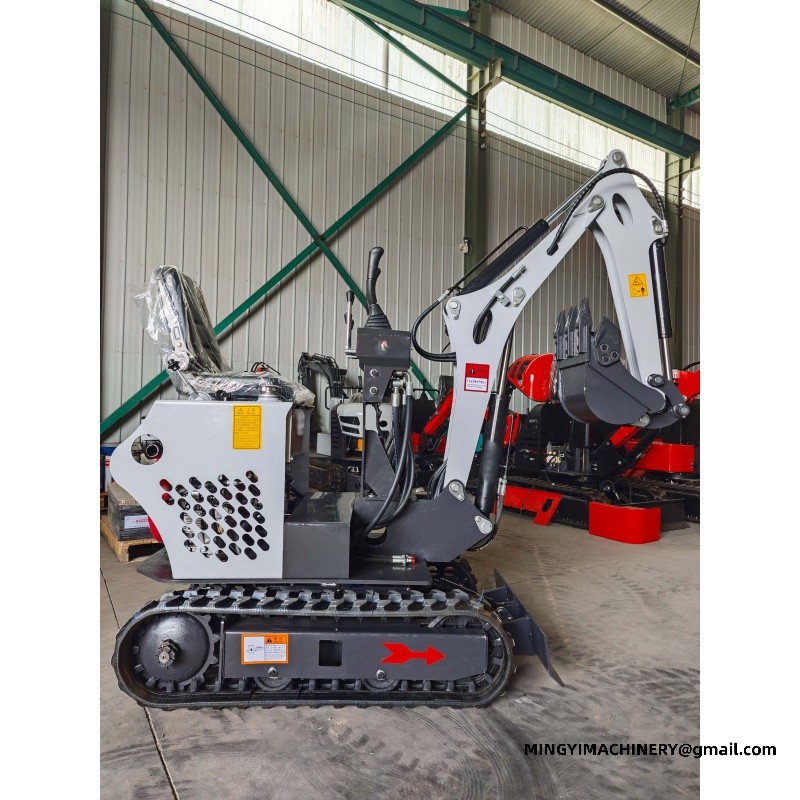
Rubber tracks protect paved and finished surfaces; steel tracks with rubber blocks are specified where ground is harder and more abrasive.
Specification and support
Engine family is the decision that determines how easily the machine is kept running, and it should follow the parts and service network the buyer can reach. Machines are supplied against a recorded build specification, so wear parts and replacement tracks match the unit delivered.
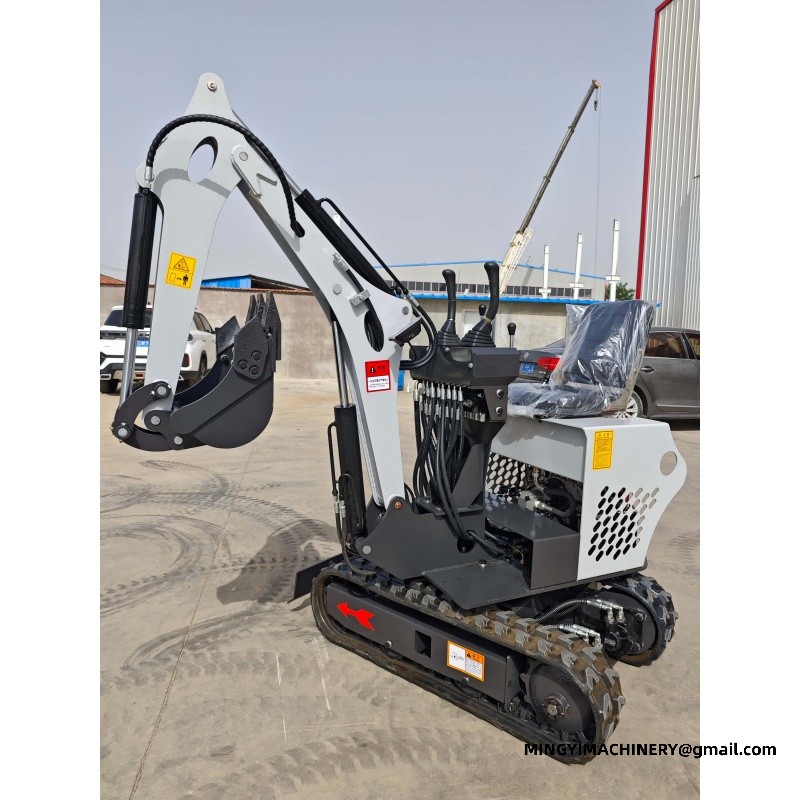
Versatility on limited machine count
Where a business runs one or two machines, the quick-change attachment interface allows the same excavator to dig, break, drill and clear, which extends the range of work it can specification for.
Supply into Latin American markets
• Compact classes for urban and agricultural work
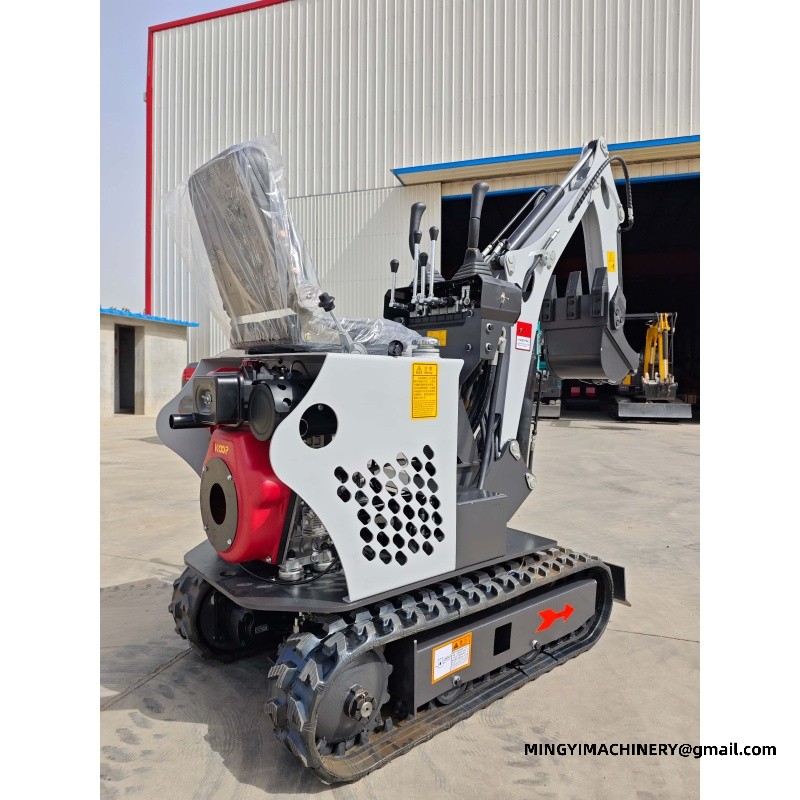
• Rubber or steel track specification for local ground
• Engine family matched to local parts support
• Shared attachment interface across the range
• Export packing and documentation
Tell us your country, the work the machine will do and the engine family you prefer and we will specification a specification.
What owners should plan for beyond the mini excavator for Latin America Purchase decision is the visible part of the effort. Fuel, filters, tracks or tyres, the operator and the transport between sites are the items that decide what this class of machine actually demands over a few seasons, and they are worth listing before the order. Downtime is the hidden line item. The unit in daily use waiting on a part earns nothing while it stands, so parts availability and service access belong in the plan as much as fuel does. Municipal and public works with mini excavator for Latin America Municipal crews work on streets, footpaths and parks where the public is present. A machine of this size is specified because it occupies little space, works inside a small exclusion zone and can be moved on a standard trailer. Drainage repair, tree planting, footway reconstruction and cemetery work are all within the range of the equipment on site. The jobs are small individually and continuous across the year. Getting mini excavator for Latin America through a narrow gap Access decides the machine before output does. With the machine itself the limiting dimension is usually the widest point on the way in, so measuring the gate, the corridor and the turning space first saves a wasted delivery and a second visit. Contractors who buy the model in question normally have one job in mind that nothing else reaches. The purchase order follows the access measurement, not the other way round, and the build sheet is then settled around it. Landscaping and ground care with mini excavator for Latin America Landscape contractors use the machine in that duty for planting holes, pond excavation, grading and retaining work. The machine is light enough to cross finished lawn and narrow enough to work between established trees. On soft landscape work the surface is the constraint. The unit on the job on rubber tracks crosses turf without stripping it, which is why the same jobs are not given to a wheeled machine. Matching a machine built for the work to ground conditions Soft ground is a flotation problem, not a power problem. The equipment in service on wide rubber tracks crosses lawn, sand and cultivated soil that would stop a narrower machine or a wheeled unit of the same capacity. Hard and abrasive ground reverses the specification. On rock, demolition rubble or sharp gravel, steel tracks with rubber blocks on this class of machine survive conditions that cut a rubber belt quickly. Hiring versus owning the unit in daily use The choice follows the hours. Work that fills a few weeks a year is usually better hired, while a machine of this size that would be on site most weeks starts to justify ownership once the transport and booking time is counted. Availability is part of the decision. Owning the equipment on site means it is there on the day the ground is ready; hiring means competing for the same machine at the same time as everyone else in the season. OEM and fleet customisation of the machine itself Customisation also covers the specification sheet. A fleet buyer may want every machine in that duty delivered with the same coupler, the same engine and the same tool kit so training and parts stock stay simple. Documentation can be prepared to suit the importer. Manuals, parts books and decal sets for the model in question can be supplied with the buyer's own branding where the order size justifies it. Hydraulic circuits on the unit on the job Flow and pressure are matched to the tool, not to the machine size. Asking for the attachment list first means a machine built for the work leaves the factory with circuits that suit the heaviest tool the buyer intends to run. Hydraulic specification is easier to settle at build time than to correct later. The equipment in service delivered without auxiliary lines can still dig, but every additional tool becomes a retrofit project. Daily checks and maintenance on this class of machine Daily maintenance on the unit in daily use is a short list: engine oil level, coolant, track tension, hydraulic oil level and a look at the hoses. Ten minutes at the start of the shift prevents most of the failures that stop a machine. Track tension is the item most often neglected. A machine of this size run with slack tracks wears the undercarriage and can throw a track on a turn; run too tight, the same components wear from the other direction. Engine options behind the equipment on site Power unit selection is settled against the service network the buyer already uses. MINGYI offers Kubota D722, Kubota D902, YANMAR, Changchai, Laidong, Runtong, YARMAX, Youpu 2V80 and Youpu 195, so a fleet running one brand of engine can keep the same filters, the same parts supplier and the same mechanic. Two buyers can order the same the machine itself and receive different engines. The decision is rarely about peak power; it is about which parts counter is closest to the site and which engine the local mechanic already knows. Lifting and material handling with the model in question Lifting with a machine built to dig needs a plan. The load, the radius and the ground under the unit on the job all matter, and the safe figure is the one on the chart rather than the one that looks possible. Ground condition under the machine is part of every lift. Soft or uneven support is the common factor in handling incidents, and checking it takes less time than recovering the machine in that duty that has settled. Working a machine built for the work through the seasons Weather decides which days are productive. Rain turns some ground unusable and cold changes how the equipment in service starts and warms up, so planning the wet months around maintenance is more useful than planning around output. Seasonal planning smooths the workload. Machines that are busy for a few months and idle for the rest benefit from a service slot in the quiet period, and this class of machine prepared in the off-season starts the busy months reliably. Specification data for the unit in daily use Buyers comparing a machine of this size usually start from four numbers - weight, digging depth, reach and transport width - because those are the ones that decide whether the machine can be delivered and whether it can do the job once it is there. These are the reference figures for the equipment on site. MINGYI confirms the final build sheet, including engine and attachment choices, against the destination and the job list before production. Delivery day is the best time to find a problem. Checking the specification against the order, the fluid levels, the fasteners and any transport damage while the model in question is still on the trailer is faster than claiming later. A function check before the machine goes to work is worth the hour. Running through the controls, the travel and the attachment circuit on the machine itself confirms it is set up as specified and ready for the site.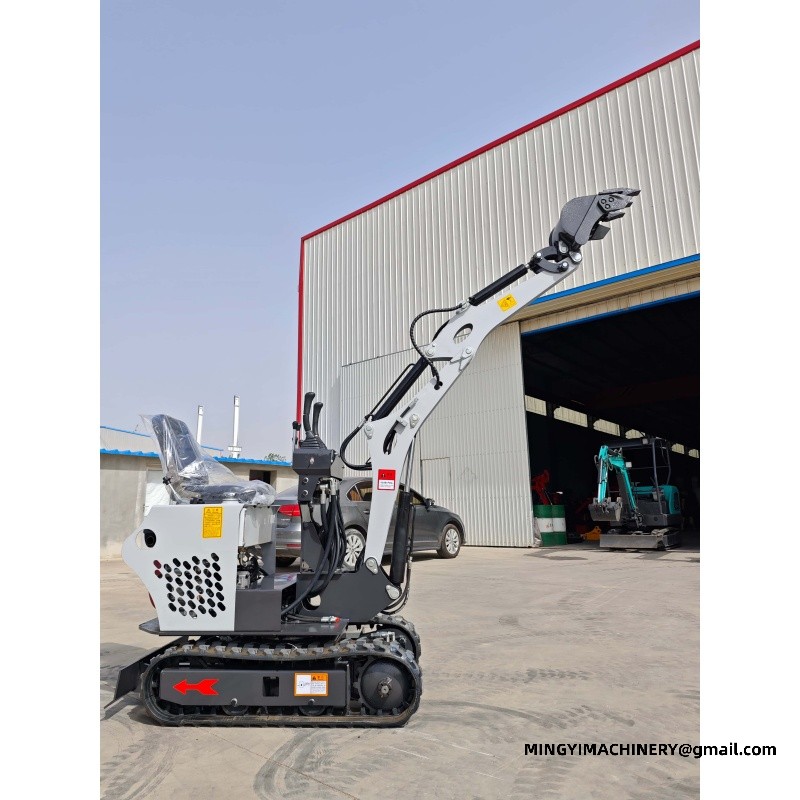
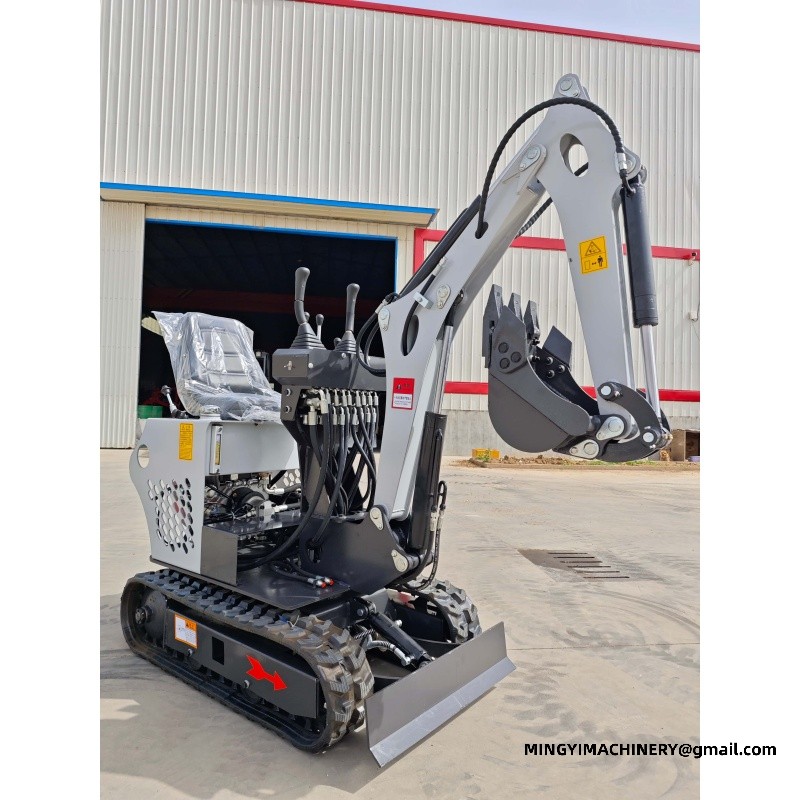
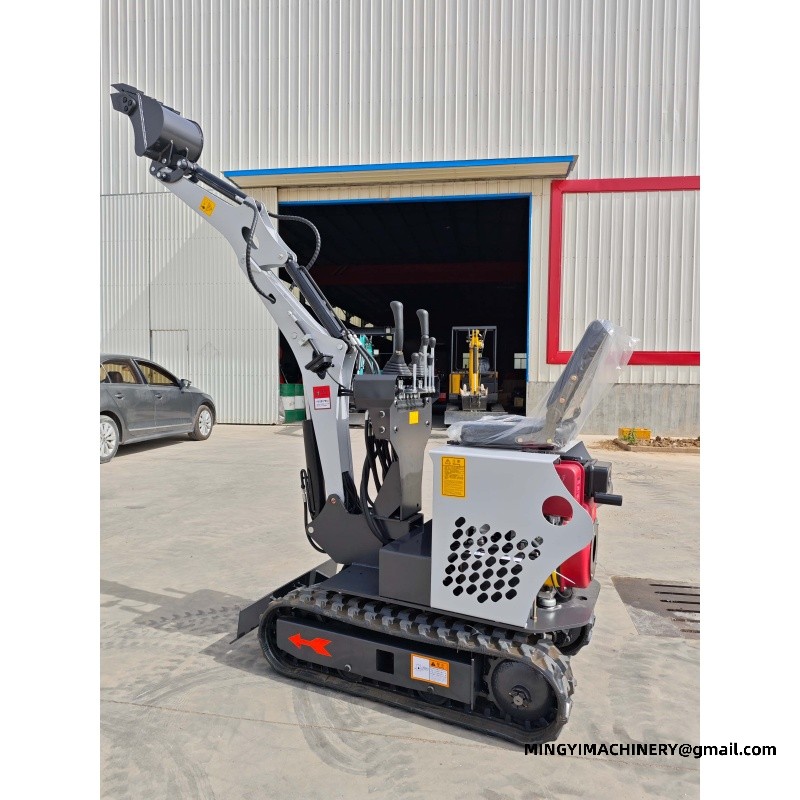
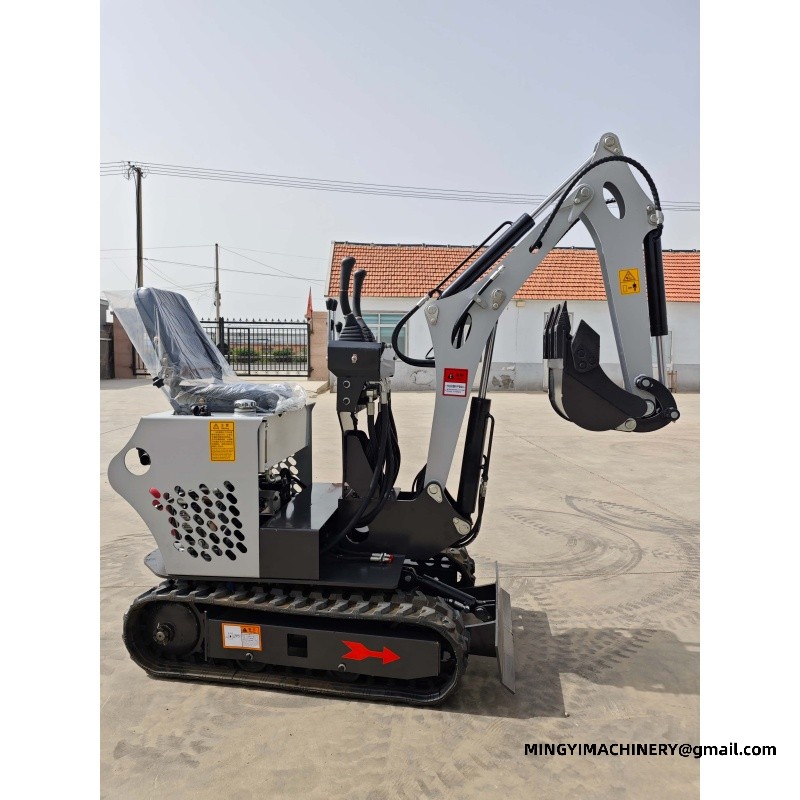
Reference specification — mini excavator range 09W 13W 30-2W 25L Operating weight 1100 kg (2425.08 lb) 1300 kg (2866.01 lb) 2700 kg (5952.48 lb) 2200 kg (4850.17 lb) Transport size (L×W×H) 1800 × 750 × 1970 mm 2200 × 930 × 2250 mm 3000 × 1100 × 2700 mm 3000 × 1300 × 2700 mm Max digging depth 1250 mm (49.21 in) 1630 mm (64.17 in) 2200 mm (86.61 in) 2300 mm (90.55 in) Max digging height 2800 mm (110.24 in) 2750 mm (108.27 in) 3000 mm (118.11 in) 3100 mm (122.05 in) Max dumping height 1700 mm (66.93 in) 1960 mm (77.17 in) 2000 mm (78.74 in) 2050 mm (80.71 in) Max digging radius 2570 mm (101.18 in) 2900 mm (114.17 in) 3800 mm (149.61 in) 3900 mm (153.54 in) Max digging distance 1869 mm (73.58 in) 2100 mm (82.68 in) 3050 mm (120.08 in) 3100 mm (125.05 in) Minimum turning radius 1000 mm (39.37 in) 1300 mm (51.18 in) 1750 mm (68.9 in) 1800 mm (70.87 in) Travel speed 3 km/h (1.86 mph) 3 km/h (1.86 mph) 7 km/h (4.35 mph) 7 km/h (4.35 mph) Gradeability 30° 30° 30° 30° Fuel consumption 1-1.3 L/h (0.264—0.343 gal) 1-1.3 L/h (0.264—0.343 gal) 2-3 L/h (0.528—0.793 gal) 2-3 L/h (0.528—0.793 gal) Fuel tank capacity 8 L (2.11 gal) 10 L (2.64 gal) 16 L (4.23 gal) 16 L (4.23 gal) Hydraulic oil tank 16 L (4.23 gal) 16 L (4.23 gal) 20 L (5.28 gal) 18 L (4.76 gal) Dozer blade lift height 180 mm (7.09 in) 180 mm (7.09 in) 230 mm (9.06 in) 230 mm (9.06 in) Dozer blade drop depth 210 mm (8.27 in) 210 mm (8.27 in) 280 mm (11.02 in) 280 mm (11.02 in)
Q. Do you supply mini excavators to Latin America?
A. Yes. MINGYI supplies compact crawler excavators to buyers in Latin American markets direct from its China factory, in the 0.8 to 6 tonne class, with the 08, 12 and 18 models as the core range.
Q. What specification suits the region?
A. Simple service and common engine parts matter, because parts distances can be long. Buyers normally choose an engine family with regional parts availability and add a first service kit to the machine order.
Q. Can you supply dealers in the region?
A. Yes. Dealer orders usually mix sizes into one container, and machines can be built with your colour and decals. Send the market and the sizes you intend to carry and MINGYI will specification the order.
Keeping a service record for the machine in that duty
A written record is worth more than a good memory. Dates, hours and the parts fitted on the unit on the job turn a guess about the next service into a fact, and they are the first thing a buyer asks to see.
Reading the early symptoms on a machine built for the work
Operators notice things first because they hear the machine every day. Encouraging the person on the equipment in service to report small changes, and acting on them, is the most effective maintenance programme there is.
E-mail : sales@mingycn.com
LINE ( ID ): mingyicn
Night work and lighting on mini excavator for Latin America
Night work changes the job more than most specification lines do, because light coverage, glare and shadow decide how much of the site the operator can actually read.
Related pages
mini excavator for Africa market · mini excavator for hot and dusty sites · micro excavator · PRODUCTS









